
Low impact exercises can support weight loss by helping you burn calories consistently while putting less stress on your joints than jumping or running. The key is doing them often enough and at a challenging (but safe) intensity, then gradually progressing over time.
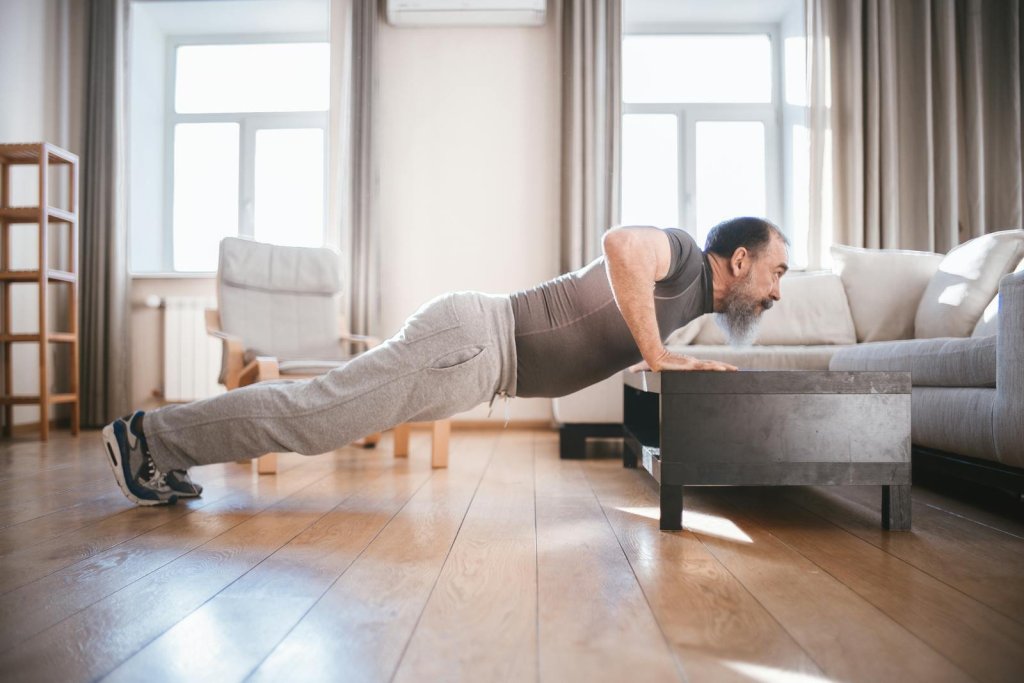
If you’re new to exercise, low impact training is a smart place to start because it’s easier to stick with, and consistency is what drives results. For general health, many public health guidelines recommend building weekly activity with a mix of cardio-style movement and muscle-strengthening work, such as the recommendations outlined by the CDC.
What “low impact” means for weight loss
Low impact means one foot stays on the ground most of the time and you avoid pounding forces (like jumping). That’s helpful if you:
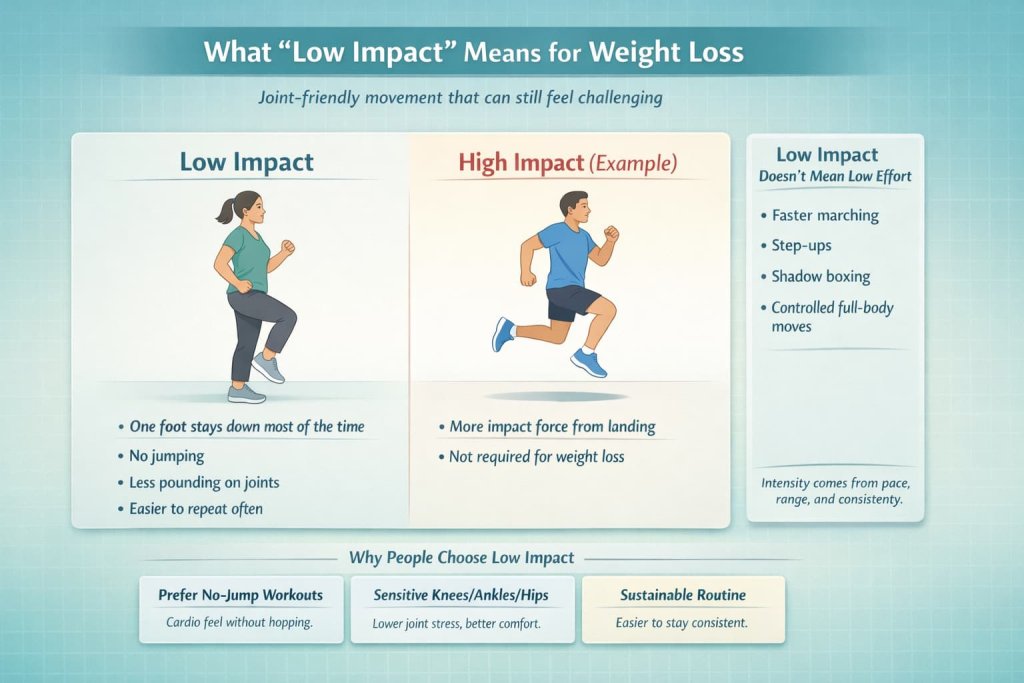
- Prefer no-jump workouts
- Have sensitive knees/ankles/hips
- Need a sustainable routine you can repeat often
Low impact does not mean low effort. You can still work at a solid pace using faster marching, step-ups, shadow boxing, and controlled total-body moves.
How hard should these feel (so they actually help)
A simple goal for many sessions is moderate intensity:
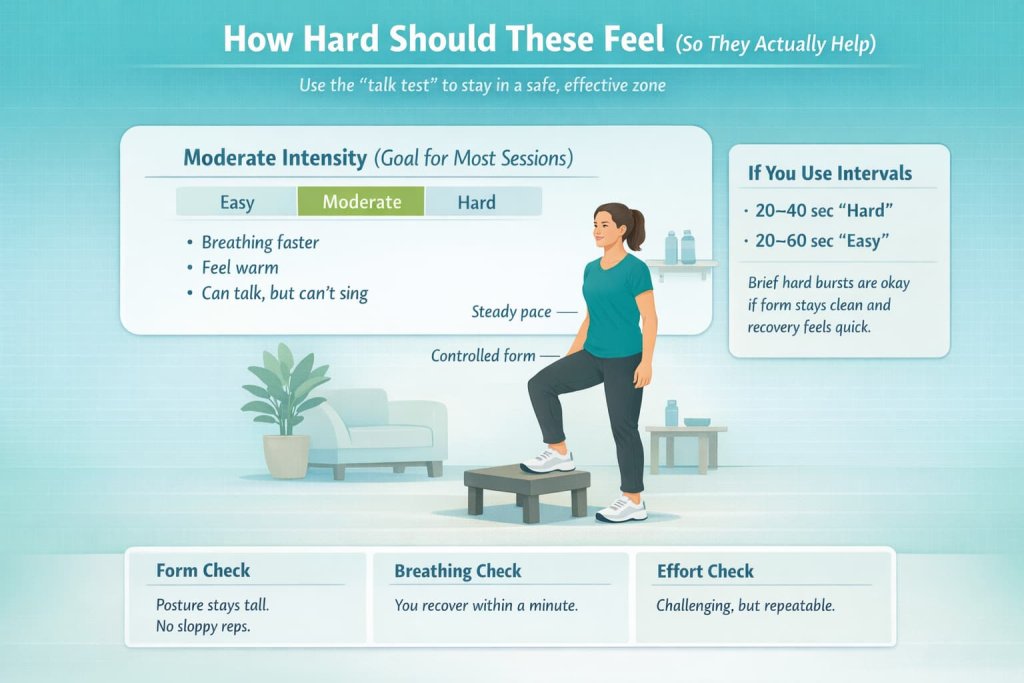
- You’re breathing faster.
- You feel warm.
- You can talk, but you wouldn’t want to sing.
If you’re doing intervals, brief “hard” bursts are okay as long as form stays clean and you recover quickly.
8 best low impact exercises for weight loss at home
Use these 8 low impact exercises for weight loss at home as standalone moves or combine them into a simple circuit. They’re beginner-friendly, no-jump options that can still raise your heart rate when you keep a steady pace.
1) Marching in Place (High-Knee March)
How to do it:
- Stand tall, feet hip-width apart.
- March briskly, lifting one knee at a time.
- Pump your arms like you’re walking fast.
- Keep your ribs stacked over your pelvis (don’t lean back).
- Go for 30–60 seconds.
Why it works: It’s simple, joint-friendly cardio that quickly raises heart rate—perfect for beginners and warm-ups.
Estimated calories burned (per 10 minutes):
- 185 lb (84 kg): ~59–118 calories
- 155 lb (70 kg): ~49–99 calories
[Note: The calorie estimates are shown for two example body weights: 155 lb (70 kg) and 185 lb (84 kg) (lb = pounds, kg = kilograms).]
Muscles worked: Hip flexors, glutes, calves, core, shoulders (arm drive).
Trainer Tip: Make it harder by marching faster, lifting knees higher, or doing 20 seconds brisk + 20 seconds easy.
2) Step-Ups (Stairs or Sturdy Step)
How to do it:
- Use a stable step or the bottom stair.
- Step up with your right foot, stand tall, then step down.
- Alternate sides or do all reps on one side, then switch.
- Keep your whole foot on the step and control the lowering.
- Aim for 8–12 reps per side.
Why it works: Step-ups are low impact but high payoff—legs + cardio together, especially when done continuously.
Estimated calories burned (per 10 minutes):
- 185 lb (84 kg): ~66–137 calories
- 155 lb (70 kg): ~56–115 calories
Muscles worked: Glutes, quads, hamstrings, calves, core.
Trainer Tip: Start with a lower step. Progress by adding time (60–90 seconds) before adding height.
3) Shadow Boxing (Low Impact Cardio)
How to do it:
- Stand in an athletic stance (soft knees, hands up).
- Punch straight ahead (jab-cross), then add hooks.
- Keep punches controlled and return hands to guard.
- Add small steps side-to-side instead of jumps.
- Go for 30–45 seconds.
Why it works: Upper-body-driven cardio boosts intensity without pounding, and it’s easy to scale up.
Estimated calories burned (per 10 minutes):
- 185 lb (84 kg): ~85–125 calories
- 155 lb (70 kg): ~72–105 calories
Muscles worked: Shoulders, chest, upper back, core, legs (light footwork).
Trainer Tip: Exhale on each punch and keep shoulders down (avoid shrugging).
4) Sit-to-Stand (Chair Squat)
How to do it:
- Sit on a sturdy chair, feet flat and slightly wider than hips.
- Lean forward slightly, press through your heels, and stand up.
- Sit back down with control (don’t drop).
- Do 10–15 reps.
Why it works: A beginner-friendly strength move that builds lower-body strength, which supports higher daily activity and better movement efficiency.
Estimated calories burned (per 10 minutes):
- 185 lb (84 kg): ~56 calories
- 155 lb (70 kg): ~47 calories
Muscles worked: Quads, glutes, hamstrings, core.
Trainer Tip: If it’s too easy, pause for 1 second just above the chair before sitting.
5) Reverse Lunge to Knee Lift (No Jump)
How to do it:
- Stand tall, step one leg back into a reverse lunge.
- Lower under control, then push through the front heel to stand.
- As you stand, bring the back knee up to hip height (optional).
- Do 8–10 reps per side.
Why it works: It trains legs and balance while adding a small cardio spike—without impact.
Estimated calories burned (per 10 minutes):
- 185 lb (84 kg): ~56–110 calories
- 155 lb (70 kg): ~47–93 calories
Muscles worked: Glutes, quads, hamstrings, calves, core.
Trainer Tip: Skip the knee lift if balance is tricky—just step back and return to standing.
6) Glute Bridge (Hip Lift)
How to do it:
- Lie on your back, knees bent, feet flat.
- Brace your core gently and squeeze your glutes.
- Lift hips until your body forms a straight line from shoulders to knees.
- Lower slowly and repeat for 12–15 reps.
Why it works: Strong glutes support walking, stairs, and daily movement—helping you stay active with less discomfort.
Estimated calories burned (per 10 minutes):
- 185 lb (84 kg): ~41–51 calories
- 155 lb (70 kg): ~35–43 calories
Muscles worked: Glutes, hamstrings, core.
Trainer Tip: Pause 2 seconds at the top and keep ribs down (avoid over-arching).
7) Incline Push-Up (Wall or Counter)
How to do it:
- Place hands on a wall, countertop, or sturdy table.
- Step feet back and keep body in a straight line.
- Lower chest toward the surface, then press back up.
- Do 8–12 reps.
Why it works: Building upper-body strength makes full-body circuits more effective and helps you keep good form when you’re tired.
Estimated calories burned (per 10 minutes):
- 185 lb (84 kg): ~56 calories
- 155 lb (70 kg): ~47 calories
Muscles worked: Chest, shoulders, triceps, core.
Trainer Tip: The lower the surface, the harder it gets—progress gradually.
8) Slow Mountain Climbers (Hands Elevated)
How to do it:
- Place hands on a chair/couch (more beginner-friendly than the floor).
- Step into a strong plank position.
- Drive one knee toward your chest, return, then switch sides.
- Move steadily for 30–45 seconds.
Why it works: This adds a cardio + core challenge with minimal impact, especially when elevated.
Estimated calories burned (per 10 minutes):
- 185 lb (84 kg): ~110 calories
- 155 lb (70 kg): ~93 calories
Muscles worked: Core, hip flexors, shoulders, chest, quads.
Trainer Tip: Keep hips level and go slower than you think—control beats speed.
How Many Calories You Burn and How Much Weight You Can Lose
Your calorie burn depends on your body weight, workout intensity, and total weekly consistency. Use the calories-per-10-min numbers in the table to estimate your session:
- Step 1: Add up the calories for each exercise you did (based on your body weight range).
- Step 2: Multiply by how many 10-minute blocks you trained (example: 20 minutes = 2 blocks).
- Step 3: Track your weekly total (workouts + walking/steps) for a more realistic picture.
A simple weight-loss estimate (rule of thumb)
A common rule of thumb is that about 3,500 calories equals roughly 1 lb of body weight. That means:
- If you create a 3,500-calorie deficit per week, that’s roughly 1 lb per week.
- If your workouts burn 250–400 calories per session, that can contribute roughly 0.07–0.11 lb per workout if your overall weekly calorie deficit stays consistent.
Important reality check (helps with results)
Exercise helps a lot, but fat loss happens when your weekly calories burned consistently exceeds your weekly calories eaten. Nutrition, sleep, and daily activity strongly affect your final results.
Beginner-friendly low impact workout plan (20–30 minutes)
Do this 3–5 days per week.
Warm-up (3–5 minutes)
- Marching in place: 60 seconds
- Easy step-ups (low step): 60 seconds
- Arm circles + gentle torso rotations: 60 seconds
Main circuit (repeat 2–4 rounds)
Work 40 seconds, rest 20 seconds (beginners can do 30/30).
- Marching in place
- Step-ups
- Shadow boxing
- Sit-to-stand
- Slow mountain climbers (elevated)
- Glute bridge
- Incline push-up
- Reverse lunge (or split squat hold if preferred)
Cool-down (3–5 minutes)
- Slow walk in place
- Gentle quad, hamstring, and calf stretches
How to progress low impact exercises for weight loss
Progress one variable at a time so it stays joint-friendly.
Progression options that work
- Add 1 round (example: 2 rounds → 3 rounds)
- Add time (30 seconds → 40 seconds per move)
- Reduce rest (30 seconds → 20 seconds)
- Increase weekly frequency (3 days/week → 4–5 days/week)
- Increase daily steps outside workouts (short walks add up)
A practical long-term target many people build toward is more total weekly activity time (for example, gradually increasing how many minutes you move each week), as long as recovery and joints feel good.
Common Mistakes to Avoid With Low Impact Workouts
- Moving fast with poor form (control first)
- Staying too easy every session (aim for moderate effort)
- Skipping strength moves (squats/bridges/push-ups matter)
- Never progressing (add time, rounds, or reduce rest)
- Doing too much too soon (increase weekly volume slowly)
- Pushing through sharp or worsening joint pain (modify or stop)
How Often to Do Low Impact Workouts for Weight Loss
- Best range for beginners: 3–5 days per week
- Start here: 15–25 minutes per session
- Progress to: 20–40 minutes as you adapt
- Off-days: easy walking or a short 10–15 minute light session
- If joints feel irritated: take a rest day and keep intensity moderate next time
What you need to do these at home
- A sturdy chair (sit-to-stand, incline climbers)
- A step or stairs (step-ups)
- Comfortable shoes (optional but helpful for step-ups and marching)
- A little floor space (glute bridge)
No equipment is required.
Who should avoid or get guidance first
Consider checking with a qualified healthcare professional or physical therapist before starting if you:
- Have chest pain, dizziness, or fainting with exercise
- Have a recent injury or surgery
- Have uncontrolled blood pressure or a heart condition
- Are pregnant or postpartum and unsure what intensity is appropriate
- Have joint pain that worsens during or after workouts
Stop if you feel sharp pain, numbness, or symptoms that feel unusual for you.
FAQs about low impact exercises for weight loss
Can low impact workouts really burn fat?
They can support fat loss by increasing calorie burn and helping you keep a consistent routine. Fat loss still comes down to sustaining a calorie deficit over time.
How many days a week should I do low impact workouts?
Many beginners do well with 3–5 days per week, mixing cardio-style circuits with strength-focused days or lighter sessions.
How long should my workouts be?
Start with 10–20 minutes if needed and build up. Total weekly minutes matter more than perfect session length.
Is walking enough for weight loss?
Walking can be enough if you do it consistently, walk briskly, and gradually increase time or intensity. Adding strength training usually helps.
What if I can’t do lunges or step-ups?
Swap in chair squats, glute bridges, or extra marching intervals. You can still get an effective workout without those movements.
Should I do cardio or strength first?
For beginners, circuits that blend both are simple and effective. If you split sessions, do the part you care about most first (so you don’t skip it).
How soon will I see results?
Many people notice better stamina and energy within a few weeks. Visible body changes usually take longer and depend on nutrition, sleep, and consistency.
Conclusion
Low impact exercises are one of the most sustainable ways to support weight loss—especially if you’re a beginner or want a no-jump routine you can repeat often. Pick 4–8 moves from the list, follow the circuit plan, and focus on small weekly progress.
References
- Centers for Disease Control and Prevention (CDC). Measuring Physical Activity Intensity (Talk Test). Accessed March 5, 2026. CDC
- World Health Organization (WHO). Physical Activity (BeHealthy Initiative). Accessed March 5, 2026. WHO
- National Institute of Diabetes and Digestive and Kidney Diseases (NIDDK). Eating & Physical Activity to Lose or Maintain Weight. Accessed March 5, 2026. NIDDK
- Mayo Clinic. Exercise Intensity: How to Measure It. Accessed March 5, 2026. Mayo Clinic
- Harvard Health Publishing. Calories Burned in 30 Minutes for People of Three Different Weights. Accessed March 5, 2026. Harvard Health
- Office of Disease Prevention and Health Promotion (ODPHP). Physical Activity Guidelines for Americans, 2nd ed. 2018. Accessed March 5, 2026. ODPHP
- Herrmann SD, et al. 2024 Adult Compendium of Physical Activities: A third update of the energy costs of human activities. 2024. (Open-access article via) PubMed Central
- CDC. How to Measure Physical Activity Intensity (includes MET-based moderate vs vigorous ranges). Updated Dec 4, 2025. CDC