
Middle trap exercises can help improve posture support, shoulder-blade control, and upper back strength when you do them with slow, clean form. The middle trapezius mainly helps pull your shoulder blades back, so the best exercises usually include rowing, reverse-fly, and scapular-retraction patterns. According to ACE, the middle trapezius is one of the main muscles involved in scapular retraction, and Cleveland Clinic notes that the trapezius helps support posture and move the upper back, neck, and shoulder blades.
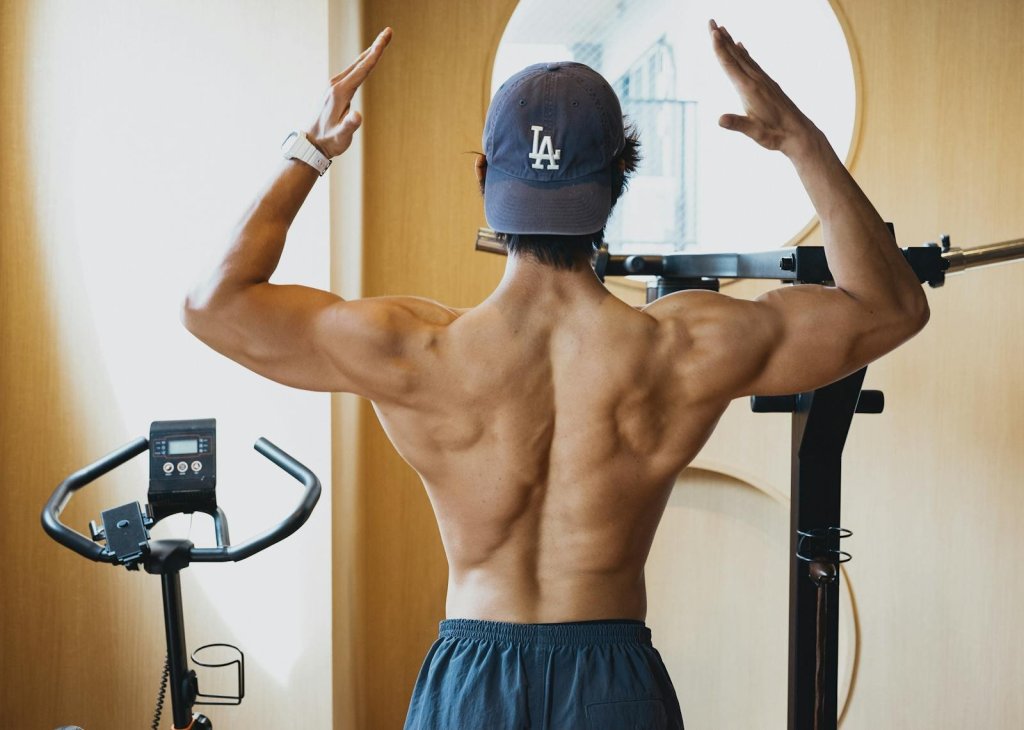
Understanding this matters because many people spend long hours sitting, typing, or training chest-heavy programs without enough upper-back work. A smart middle-trap routine can help balance that by building the muscles that support the shoulder blades and upper back. This article covers the best middle trap exercises, how to do them, common mistakes, and how to fit them into a safe weekly routine. Research published in PubMed Central also suggests exercise setup and arm angle can change how strongly the middle trapezius works, so technique matters.
What the Middle Traps Actually Do
The middle trapezius sits across the upper-mid back and plays a major role in pulling the shoulder blades toward the spine. That action is called scapular retraction. It helps during rows, reverse flies, face pulls, and many posture-focused upper-back drills. The trapezius as a whole also contributes to upper-back and shoulder-blade movement, which is one reason it matters for both exercise performance and daily posture.
Why Middle Trap Exercises Matter
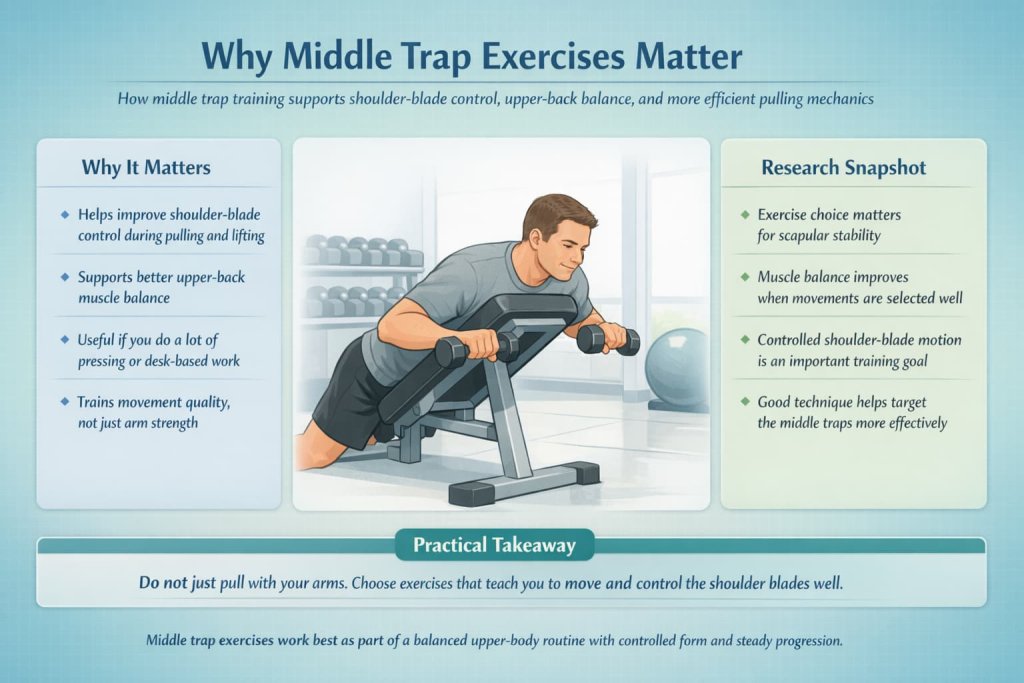
Middle trap exercises are worth doing because they train the muscles that help keep the shoulder blades better controlled during pulling, lifting, and everyday upper-body movement. They may also support a more balanced training plan if you already do a lot of pressing, desk work, or forward-shoulder activities. A systematic review in PubMed Central found that exercise choice matters when the goal is better scapular stability and muscle balance.
A practical takeaway is simple: do not just pull with your arms. Use exercises that teach you to move and control the shoulder blades well.
11 Best Middle Trap Exercises for Better Posture
Build a stronger upper back with these 11 best middle trap exercises that support better posture, shoulder blade control, and balanced pulling strength. From rows to raises, these moves can help you train the middle traps with clean form and fit easily into most upper-body workouts.
1. Seated Cable Row
How to do it:
- Sit tall with your feet planted and hold the handle with both hands.
- Start with your arms extended and your shoulders relaxed.
- Pull the handle toward your lower ribs or upper waist.
- At the end of the rep, gently squeeze your shoulder blades together.
- Pause briefly, then return with control.
- Repeat without shrugging your shoulders up.
Why it works: The seated cable row is one of the most practical middle trap exercises because it combines scapular retraction with a stable pulling pattern. It is easy to scale for beginners and advanced lifters.
Muscles worked: Middle trapezius, rhomboids, posterior deltoids, lats, biceps.
Trainer Tip: Think about moving your shoulder blades first, then finishing with the arms.
2. Chest-Supported Row
How to do it:
- Lie face down on an incline bench with a dumbbell in each hand.
- Let your arms hang straight down.
- Row the weights up by pulling your elbows back.
- Squeeze your shoulder blades together at the top.
- Lower slowly until your arms are straight again.
- Keep your chest on the bench the whole time.
Why it works: The bench support reduces momentum and helps you focus on the upper back instead of swinging the torso. That makes it easier to feel the middle traps doing the work.
Muscles worked: Middle trapezius, rhomboids, posterior deltoids, lats.
Trainer Tip: Use a lighter load and a 1-second squeeze at the top to make this more effective.
3. Bent-Over Dumbbell Row
How to do it:
- Stand with a dumbbell in each hand and hinge at the hips.
- Keep your back flat and knees slightly bent.
- Let the weights hang below your shoulders.
- Pull your elbows back toward your hips or ribs.
- Briefly squeeze the shoulder blades together.
- Lower the dumbbells with control.
Why it works: This classic row builds upper-back strength and teaches the middle traps to work with the rhomboids and rear delts during a strong pulling pattern.
Muscles worked: Middle trapezius, rhomboids, lats, posterior deltoids, biceps.
Trainer Tip: Do not turn this into a shrug. Keep the neck long and shoulders away from the ears.
4. Face Pull
How to do it:
- Set a rope attachment at about upper-chest or face height.
- Hold the rope with both hands and step back until there is tension.
- Pull the rope toward your face while flaring your elbows out.
- Finish with your hands near your temples or ears.
- Squeeze the upper back without arching hard.
- Return slowly to the start.
Why it works: Face pulls train upper-back muscles in a posture-friendly direction and combine scapular retraction with external rotation. They are a strong choice for shoulder-blade control.
Muscles worked: Middle trapezius, lower trapezius, rear deltoids, rotator cuff, rhomboids.
Trainer Tip: Use moderate weight. The goal is clean control, not moving the heaviest stack.
5. Reverse Dumbbell Fly
How to do it:
- Hinge forward with a dumbbell in each hand.
- Keep a soft bend in your elbows.
- Raise your arms out to the sides in a wide arc.
- Lift until your arms are about in line with your shoulders.
- Pause briefly and squeeze your shoulder blades together.
- Lower slowly.
Why it works: The reverse fly is one of the best middle trap exercises for learning controlled scapular retraction without a heavy row. It can also help you feel the back of the shoulders and upper back working together.
Muscles worked: Middle trapezius, rhomboids, posterior deltoids.
Trainer Tip: Keep the movement smooth. Swinging the weights shifts the work away from the target area.
6. Prone T Raise
How to do it:
- Lie face down on a bench or mat.
- Extend your arms straight out to the sides to make a T shape.
- Lift your arms off the floor or bench with your thumbs pointing up.
- Pause briefly at the top.
- Lower with control.
- Repeat for smooth, controlled reps.
Why it works: This exercise places the upper back in a position that strongly challenges scapular control. It is a common rehab-style pattern for the middle traps and surrounding scapular stabilizers. AAOS shoulder-conditioning material also includes bent-over horizontal abduction, which is a similar movement pattern.
Muscles worked: Middle trapezius, posterior deltoids, rhomboids.
Trainer Tip: Small range, high quality. You do not need to lift very high to make it effective.
7. Resistance Band Pull-Apart
How to do it:
- Hold a light resistance band at shoulder height with straight arms.
- Start with your hands about shoulder-width apart.
- Pull the band apart by moving your arms outward.
- Let your shoulder blades come together gently.
- Pause for a moment at full tension.
- Return slowly to the start.
Why it works: The band pull-apart is simple, portable, and excellent for high-quality reps. It works well in warm-ups, posture breaks, or finishing sets.
Muscles worked: Middle trapezius, rhomboids, rear deltoids.
Trainer Tip: Keep your ribs down and avoid leaning back to fake the rep.
8. Scapular Retraction Hold
How to do it:
- Stand or sit tall with your arms by your sides.
- Gently pull your shoulder blades back and slightly down.
- Hold that position for 5 to 10 seconds.
- Relax fully.
- Repeat for several slow reps.
- Keep your neck relaxed the whole time.
Why it works: This low-load drill teaches you what proper scapular retraction feels like. It is especially useful for beginners who struggle to feel their middle traps during bigger exercises.
Muscles worked: Middle trapezius, rhomboids, lower trapezius.
Trainer Tip: Do not over-squeeze. Aim for a firm, controlled hold rather than a hard jam backward.
9. TRX or Suspension Row
How to do it:
- Hold the handles and lean back with your body straight.
- Start with your arms extended.
- Pull your chest toward the handles by driving your elbows back.
- Squeeze the shoulder blades together at the top.
- Lower under control.
- Adjust your foot position to make it easier or harder.
Why it works: Suspension rows train the middle traps in a closed-chain pulling pattern and let you fine-tune difficulty quickly.
Muscles worked: Middle trapezius, rhomboids, lats, rear deltoids, biceps, core.
Trainer Tip: Keep your body in one straight line instead of letting the hips sag.
10. Wall-Supported Trap Raise
How to do it:
- Stand facing a wall with your forearms or hands lightly supported.
- Keep your ribs stacked and neck relaxed.
- Slide your arms upward while keeping control through the shoulder blades.
- Pause briefly in the raised position.
- Return slowly.
- Stay within a pain-free range.
Why it works: Wall-supported variations can help you learn better shoulder-blade motion with less cheating. They are useful when heavier pulling work feels too aggressive.
Muscles worked: Middle trapezius, lower trapezius, serratus anterior.
Trainer Tip: Move slowly and avoid shrugging as your arms go up.
11. Wide-Grip Cable Row
How to do it:
- Sit at a cable row station with a wide handle if available.
- Sit tall and start with the arms extended.
- Pull the handle toward your upper abdomen or lower chest.
- Let your elbows travel out slightly wider than a close row.
- Squeeze your shoulder blades together.
- Return slowly.
Why it works: A wider row angle can shift emphasis toward the upper back and make scapular retraction easier to feel.
Muscles worked: Middle trapezius, rhomboids, posterior deltoids, lats.
Trainer Tip: Think elbow path and shoulder-blade squeeze, not just pulling the handle fast.
Before You Start Middle Trap Exercises
Warm up for 5 to 10 minutes before training. Then do a few light reps of band pull-aparts, wall slides, or easy rows to wake up the upper back. AAOS shoulder-conditioning guidance includes controlled shoulder and scapular exercises, and the CDC recommends adults do muscle-strengthening activity at least 2 days per week.
Use these quick rules before you begin:
- Keep your neck relaxed instead of shrugging toward your ears.
- Pull your shoulder blades back with control, not by jerking.
- Use lighter resistance than you think you need at first.
- Stop if you feel sharp pain, worsening pain, numbness, or unusual joint discomfort.
- Focus on quality reps more than heavy weight.
Are Middle Trap Exercises Actually Effective?
Yes, they can be effective when the exercises match the function of the middle trapezius and are done consistently. Research published in PubMed Central has shown that middle trapezius activity can change based on body position and shoulder angle during scapular-retraction work, which helps explain why some people feel certain exercises much better than others. Studies in PubMed Central have also looked at ways to increase middle trapezius activation while limiting unwanted dominance from nearby muscles during retraction drills.
The bigger point is not to chase one magic movement. It is better to use a few solid middle trap exercises, improve your technique, and progress your volume or resistance over time.
How Often Should You Train the Middle Traps?
For most people, training the middle traps 2 to 3 times per week works well. That fits within the CDC broader recommendation for muscle-strengthening work on at least 2 days per week. You do not need a separate “trap day” unless upper-back development is a major goal.
A simple starting point looks like this:
- 2 to 3 sessions per week
- 2 to 4 middle-trap-focused exercises per session
- 2 to 4 sets per exercise
- 8 to 15 reps for most rows and fly variations
- 10 to 20 reps for lighter band or posture drills
Common Middle Trap Exercise Mistakes
Using too much weight
Heavy loads often turn a middle-trap exercise into a shrug, lower-back swing, or arm-dominant pull.
Letting the neck take over
If your shoulders climb toward your ears, you are usually shifting tension away from the target area.
Rushing the rep
Middle trap exercises often work best with slower tempos and a brief squeeze.
Forgetting shoulder-blade control
Do not just move the handle or dumbbells. Control the shoulder blades too.
Doing only one exercise pattern
Rows are great, but combining rows, reverse flies, and retraction drills usually gives a better result.
Sample Middle Trap Workout
Here is a simple upper-back-focused session:
Beginner Option
- Band pull-apart — 2 sets of 15
- Seated cable row — 3 sets of 10
- Prone T raise — 2 sets of 10
- Scapular retraction hold — 2 sets of 6 holds
Intermediate Option
- Chest-supported row — 3 sets of 10
- Face pull — 3 sets of 12
- Reverse dumbbell fly — 3 sets of 12
- TRX row — 2 sets of 10
Who Should Be Careful First
Use extra caution or get individualized guidance before starting if you have recent shoulder surgery, a current shoulder or neck injury, unexplained arm weakness, numbness, or pain that gets worse during or after the exercise session. Cleveland Clinic advises seeing a provider if upper-back, neck, or head pain lasts more than a week.
FAQs About Middle Trap Exercises
What are the best middle trap exercises for beginners?
Good beginner options include band pull-aparts, seated cable rows, scapular retraction holds, and prone T raises. They are easier to control and help you learn how scapular retraction should feel.
Do middle trap exercises help posture?
They may help support better posture by strengthening muscles that retract the shoulder blades and support upper-back control. They work best alongside general strength training, movement breaks, and ergonomic habits.
How do I know if my middle traps are working?
You will usually feel effort between the shoulder blades rather than mostly in the neck. A light squeeze at the end of rows or reverse flies is a common sign.
Are rows enough for the middle traps?
Rows are excellent, but they are usually even better when combined with reverse-fly or retraction-focused exercises for more complete upper-back training.
How many reps should I do for middle trap exercises?
Most people do well with 8 to 15 reps for rows and fly variations, and 10 to 20 reps for lighter band or control drills.
Can I train middle traps every day?
Light activation work can be done often, but harder strength-focused sessions usually need recovery. Two to three weekly sessions is a practical target for most people.
Conclusion
Middle trap exercises are one of the smartest ways to build a stronger upper back, improve shoulder-blade control, and support better posture habits. The best plan is usually simple: pick a few proven exercises, use controlled form, and stay consistent. Start with easier retraction and rowing patterns, then progress gradually as your control improves.