
The best upper back exercises strengthen the muscles that support your posture, reduce slouching, and help keep your shoulders stable. These exercises target your mid and lower trapezius, rhomboids, rear deltoids, serratus anterior, and upper spinal stabilizers—key areas that influence how you sit, stand, and move.
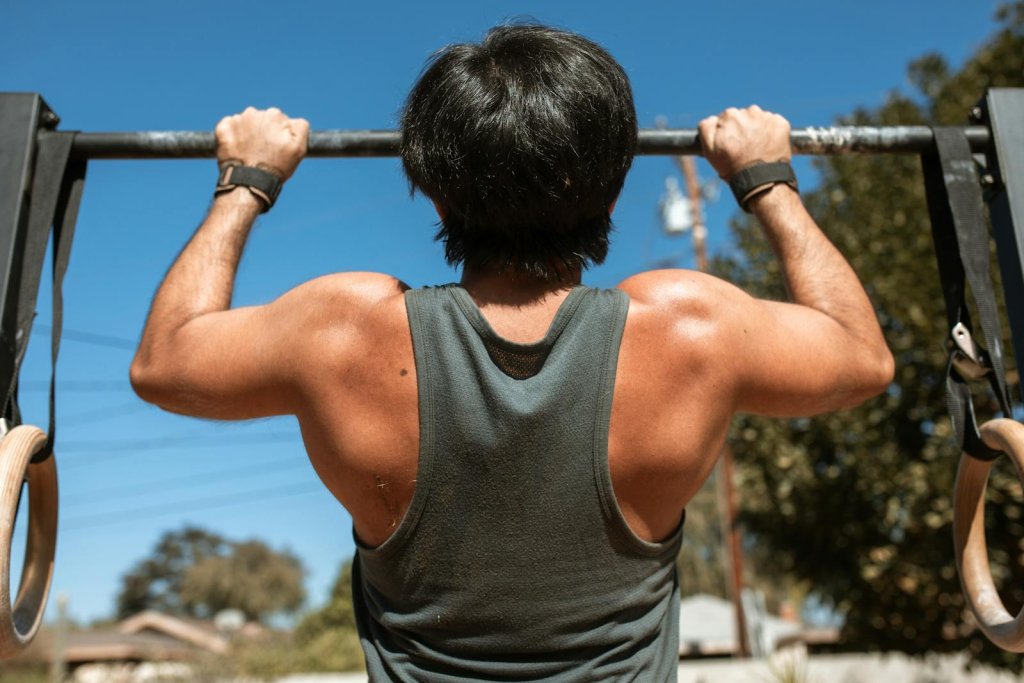
Improving upper back strength is important because weak or underactive muscles in this region often contribute to rounded shoulders, forward head posture, neck tension, and poor movement mechanics. The right exercises can support better alignment, enhance shoulder control, and build long-term back resilience.
In this guide, you’ll find 17 evidence-based upper back exercises, step-by-step instructions, posture tips, variations, and safety notes.
The 17 Best Upper Back Exercises
Strengthening your upper back goes beyond posture—it helps stabilize your shoulders, support your spine, and improve daily movement. Below are the 17 most effective exercises to build a stronger, more balanced upper back.
1. Scapular Retractions
Why It Works
This exercise teaches proper shoulder-blade control, which is essential for improving posture and reducing forward-shoulder rounding. It trains your ability to activate the mid-back muscles without overusing the upper traps or neck.
Muscles Worked
Rhomboids, middle trapezius, lower trapezius, scapular stabilizers
How to Do It
- Sit or stand tall with arms relaxed.
- Pull your shoulder blades straight back as if trying to pinch them together.
- Avoid shrugging upward.
- Hold 1–2 seconds, then release.
- Do 10–15 slow reps.
Trainer Tip
Imagine “sliding” your shoulder blades toward your spine—not lifting them toward your ears.
2. Band Pull-Apart
Why It Works
A simple but powerful exercise for correcting rounded shoulders by strengthening the often-weak posterior shoulder and mid-back muscles.
Muscles Worked
Rear deltoids, rhomboids, middle trapezius
How to Do It
- Hold a resistance band at shoulder height with straight arms.
- Pull the band apart until your arms reach a wide T-shape.
- Keep wrists in line with shoulders.
- Return with control.
- Perform 12–15 reps.
Trainer Tip
Keep your ribs down and core braced to prevent your lower back from arching.
3. Face Pull (Band or Cable)
Why It Works
Face pulls strengthen the entire upper back and rotator cuff, supporting shoulder health and improving posture.
Muscles Worked
Rear delts, rhomboids, lower traps, rotator cuff stabilizers
How to Do It
- Set a band or cable at upper-chest height.
- Pull the handles toward your forehead.
- Flare elbows slightly outward.
- Squeeze your upper back.
- Repeat 10–12 reps.
Trainer Tip
Use a slow tempo—this exercise works best when controlled and precise.
4. Scapular Wall Slides
Why It Works
Improves shoulder mobility, strengthens postural muscles, and enhances movement overhead.
Muscles Worked
Lower traps, serratus anterior, upper-thoracic extensors
How to Do It
- Stand with your back and arms against the wall in a “W” position.
- Slide your arms upward while keeping contact as much as possible.
- Lower slowly.
- Repeat 8–12 reps.
Trainer Tip
If your lower back arches, move your feet slightly forward to stay neutral.
5. Prone I-T-Y Raises
Why It Works
Targets hard-to-activate postural muscles and improves shoulder stability across multiple angles.
Muscles Worked
Middle traps, lower traps, rhomboids, rear delts
How to Do It
- Lie face-down or on an incline bench.
- Raise arms to form an I, then T, then Y.
- Keep neck neutral.
- Perform 6–10 cycles.
Trainer Tip
Use light weights (or none); this is about control and endurance, not heavy loading.
6. Superman (Back Extension)
Why It Works
Strengthens the thoracic spine and supports healthy upright posture.
Muscles Worked
Thoracic extensors, erector spinae, glutes
How to Do It
- Lie face down.
- Lift chest and legs slightly.
- Hold 1–2 seconds.
- Lower with control.
- Do 10–12 reps.
Trainer Tip
Think of reaching long through your fingers and toes rather than lifting high.
7. Inverted Row
Why It Works
A bodyweight pull that trains the entire upper back and improves pulling strength.
Muscles Worked
Lats, mid traps, rhomboids, rear delts, biceps
How to Do It
- Position your body under a bar or TRX.
- Keep your body straight.
- Pull your chest toward the bar.
- Lower slowly.
- Perform 8–12 reps.
Trainer Tip
The lower you position yourself (more horizontal), the harder the exercise becomes.
8. Bent-Over Dumbbell Row
Why It Works
A classic strength exercise for building back thickness and improving scapular control.
Muscles Worked
Lats, rhomboids, trapezius, rear deltoids
How to Do It
- Hinge forward with a flat back.
- Pull dumbbells toward your hips.
- Lower slowly.
- Do 8–12 reps.
Trainer Tip
Maintain a long spine—avoid rounding your chest toward the ground.
9. Single-Arm Dumbbell Row
Why It Works
Supports unilateral balance, shoulder stability, and upper-back engagement.
Muscles Worked
Upper back, lats, rhomboids, core stabilizers
How to Do It
- Place one hand on a bench.
- Row the dumbbell toward your hip.
- Squeeze shoulder blade at the top.
- Perform 8–12 reps each side.
Trainer Tip
Drive the elbow backward toward your hip—not straight upward.
10. Incline Chest-Supported Row
Why It Works
Removes momentum and lower-back strain, allowing perfect upper-back isolation.
Muscles Worked
Rhomboids, lats, middle traps, rear delts
How to Do It
- Lie chest-down on an incline bench.
- Row dumbbells upward.
- Lower slowly.
- Do 10–12 reps.
Trainer Tip
Keep your chest glued to the bench—don’t lift your torso.
11. Reverse Fly (Dumbbells or Bands)
Why It Works
Strengthens the rear shoulders and postural muscles that counteract slouching.
Muscles Worked
Rear delts, rhomboids, mid traps
How to Do It
- Bend forward slightly.
- Open arms outward.
- Lower slowly.
- Perform 12–15 reps.
Trainer Tip
Use light weights to prevent shrugging and neck tension.
12. Seated Cable Row
Why It Works
Builds balanced back strength, supporting posture and pulling power.
Muscles Worked
Lats, traps, rhomboids, rear delts
How to Do It
- Sit tall with neutral spine.
- Pull handles toward your torso.
- Squeeze shoulder blades.
- Perform 8–12 reps.
Trainer Tip
Avoid leaning back; keep the movement in your upper back, not your lower spine.
13. Lat Pulldown (or Band Pulldown)
Why It Works
Strengthens the lats and supporting upper-back muscles for better pulling and posture.
Muscles Worked
Lats, mid traps, rhomboids, rear delts
How to Do It
- Grip wider than shoulder width.
- Pull bar toward upper chest.
- Keep elbows pointed downward.
- Perform 8–12 reps.
Trainer Tip
Cue yourself to “pull the shoulder blades down first” before bending your elbows.
14. Trap Raise / Y-Raise
Why It Works
Improves scapular upward rotation and overhead mobility—key for shoulder health.
Muscles Worked
Lower traps, mid traps, rear delts
How to Do It
- Stand or lean on an incline bench.
- Raise arms into a Y-shape.
- Lower slowly.
- Perform 10–12 reps.
Trainer Tip
Move slowly—lower traps respond best to controlled repetitions.
15. Wall Angels
Why It Works
Enhances shoulder mobility, strengthens stabilizers, and reduces posture issues.
Muscles Worked
Serratus anterior, lower traps, thoracic extensors
How to Do It
- Stand flat against a wall.
- Raise arms from W to overhead.
- Maintain wall contact.
- Perform 8–12 reps.
Trainer Tip
Expect tightness—this is normal. Focus on smooth motion, not perfect range.
16. Plank Row (Renegade Row)
Why It Works
Combines core stabilization with upper-back strengthening, improving total-body control.
Muscles Worked
Upper back, lats, shoulders, core stabilizers
How to Do It
- Begin in a plank holding dumbbells.
- Row one dumbbell at a time.
- Keep hips stable.
- Perform 6–10 reps per side.
Trainer Tip
Widen your feet if your hips rotate—stable hips make this exercise more effective.
17. Shrug or Scapular Pull-Up
Why It Works
Strengthens the scapular muscles responsible for shoulder elevation and stability.
Muscles Worked
Upper traps, mid traps, scapular stabilizers
How to Do It
Option 1: Dumbbell Shrugs
- Lift shoulders upward slightly, then lower with control.
Option 2: Scapular Pull-Ups
- Hang from a bar.
- Lift your body slightly by pulling shoulder blades downward.
- Lower slowly.
Perform 10–12 reps.
Trainer Tip
Avoid excessive neck movement—keep your chin tucked and shoulders relaxed.
How to Use This Upper Back Workout Guide
Follow these tips for best results:
- Choose 4–6 exercises, mixing bodyweight, dumbbell, and banded movements.
- Perform 2–3 sessions per week with at least one rest day in between.
- Aim for 8–12 reps and 1–4 sets per exercise, depending on your level.
- Move slowly and maintain a neutral neck and spine.
- Prioritize form over weight.
- If you feel sharp or radiating pain, stop and reassess your technique.
Why Upper Back Exercises Matter
Strengthening your upper back provides several science-supported benefits:
- Helps improve posture and reduce forward shoulder rounding
- Supports healthier shoulder movement and stability
- Reduces neck and upper-back fatigue from sitting or desk work
- Enhances pulling strength for daily activities and workouts
- Encourages better breathing mechanics through thoracic extension
- Helps balance overactive chest muscles
- Supports safer overhead movement and lifting mechanics
Major health organizations, including ACSM, emphasize performing resistance training at least twice per week to support muscular strength, posture, and long-term musculoskeletal health.
When Not to Do These Exercises (Red Flags & Warnings)
Avoid or modify upper back exercises if you have:
- Sharp or radiating pain in the neck, upper back, or shoulders
- Recent shoulder dislocation or rotator cuff injury
- Uncontrolled upper spinal conditions
- Nerve symptoms (numbness, tingling, weakness)
- Acute inflammation or swelling
Stop exercising immediately if you experience:
- Sudden shooting pain
- Dizziness or lightheadedness
- Worsening symptoms during or after the workout
If you have existing neck, shoulder, or spine issues, consult a licensed healthcare professional before starting a new exercise program.
Frequently Asked Questions (FAQ)
1. How often should I do upper back exercises?
Aim for 2–3 sessions per week, following ACSM resistance training guidelines.
2. Can upper back exercises fix posture?
They may help improve posture by strengthening the muscles that counter slouching, but consistency is key.
3. Are upper back exercises safe for beginners?
Yes—most can be done with light resistance. Start slowly and focus on form.
4. What equipment is best for upper back workouts?
Resistance bands, dumbbells, a cable machine, or simply your body weight.
5. How long does it take to notice posture improvement?
Most people begin noticing changes in 4–8 weeks of consistent training.
6. Do upper back exercises help with neck tension?
Strengthening the upper back may help reduce neck strain caused by poor posture.
7. Should I stretch after upper back workouts?
Yes—gentle chest, neck, and lat stretches help restore balance.
Conclusion
Strengthening your upper back supports better posture, healthier shoulder movement, and long-term spinal stability. Start with a few exercises, focus on slow, controlled form, and build consistency over time. If you experience sharp or lasting pain, consult a healthcare professional. Even a few minutes of targeted upper-back work each week can make a meaningful difference in how you feel and move.