
Neck exercises for saggy neck focus on improving muscle tone, posture, and control in the neck and jawline area—but they do not tighten loose skin directly. Understanding what these exercises can and cannot do helps you set realistic expectations and choose a safe, evidence-based approach.
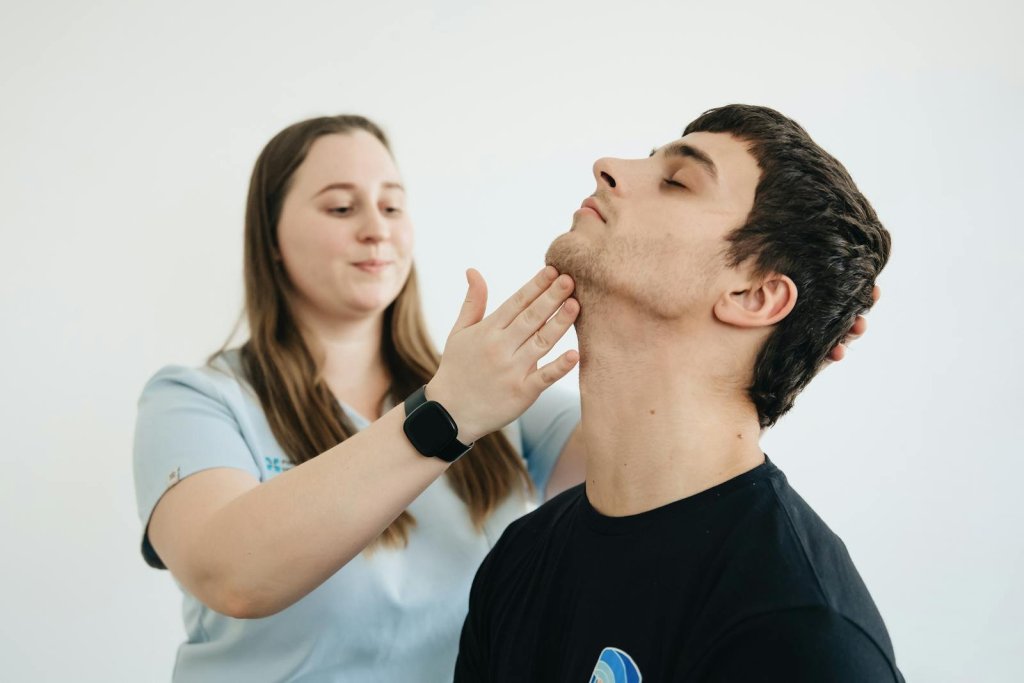
A sagging neck (often called “turkey neck”) usually develops due to a combination of aging skin, reduced collagen and elastin, posture habits, and changes in the underlying neck muscles. While exercise cannot replace medical or cosmetic treatments, consistent, gentle neck exercises may support muscle firmness, postural alignment, and overall neck appearance when used as part of a broader skin-health routine.
What Causes a Saggy Neck?
Sagging in the neck area is rarely due to one single factor. Common contributors include:

- Natural aging: Gradual loss of collagen and elastin reduces skin elasticity
- Postural strain: Forward-head posture increases stress on neck tissues
- Muscle changes: The platysma muscle can lose tone over time
- Sun exposure: UV damage accelerates visible skin aging
- Genetics and lifestyle: Smoking, weight changes, and skin type all play a role
Organizations such as the American Academy of Dermatology explain that sagging skin is a normal age-related change, not a sign of poor health.
Can Neck Exercises Really Help a Saggy Neck?
Neck exercises may help improve muscle tone and neuromuscular control, especially when sagging is mild and related to posture or muscle inactivity. However:
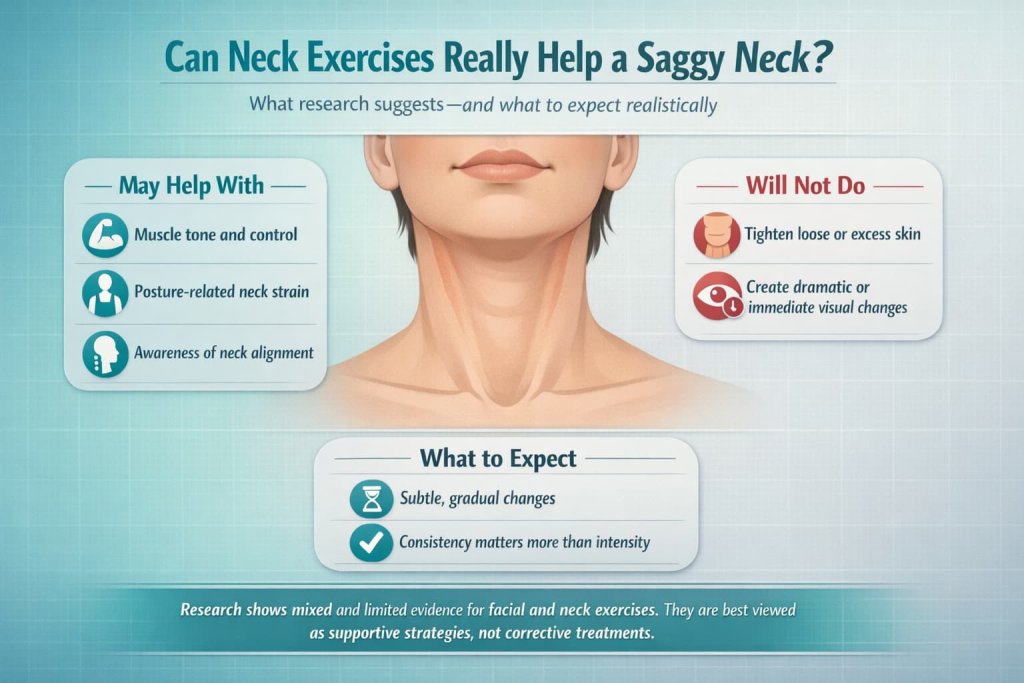
- They do not tighten loose skin
- Results tend to be subtle and gradual
- Consistency matters more than intensity
Clinical reviews published in peer-reviewed journals note that evidence for facial and neck exercises is limited and mixed, meaning they should be viewed as supportive—not corrective—strategies.
6 Best Neck Exercises for Saggy Neck
These six neck exercises focus on gentle muscle activation, posture support, and controlled movement to help improve neck tone. When practiced consistently and without strain, they may support a firmer-looking neckline as part of a safe, natural routine.
1. Neck Flexion Hold
How to do it
- Lie on your back with knees bent
- Slowly lift your head just off the floor
- Keep your chin slightly tucked
- Hold for 5 seconds, then lower slowly
Why it works
Builds endurance in deep neck flexor muscles that support posture.
Muscles worked
Deep cervical flexors
Trainer Tip
Stop if you feel shaking or neck discomfort.
2 . Postural Chin Tuck
How to do it
- Sit against a wall with head touching the wall
- Gently draw your chin straight back (no tilting)
- Hold 5 seconds and release
Why it works
Reinforces neutral head alignment and reduces forward-head posture stress.
Muscles worked
Deep neck flexors, upper cervical stabilizers
Trainer Tip
Think “lengthen the neck,” not “force the chin back.”
3. Chin Lift
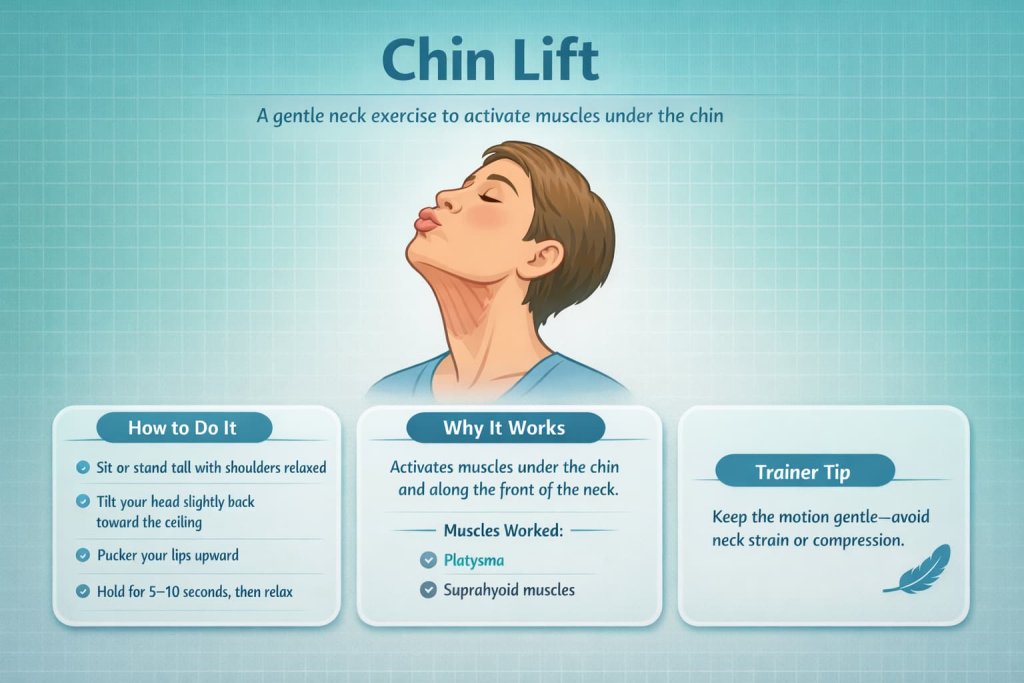
How to do it
- Sit or stand tall with shoulders relaxed
- Tilt your head slightly back toward the ceiling
- Pucker your lips upward as if kissing the ceiling
- Hold for 5–10 seconds, then relax
Why it works
This movement activates muscles under the chin and along the front of the neck.
4. Jaw Release Press
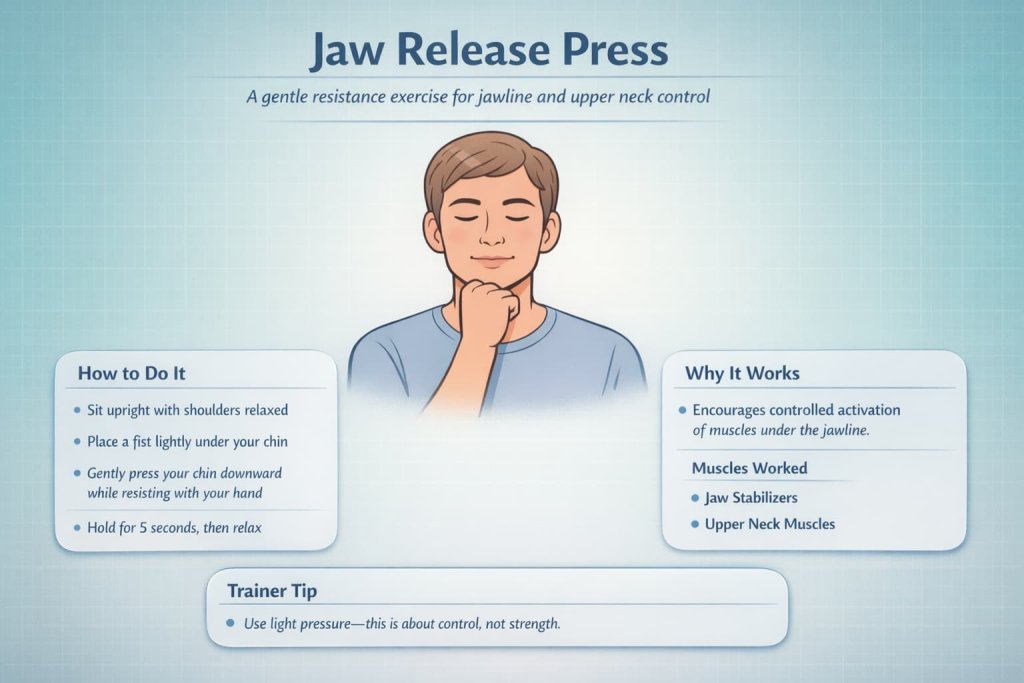
How to do it
- Sit upright and place a fist under your chin
- Gently press your chin downward while resisting with your hand
- Hold for 5 seconds, then relax
Why it works
Encourages controlled activation of the muscles under the jawline.
5. Side Neck Lift
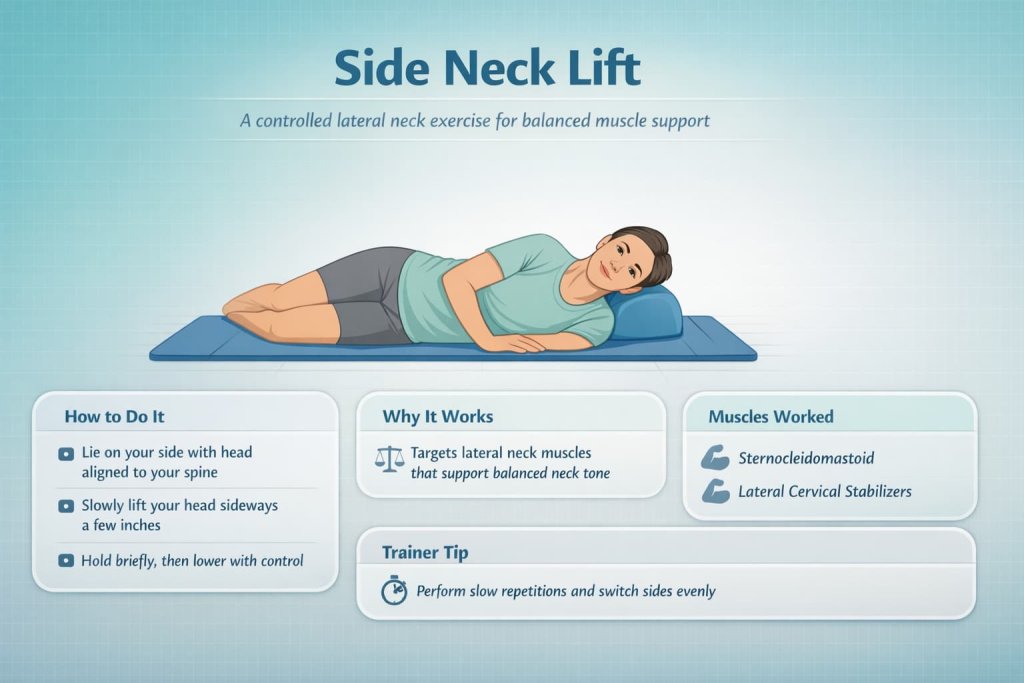
How to do it
- Lie on your side with head aligned to your spine
- Slowly lift your head sideways a few inches
- Hold briefly, then lower with control
Why it works
Targets lateral neck muscles that support balanced neck tone.
6. Platysma Activation (“Eee–Ooo”)
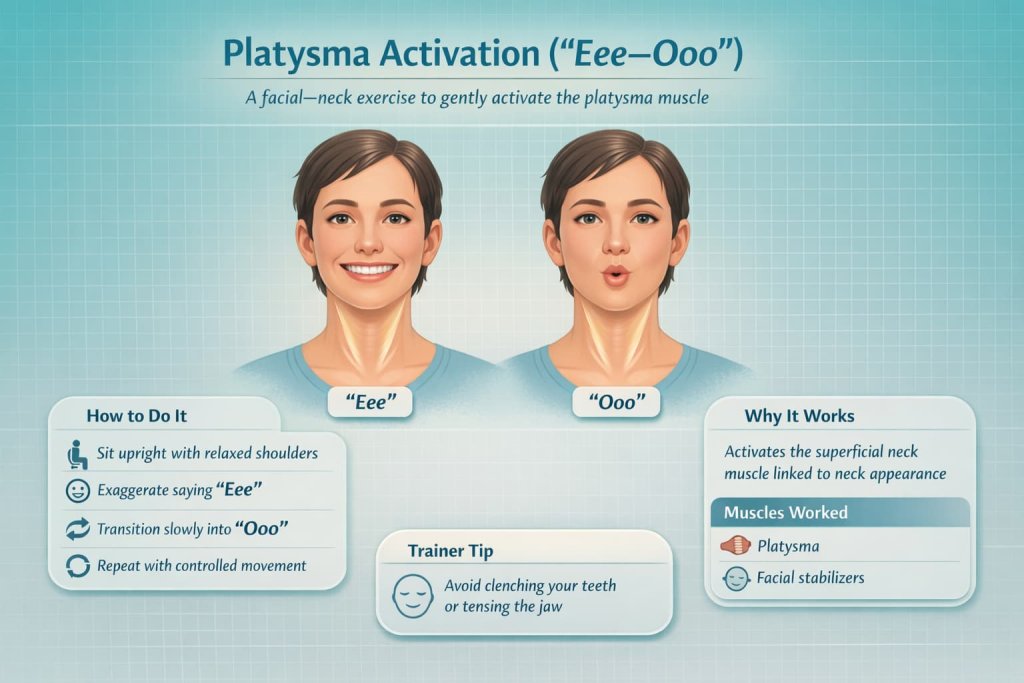
How to do it
- Sit upright and exaggerate saying “Eee”
- Then transition slowly into “Ooo”
- Repeat for controlled repetitions
Why it works
Activates the superficial neck muscle linked to neck appearance.
How Often Should You Do Neck Exercises?
- Frequency: 3–5 days per week
- Volume: 1–2 sets of 6–10 controlled reps
- Progression: Increase control and consistency—not resistance
The American College of Sports Medicine emphasizes gradual loading and proper form for small stabilizing muscles like those in the neck.
Safety Guidelines for Neck Exercises
- Avoid fast, jerky movements
- Stop immediately if you feel pain, dizziness, or nerve symptoms
- Never stretch or force the neck aggressively
- Keep breathing relaxed and steady
The Cleveland Clinic advises medical guidance if neck pain or stiffness persists.
Who Should Be Cautious With Neck Exercises?
You should consult a healthcare professional before starting if you have:
- A history of neck injury or surgery
- Cervical disc issues or nerve pain
- Chronic headaches triggered by neck movement
- Balance or neurological conditions
When to Seek Professional Guidance
Seek professional advice if:
- Sagging is sudden or asymmetrical
- Neck pain worsens with exercise
- You experience numbness, tingling, or weakness
A physical therapist or clinician can assess whether posture, muscle imbalance, or other factors are contributing.
FAQs About Neck Exercises for Saggy Neck
Do neck exercises tighten loose skin?
No. They may improve muscle tone and posture, but loose skin is primarily a skin-quality issue.
How long before I see results?
If changes occur, they are usually subtle and may take 6–8 weeks of consistency.
Are neck exercises safe for older adults?
Yes, when performed gently and without pain.
Can posture really affect neck sagging?
Yes. Forward-head posture increases strain on neck tissues and can worsen appearance.
Should I use weights for neck exercises?
No. Bodyweight and light resistance are sufficient for most people.
Do dermatologists recommend neck exercises?
Most emphasize sun protection, skin care, and realistic expectations. Exercises may be supportive, not corrective.
Conclusion
Neck exercises for saggy neck offer a low-risk, natural way to support muscle tone and posture, but they are not a cure for loose skin. When combined with good posture, sun protection, and healthy lifestyle habits, they may help improve how your neck looks and feels over time.
If your goal is major visible tightening, consult a qualified healthcare or dermatology professional to explore evidence-based options.
This content is for informational purposes only and not medical advice.