
Outer thigh exercises mainly strengthen your hip abductors, especially the gluteus medius and gluteus minimus, which help support hip stability, leg alignment, and everyday movement. That matters because stronger outer hips can make walking, climbing stairs, single-leg balance, and lower-body training feel more controlled and more stable.
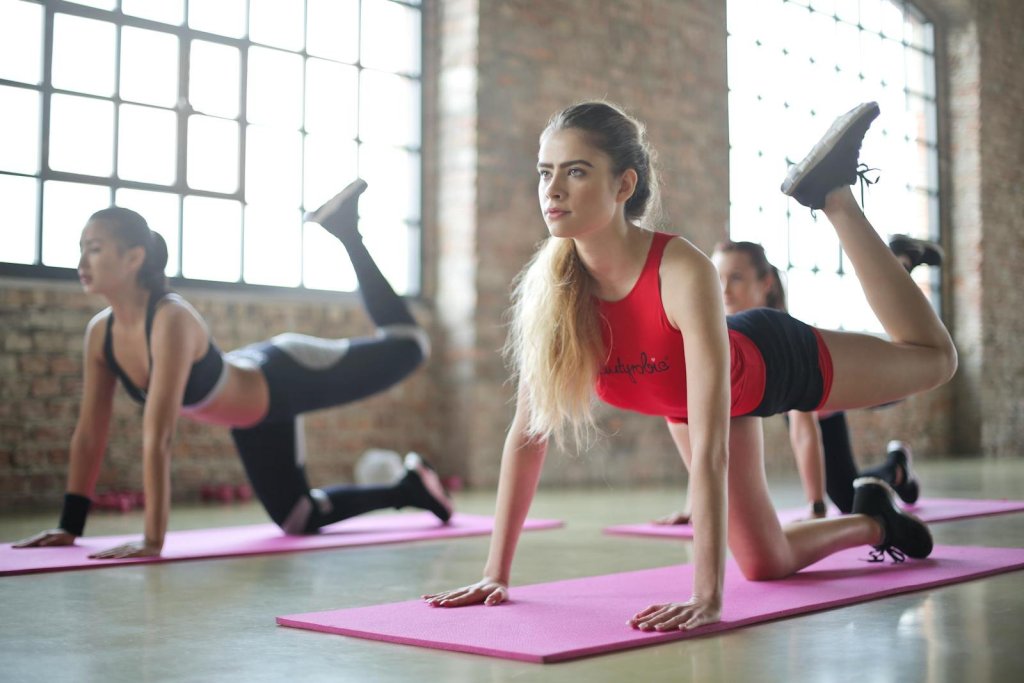
In practical terms, the best outer thigh exercises usually include a mix of side-lying work, banded standing drills, and single-leg stability movements. Authoritative sources such as the American Academy of Orthopaedic Surgeons, ACE, and NHS inform all support hip-abduction-based training as part of lower-body strength and movement programs. Research reviews also show that exercise selection matters when the goal is to challenge the gluteal muscles more effectively.
What Are Outer Thigh Exercises?
Outer thigh exercises are movements that train the muscles on the outside of the hip and upper thigh. The main target is usually the hip abductor group, including the gluteus medius, gluteus minimus, and tensor fasciae latae. These muscles help move the leg away from the body and help keep the pelvis level when you stand, walk, or balance on one leg, as described in PubMed.
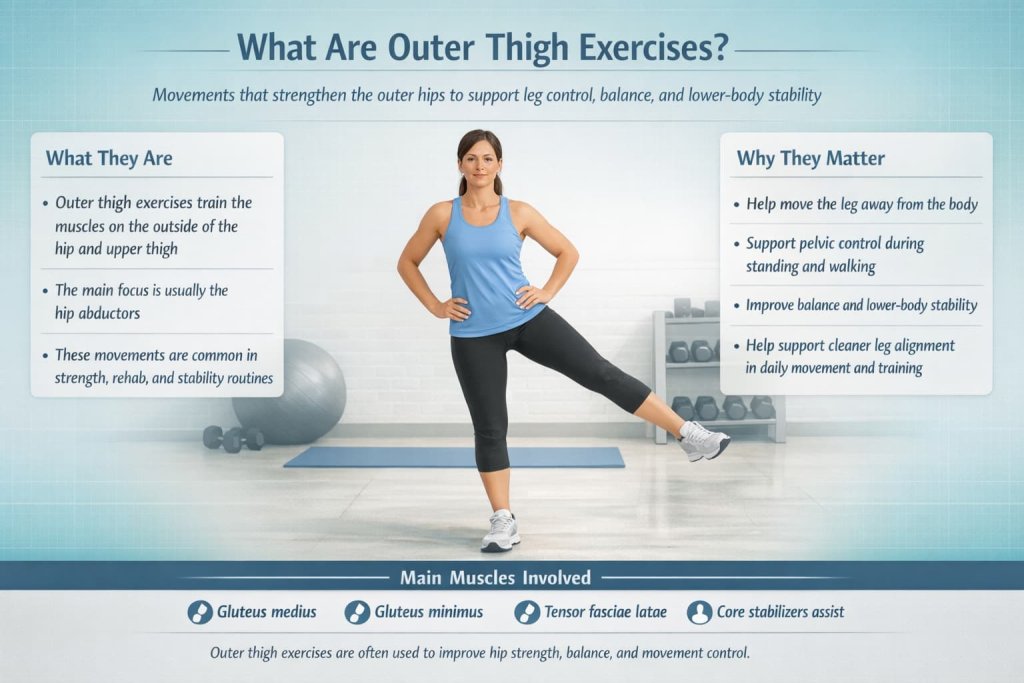
People often search for outer thigh exercises because they want to tone the side of the legs. That can be part of the goal, but function comes first. Stronger hip abductors support pelvic control, knee tracking, and lower-body stability during daily activity and exercise. ACE also notes that the gluteus medius plays an important role in hip and pelvic stabilization during weight-bearing movement.
Benefits of Outer Thigh Exercises
Outer thigh exercises can help:
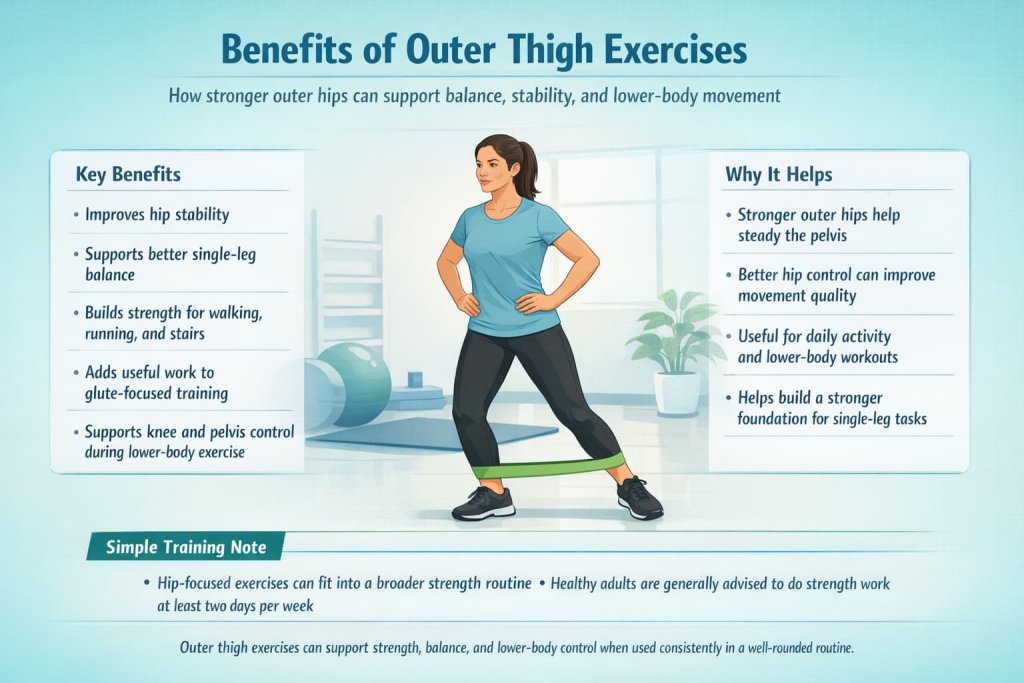
- Improve hip stability
- Support better single-leg balance
- Build strength for walking, running, and stairs
- Add useful work for glute-focused training
- Support knee and pelvis control during lower-body exercise
For healthy adults, general strength work is recommended at least two days per week by the American College of Sports Medicine. Hip-focused exercises can fit into that broader strength plan.
9 Best Outer Thigh Exercises
Target your outer hips with these 9 effective outer thigh exercises designed to improve strength, stability, and lower-body control. These moves can help build stronger, leaner legs while supporting better balance and everyday movement.
1. Side-Lying Leg Raise
How to do it:
- Lie on your side with your bottom knee bent for support and your top leg straight.
- Stack your hips so they do not roll backward.
- Lift the top leg toward the ceiling in a slow, controlled motion.
- Pause briefly at the top.
- Lower the leg with control and repeat before switching sides.
Why it works: This is one of the simplest and most practical outer thigh exercises. The American Academy of Orthopaedic Surgeons hip conditioning program includes side-lying hip abduction, and ACE also highlights it as a key gluteus medius exercise. It is easy to learn and helps you feel the target area clearly without needing much equipment.
Muscles worked: The main emphasis is on the gluteus medius and gluteus minimus, with help from the tensor fasciae latae and core stabilizers.
Trainer Tip: Keep the movement small and clean. Lifting too high often shifts the work away from the outer hip.
2. Clamshell
How to do it:
- Lie on your side with your knees bent and feet together.
- Keep your hips stacked and your heels touching.
- Lift the top knee while keeping your feet together.
- Pause, then lower slowly.
- Repeat on both sides.
Why it works: The clamshell is one of the most common hip-abductor exercises used in rehab and strength programs. It is beginner-friendly and lets you train the outer hip without standing or balancing. A JOSPT study identified the clam as one of the more useful choices when the goal is to challenge the gluteals while limiting excess tensor fasciae latae activity.
Muscles worked: This variation mainly trains the gluteus medius, with support from the gluteus minimus and deep hip stabilizers.
Trainer Tip: Do not roll your torso backward to open the knee higher. The range should stay controlled.
3. Standing Hip Abduction
How to do it:
- Stand tall next to a wall or chair for support.
- Shift your weight into one leg.
- Lift the other leg out to the side without leaning your torso.
- Pause briefly.
- Lower with control and repeat before switching sides.
Why it works: This move trains the outer thigh in a more upright, functional position. It can be a good step up from floor work because it adds balance and posture control. It also resembles the way the hip abductors work during walking and single-leg support.
Muscles worked: The main work comes from the gluteus medius and gluteus minimus on the moving side, while the standing leg also works to stabilize the pelvis.
Trainer Tip: Keep your toes mostly facing forward. Turning the foot too far out can change the feel of the exercise.
4. Lateral Band Walk
How to do it:
- Place a loop band around your ankles or just above your knees.
- Stand with soft knees and a small athletic stance.
- Step sideways with one foot.
- Follow with the other foot without letting the band go slack.
- Continue for several steps, then return in the other direction.
Why it works: Lateral band walks add constant tension and make the outer hips work through repeated side steps. They are popular in both warm-ups and strength sessions because they are simple, scalable, and easy to feel. Research and coaching sources often include sidestepping variations when targeting the gluteal muscles.
Muscles worked: The gluteus medius is the main driver, with assistance from the gluteus minimus, tensor fasciae latae, and trunk stabilizers.
Trainer Tip: Avoid bouncing side to side. Stay low, keep tension on the band, and move with short, deliberate steps.
5. Monster Walk
How to do it:
- Put a loop band around your ankles or above your knees.
- Bend your knees slightly and hinge your hips a little.
- Step diagonally forward and outward with one foot.
- Follow with the other foot while keeping band tension.
- Continue for several steps, then reverse the pattern.
Why it works: Monster walks train the outer hips while also adding a forward movement pattern. ACE specifically includes monster walks among gluteus medius strengthening options, which makes them a strong fit for an outer thigh routine.
Muscles worked: This drill works the gluteus medius and minimus, with extra contribution from the gluteus maximus and core as you maintain position.
Trainer Tip: Keep your hips level and your steps controlled. Rushing usually makes the band work easier, not harder.
6. Fire Hydrant
How to do it:
- Start on all fours with your hands under your shoulders and knees under your hips.
- Brace your trunk to keep your spine steady.
- Lift one knee out to the side while keeping the knee bent.
- Pause briefly at the top.
- Lower with control and repeat before switching sides.
Why it works: The fire hydrant is a simple quadruped hip-abduction exercise that challenges the outer hip without needing to stand. It is often used as a beginner-to-intermediate glute activation move and fits well between clamshells and more advanced standing patterns. The JOSPT paper also examined quadruped-based glute work in the context of gluteal targeting.
Muscles worked: The gluteus medius and minimus are the main targets, while the trunk and shoulders stabilize your body position.
Trainer Tip: Do not twist through the lower back to lift the knee higher. The movement should come from the hip.
7. Side Plank Leg Lift
How to do it:
- Set up in a side plank on your forearm or hand.
- Stack your legs and lift your hips.
- Raise the top leg while keeping your body in a straight line.
- Lower the leg with control.
- Complete your reps, then switch sides.
Why it works: This exercise combines hip abduction with trunk stability. ACE has featured side-plank-based glute exercises because they challenge the outer hip while also training lateral core control. That makes this a stronger choice when basic floor exercises start feeling too easy.
Muscles worked: The top leg targets the gluteus medius and minimus, while the lower side of the body works hard through the obliques, shoulder, and lateral hip stabilizers.
Trainer Tip: Use the bent-knee version first if the full side plank feels too demanding.
8. Single-Leg Wall Lean
How to do it:
- Stand sideways next to a wall.
- Lift the knee closest to the wall to about hip height.
- Press that bent leg gently into the wall.
- Keep your standing foot rooted and your pelvis level.
- Hold, then relax and switch sides.
Why it works: ACE highlights the isometric single-leg wall lean as a strong gluteus medius drill. It teaches the standing hip to stabilize the pelvis, which is exactly what the outer hip has to do during gait and single-leg tasks. This is a great option for people who want a low-impact but very focused challenge.
Muscles worked: The standing side gluteus medius is the main target, supported by the gluteus minimus and foot-to-core stabilizers.
Trainer Tip: Think about getting tall through the standing side instead of sinking into the hip.
9. Curtsy Lunge
How to do it:
- Stand tall with your feet hip-width apart.
- Step one leg behind and slightly across the other leg.
- Lower into a controlled lunge while keeping your chest upright.
- Push through the front foot to return to standing.
- Repeat, then switch sides.
Why it works: The curtsy lunge adds a larger movement pattern than classic abduction drills. While it is not as isolated as a side-lying raise or clamshell, many people feel the outer hips working because the front leg has to resist pelvic drop and control position. It can be useful once you already have good control in simpler drills. This is more of a strength-and-coordination option than a rehab-style starter move.
Muscles worked: The gluteus medius helps stabilize the front hip, while the gluteus maximus, quads, hamstrings, and adductors also contribute.
Trainer Tip: Keep the step moderate. Crossing too far behind can make the movement feel awkward or unstable.
Which Outer Thigh Exercises Are Best for Beginners?
For most beginners, these are the easiest places to start:
- Side-lying leg raise
- Clamshell
- Standing hip abduction
- Fire hydrant
These exercises are easier to control and let you focus on clean movement before adding bands, longer holds, or more demanding balance work. The American Academy of Orthopaedic Surgeons hip conditioning program is a useful model for simple hip strengthening progressions.
How Often Should You Do Outer Thigh Exercises?
A practical starting point is two to three sessions per week, depending on your current routine and recovery. That fits well with American College of Sports Medicine guidance for regular muscle-strengthening activity and aligns with how many rehab-style hip programs are structured. NHS inform also recommends building up gradually and monitoring how your body responds.
A simple approach is:
- Pick 4 to 6 exercises
- Perform 1 to 3 sets each
- Use 8 to 15 reps for controlled reps, or 15 to 30 seconds for holds
- Increase reps, hold time, or band tension over time
Common Mistakes to Avoid With Outer Thigh Exercises
Letting the Hips Rotate
When the pelvis rolls backward or forward, the target muscles may stop doing as much of the work.
Lifting Too High
A bigger range is not always better. On side-lying moves, going too high often changes the exercise.
Rushing Band Walks
Short, controlled steps usually keep better tension on the outer hips.
Ignoring Pain Signals
NHS inform uses a pain-monitoring approach and notes that mild discomfort may be acceptable, while higher pain levels suggest the exercise may be too much right now.
Safety Tips Before You Start
Warm up first with a few minutes of easy movement. If you are returning after injury, surgery, or persistent hip or knee pain, get individualized advice from a qualified clinician before starting. The American Academy of Orthopaedic Surgeons also advises that exercise programs should match your condition and current ability.
Stop and seek professional guidance if:
- Pain is sharp or worsening
- You cannot control the movement
- Symptoms spread down the leg
- The hip feels unstable or gives way
- Pain stays elevated after exercise
FAQ
Do Outer Thigh Exercises Make Your Legs Leaner?
They can help strengthen and develop the muscles around the hips and thighs, but they do not remove fat from one area by themselves. Body composition changes depend on overall activity, nutrition, sleep, and consistency.
What Muscles Do Outer Thigh Exercises Target?
They mainly target the hip abductors, especially the gluteus medius and gluteus minimus, with some contribution from the tensor fasciae latae.
Are Outer Thigh Exercises Good for Knee Support?
They can help support lower-body alignment because the hip muscles contribute to pelvis and leg control. That does not mean they fix every knee issue, but stronger hips are often part of broader lower-body programs.
Can I Do Outer Thigh Exercises Every Day?
Some light activation work may be fine daily, but harder strength sessions usually work better with recovery between them. Two to three focused sessions per week is a sensible starting point for many people.
Do I Need Bands for Outer Thigh Exercises?
No. Several excellent options, such as clamshells, side-lying leg raises, fire hydrants, and wall leans, can be done without equipment.
What Is the Best Outer Thigh Exercise at Home?
The best home option is often the one you can do well and consistently. For many people, side-lying leg raises and lateral band walks are the most practical starting choices.
Are Outer Thigh Exercises the Same as Glute Med Exercises?
Often, yes. Many “outer thigh” routines are really gluteus medius and hip abductor routines, even if they are described with more general fitness language.
Conclusion
Outer thigh exercises are not just about appearance. They are a smart way to build stronger hips, better balance, and more stable lower-body movement. Start with a few simple drills, focus on control, and progress gradually. A consistent routine built around quality reps usually works better than chasing harder exercises too soon.
For a practical plan, choose 4 or 5 of the exercises above and do them two to three times per week with steady progression.
References
- Moore D, Semciw AI, Pizzari T. A Systematic Review and Meta-Analysis of Common Therapeutic Exercises That Generate Highest Muscle Activity in the Gluteus Medius and Gluteus Minimus Segments. International Journal of Sports Physical Therapy. 2020.
- Lanza MB, Balshaw TG, Folland JP. Systematic Review of the Importance of Hip Muscle Strength, Activation, and Structure in Balance and Mobility Tasks. 2022.