
Gluteus minimus exercises are targeted movements that strengthen the deepest glute muscle responsible for hip stability, balance, and smooth walking mechanics.
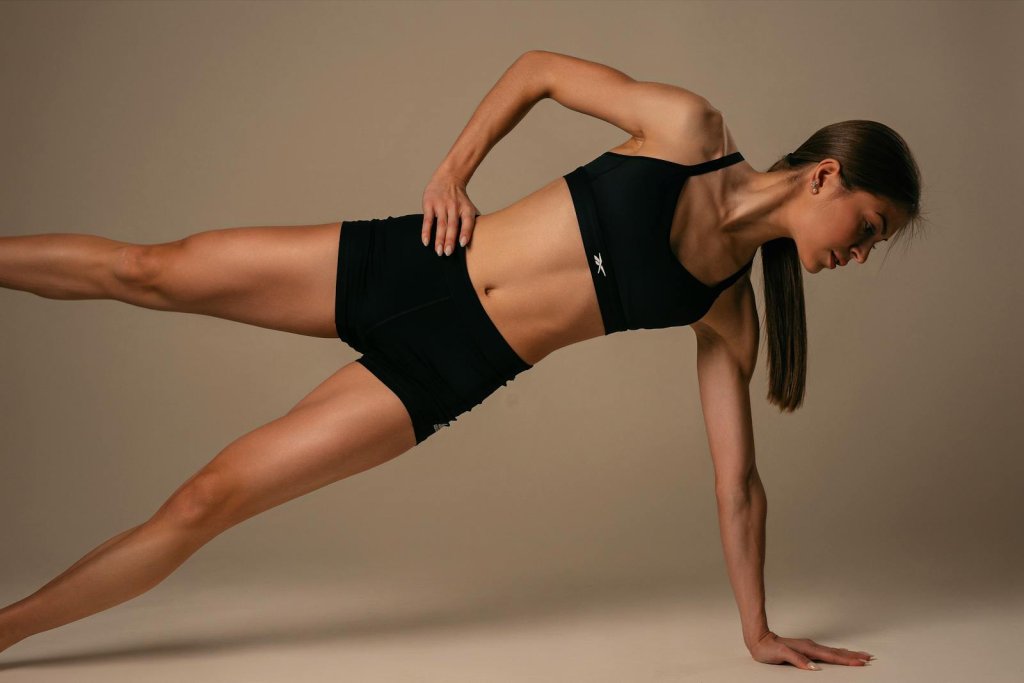
Strengthening this often-overlooked muscle is important because weak gluteus minimus function is commonly linked to hip instability, poor single-leg control, and increased stress on the knees and lower back.
When trained correctly, gluteus minimus exercises may help support:
- Better pelvic and hip stability during walking and stairs
- Improved balance and coordination
- Reduced compensation from the hip flexors and TFL
- Safer lower-body strength and movement patterns
Clinical and fitness guidelines from organizations such as the American College of Sports Medicine emphasize strengthening the hip abductors as part of a balanced lower-body program.
What Is the Gluteus Minimus?
The gluteus minimus is the smallest and deepest of the three glute muscles. It lies beneath the gluteus medius on the outer surface of the pelvis and attaches to the upper thigh bone (femur).
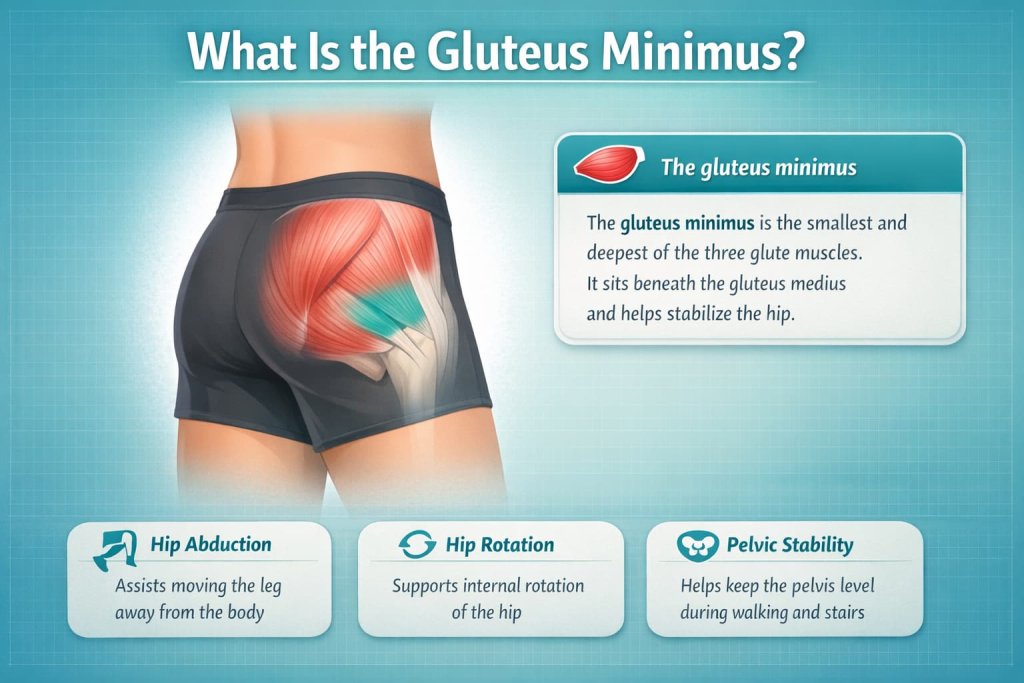
Its primary roles include:
- Assisting hip abduction (moving the leg away from the body)
- Supporting internal rotation of the hip
- Stabilizing the pelvis during single-leg activities like walking or climbing stairs
Because it works mostly behind the scenes, this muscle is often undertrained.
Why Gluteus Minimus Strength Matters
A well-functioning gluteus minimus helps keep the pelvis level when standing on one leg. If it is weak, other muscles may overcompensate, which can affect movement efficiency.
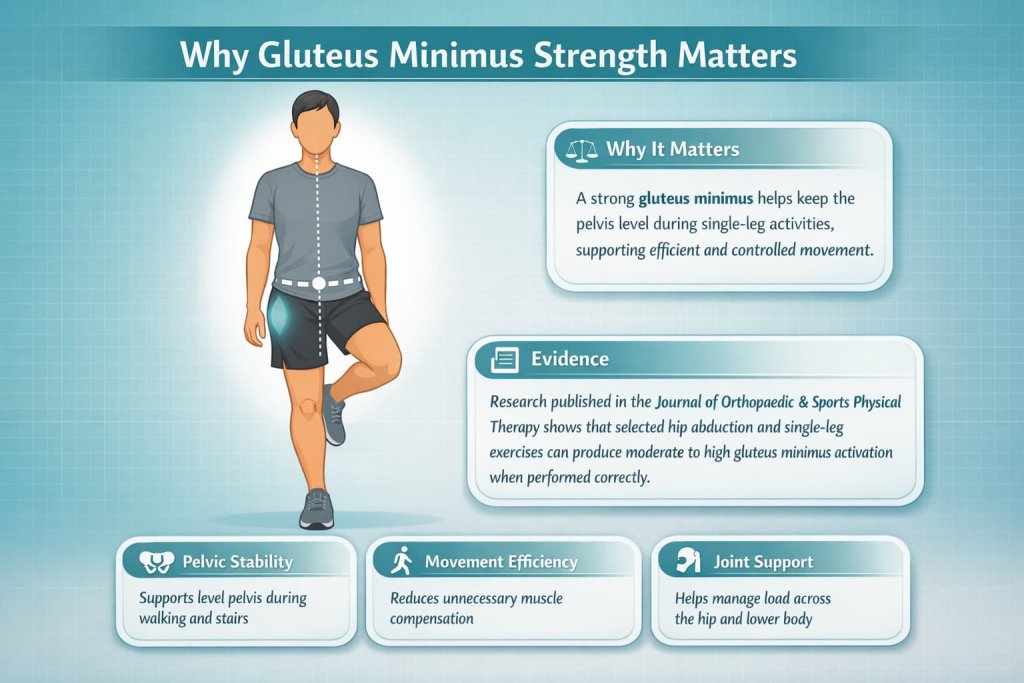
Research published in the Journal of Orthopaedic & Sports Physical Therapy shows that certain hip abduction and single-leg exercises produce moderate to high activation of the gluteus minimus when performed with proper technique.
13 Best Gluteus Minimus Exercises
Below is a practical, progression-friendly list. Each exercise is included for its ability to activate the gluteus minimus while supporting safe, controlled movement.
1. Side-Lying Hip Abduction
A foundational exercise that directly targets the deep hip abductors with minimal joint stress.
Why it works:
This movement isolates the lateral hip muscles without weight-bearing demands, making it ideal for beginners or rehabilitation-focused programs. Proper alignment helps minimize compensation from the hip flexors.
Muscles worked:
Gluteus minimus, gluteus medius, tensor fasciae latae (secondary)
How to do it:
- Lie on your side with legs stacked and hips aligned
- Bend the bottom knee slightly for stability
- Keep the top leg straight with toes facing forward
- Lift the top leg upward without rolling the hips back
- Lower slowly with control
Trainer Tip:
Think about reaching the heel long rather than lifting high to avoid hip flexor takeover.
2. Side-Lying Hip Abduction With Slight Internal Rotation
A subtle variation that may increase deep glute activation in some individuals.
Why it works:
Slight internal rotation can shift muscular emphasis toward the gluteus minimus, which plays a role in hip stabilization and internal rotation control.
Muscles worked:
Gluteus minimus, gluteus medius
How to do it:
- Lie on your side with hips stacked
- Rotate the top leg slightly inward (toes angled down)
- Keep the knee straight and pelvis steady
- Lift the leg upward in a controlled motion
- Lower slowly without losing alignment
Trainer Tip:
Use a small range of motion—too much rotation reduces control and effectiveness.
3. Standing Banded Hip Abduction
A functional exercise that reinforces upright posture and pelvic control.
Why it works:
The band provides continuous lateral resistance, encouraging the gluteus minimus to stabilize the pelvis while standing—closer to real-life movement demands.
Muscles worked:
Gluteus minimus, gluteus medius
How to do it:
- Place a resistance band around the ankles
- Stand tall holding a wall or chair for balance
- Shift weight onto one leg
- Move the opposite leg out to the side
- Return slowly to the starting position
Trainer Tip:
Avoid leaning—keep your torso vertical and movement slow.
4. Banded Lateral Walks
A staple exercise for sustained hip abductor engagement.
Why it works:
This drill keeps the gluteus minimus under constant tension while training control through side-to-side movement.
Muscles worked:
Gluteus minimus, gluteus medius, hip stabilizers
How to do it:
- Place a resistance band above the knees or at the ankles
- Bend knees slightly and hinge hips back
- Step sideways while maintaining band tension
- Keep feet parallel and pelvis level
- Take slow, controlled steps
Trainer Tip:
Smaller steps increase time under tension and reduce momentum.
5. Cable Hip Abduction
A controlled, load-adjustable strengthening option.
Why it works:
Cables provide smooth, consistent resistance, allowing precise loading for progressive strengthening of the gluteus minimus.
Muscles worked:
Gluteus minimus, gluteus medius
How to do it:
- Attach an ankle cuff to a low cable
- Stand sideways to the machine
- Hold the support handle for balance
- Move the outer leg away from your body
- Return slowly under control
Trainer Tip:
Use lighter weight and slower tempo for better muscle activation.
6. Single-Leg Bridge
A stability-focused glute exercise.
Why it works:
The gluteus minimus helps prevent pelvic drop during single-leg support, making this exercise effective for hip and pelvis control.
Muscles worked:
Gluteus minimus, gluteus maximus, core
How to do it:
- Lie on your back with one knee bent and one leg extended
- Press through the heel of the bent leg
- Lift hips until pelvis is level
- Hold briefly at the top
- Lower slowly
Trainer Tip:
If hips twist, return to a double-leg bridge and progress gradually.
7. Side Plank With Top-Leg Abduction
An advanced stability and strength exercise.
Why it works:
Combines lateral core stability with hip abductor demand, increasing gluteus minimus engagement under load.
Muscles worked:
Gluteus minimus, gluteus medius, obliques
How to do it:
- Set up in a side plank on forearm or hand
- Keep body in a straight line
- Lift the top leg slightly upward
- Hold briefly, then lower
- Maintain steady breathing
Trainer Tip:
Quality beats height—small lifts with control are more effective.
8. Step-Downs
A functional hip control exercise.
Why it works:
The gluteus minimus works eccentrically to control pelvic alignment during lowering motions.
Muscles worked:
Gluteus minimus, quadriceps, hip stabilizers
How to do it:
- Stand on a low step with one foot
- Slowly lower the opposite heel toward the floor
- Keep hips level and knee aligned
- Lightly tap the heel down
- Return to standing
Trainer Tip:
Use a mirror to monitor pelvic drop and knee alignment.
9. Lateral Step-Ups
Builds strength in a side-loading pattern.
Why it works:
Weight-bearing lateral movement challenges the gluteus minimus to stabilize the pelvis under load.
Muscles worked:
Gluteus minimus, gluteus medius, quadriceps
How to do it:
- Stand beside a step or low box
- Place the outside foot on the step
- Push through the heel to stand up
- Bring the other foot up
- Step back down with control
Trainer Tip:
Avoid pushing off the trailing leg—let the working hip do the work.
10. Single-Leg Squat (Supported)
A controlled progression toward unilateral strength.
Why it works:
Requires the gluteus minimus to stabilize the pelvis and knee throughout the squat movement.
Muscles worked:
Gluteus minimus, quadriceps, gluteus maximus
How to do it:
- Hold a rail, wall, or chair for support
- Stand on one leg
- Sit back into a shallow squat
- Keep knee tracking forward
- Return to standing slowly
Trainer Tip:
Depth is optional—focus on control, not range.
11. Standing Hip Abduction Isometric Hold
A low-impact endurance builder.
Why it works:
Isometric contractions improve neuromuscular control and endurance of the gluteus minimus without joint movement.
Muscles worked:
Gluteus minimus, gluteus medius
How to do it:
- Stand next to a wall or chair
- Lift one leg slightly to the side
- Hold the position for 10–30 seconds
- Keep pelvis level
- Lower with control
Trainer Tip:
Gentle tension is enough—avoid gripping or hiking the hip.
12. Curtsy Step-Back (Controlled Range)
Introduces multi-directional hip control.
Why it works:
The angled step challenges lateral hip stabilizers while improving balance and coordination.
Muscles worked:
Gluteus minimus, gluteus medius, adductors
How to do it:
- Stand tall with feet hip-width apart
- Step one leg diagonally back
- Bend the front knee slightly
- Keep torso upright
- Return to standing
Trainer Tip:
Keep steps shallow to avoid excessive knee stress.
13. Split-Stance Weight Shift
A low-load proprioceptive drill.
Why it works:
Encourages the gluteus minimus to stabilize the pelvis during subtle weight transfers.
Muscles worked:
Gluteus minimus, hip stabilizers
How to do it:
- Stand in a staggered stance
- Shift weight slowly onto the front leg
- Keep hips level and steady
- Hold briefly
- Shift back with control
Trainer Tip:
Move slowly—this is about awareness, not effort.
How Often Should You Train the Gluteus Minimus?
General strength-training guidance from the Centers for Disease Control and Prevention recommends working major muscle groups at least two days per week.
For gluteus minimus exercises:
- 2–4 sessions per week is sufficient for most people
- 2–3 sets per exercise
- Slow, controlled repetitions with proper alignment
What Does the Gluteus Minimus Do?
The gluteus minimus plays a key role in hip stability and pelvic control, especially during single-leg activities such as walking, climbing stairs, and standing on one leg.
Its primary functions include:
- Assisting hip abduction (moving the leg away from the body)
- Supporting internal rotation of the hip
- Helping keep the pelvis level during movement
When this muscle works properly, it helps distribute load more evenly across the hip and lower body, contributing to smoother and more efficient movement patterns.
Who Should Focus on Gluteus Minimus Exercises?
Gluteus minimus exercises may be particularly helpful for:
- Individuals who experience poor balance or hip instability
- Runners, walkers, and athletes who rely on single-leg support
- Older adults aiming to maintain pelvic stability and confidence with movement
- People who spend long periods sitting and have underactive hip muscles
- Anyone working to improve lower-body alignment and movement control
These exercises are commonly included in both fitness and rehabilitation-focused programs because of their role in supporting everyday movement.
Are Gluteus Minimus Exercises Safe?
For most people, gluteus minimus exercises are considered safe when performed with proper technique and within a comfortable range of motion.
General safety principles include:
- Starting with low-load, stable exercises
- Moving slowly and with control
- Avoiding sharp or increasing pain
- Progressing gradually as strength and coordination improve
Individuals with existing hip, knee, or lower-back conditions should consider professional guidance before beginning a new exercise program.
Signs of a Weak Gluteus Minimus
Common indicators may include:
- Pelvic drop when standing on one leg
- Hip fatigue during walking or stairs
- Poor balance or instability
- Overuse of the front or outer hip muscles
If symptoms persist or worsen, professional evaluation is recommended.
Is It Safe to Do Gluteus Minimus Exercises With Hip or Knee Pain?
In many cases, yes—when exercises are chosen carefully and performed with control. Low-load, stable movements are often recommended early on.
The National Health Service and other clinical guidelines emphasize gradual progression and avoiding sharp pain during exercise.
Always stop if pain increases and consult a qualified healthcare professional when needed.
Common Mistakes to Avoid
- Allowing the hips to roll backward during side-lying exercises
- Using momentum instead of slow, controlled movement
- Standing too tall during band walks instead of maintaining a slight knee bend
- Ignoring pelvic alignment during single-leg tasks
Frequently Asked Questions
1. Can gluteus minimus exercises help with balance?
Yes. These exercises support pelvic stability, which plays a key role in balance and single-leg control.
2. Are gluteus minimus exercises the same as gluteus medius exercises?
They overlap, but subtle changes in position and control can shift emphasis toward the gluteus minimus.
3. Do I need bands or cables?
No. Many effective exercises use bodyweight alone, especially for beginners.
4. How long before I notice results?
With consistent training, improved control and awareness may be noticed within 3–6 weeks.
5. Can beginners do these exercises?
Yes. Start with stable, low-load options and progress gradually.
6. Should these exercises be done before or after workouts?
They can be used as part of a warm-up or within a focused lower-body session.
Conclusion
The gluteus minimus may be small, but its role in hip stability and efficient movement is significant. By including targeted gluteus minimus exercises in your routine, you support stronger hips, better balance, and safer lower-body mechanics.
If your goal is long-term joint health and confident movement, start with controlled basics and progress gradually.
References
- StatPearls (NCBI Bookshelf). (2023). Anatomy and function overview of the gluteus minimus.
- Beck M, Sledge JB, Gautier E, Dora C, Ganz R. (2000). The anatomy and function of the gluteus minimus muscle. (PubMed)
- Moore D, et al. (2019). Rehabilitation exercises for gluteus minimus muscle segments: EMG study (exercise activation data). (PubMed)
- Moore D, et al. (2020). Systematic review/meta-analysis on exercises that generate high gluteal muscle activity (includes hip-focused patterns relevant to your list). (PubMed)
- Selkowitz DM, Beneck GJ, Powers CM. (2013). Which exercises target the gluteal muscles while minimizing tensor fasciae latae activity? (JOSPT)
- Distefano LJ, Blackburn JT, Marshall SW, Padua DA. (2009). Gluteal muscle activation during common therapeutic exercises (bridges, hip abduction patterns, etc.). (JOSPT)
- NHS. (Updated regularly). Physical activity guidelines for older adults (strength and balance guidance that supports your “stability hips” angle).