
The best resistance band quad exercises are those that strengthen the front thighs safely and effectively using controlled tension and full range of motion. These include leg extensions, banded squats, split squats, step-ups, and isometric holds like wall sits with a band.
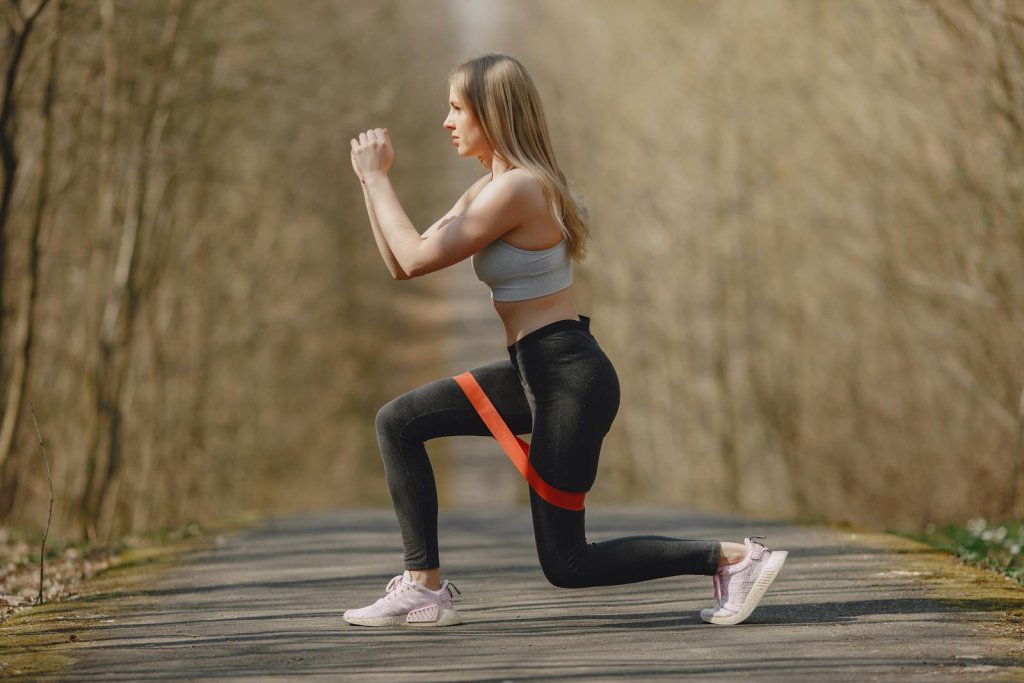
Strengthening the quadriceps is essential because these muscles help you stand, walk, climb stairs, protect your knees, and improve balance. Resistance bands offer a joint-friendly way to target the quads at home without heavy weights. They provide variable resistance, meaning the tension increases as the band stretches—making the exercises more effective.
In this guide, you’ll learn the top quad-focused movements, how to do them correctly, key safety rules, programming tips, and research-backed benefits.
The 10 Best Resistance Band Quad Exercises
A beginner-friendly quad isolation move that mimics the gym leg extension machine. Ideal for building knee-extension strength with full control.
1. Seated Resistance Band Leg Extension
Why it works:
This isolates the quadriceps better than almost any other band movement, closely mimicking the gym leg extension machine. It strengthens knee-extension power, improves stability, and supports daily movements like standing and climbing stairs.
Muscles worked:
Quadriceps (rectus femoris, vastus lateralis, vastus medialis, vastus intermedius), hip flexors (light activation)
How to do it:
- Sit upright on a sturdy, non-rolling chair.
- Loop the band around your working ankle.
- Anchor the other end of the band securely under your opposite foot.
- Straighten the working leg until your knee is fully extended.
- Pause briefly, then lower with slow control to keep tension on the quad.
Trainer Tip:
Avoid snapping the leg straight; stop just before full lockout to protect the knee joint.
2. Standing Band Leg Extension (Rear Anchor)
Why it works:
This exercise provides constant forward tension on the leg, strengthening the quadriceps through controlled knee extension while improving balance and stability.
Muscles worked:
Quadriceps, hip flexors (secondary)
How to do it:
- Anchor the band securely behind you at ankle height.
- Loop the free end around one ankle.
- Stand tall and lightly hold a wall for balance if needed.
- Extend your leg forward by straightening your knee.
- Lower slowly to keep the quad engaged the entire time.
Trainer Tip:
Keep your torso upright—no leaning back for momentum.
3. Banded Squat
Why it works:
Using a band adds increasing resistance toward the top of the squat, where the quads work hardest. It strengthens your legs while improving knee alignment and overall lower-body mechanics.
Muscles worked:
Quadriceps, glutes, hamstrings, core stabilizers
How to do it:
- Stand on the band with feet shoulder-width apart.
- Hold the handles at shoulder height or cross them over your chest.
- Push your hips back and bend your knees to squat down.
- Drive through your heels to stand tall again.
- Keep your knees tracking over your toes.
Trainer Tip:
Gently push your knees outward as you rise to prevent inward collapse.
4. Resistance Band Split Squat
Why it works:
Targets the quads more effectively because the majority of the load stays on the front leg. Great for building unilateral strength and improving knee stability.
Muscles worked:
Quadriceps, glutes, calves, hip stabilizers
How to do it:
- Stand with one foot on the center of the band.
- Step your other leg back into a split stance.
- Hold both handles at shoulder height.
- Lower into a lunge by bending the front knee.
- Press through the front foot to rise.
Trainer Tip:
Shift most of your weight onto the front leg for maximum quad activation.
5. Banded Step-Ups
Why it works:
Strengthens the quads through a functional movement pattern similar to climbing stairs. Builds stability and improves real-life leg strength.
Muscles worked:
Quadriceps, glutes, hamstrings
How to do it:
- Place the band under the foot that steps onto the bench or step.
- Hold the band handles at your sides or shoulders.
- Step up by driving through the working leg.
- Step down with control and repeat.
Trainer Tip:
Do not push off the back foot—let the lead leg do the work.
6. Wall Sit with Band Around Thighs
Why it works:
This isometric hold strengthens the quads while the band forces the hips to push outward, improving knee alignment and stability.
Muscles worked:
Quadriceps, hip abductors, glute medius
How to do it:
- Place a mini band around your thighs just above the knees.
- Slide your back down a wall until your thighs are parallel to the floor.
- Push your knees slightly outward to maintain tension.
- Hold for 20–40 seconds while keeping your core tight.
Trainer Tip:
Keep hips, knees, and ankles aligned in a straight line for maximum effectiveness.
7. Banded Reverse Lunge
Why it works:
Reverse lunges are easier on the knees than forward lunges while still loading the quads effectively. The band increases difficulty and forces controlled movement.
Muscles worked:
Quadriceps, hamstrings, glutes, core stabilizers
How to do it:
- Stand on the band with one foot.
- Hold the handles at your shoulders.
- Step the opposite foot backward and lower into a lunge.
- Push through the front foot to rise back up.
- Repeat all reps on one side before switching.
Trainer Tip:
Move slowly — especially on the return — to prevent the band from pulling you forward.
8. Banded Lateral Walks (Quad–Glute Combo)
Why it works:
Although primarily a glute exercise, the slight knee bend activates the quads and strengthens the muscles responsible for knee tracking and stability.
Muscles worked:
Quadriceps, glute medius, hip abductors, hip stabilizers
How to do it:
- Place a mini band above your knees or around your ankles.
- Bend your knees slightly and step sideways.
- Keep your torso tall and maintain constant tension.
- Move slowly and avoid dragging your feet.
Trainer Tip:
Never let your feet come fully together—keep tension on the band throughout.
9. Sit-to-Stand with Resistance Band
Why it works:
A beginner-friendly movement that strengthens the quads using a familiar pattern. Excellent for seniors or those building foundational leg strength.
Muscles worked:
Quadriceps, glutes, core
How to do it:
- Sit on a sturdy chair.
- Loop the band under your feet and hold the ends firmly.
- Stand up slowly against the band’s resistance.
- Sit back down with control rather than dropping into the chair.
Trainer Tip:
Lean slightly forward as you stand to help engage your quads and maintain balance.
10. Banded Front Squat (High Tension)
Why it works:
Creates high tension through the movement and forces an upright posture, which significantly increases quad recruitment compared to a regular banded squat.
Muscles worked:
Quadriceps, core, glutes (secondary)
How to do it:
- Stand on a heavy band with feet shoulder-width apart.
- Bring the handles up to your shoulders, elbows pointing forward.
- Squat down while keeping your chest lifted.
- Push through your whole foot to stand tall.
Trainer Tip:
Keep elbows high and spine tall to keep the load on your quads instead of your lower back.
How Often Should You Train Your Quads With Resistance Bands?
Most evidence-based guidelines recommend:
- 2–3 sessions per week for strength
- 1–3 sets per exercise
- 8–15 slow, controlled reps
- 6-second tempo per rep (2 up, 3–4 down)
- Progress once you can exceed your rep target comfortably
Why Resistance Band Quad Exercises Matter
Strong quads support the knees, improve daily movement, and reduce injury risk. Bands offer a simple, portable, and effective way to strengthen this essential muscle group.
Benefits include:
- Build quad strength without heavy weights
- Improve balance, walking ability, and functional lower-body strength
- Support knee stability by strengthening surrounding muscles
- Provide joint-friendly resistance suitable for beginners and seniors
- Allow seated or standing variations for all fitness levels
- Improve muscle endurance and control through slow, controlled reps
How to Do Resistance Band Quad Workouts Safely
To keep your workouts joint-friendly:
- Use a sturdy, non-rolling chair for seated work
- Start with light resistance and progress gradually
- Move slowly and control the return phase
- Avoid sudden jerks—bands create variable tension
- Keep knees aligned with toes
- Stop if you feel sharp pain
- Check the band for tearing or thinning before every session
For individuals with knee pain, osteoarthritis, heart conditions, or mobility issues, consult a healthcare provider first.
Who Should Avoid or Modify Resistance Band Quad Exercises
You should be cautious or modify if you have:
- Recent knee surgery
- Moderate to severe knee instability
- Uncontrolled swelling or pain
- Difficulty standing without support
- Advanced arthritis flare-ups
- Cardiovascular limitations requiring medical clearance
Safer modifications include seated leg extensions, sit-to-stand, or wall sits with support.
FAQs
1. Do resistance band quad exercises really build muscle?
Yes, resistance bands can build quad strength and muscle when used with proper volume and progression.
2. Are banded quad exercises safe for knee pain?
They may help improve strength and support knee function, but avoid deep bending if painful.
3. How long does it take to see results?
Most people notice improvements in 3–6 weeks with consistent training.
4. Can beginners do banded quad exercises?
Absolutely—bands are ideal for beginners because they’re joint-friendly and easy to control.
5. What band resistance should I start with?
Light to medium bands work best for beginners; increase tension as you get stronger.
6. Are seated quad exercises effective?
Yes—seated leg extensions with a band are one of the best isolation movements for the quads.
7. Can I replace leg day with resistance band workouts?
Yes, if you progressively increase resistance and maintain proper form.
Conclusion
Resistance band quad exercises are a simple, effective way to build strong, toned legs without heavy equipment. By using controlled tension, proper form, and consistent progression, these exercises can support knee stability, improve daily movement, and enhance lower-body strength for beginners through advanced trainees. Whether you train at home, travel often, or need a joint-friendly option, resistance bands make quad training accessible and adaptable. Start with the exercises that match your current level, progress gradually, and stay consistent to see lasting results.
References
- Li A, Sun Y, Li M, Wang D, Ma X. Effects of elastic band resistance training on the physical and mental health of elderly individuals: A mixed methods systematic review. PLOS ONE. 2024.
- Meng Y, Ma X, Zhang L, et al. Effects of elastic band resistance training on lower limb strength and balance function in older adults: A systematic review and meta-analysis. Frontiers in Sports and Active Living. 2025.
- Kim GJ, Oh H, Lee S, Lee K, Kim K. Effects of resistance exercise using the elastic band on the pain and function of patients with degenerative knee arthritis. Journal of Physical Therapy Science. 2020;32(1):52–54.
- Chang TF, Liou TH, Chen CH, et al. Effects of elastic-band exercise on lower-extremity function among female patients with osteoarthritis of the knee. Disability and Rehabilitation. 2012;34(20):1727–1735.
- Lim J, Choi A, Kim B. The effects of resistance training on pain, strength, and function in osteoarthritis: Systematic review and meta-analysis. Journal of Personalized Medicine. 2024.
- Garber CE, Blissmer B, Deschenes MR, et al. American College of Sports Medicine position stand: Quantity and quality of exercise for developing and maintaining cardiorespiratory, musculoskeletal, and neuromotor fitness in apparently healthy adults. Medicine and Science in Sports and Exercise. 2011;43(7):1334–1359.
- Centers for Disease Control and Prevention (CDC). Adult Activity: An Overview – Physical Activity Guidelines for Adults.
- National Institute on Aging. How can strength training build healthier bodies as we age? 2022.