
Sciatica stretching exercises are gentle movements designed to ease pressure on the sciatic nerve, reduce leg and lower-back discomfort, and improve mobility. When done correctly and consistently, these stretches may help calm irritated tissues, improve flexibility around the hips and spine, and support daily movement without worsening symptoms.

Understanding how and when to stretch is important because sciatica can stem from different causes—such as muscle tightness, disc-related irritation, or spinal narrowing—and aggressive or poorly chosen movements can aggravate symptoms. The exercises below focus on controlled, evidence-based stretching commonly recommended in conservative care approaches.
What Are Sciatica Stretching Exercises?
Sciatica stretching exercises are low-impact stretches that target muscles and structures surrounding the sciatic nerve, including the hips, glutes, hamstrings, and lower back. The goal is not to “stretch the nerve” directly, but to reduce tension in nearby tissues that may contribute to nerve irritation.
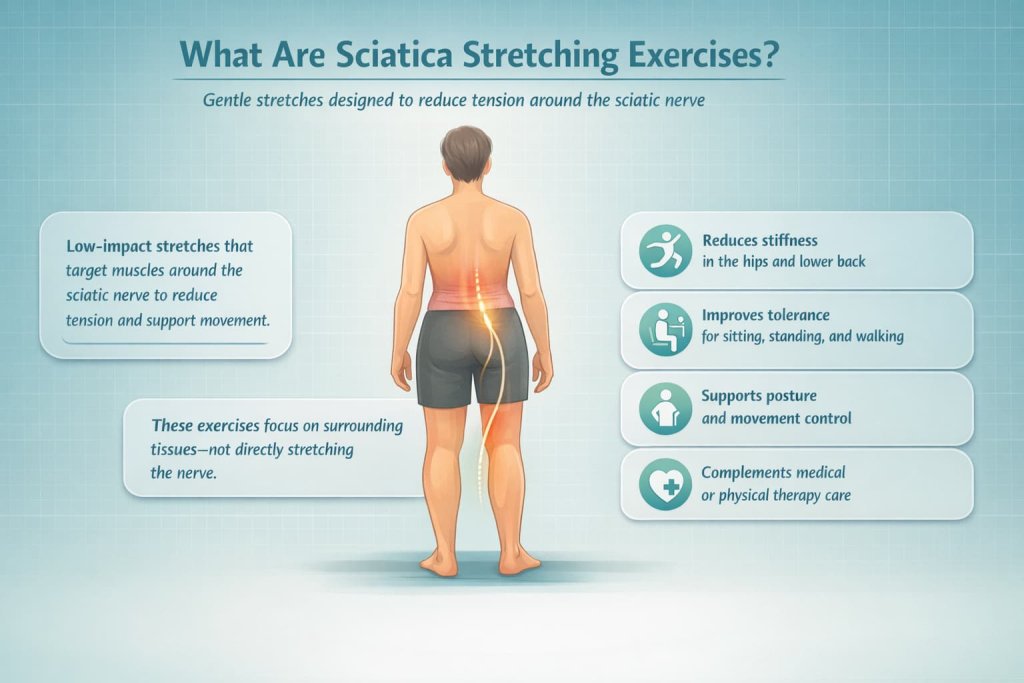
These exercises are commonly used in home programs, physical therapy routines, and early-stage self-care plans.
They may help:
- Reduce stiffness in the hips and lower back
- Improve tolerance to sitting, standing, and walking
- Support better posture and movement control
- Complement medical or physical therapy care
Who Can Benefit From Sciatica Stretching Exercises?
Sciatica stretching exercises are commonly used by adults who experience:
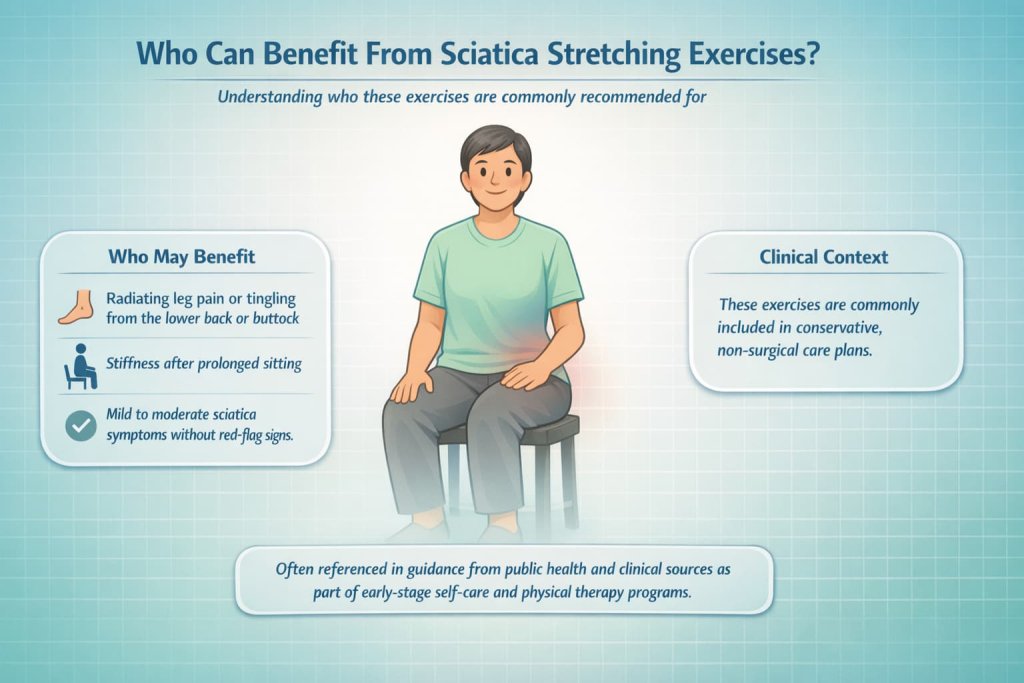
- Radiating leg pain or tingling from the lower back or buttock
- Stiffness after prolonged sitting
- Mild to moderate sciatica symptoms without red-flag signs
They are often included in guidance from public health and clinical sources as part of conservative, non-surgical management.
10 Best Sciatica Stretching Exercises for Fast Pain Relief
These sciatica stretching exercises are designed to gently reduce muscle tension around the hips and lower back, which may help ease pressure on the sciatic nerve. Each movement focuses on safe, controlled stretching to support pain relief and better mobility.
1. Knee-to-Chest Stretch
How to do it
- Lie on your back with both knees bent and feet flat on the floor
- Gently bring one knee toward your chest, holding behind the thigh or over the shin
- Keep the opposite foot relaxed on the floor and pelvis neutral
- Hold briefly, then lower with control and switch sides
Why it works
This stretch encourages gentle lumbar flexion, which may help reduce stiffness and compression around the lower spine. By relaxing the surrounding tissues, it can ease tension patterns often associated with sciatica-related discomfort.
Muscles worked
Lower back muscles, gluteal muscles
Trainer Tip
Keep your breathing slow and relaxed—tension in the neck or shoulders reduces the effectiveness of the stretch.
2. Figure-4 Piriformis Stretch
How to do it
- Lie on your back with knees bent and feet on the floor
- Cross one ankle over the opposite knee to form a figure-4 shape
- Gently pull the uncrossed leg toward your chest
- Hold with control, then switch sides
Why it works
This stretch targets the piriformis muscle, which sits close to the sciatic nerve. Reducing excessive tension here may help decrease pressure or irritation in individuals whose symptoms are influenced by hip muscle tightness.
Muscles worked
Piriformis, deep hip rotators, gluteal muscles
Trainer Tip
If pulling the leg causes discomfort, keep the foot on the floor and focus on relaxing the hips instead.
3. Seated Spinal Flexion Stretch
How to do it
- Sit upright on a chair with feet flat and hands resting on thighs
- Slowly round your spine, allowing your head and shoulders to relax forward
- Pause briefly, then return to an upright seated position with control
Why it works
Gentle spinal flexion promotes mobility in the lumbar segments and may help reduce stiffness from prolonged sitting, a common trigger for sciatica symptoms.
Muscles worked
Spinal extensors, lower back muscles
Trainer Tip
Move slowly and avoid collapsing forward—controlled motion is more beneficial than range.
4. Standing Hamstring Stretch
How to do it
- Place one heel on a low step, bench, or sturdy chair
- Keep the raised leg straight and hinge forward slightly from the hips
- Hold the position, then switch sides
Why it works
Tight hamstrings can alter pelvic position and increase strain on the lower back. Improving hamstring flexibility may reduce stress placed on lumbar structures during daily movement.
Muscles worked
Hamstrings, calves
Trainer Tip
Stop the hinge as soon as you feel a gentle stretch—rounding the back shifts focus away from the hamstrings.
5. Pelvic Tilt (Supine)
How to do it
- Lie on your back with knees bent and feet flat on the floor
- Gently tilt your pelvis to press your lower back into the floor
- Hold briefly, then relax back to neutral and repeat
Why it works
Pelvic tilts promote awareness and control of the lumbar spine while encouraging gentle movement. This can support spinal comfort and coordination without placing excessive load on irritated tissues.
Muscles worked
Deep abdominal muscles, lower back stabilizers
Trainer Tip
Think of flattening the lower back rather than lifting the hips—subtle control is key.
6. Child’s Pose Stretch
How to do it
- Kneel on the floor and sit back toward your heels
- Reach your arms forward and lower your torso toward the ground
- Hold in a comfortable position while breathing steadily
Why it works
This position gently lengthens the spine and hips while minimizing spinal loading. It may help reduce overall tension in the lower back and gluteal region.
Muscles worked
Lower back, hips, glutes
Trainer Tip
Support your body with cushions or blocks if knee or hip comfort is limited.
7. Hip Flexor Stretch
How to do it
- Step one foot forward into a staggered stance
- Gently shift your weight forward while keeping your torso upright
- Hold the stretch, then switch sides
Why it works
Tight hip flexors can contribute to anterior pelvic tilt, increasing strain on the lumbar spine. Improving flexibility here may help restore more balanced pelvic alignment.
Muscles worked
Hip flexors, quadriceps
Trainer Tip
Engage your glutes lightly to avoid arching the lower back.
8. Seated Hamstring Nerve Glide (Gentle)
How to do it
- Sit upright with one leg extended in front of you
- Slowly straighten the knee while gently lifting the toes
- Return to the starting position and repeat in a smooth motion
Why it works
This movement promotes controlled motion of neural tissues rather than static stretching. It may help improve tolerance to movement without placing excessive strain on the sciatic nerve.
Muscles worked
Hamstrings, neural tissues
Trainer Tip
There should be no sharp pain or lingering symptoms—reduce range if needed.
9. Standing Back Extension (Gentle)
How to do it
- Stand upright with feet hip-width apart
- Place hands on hips for support
- Slowly lean backward within a comfortable range, then return to neutral
Why it works
Some individuals experience symptom relief with gentle extension-based movements, which can temporarily reduce pressure on certain spinal structures.
Muscles worked
Spinal extensors, lower back muscles
Trainer Tip
Skip this exercise if symptoms worsen or travel further down the leg.
10. Side-Lying Knee Pull
How to do it
- Lie on your side with hips and knees bent
- Gently pull the top knee toward your chest
- Hold briefly, then switch sides
Why it works
This low-load position allows the hips and lower back to relax without weight-bearing stress, making it suitable during sensitive phases of sciatica.
Muscles worked
Glutes, lower back muscles
Trainer Tip
Use a pillow between your knees or under your head for better alignment and comfort.
How Often Should You Do Sciatica Stretching Exercises?
Most clinical guidance suggests:
- Gentle stretching once or twice daily
- Holding stretches for about 20–30 seconds
- Avoiding movements that increase pain, numbness, or tingling
Consistency matters more than intensity.
Safety Guidelines Before Starting Sciatica Stretching Exercises
Sciatica stretching exercises should always be gentle and controlled to avoid increasing nerve irritation.
- Stretch only within a pain-free range
- Avoid bouncing, forcing, or holding your breath
- Stop if pain sharpens, spreads down the leg, or causes numbness
- Skip stretching during severe flare-ups
- Use stable support (mat, chair, wall) as needed
Seek medical care if you experience leg weakness, groin numbness, or bladder or bowel changes.
Sciatica Stretching Exercises vs Strengthening Exercises
Stretching and strengthening serve different purposes in sciatica care.
- Stretching exercises help reduce muscle tension and improve short-term comfort
- Strengthening exercises improve spinal and hip stability for long-term support
- Stretching is often used first to calm symptoms
- Strengthening is added gradually as pain allows
Both should be adjusted based on symptoms and tolerance.
Common Mistakes to Avoid
- Forcing stretches into pain
- Holding your breath during movements
- Stretching aggressively during flare-ups
- Ignoring worsening symptoms
When to Avoid Sciatica Stretching Exercises
Do not rely on stretching alone if you experience:
- Progressive leg weakness
- Numbness in the groin or saddle area
- New bladder or bowel control issues
These symptoms require immediate medical evaluation.
Frequently Asked Questions
Can stretching cure sciatica?
Stretching does not cure sciatica, but it may help reduce symptoms and support recovery as part of a broader care plan.
How long does it take to feel relief?
Some people notice mild relief within days, while others need several weeks of consistent, gentle practice.
Is it safe to stretch during sciatica pain?
Yes, gentle stretching is often encouraged, but movements should never increase pain or neurological symptoms.
Should I stretch every day?
Daily light stretching is commonly recommended, provided symptoms do not worsen.
Can seniors do sciatica stretching exercises?
Yes, with modified ranges, support, and slower pacing.
Are nerve glides better than stretches?
They serve different purposes; nerve glides emphasize controlled motion, while stretches focus on muscle flexibility.
Conclusion
Sciatica stretching exercises can be a helpful, low-risk way to support pain relief, flexibility, and daily movement when performed carefully. Focus on gentle, controlled motions, listen to your body, and stop any exercise that worsens symptoms. For persistent or severe pain, professional evaluation is essential.