
Somatic exercises for beginners are slow, mindful movements that focus on how your body feels, helping you notice and release unnecessary muscle tension while improving body awareness.
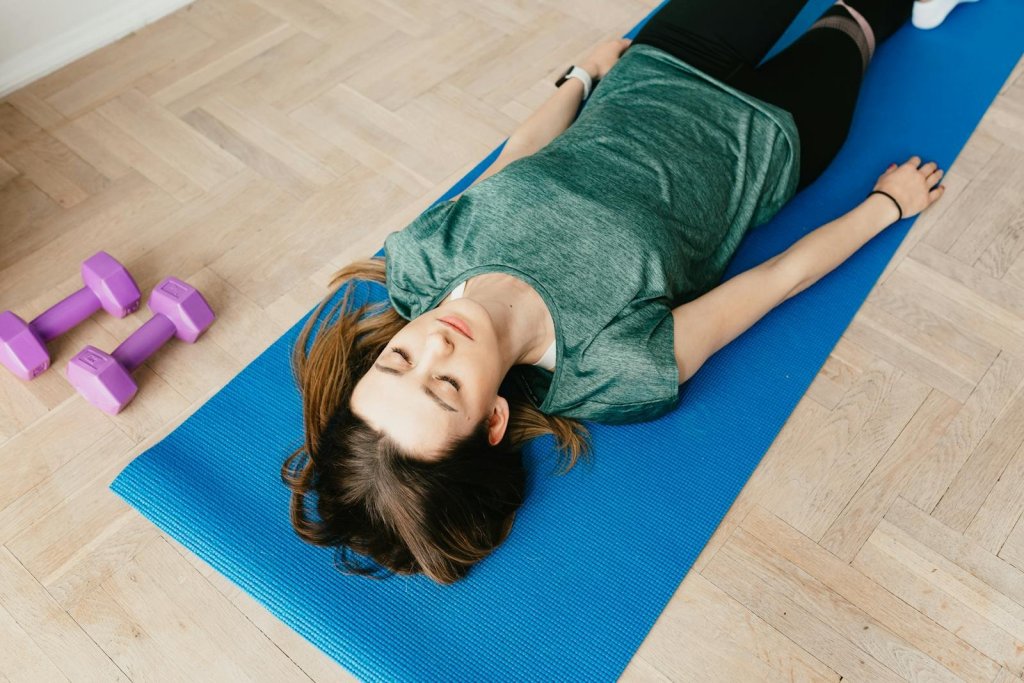
This matters because many people carry “hidden” tension in the neck, shoulders, hips, and lower back, and a gentle somatic-style practice can help you move more comfortably day to day. A good beginner routine stays low-effort, uses smooth breathing, and prioritizes control over intensity.
What are somatic exercises for beginners
Somatic movement is a mindfulness-based approach to exercise that emphasizes internal sensation, slow pacing, and intentional control rather than “pushing through.” Instead of stretching harder, you move gently, pay attention to subtle signals (tightness, effort, trembling, ease), and aim for a calmer, more coordinated pattern.
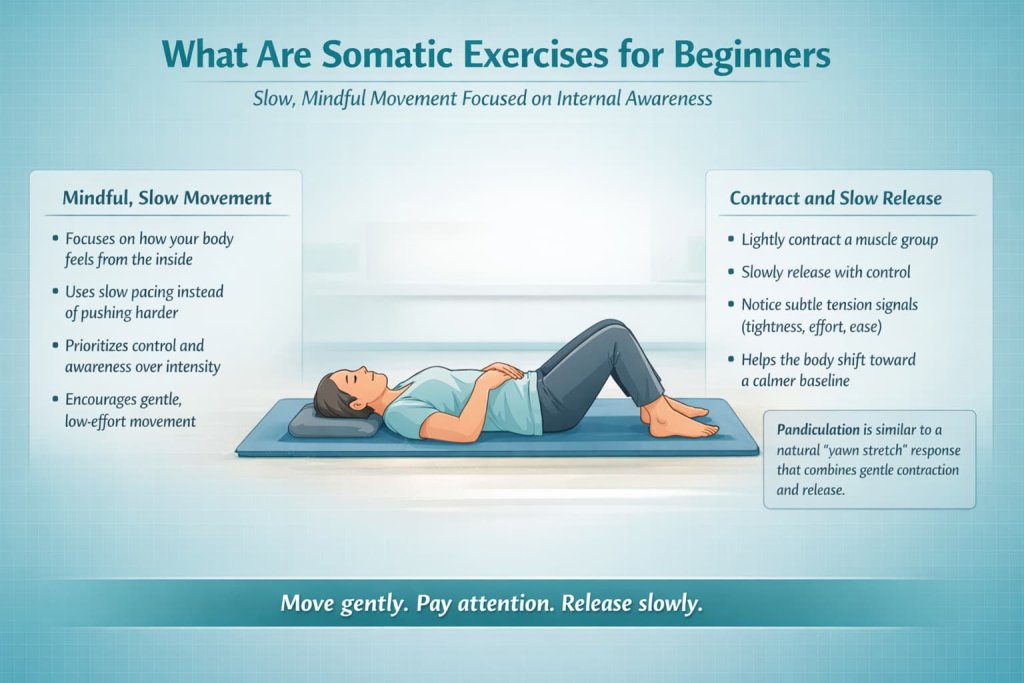
Many somatic methods use a contract-and-slow-release idea similar to a natural “yawn stretch” response called pandiculation. If you want a simple explanation of pandiculation and why it can feel like a reset, the Cleveland Clinic breaks it down in plain language.
Who somatic exercises are best for
Somatic exercises for beginners are a good fit if you:
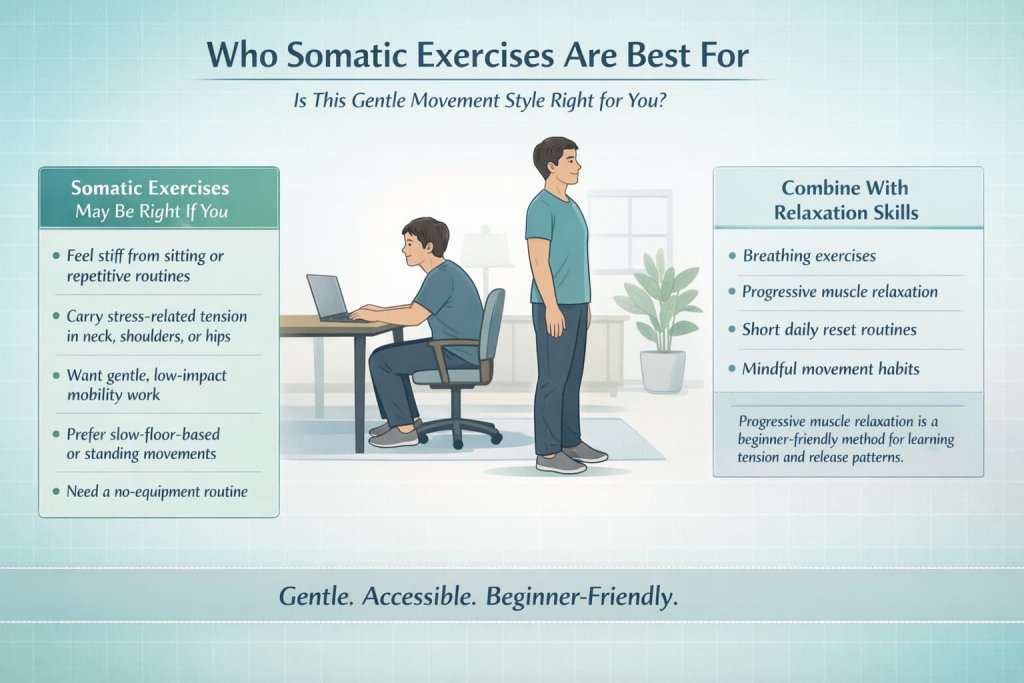
- Feel stiff from sitting, stress, or repetitive routines
- Want a gentle, low-impact way to improve mobility
- Prefer floor-based or slow standing movements
- Need an easy-to-start routine with no equipment
They can also pair well with relaxation skills that build awareness of tension and release, and NHS inform explains progressive muscle relaxation as a straightforward option many beginners can understand.
7 best somatic exercises for beginners
Below are beginner-friendly options you can do on a mat or firm carpet. Pick 4–7 moves, go slow, and keep the effort light.
1) Constructive rest with body scan
How to do it:
- Lie on your back with knees bent, feet flat, arms relaxed by your sides
- Let your low back rest naturally (don’t force it flat)
- Inhale gently through your nose
- Exhale slowly and scan from jaw to shoulders to ribs to hips
- Spend 1–3 minutes noticing where you feel gripping or tension
Why it works: This position reduces postural effort and helps you notice where you’re bracing without realizing it.
Trainer Tip: If your hip flexors feel tight, place a pillow under your knees.
2) Pelvic clock
How to do it:
- Lie on your back, knees bent, feet hip-width
- Imagine a clock on your pelvis (12 toward your belly button, 6 toward your tailbone)
- Slowly tip pelvis toward 12, then toward 6
- Add gentle shifts toward 3 and 9 (right/left)
- Make small circles, then reverse direction
Why it works: Improves pelvis-to-spine awareness and helps reduce “stuck” low-back tension by restoring small, controlled motion.
Trainer Tip: Keep the movement small enough that your ribs stay quiet and relaxed.
3) Rib and breath expansion (side-to-side)
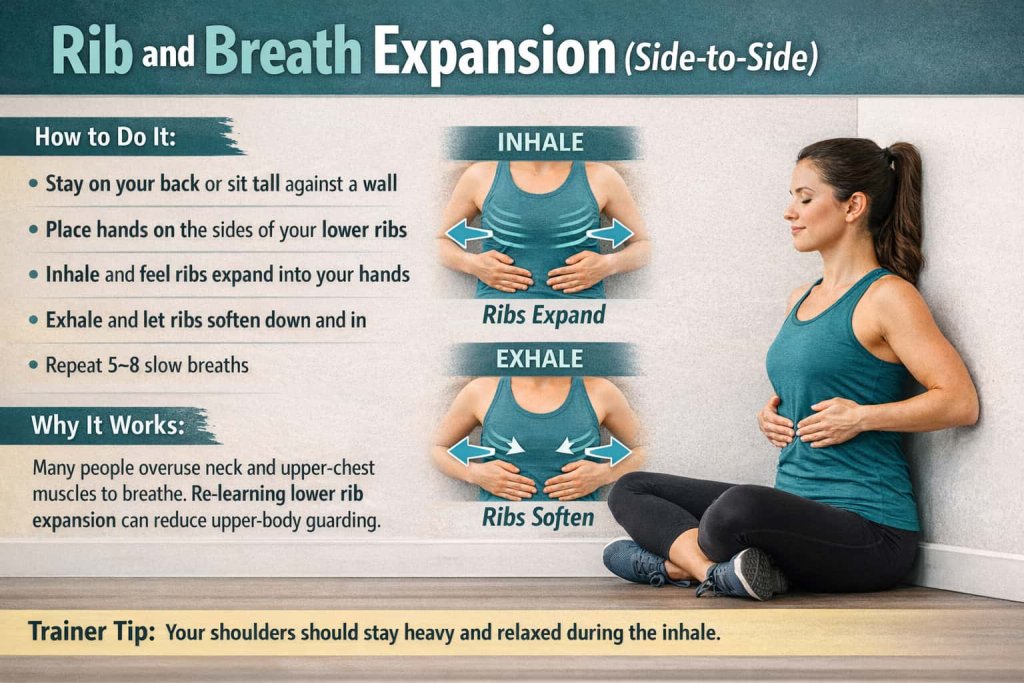
How to do it:
- Stay on your back or sit tall against a wall
- Place hands on the sides of your lower ribs
- Inhale and feel ribs expand into your hands
- Exhale and let ribs soften down and in
- Repeat 5–8 slow breaths
Why it works: Many people overuse neck and upper-chest muscles to breathe. Re-learning lower rib expansion can reduce upper-body guarding.
Trainer Tip: Your shoulders should stay heavy and relaxed during the inhale.
4) Shoulder shrug and slow release (pandiculation style)
How to do it:
- Sit or stand tall
- Inhale and gently lift shoulders toward ears (light effort)
- Pause 1 second
- Exhale and very slowly lower shoulders, as if melting downward
- Repeat 4–6 times
Why it works: The slow release trains your nervous system to let go instead of snapping back to tension.
Trainer Tip: The lowering phase should take longer than the lifting phase.
5) Head nod and neck lengthening (tiny range)
How to do it:
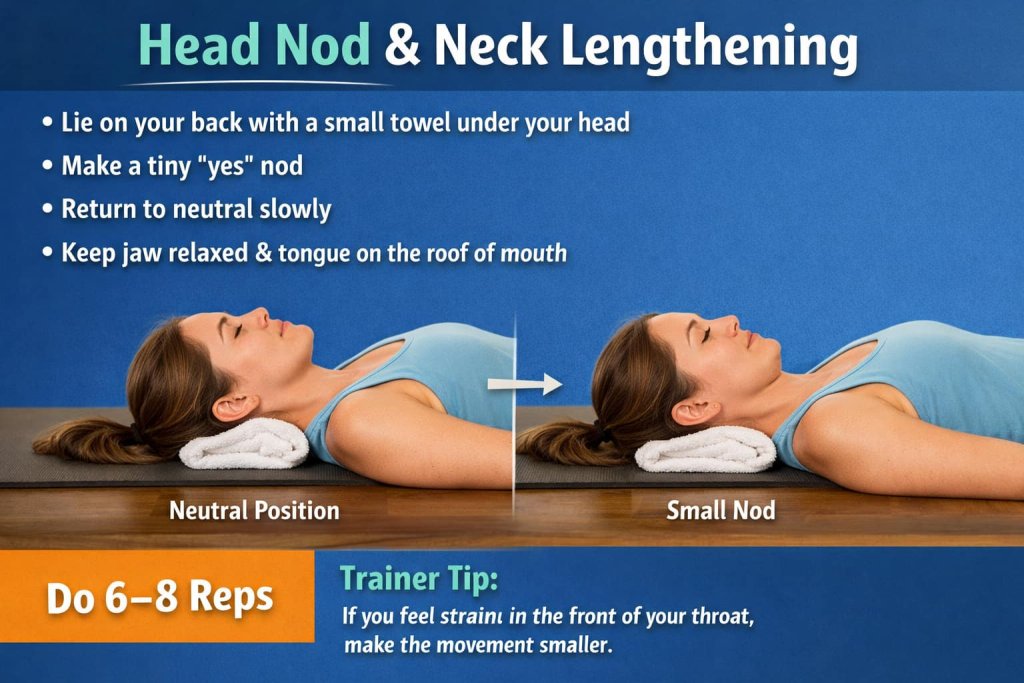
- Lie on your back with a small towel under your head if needed
- Make a very small “yes” nod (as if sliding the back of your head long)
- Return to neutral slowly
- Keep jaw relaxed and tongue resting on the roof of the mouth
- Do 6–8 reps
Why it works: Small controlled neck motion can improve awareness and reduce clenching patterns that contribute to stiffness.
Trainer Tip: If you feel strain in the front of your throat, make the movement smaller.
6) Knee sway (windshield wipers)
How to do it:
- Lie on your back, knees bent, feet flat
- Keep knees together and gently sway them a few inches right
- Slowly come back to center
- Sway left
- Repeat 6–10 total reps
Why it works: Encourages gentle trunk rotation and can reduce low-back and hip stiffness without forcing a stretch.
Trainer Tip: Keep both shoulders relaxed on the floor and reduce range if your back feels pinchy.
7) Standing weight shift and foot awareness
How to do it:
- Stand with feet hip-width, knees soft
- Shift weight slowly to the right foot (feel heel, big toe, little toe)
- Return to center
- Shift to the left foot
- Repeat 8–12 slow shifts
Why it works: Many people hold tension because balance and grounding feel uncertain. Controlled weight shifts build steadiness and reduce unnecessary bracing.
Trainer Tip: Keep your breath smooth; if you’re holding your breath, slow down.
How to get the best results from somatic exercises for beginners
Use these rules to make the routine work better:
- Go slower than you think you need to
- Breathe normally (no breath-holding)
- Focus on “less effort” as you return to the start position
- Do fewer reps with more attention (quality beats quantity)
- Practice consistently (even 5–10 minutes helps build the habit)
Beginner routine structure
A simple structure most beginners can follow:
| Goal | Time | Reps |
|---|---|---|
| Quick reset | 5 minutes | 1 set of each |
| Daily routine | 10–12 minutes | 1–2 sets of each |
| Deeper practice | 15–20 minutes | 2 sets plus extra breathing |
How somatic exercises work to release tension
Somatic exercises reduce tension by using slow, mindful movement to help your body notice bracing patterns and soften them.
- Uses gentle contract-and-slow-release to “reset” tight muscle holding
- Improves body awareness so you can catch tension early
- Encourages calmer breathing, which can reduce guarding
- Builds smoother control, so you move with less effort over time
Sample 10-minute somatic routine for beginners
Do this 3–5 days per week:
- Constructive rest with body scan (2 minutes)
- Pelvic clock (1–2 minutes)
- Rib and breath expansion (1–2 minutes)
- Shoulder shrug and slow release (1 minute)
- Knee sway (2 minutes)
- Standing weight shifts (2 minutes)
Consistency matters more than intensity, and a broad clinical overview of relaxation methods is available through PubMed Central if you want to learn how common stress-relaxation techniques are discussed in the research literature.
Common mistakes beginners make with somatic exercises
- Moving too fast to feel subtle tension changes
- Treating it like stretching (forcing range instead of exploring control)
- Trying to fix everything in one session
- Holding the breath during slow movements
- Adding too many exercises instead of repeating a short routine consistently
When to avoid somatic exercises and talk to a professional
Get medical advice before starting (or stop and get help) if you have:
- New or worsening symptoms (especially numbness, tingling, weakness, dizziness)
- A recent accident or injury
- Unexplained severe pain
- Post-surgical restrictions or a condition where movement must be modified
If you’re researching somatic education for persistent neck or low-back pain, you can review one clinical paper on Hanna Somatic Education via PubMed Central to understand what has been studied and what limitations may apply.
FAQs about somatic exercises for beginners
Are somatic exercises the same as stretching?
Not exactly. Stretching often emphasizes lengthening tissues, while somatic work emphasizes slow control, sensation, and reducing unnecessary muscle activation.
How often should beginners do somatic exercises?
A practical target is 3–5 days per week for 5–15 minutes. Daily short sessions are often easier to maintain than long workouts.
Can somatic exercises help with stress and tension?
They may help you notice and reduce physical tension patterns, and Harvard Health also describes progressive muscle relaxation as a simple technique for reducing tension that some people use alongside gentle movement.
Should somatic exercises hurt?
No. Mild effort and mild stretching sensations can be normal, but sharp pain, pinching, radiating symptoms, dizziness, or numbness are signs to stop and get guidance.
Do I need equipment?
No equipment is required. A mat and a small pillow or folded towel can make the practice more comfortable.
How long until I feel a difference?
Some people feel calmer right away, while mobility and movement changes usually require consistent practice over several weeks.
Can I combine somatic exercises with strength training?
Yes. Many people do 5–10 minutes of somatic work as a warm-up or cooldown to improve body awareness and reduce tension before or after training.
Conclusion
Somatic exercises for beginners work best when you keep them slow, gentle, and consistent. Start with the 10-minute routine, focus on smooth breathing and controlled releases, and build the habit before adding more exercises. If you want, tell me your main goal (neck tension, hip stiffness, low back tightness, or stress), and I’ll rearrange these into a simple beginner plan with progressions.