
Somatic exercises for trauma are gentle, body-based practices that focus on physical sensations and movement to help calm the nervous system and restore a sense of safety.

They are not about reliving traumatic memories. Instead, they support regulation by helping the body gradually shift out of chronic stress responses.
Understanding somatic exercises matters because trauma often affects the nervous system and body, not just thoughts and emotions.
What Are Somatic Exercises for Trauma?
Somatic exercises for trauma are slow, intentional movements and awareness practices that focus on how the body feels in the present moment. The goal is to improve nervous system regulation, body awareness, and emotional stability without forcing intense emotional processing.
These exercises typically aim to:
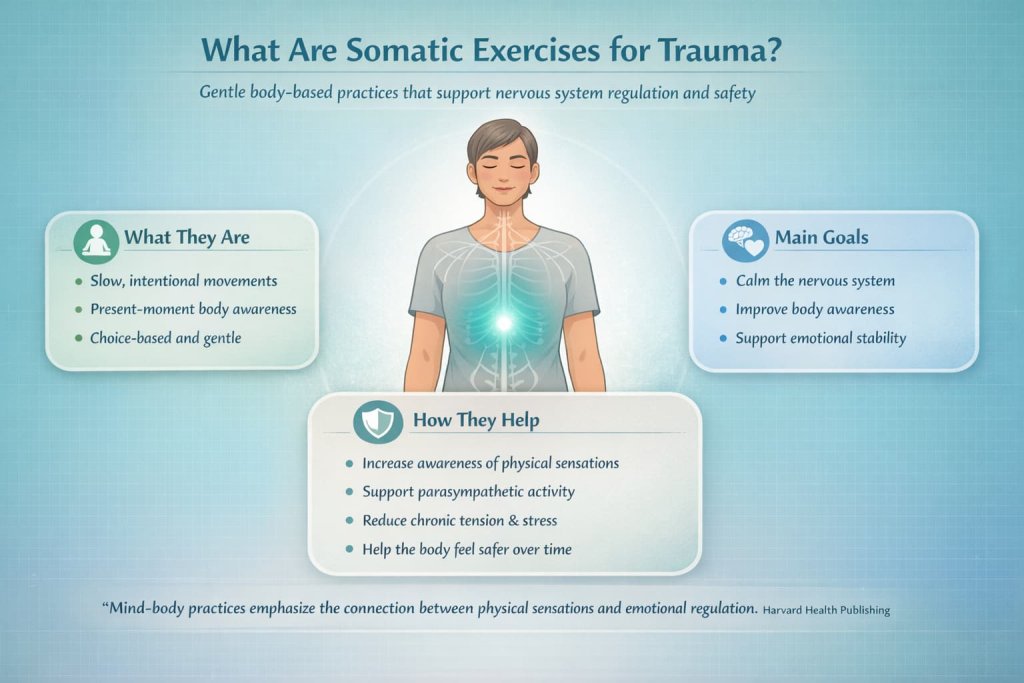
- Increase awareness of physical sensations
- Support parasympathetic (calming) nervous system activity
- Reduce chronic tension and stress responses
- Help the body feel safer over time
According to Harvard Health Publishing, somatic and mind-body practices emphasize the connection between physical sensations and emotional regulation, especially in stress-related conditions.
Why Somatic Exercises Matter for Trauma Recovery
Trauma is often described as a “bottom-up” experience, meaning it affects the body and nervous system before conscious thought. Exercise-based regulation does not replace therapy, but it may help by:
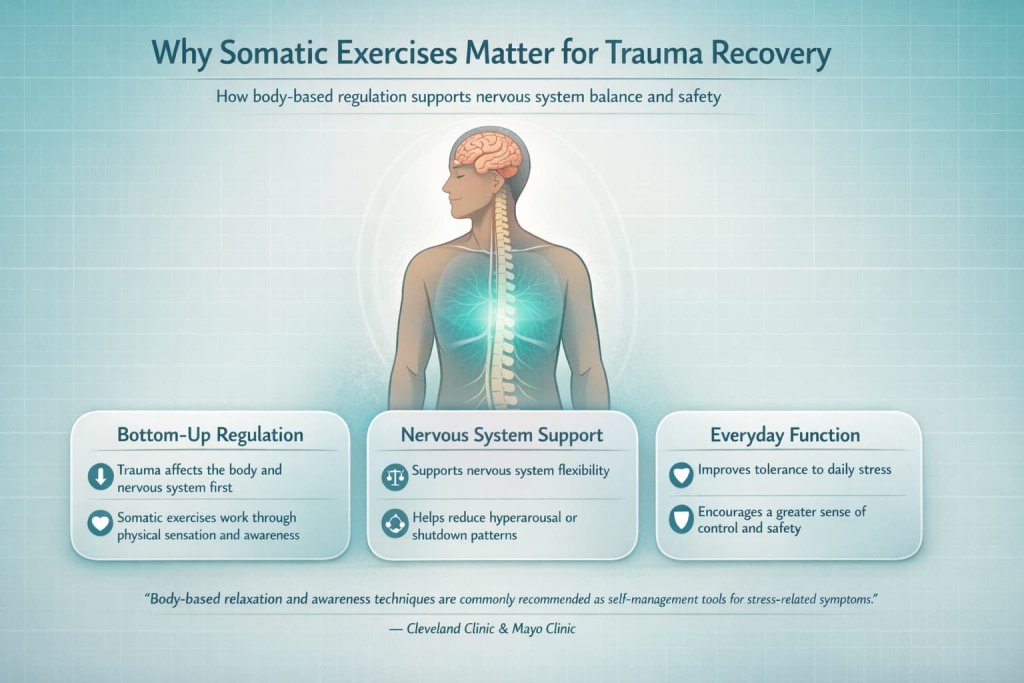
- Supporting nervous system flexibility
- Reducing hyperarousal or shutdown patterns
- Improving tolerance to everyday stress
- Increasing a sense of control and safety
Clinical resources from Cleveland Clinic and Mayo Clinic consistently describe body-based relaxation and awareness techniques as helpful self-management tools for stress-related symptoms.
12 Best Somatic Exercises for Trauma
These 12 somatic exercises focus on gentle body awareness, breath, and movement to help calm the nervous system after trauma. They are designed to support grounding, safety, and regulation without forcing emotional processing.
1. Extended Exhale Breathing
How to do it:
- Inhale gently through the nose for a comfortable count
- Exhale slowly through the mouth, slightly longer than the inhale
- Keep the breath soft, not forced
- Repeat for several cycles
Why it works:
A longer exhale supports parasympathetic nervous system activity, which is associated with calming and recovery states.
Trainer Tip:
If counting feels stressful, focus instead on the feeling of the breath leaving the body.
2. Grounding Through the Feet
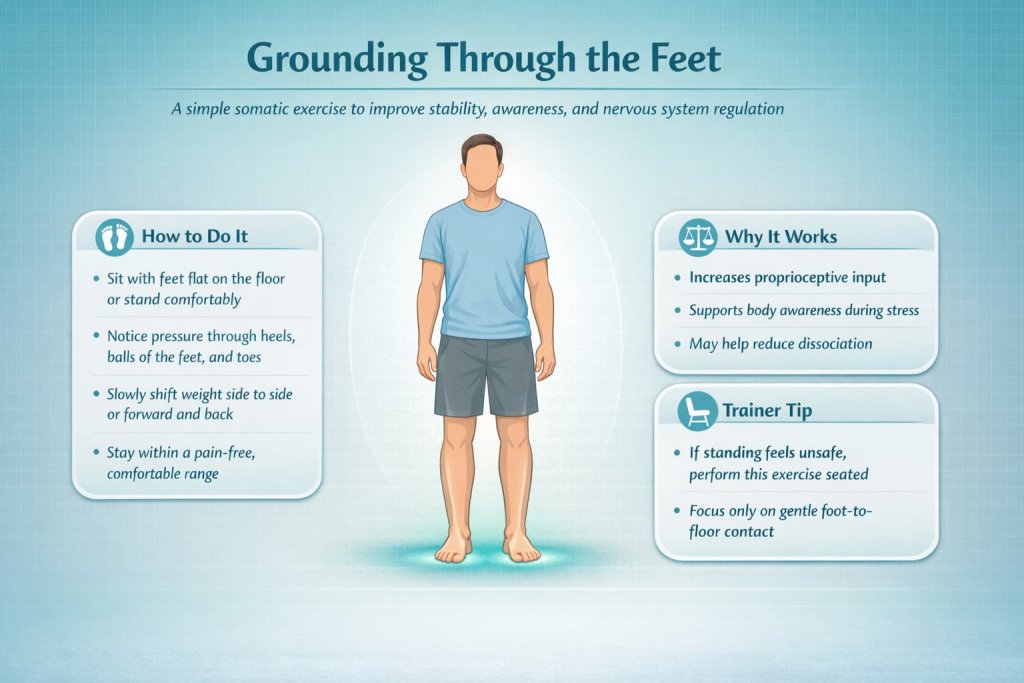
How to do it:
- Sit with feet flat on the floor or stand comfortably
- Notice pressure through the heels, balls of the feet, and toes
- Slowly shift weight side to side or forward and back
- Stay within a pain-free, comfortable range
Why it works:
Grounding through the feet increases proprioceptive input, which can help reduce dissociation and improve body awareness during stress.
Trainer Tip:
If standing feels unsafe, perform this seated and focus on foot-to-floor contact.
3. Orienting to the Environment
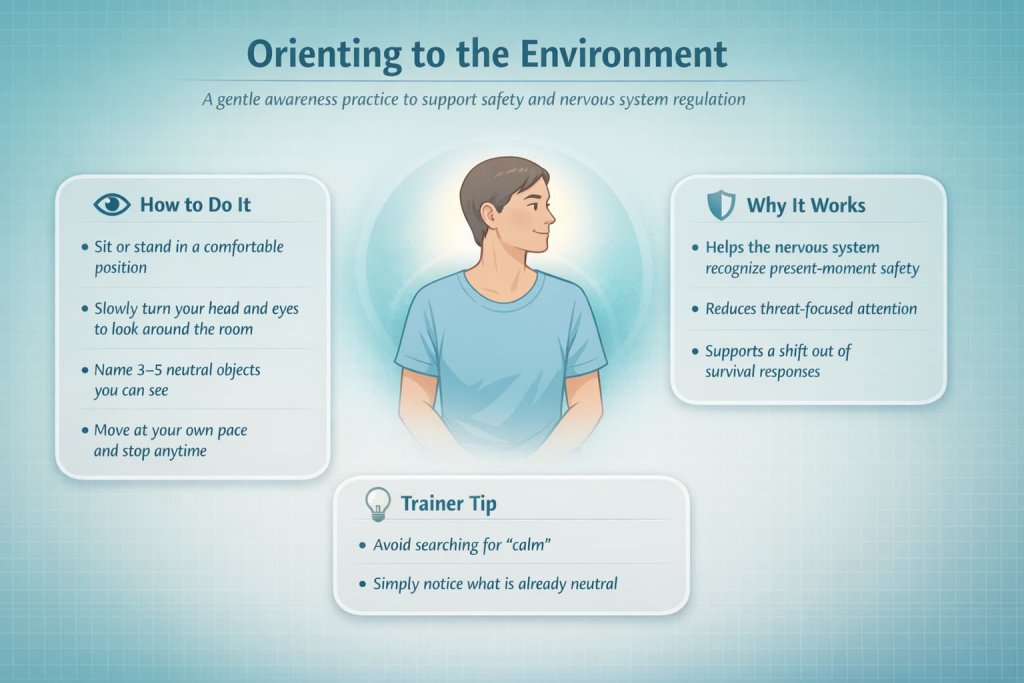
How to do it:
- Sit or stand in a comfortable position
- Slowly turn your head and eyes to look around the room
- Name 3–5 neutral objects you can see (colors, shapes, light sources)
- Move at your own pace and stop anytime
Why it works:
Orienting helps the nervous system recognize that the present environment is safe. Trauma can keep the brain in a threat-focused mode, and visually scanning for neutral cues supports a shift out of survival responses.
Trainer Tip:
Avoid searching for “calm.” Simply noticing what is already neutral is enough to support regulation.
4. Gentle Neck and Shoulder Rolls
How to do it:
- Sit or stand upright with relaxed posture
- Slowly roll shoulders in small circles
- Gently move the neck side to side or in half circles
- Keep movements slow and within comfort
Why it works:
Trauma-related tension often accumulates in the neck and shoulders. Gentle movement helps reduce protective muscle holding without triggering threat responses.
Trainer Tip:
Smaller movements are usually more regulating than large stretches.
5. Hand-on-Chest or Hand-on-Belly Awareness
How to do it:
- Place one hand on the chest or abdomen
- Notice warmth, pressure, and movement with breathing
- Stay for a few breaths
- Remove the hand if discomfort increases
Why it works:
Self-contact can support interoception and emotional regulation by increasing awareness of internal sensations linked to safety.
Trainer Tip:
If direct contact feels uncomfortable, place your hand over clothing or nearby instead.
6. Body Scanning for Neutral Sensations
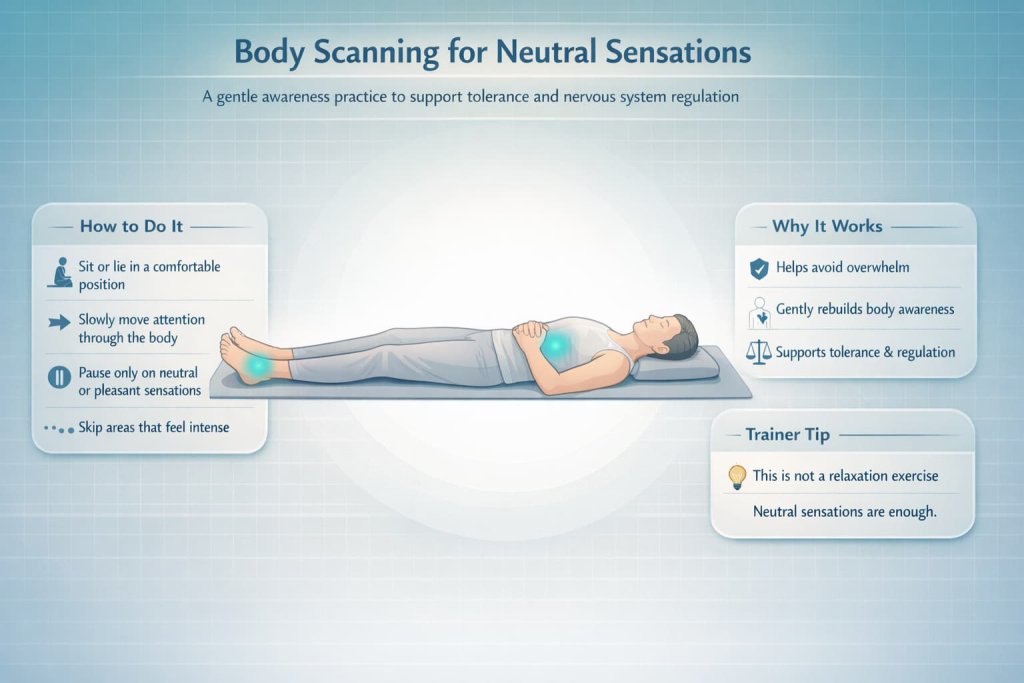
How to do it:
- Sit or lie in a comfortable position
- Slowly move attention through the body
- Pause only on neutral or pleasant sensations
- Skip areas that feel intense
Why it works:
Focusing on neutral sensations avoids overwhelm while gently rebuilding body awareness and tolerance.
Trainer Tip:
This is not a relaxation exercise—neutral is enough.
7. Slow Rocking or Swaying
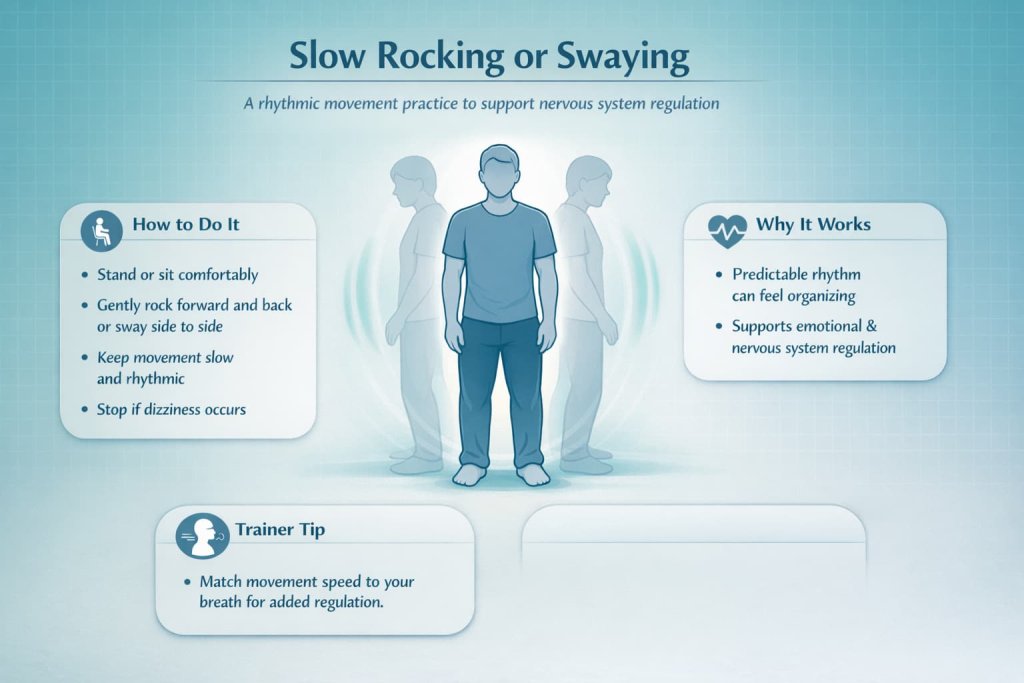
How to do it:
- Stand or sit comfortably
- Gently rock forward and back or sway side to side
- Keep movement slow and rhythmic
- Stop if dizziness occurs
Why it works:
Rhythmic movement can feel organizing to the nervous system and may support emotional regulation through predictable motion.
Trainer Tip:
Match movement speed to your breath for added regulation.
8. Wall Press or Isometric Hold
How to do it:
- Stand facing a wall
- Place hands against the wall at chest height
- Press gently for 3–5 seconds
- Release and notice sensations
Why it works:
Isometric contractions provide strong proprioceptive input, which can increase feelings of stability and control.
Trainer Tip:
Use about 30–50% effort—more pressure is not better.
9. Humming or Gentle Vocalization
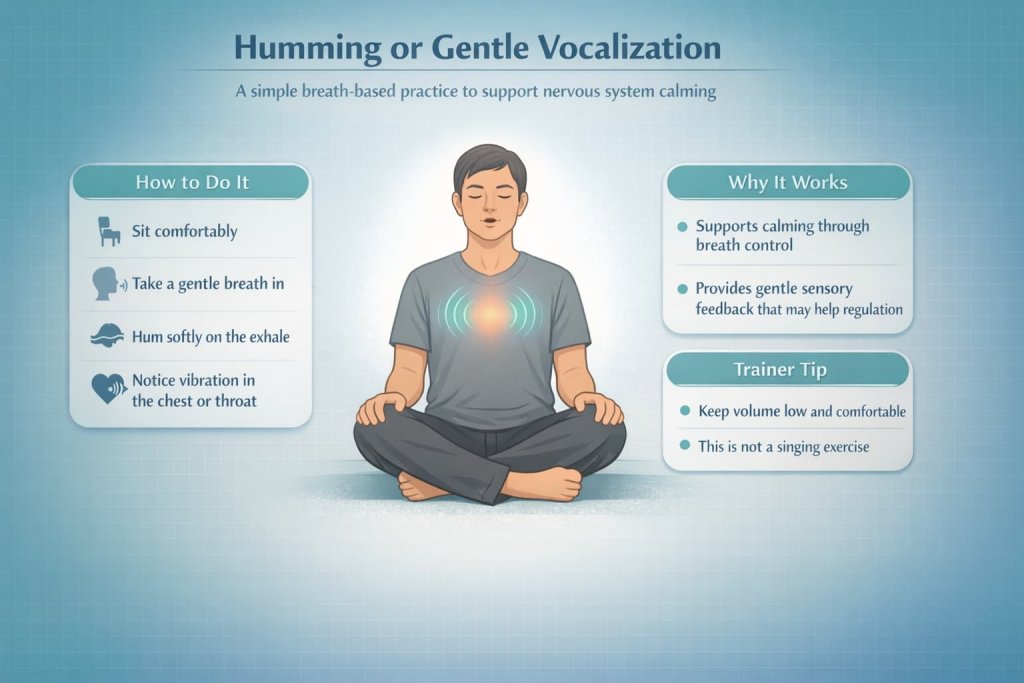
How to do it:
- Sit comfortably
- Take a gentle breath in
- Hum softly on the exhale
- Notice vibration in the chest or throat
Why it works:
Low-frequency vocalization may support nervous system calming through breath control and sensory feedback.
Trainer Tip:
Keep volume low and comfortable; this is not a singing exercise.
10. Seated Pelvic Tilts
How to do it:
- Sit upright on a chair
- Gently tilt the pelvis forward and back
- Keep the spine relaxed
- Move slowly and smoothly
Why it works:
Pelvic awareness supports connection to the body’s center and may reduce rigidity associated with stress.
Trainer Tip:
If seated feels unsafe, perform this lying down with knees bent.
11. Temperature Awareness
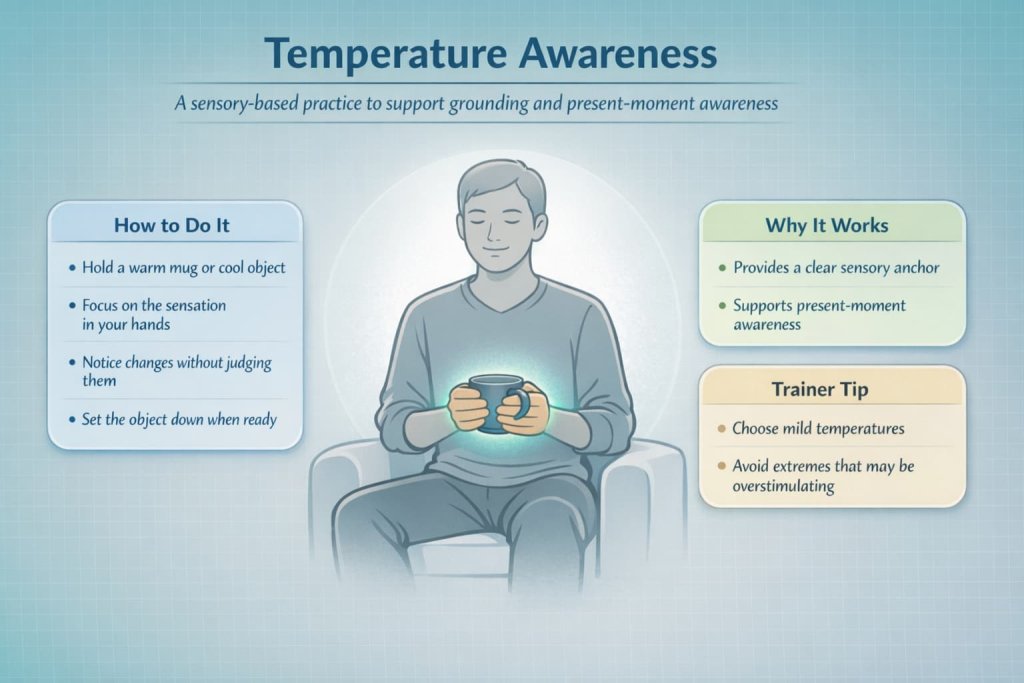
How to do it:
- Hold a warm mug or cool object
- Focus on the sensation in your hands
- Notice changes without judging them
- Set the object down when ready
Why it works:
Temperature provides a clear sensory anchor that can bring attention back to the present moment.
Trainer Tip:
Choose mild temperatures—extremes may be overstimulating.
12. Choice-Based Rest Position
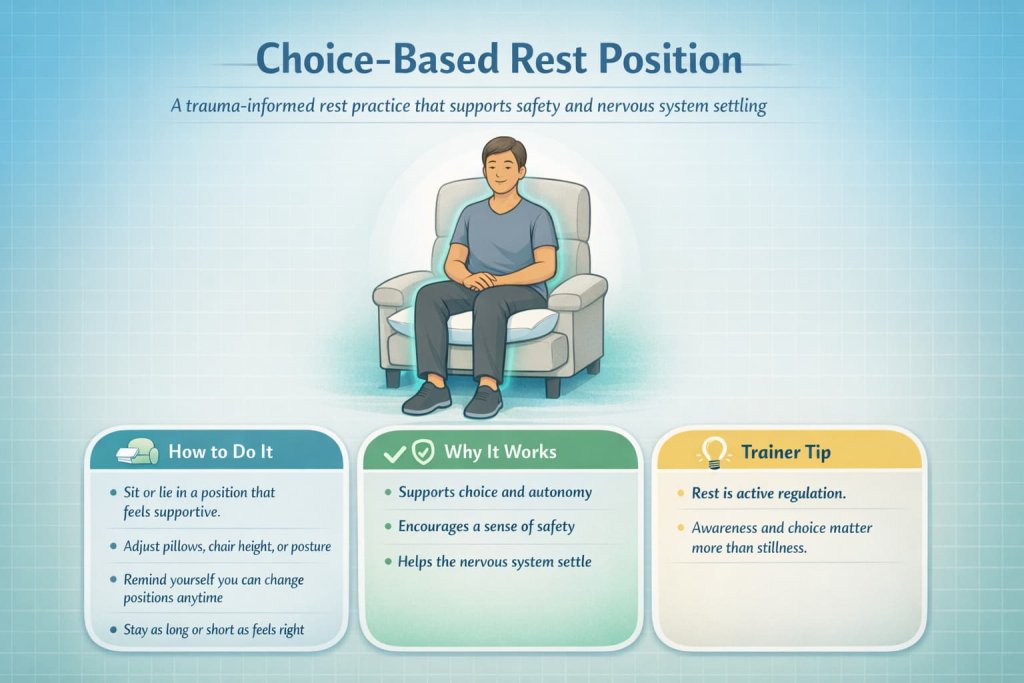
How to do it:
- Sit or lie in a position that feels supportive
- Adjust pillows, chair height, or posture
- Remind yourself you can change positions anytime
- Stay as long or short as feels right
Why it works:
Choice and autonomy are central to trauma-informed practice. Rest with control can support safety and nervous system settling.
Trainer Tip:
Rest is active regulation—not inactivity—when done with awareness and choice.
How Often to Practice Somatic Exercises for Trauma
There is no fixed rule, but many trauma-informed resources suggest:
- Short sessions (1–5 minutes) at first
- Practicing once or twice daily
- Stopping or modifying if distress increases
Consistency and gentleness matter more than duration.
Who Should Be Cautious
Somatic exercises are generally low-intensity, but caution is important if:
- Symptoms intensify significantly during practice
- Dissociation or panic increases
- There is a history of severe or complex trauma
In these cases, guidance from a qualified mental-health professional is recommended.
When to Seek Professional Support
According to the World Health Organization, trauma-related conditions such as PTSD often respond best to evidence-based psychological therapies. Somatic exercises should be viewed as supportive tools, not replacements for professional care.
Seek help if symptoms interfere with daily life, sleep, work, or relationships.
Safety Guidelines Before Starting Somatic Exercises for Trauma
- Start slow and keep sessions short (1–5 minutes is enough)
- Stay choice-based — you can pause, modify, or stop anytime
- Avoid forcing emotions or memories; focus on present-moment sensations
- Work within a neutral, comfortable range — intensity is not required
- Practice in a safe, familiar environment
- Stop if overwhelm increases (dizziness, panic, numbness)
- Seek professional support if symptoms worsen or feel unmanageable
These guidelines help keep somatic exercises safe, supportive, and trauma-informed.
Frequently Asked Questions
Are somatic exercises the same as therapy?
No. Somatic exercises are self-regulation tools. Therapy involves structured assessment and treatment by a trained professional.
Can somatic exercises replace trauma therapy?
No. Major health organizations recommend them as complementary, not primary, treatments.
How fast do somatic exercises work?
Some people notice calming effects quickly, while others need consistent practice over time.
Are these exercises safe to do alone?
Many are safe for self-practice, but choice-based pacing and stopping when needed are essential.
Can somatic exercises increase emotions?
They can sometimes bring awareness to sensations or feelings. This is why gradual pacing is important.
Do I need special equipment?
No. Most somatic exercises use body awareness, breath, or simple movements.
Conclusion
Somatic exercises for trauma offer a gentle, body-first way to support nervous system regulation and emotional stability. When practiced with choice, safety, and patience, they may help you reconnect with your body and reduce everyday stress responses. For long-term recovery, combining these exercises with professional support provides the strongest foundation.
References
- World Health Organization (WHO): Post-traumatic stress disorder (PTSD) fact sheet
- VA/DoD Clinical Practice Guideline: Management of PTSD and Acute Stress Disorder (Full CPG PDF)
- U.S. Department of Veterans Affairs (VA): PTSD Clinical Practice Guideline overview
- Somatic Experiencing effectiveness and key factors (Scoping review, PMC)
- Mindfulness-based treatments for PTSD (Scoping review, PMC)