
A step aerobics workout is a cardiovascular exercise routine performed by stepping up and down on a raised platform in rhythmic, repeated patterns. It helps burn calories, improve heart health, and tone the lower body while also engaging the core and upper body when arm movements are added. Understanding how step aerobics works—and how to do it safely—allows you to get maximum benefits while minimizing joint stress.
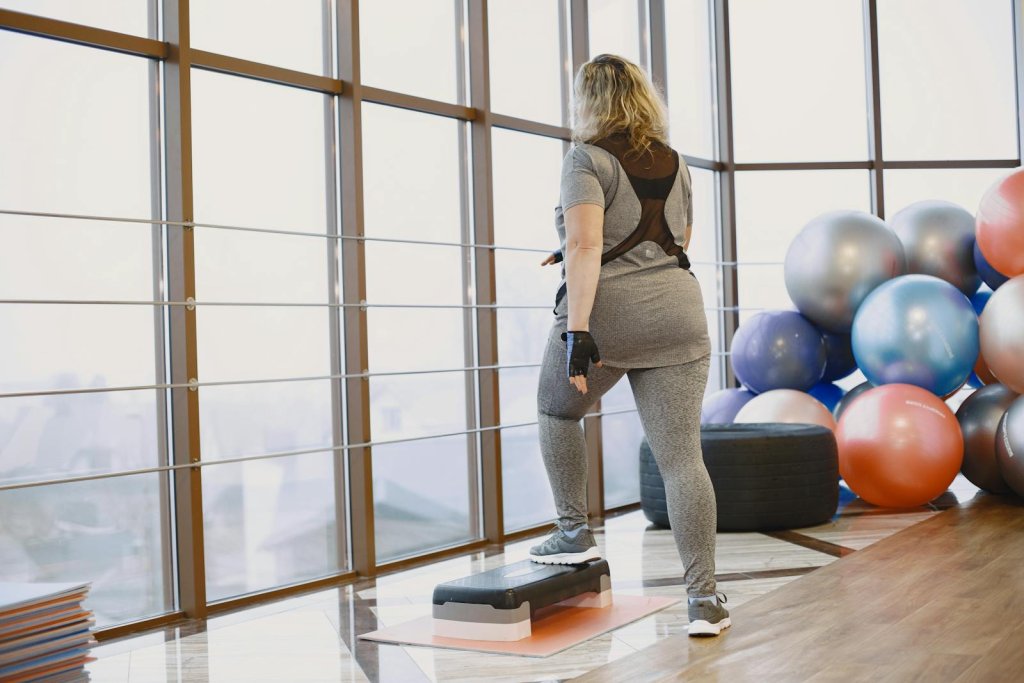
Step aerobics remains popular because it is adjustable for different fitness levels, can be done at home or in a class setting, and aligns well with official physical activity recommendations from organizations like the CDC and ACSM.
What Is a Step Aerobics Workout?
A step aerobics workout is a form of aerobic exercise that uses a sturdy platform (usually 4–10 inches high) to elevate and lower the body in a controlled, repetitive manner. The workout may include simple stepping patterns or choreographed sequences combined with arm movements.
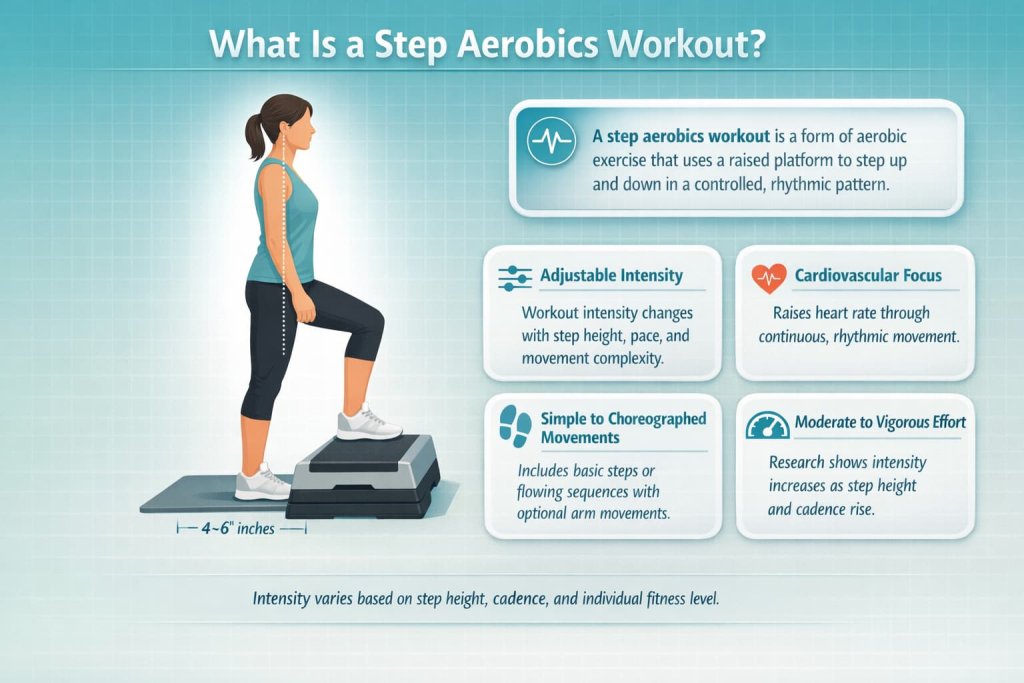
Research measuring oxygen consumption (VO₂) and heart-rate responses during bench/step aerobics shows that workout intensity increases as step height and cadence rise—often ranging from moderate to vigorous effort depending on how the routine is performed.
Why Step Aerobics Workout Is Effective for Cardio Fitness
Regular step aerobics workouts support cardiovascular health by raising heart rate and maintaining it over sustained periods. When performed consistently, step aerobics aligns with public health recommendations of at least 150 minutes of moderate-intensity aerobic activity per week.
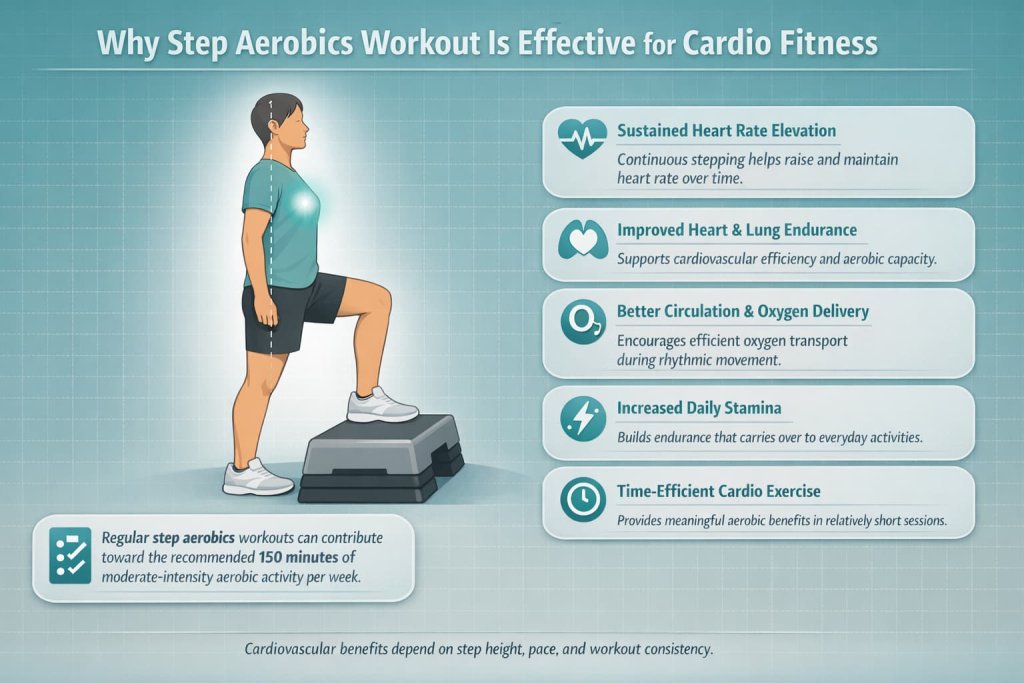
Benefits supported by research and guidelines include:
- Improved heart and lung endurance
- Better circulation and oxygen delivery
- Increased stamina for daily activities
- Efficient calorie expenditure in a short time
American College of Sports Medicine (ACSM) guidance confirms that rhythmic, weight-bearing aerobic activities like step aerobics contribute to overall cardiovascular fitness.
Calories Burned During a Step Aerobics Workout
Calorie burn depends on step height, body weight, and intensity. Based on MET values from the Compendium of Physical Activities:
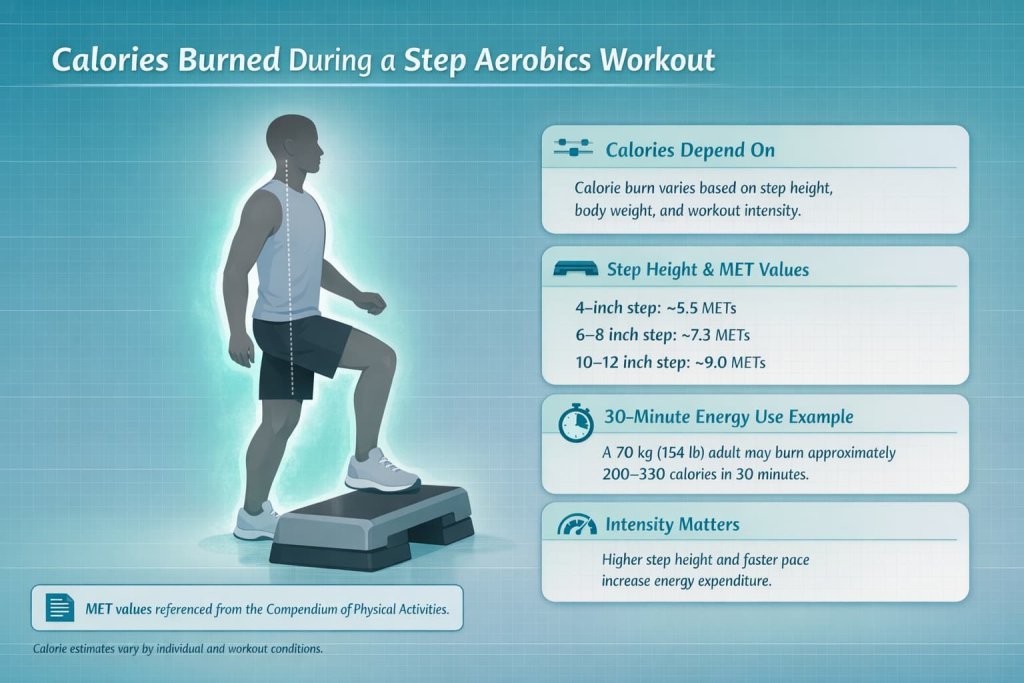
- 4-inch step: approximately 5.5 METs
- 6–8 inch step: approximately 7.3 METs
- 10–12 inch step: approximately 9.0 METs
For a 70 kg (154 lb) adult, a 30-minute step aerobics workout may burn roughly 200–330 calories, depending on intensity.
10 Best Step Aerobics Workout Moves
Below are ten effective step aerobics workout moves commonly used in classes and home routines. Perform them in a continuous flow or circuit format.
1. Basic Step
Why it works:
The Basic Step is the foundation of every step aerobics workout. It helps establish rhythm, balance, and proper stepping mechanics while gradually elevating heart rate. This move allows beginners to build confidence before progressing to more complex patterns.
Muscles worked:
Quadriceps, glutes, hamstrings, calves, and core stabilizers.
How to do it:
- Stand facing the step platform with feet hip-width apart
- Step up with your right foot, then bring your left foot onto the step
- Step down with your right foot, followed by your left
- Alternate the lead foot after several repetitions
- Maintain an upright posture and controlled tempo
Trainer Tip:
Focus on placing your full foot on the platform and keeping your chest tall to reduce knee strain and improve balance.
2. Alternating Knee Lift
Why it works:
This movement adds hip flexion and light core engagement while keeping the cardiovascular demand steady. It increases balance challenge and helps transition from basic steps to more dynamic patterns.
Muscles worked:
Quadriceps, hip flexors, glutes, core muscles, and calves.
How to do it:
- Step up onto the platform with your right foot
- Lift your left knee to hip height
- Step back down with the left foot, then the right
- Repeat on the opposite side
- Keep movements smooth and controlled
Trainer Tip:
Avoid leaning back during the knee lift—engage your core and lift the knee only to a comfortable height.
3. V-Step
Why it works:
The V-Step introduces lateral movement, increasing coordination and activating additional lower-body muscles. It also slightly raises intensity compared to straight stepping patterns.
Muscles worked:
Glutes, quadriceps, inner thighs, calves, and hip stabilizers.
How to do it:
- Step wide onto the platform with your right foot
- Step wide with your left foot to form a “V” shape
- Step back down to the floor, feet returning to center
- Alternate lead foot after several repetitions
Trainer Tip:
Control the width of your steps—wider isn’t always better. Stay within a range that feels stable and joint-friendly.
4. Corner-to-Corner Step
Why it works:
This diagonal stepping pattern increases glute activation and improves coordination. It also introduces gentle rotation, making the workout more dynamic without excessive impact.
Muscles worked:
Glutes, quadriceps, hamstrings, calves, and core.
How to do it:
- Step onto one corner of the platform with your lead foot
- Bring the other foot up briefly
- Step down diagonally off the opposite corner
- Repeat in a flowing, alternating pattern
Trainer Tip:
Turn your whole body slightly rather than twisting only at the knee to maintain safe alignment.
5. Side Step with Tap
Why it works:
This is a lower-impact movement that supports joint comfort while keeping the heart rate elevated. It’s ideal for recovery phases or beginner-friendly routines.
Muscles worked:
Outer thighs, glutes, quadriceps, and calves.
How to do it:
- Stand sideways next to the step
- Step onto the platform with the inside foot
- Tap the outside foot onto the step
- Step back down and repeat
- Switch sides after several repetitions
Trainer Tip:
Use this move during intervals to maintain cardio benefits without excessive fatigue.
6. Over-the-Top Step
Why it works:
The Over-the-Top Step adds rotational movement and balance demand, increasing coordination and lower-body engagement while maintaining aerobic intensity.
Muscles worked:
Glutes, quadriceps, hip stabilizers, calves, and core.
How to do it:
- Step onto the platform with one foot
- Bring the other foot up and step across to the opposite side
- Step down on the far side of the platform
- Repeat back across in the opposite direction
Trainer Tip:
Move smoothly and keep your gaze forward to help maintain balance.
7. Repeater Knee
Why it works:
This move keeps one foot on the step for multiple knee lifts, elevating heart rate and increasing muscular endurance in the lower body.
Muscles worked:
Hip flexors, quadriceps, glutes, calves, and core.
How to do it:
- Step onto the platform with your lead foot
- Lift the opposite knee three times in a controlled rhythm
- Step down and switch sides
- Maintain steady breathing throughout
Trainer Tip:
Drive the knee upward using hip control rather than momentum for better muscle engagement.
8. L-Step
Why it works:
The L-Step combines forward and lateral movement, improving agility and coordination while increasing cardiovascular demand.
Muscles worked:
Glutes, quadriceps, hamstrings, calves, and hip stabilizers.
How to do it:
- Step up onto the platform with your lead foot
- Step out to the side with the opposite foot
- Step back down behind the platform
- Repeat in a fluid pattern and alternate sides
Trainer Tip:
Slow the movement initially to master the pattern before increasing speed.
9. Step Kick
Why it works:
Adding a controlled kick introduces dynamic flexibility and challenges balance while maintaining moderate cardio intensity.
Muscles worked:
Hamstrings, quadriceps, glutes, hip flexors, and core.
How to do it:
- Step onto the platform with one foot
- Extend the opposite leg forward in a gentle kick
- Step back down and switch sides
- Keep kicks controlled and pain-free
Trainer Tip:
Avoid locking the knee during the kick—focus on smooth extension rather than height.
10. Power Step
Why it works:
The Power Step increases intensity through stronger push-offs and quicker tempo, making it ideal for advanced participants seeking higher calorie burn.
Muscles worked:
Glutes, quadriceps, hamstrings, calves, and core.
How to do it:
- Step forcefully onto the platform using one foot
- Drive through the heel to lift the body
- Step down under control
- Alternate lead foot and maintain rhythm
Trainer Tip:
Only use power moves after mastering basic technique and warming up thoroughly.
How to Prepare for a Step Aerobics Workout
Preparing properly helps reduce injury risk and improves workout quality. A few simple steps ensure your body, equipment, and environment are ready before you begin.
Before starting your workout:
- Begin with a 5–10 minute warm-up to gradually raise heart rate and loosen joints
- Use gentle movements such as marching in place, step touches, ankle circles, and light hip mobility exercises
- Wear supportive athletic shoes with good grip and cushioning to improve stability and impact control
- Place the step platform on a flat, non-slip surface and clear the surrounding area of obstacles
- Choose an appropriate step height based on your current fitness level
- Start with slower movements and focus on proper form before increasing speed or intensity
- Keep all movements controlled and pain-free, prioritizing comfort over height or tempo
This preparation helps create a safer, more effective step aerobics workout and supports long-term consistency.
Muscles Worked in a Step Aerobics Workout
A step aerobics workout is a lower-body–dominant cardio exercise with added full-body involvement.
Primary muscles engaged:
- Quadriceps
- Gluteus maximus and medius
- Hamstrings
- Calves
Secondary muscles engaged:
- Core muscles for balance and posture
- Hip stabilizers
- Shoulders and arms when arm patterns are added
Because it is weight-bearing, step aerobics also supports bone health when performed appropriately.
Step Height and Safety Guidelines
Step height plays a major role in joint loading and overall safety during a step aerobics workout. Using the right height allows you to gain cardiovascular benefits without unnecessary strain.
General guidelines include:
- Beginner or deconditioned exercisers: 4 inches
- Intermediate exercisers: 6–8 inches
- Advanced exercisers: up to 10 inches, with good technique
A widely accepted safety guideline is to keep the knee from bending beyond approximately 90 degrees when stepping up. Excessive knee flexion or rapid movements on a high platform may increase joint stress.
Additional safety considerations include maintaining an upright posture, placing the entire foot on the step, and stepping down under control rather than jumping. Tempo should allow you to move smoothly while staying balanced and in control.
Who Should Be Careful With Step Aerobics Workouts
Step aerobics workouts are adaptable, but certain individuals may need to take extra precautions or modify intensity.
Extra care is advised for people who:
- Experience knee, hip, or ankle discomfort during weight-bearing exercise
- Have balance limitations or are new to coordinated movement patterns
- Are returning to exercise after a long period of inactivity
- Are new to cardio workouts and unsure of appropriate intensity
In these cases, starting with a lower step height, slower pace, and simpler movements is recommended. Using hand support nearby and limiting impact-based variations can also improve comfort and confidence.
Common Mistakes to Avoid in a Step Aerobics Workout
Avoid these common errors:
- Using a step that is too high for your fitness level
- Locking the knees at the top of the step
- Letting the heel hang off the platform
- Moving too fast before mastering technique
- Skipping warm-up or cool-down phases
Proper form ensures safety and effectiveness.
Equipment Needed for Step Aerobics Workout
Essential equipment includes:
- A sturdy, non-slip step platform
- Athletic shoes with good grip
- Comfortable workout clothing
- Optional: light hand weights for advanced routines
Adjustable step platforms are widely available and commonly range from budget to premium pricing depending on brand and features.
Frequently Asked Questions (FAQs)
Is a step aerobics workout good for weight loss?
A step aerobics workout may support weight management by increasing calorie expenditure when combined with balanced nutrition and consistent activity.
Can beginners do step aerobics workouts?
Yes. Beginners should start with lower step heights, slower tempos, and simple patterns.
Is step aerobics bad for the knees?
When performed with proper step height and technique, step aerobics is generally considered knee-friendly for healthy individuals.
How often should I do step aerobics workouts?
Most guidelines support 3–5 sessions per week as part of a balanced fitness routine.
Can step aerobics replace walking or running?
Step aerobics can serve as an alternative aerobic exercise, offering similar cardiovascular benefits with added coordination challenges.
Do I need music for step aerobics?
Music is optional but often improves rhythm, motivation, and workout enjoyment.
Conclusion
A step aerobics workout is a proven, adaptable, and enjoyable way to burn calories, improve cardiovascular fitness, and tone the lower body. By choosing the right step height, following safe technique, and progressing gradually, you can make step aerobics a long-term part of your fitness routine.
If you’re looking for a fun, effective cardio workout that fits official activity guidelines and works well at home or in classes, step aerobics is a smart choice.
References
- American Heart Association — Warm Up and Cool Down guidance (5–10 minutes)
- ACE — Step Training Guidelines (step height and knee-flexion safety guidance PDF)
- Hallage et al. — 12 weeks of step aerobics improves functional fitness in older women (study)
- Maybury & Waterfield — Step height vs impact force in step exercise (biomechanics, PMC)
- Rutkowska-Kucharska et al. — Technique factors linked to potential overloading in step aerobics (PMC)