
Water aerobics exercises are low-impact, full-body movements performed in a pool that use water resistance to support strength, cardiovascular fitness, and joint comfort. Because the water reduces weight-bearing stress while still creating resistance, these exercises are widely used by beginners, older adults, and people seeking joint-friendly workouts.
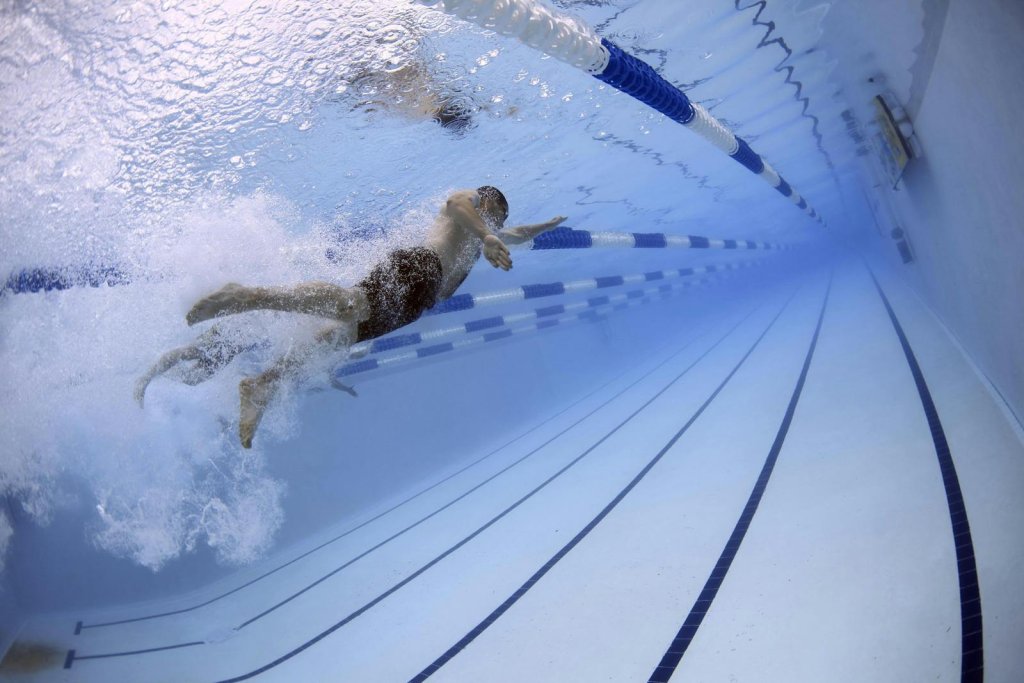
Understanding water aerobics exercises matters because they allow you to stay active, build fitness, and meet weekly movement guidelines without the high joint impact associated with many land-based workouts. When done correctly, water aerobics can support strength, endurance, balance, and mobility in a safe, scalable way.
What Are Water Aerobics Exercises?
Water aerobics exercises are structured movements performed in shallow or deep water, typically in chest-deep pools. Resistance comes from the water itself rather than external weights.
Common characteristics include:
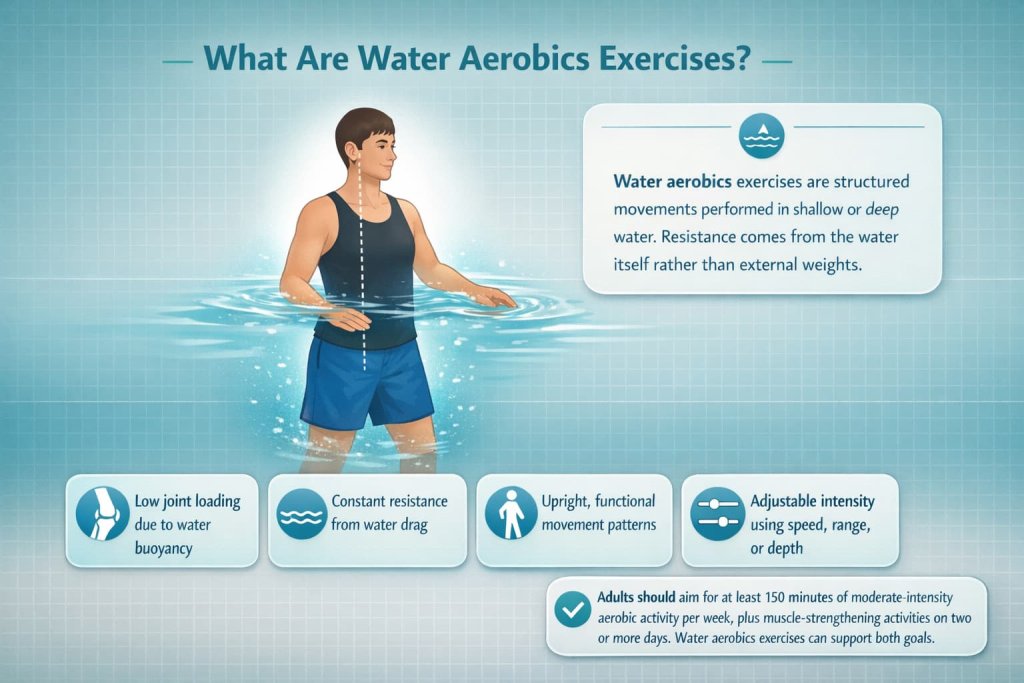
- Low joint loading due to water buoyancy
- Constant resistance from water drag
- Upright, functional movement patterns
- Adjustable intensity by changing speed, range of motion, or water depth
According to the Centers for Disease Control and Prevention, adults should aim for at least 150 minutes of moderate-intensity aerobic activity per week, plus muscle-strengthening activities on two or more days. Water aerobics exercises can help meet both goals.
Why Water Aerobics Exercises Matter for Joint Support
Water changes how your body experiences movement.
Key properties of water that make these exercises joint-friendly:
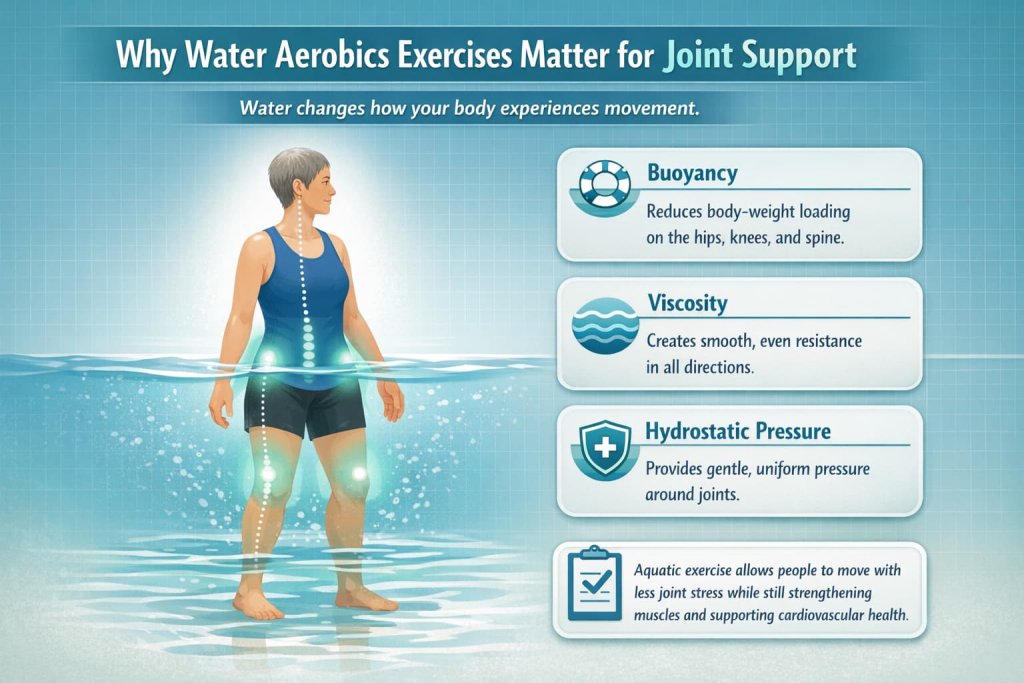
- Buoyancy: Reduces body weight loading on hips, knees, and spine
- Viscosity: Creates smooth, even resistance in all directions
- Hydrostatic pressure: Provides gentle, uniform pressure around joints
The Mayo Clinic notes that aquatic exercise allows people to move with less joint stress while still strengthening muscles and supporting cardiovascular health.
12 Best Water Aerobics Exercises
Low-impact, full-body pool movements that support strength, cardiovascular fitness, and joint comfort.
These water aerobics exercises use water resistance to challenge muscles while reducing stress on the joints.
1. Water Walking
A foundational cardio and mobility exercise.
How to do it:
- Stand in chest-deep water with feet hip-width apart
- Walk forward with an upright posture and eyes forward
- Swing arms naturally through the water to increase resistance
- Take controlled steps, rolling from heel to toe
- Increase pace or stride length to raise intensity
Why it works:
Water walking provides steady cardiovascular stimulation while reducing impact on the hips, knees, and spine. Water resistance slows movement, encouraging controlled muscle engagement and improved movement quality.
Muscles worked:
Quadriceps, hamstrings, glutes, calves, hip flexors, core, shoulders
Trainer Tip:
Focus on posture first. Keeping your chest tall and core lightly engaged improves efficiency and balance.
2. Water Jogging
A higher-intensity version of water walking.
How to do it:
- Jog in place or move forward in chest-deep water
- Drive knees comfortably upward without forcing height
- Pump arms forward and back with control
- Maintain a tall, upright torso
- Keep movements smooth rather than bouncing
Why it works:
Water jogging raises heart rate while limiting joint impact. The resistance challenges both cardiovascular endurance and muscular control, making it a popular low-impact cardio option.
Muscles worked:
Glutes, quadriceps, hamstrings, calves, hip flexors, core, shoulders
Trainer Tip:
Shorten your stride if balance feels difficult. Speed can always be increased later.
3. Jumping Jacks (Water Version)
A classic movement adapted for the pool.
How to do it:
- Start standing tall with feet together
- Step legs out to the side, then back together
- Move arms out and overhead through the water
- Avoid jumping if joint comfort is a concern
- Adjust speed to control intensity
Why it works:
Water-based jumping jacks elevate heart rate while reducing ground reaction forces. The resistance of water increases muscular demand without high-impact landing forces.
Muscles worked:
Shoulders, chest, glutes, quadriceps, calves, core
Trainer Tip:
Move slowly at first. Faster movements dramatically increase resistance in water.
4. Cross-Country Ski
A full-body coordination exercise.
How to do it:
- Stand upright in chest-deep water
- Step one leg forward while the opposite arm moves forward
- Switch sides in a smooth, alternating pattern
- Keep chest lifted and core engaged
- Move through a comfortable stride length
Why it works:
This exercise trains coordination while engaging both upper and lower body simultaneously. Continuous movement supports cardiovascular fitness and full-body endurance.
Muscles worked:
Glutes, quadriceps, hamstrings, calves, shoulders, upper back, core
Trainer Tip:
Think “long and smooth” rather than fast to maintain control and balance.
5. Standing Knee Lifts
A balance and core-focused movement.
How to do it:
- Stand tall with feet hip-width apart
- Lift one knee toward chest height
- Lower with control and switch sides
- Use arms lightly for balance or resistance
- Keep torso upright throughout
Why it works:
Standing knee lifts challenge balance and activate the core while promoting hip mobility. Water support allows controlled movement without joint strain.
Muscles worked:
Hip flexors, abdominals, glutes, quadriceps
Trainer Tip:
Slow the lowering phase to increase core engagement and stability.
6. Water Squats
A lower-body strength staple.
How to do it:
- Stand with feet shoulder-width apart
- Sit hips back into a squat position
- Keep chest upright and knees tracking forward
- Press through heels to stand back up
- Control speed both down and up
Why it works:
Water squats strengthen the lower body while water resistance helps regulate depth and speed, supporting joint-friendly strength training.
Muscles worked:
Glutes, quadriceps, hamstrings, calves, core
Trainer Tip:
Exhale as you stand to support core stability and posture.
7. Alternating Lunges
A strength and balance challenge.
How to do it:
- Step one foot forward into a lunge
- Lower with control while keeping torso upright
- Push through front heel to return to standing
- Alternate sides after each repetition
- Maintain steady balance throughout
Why it works:
Alternating lunges train unilateral leg strength and balance. Water resistance reduces impact while still challenging stability.
Muscles worked:
Glutes, quadriceps, hamstrings, calves, core
Trainer Tip:
Shorten your step length if balance feels unstable.
8. Leg Swings
A hip-mobility and stability exercise.
How to do it:
- Hold the pool wall or stand freely
- Swing one leg forward and back with control
- Keep torso upright and still
- Move through a comfortable range
- Switch sides after several repetitions
Why it works:
Leg swings promote hip mobility and joint range of motion without loading the joints. Water resistance slows the swing for safer control.
Muscles worked:
Hip flexors, glutes, hamstrings, adductors, abductors
Trainer Tip:
Avoid forcing range. Controlled movement is more beneficial than height.
9. Arm Push-Pulls
An upper-body resistance exercise.
How to do it:
- Stand tall with arms extended forward
- Push hands through the water away from your body
- Pull arms back toward your torso
- Keep shoulders relaxed and down
- Increase speed to raise resistance
Why it works:
Water drag provides constant resistance, making this an effective upper-body strengthening exercise without weights.
Muscles worked:
Chest, upper back, shoulders, arms, core
Trainer Tip:
Use open hands for less resistance or closed fists for more challenge.
10. Lateral Side Steps
A movement often missed in land workouts.
How to do it:
- Step sideways across the pool
- Keep toes pointing forward
- Bend knees slightly for stability
- Add arm movements to increase intensity
- Move both directions evenly
Why it works:
Side-to-side movement strengthens stabilizing muscles that support balance and joint control, especially at the hips and knees.
Muscles worked:
Glutes, hip abductors, adductors, quadriceps, core
Trainer Tip:
Move slowly to feel the resistance before increasing speed.
11. Flutter Kicks
A core-supported leg exercise.
How to do it:
- Hold the pool edge or a kickboard
- Extend legs behind you
- Kick gently in alternating motions
- Keep core engaged and movements controlled
- Avoid excessive splashing
Why it works:
Flutter kicks build lower-body endurance while water support reduces spinal loading and joint stress.
Muscles worked:
Hip flexors, quadriceps, glutes, calves, core
Trainer Tip:
Small, fast kicks are usually more effective than large swings.
12. Treading Water
A full-body endurance drill.
How to do it:
- Stay upright in deep or shallow water
- Move arms and legs continuously
- Adjust effort to maintain position
- Use flotation support if needed
- Breathe steadily throughout
Why it works:
Treading water requires continuous muscle activation, supporting cardiovascular endurance and full-body coordination.
Muscles worked:
Shoulders, arms, core, hips, legs
Trainer Tip:
Start with short intervals and rest as needed before extending duration.
How Often Should You Do Water Aerobics Exercises?
The American College of Sports Medicine recommends combining aerobic and strength activity weekly.
General guidance:
- 2–5 sessions per week
- 30–60 minutes per session
- Mix cardio-focused and strength-focused movements
Intensity can be adjusted by speed, range of motion, or water depth rather than adding external load.
Who Should Do Water Aerobics Exercises — and Who Should Be Cautious
Water aerobics exercises are suitable for many people because they are low-impact and easily adjustable.
They may be appropriate for:
- Beginners starting an exercise routine
- Older adults focusing on joint comfort and balance
- People seeking low-impact cardio options
- Individuals returning to activity after long periods of inactivity
Caution is advised for individuals with:
- Open wounds or skin infections
- Uncontrolled heart, respiratory, or neurological conditions
- Severe balance disorders without supervision
According to the Centers for Disease Control and Prevention, individuals with underlying health conditions should consult a qualified professional before beginning a new exercise program.
Pool Setup and Safety Guidelines Before Starting
Proper setup helps reduce risk and improves exercise effectiveness.
Key safety considerations:
- Water depth: Waist- to chest-deep water allows upright posture and controlled movement
- Footwear: Water shoes may improve traction and comfort on pool floors
- Warm-up: Begin with at least 5 minutes of gentle movement
- Hydration: Drink water before and after sessions, even when exercising in a pool
- Temperature: Avoid very warm water for moderate or higher-intensity workouts
The Aquatic Exercise Association emphasizes gradual intensity changes and proper water depth selection for safe aquatic training.
How to Adjust Water Aerobics Intensity for Different Fitness Levels
One advantage of water aerobics exercises is how easily intensity can be scaled.
You can adjust difficulty by:
- Moving faster or slower through the water
- Increasing or decreasing range of motion
- Changing water depth (deeper water increases resistance)
- Adding or removing arm movements
- Using flotation or resistance tools only when appropriate
Intensity should feel challenging but still allow controlled movement and steady breathing.
Common Mistakes to Avoid During Water Aerobics Exercises
Avoiding common errors helps protect joints and improve results.
Frequent mistakes include:
- Moving too quickly before mastering control
- Leaning forward or collapsing posture
- Holding breath during movements
- Skipping warm-up or cool-down phases
- Forcing range of motion beyond comfort
Controlled, smooth movement is more effective than speed in water-based exercise.
When to Stop or Seek Professional Guidance
Stop exercising and seek guidance if you experience:
- Dizziness, lightheadedness, or chest discomfort
- Sharp or persistent joint pain
- Sudden shortness of breath
- Loss of balance or coordination
- Unusual fatigue that does not resolve with rest
Exercise should feel challenging but never painful or alarming. When in doubt, reduce intensity or consult a qualified fitness or healthcare professional.
Who Can Benefit Most From Water Aerobics Exercises?
Water aerobics exercises are commonly used by:
- Beginners starting an exercise routine
- Older adults focusing on joint comfort
- People returning to activity after long inactivity
- Individuals seeking low-impact cardio options
Programs can be adapted for different fitness levels and goals.
Frequently Asked Questions
Are water aerobics exercises good for weight loss?
They can support calorie expenditure and cardiovascular fitness when performed at sufficient intensity and frequency.
Can beginners do water aerobics exercises?
Yes. Movements are scalable, and water supports balance and control.
Do water aerobics exercises build strength?
They can support muscular strength and endurance through continuous water resistance.
How deep should the water be?
Most classes use chest-deep water, but depth can vary depending on goals and comfort.
Are water aerobics exercises safe for joint pain?
They are commonly used in joint-friendly fitness programs, but individual tolerance varies.
Do I need special equipment?
Most exercises use only body weight, though kickboards or flotation belts may be added.
Conclusion
Water aerobics exercises offer a practical way to build strength, improve cardiovascular fitness, and support joint comfort without high impact. With adjustable intensity and accessible movements, they fit well into long-term, sustainable fitness routines.
If you’re looking for a low-impact workout that still challenges your body, water aerobics exercises are a smart place to start.
References
- U.S. HHS — Physical Activity Guidelines for Americans, 2nd edition (PDF)
- Aquatic Exercise Association (AEA) — Standards and Guidelines for Aquatic Fitness Programming (PDF, 2025)
- Cochrane — Aquatic exercise for knee or hip osteoarthritis (Plain-language summary, Mar 23, 2016)
- Systematic Review (PMC) — Effects of Aquatic Exercise in Older People with Osteoarthritis (2025)
- Arthritis Foundation — Water exercise benefits for arthriti