
Tibialis anterior exercises are targeted movements that strengthen the muscle along the front of your shin, supporting ankle control, walking mechanics, and lower-leg stability. This muscle plays a key role in lifting the foot (ankle dorsiflexion), helping prevent tripping, improving balance, and supporting pain-free movement during daily activities and sports.
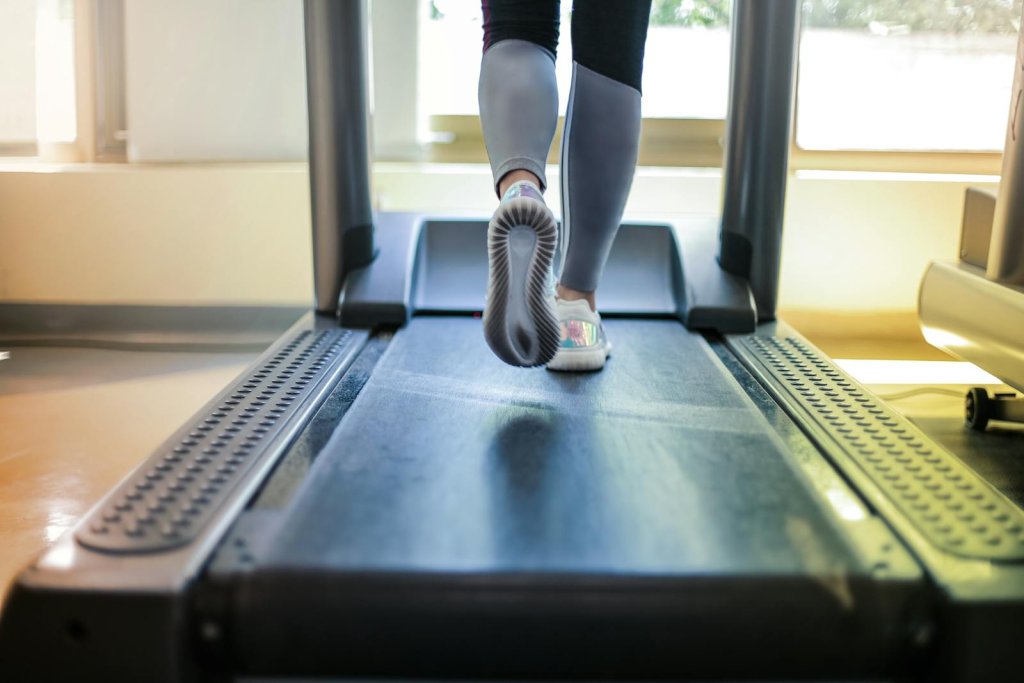
Understanding how to train the tibialis anterior correctly matters because weak shin muscles are commonly linked to issues such as poor gait mechanics, ankle instability, and overuse conditions like shin splints. The exercises below focus on safe, progressive strengthening using evidence-based principles recommended by orthopedic and sports-medicine organizations.
What Is the Tibialis Anterior?
The tibialis anterior is a long muscle located on the front of the lower leg. It originates on the tibia and runs down toward the inner foot, where it helps lift the toes and foot upward.
Its primary roles include:
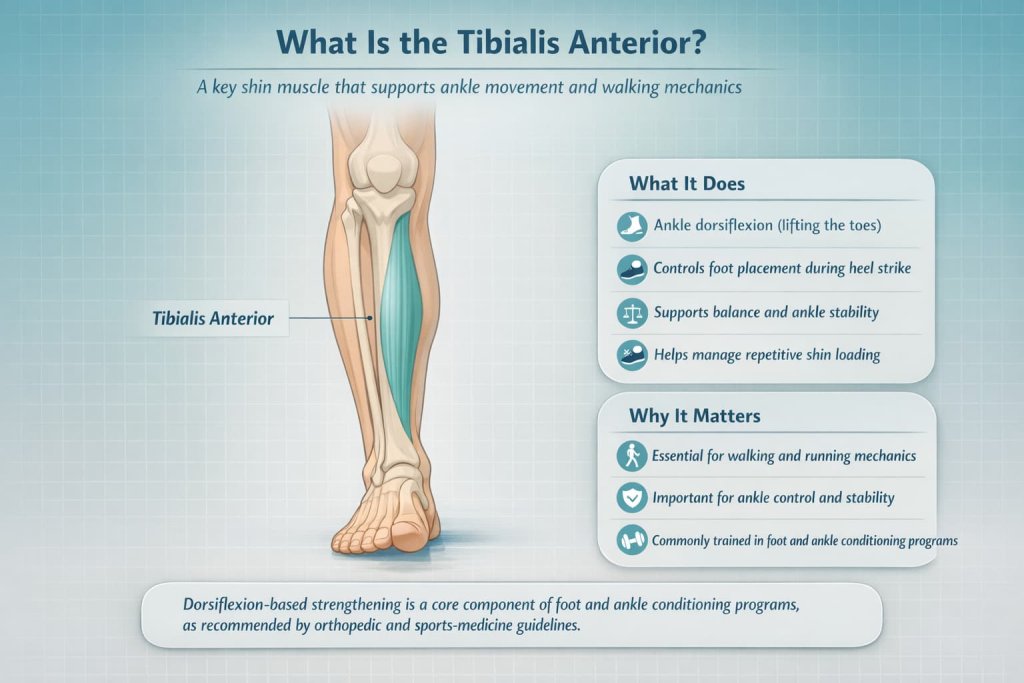
- Ankle dorsiflexion during walking and running
- Controlling foot placement as the heel strikes the ground
- Supporting balance and ankle stability
- Reducing excessive stress on the shin during repetitive activity
According to guidance from the American Academy of Orthopaedic Surgeons, dorsiflexion-based strengthening is a core part of foot and ankle conditioning programs.
10 Best Tibialis Anterior Exercises
These tibialis anterior exercises focus on controlled ankle dorsiflexion to help strengthen the shins and support ankle stability. They are suitable for beginners through advanced users when performed with proper form and gradual progression.
1. Resistance Band Ankle Dorsiflexion
How to do it
- Sit on the floor or a bench with legs fully extended
- Secure a resistance band to a sturdy anchor or heavy object
- Loop the band around the ball of one foot
- Pull the toes and foot toward your shin against the band
- Pause briefly, then return slowly to the starting position
Why it works
This exercise directly trains ankle dorsiflexion, the primary action of the tibialis anterior. Controlled resistance strengthens the muscle through its full functional range, which is essential for walking, running, and ankle stability.
Trainer Tip
Use slow, controlled reps and light resistance at first—quality movement matters more than band thickness.
2. Heel Walks
How to do it
- Stand upright with feet hip-width apart
- Lift the toes so only your heels contact the floor
- Walk forward slowly while keeping toes elevated
- Maintain an upright posture and relaxed shoulders
Why it works
Heel walking loads the tibialis anterior using bodyweight, reinforcing its role in foot clearance and gait control. It also improves endurance of the shin muscles during upright movement.
Trainer Tip
Keep steps short and controlled to avoid excessive strain on the shins.
3. Seated Toe Raises
How to do it
- Sit upright in a chair with feet flat on the floor
- Keep heels planted
- Lift toes upward toward the shins
- Lower the toes slowly back to the floor
Why it works
This low-load movement isolates the tibialis anterior without balance demands, making it suitable for beginners, older adults, or recovery-focused training.
Trainer Tip
Add a short pause at the top to improve muscle engagement and awareness.
4. Standing Toe Raises
How to do it
- Stand with feet hip-width apart
- Shift weight evenly through the heels
- Lift toes off the floor while staying balanced
- Lower the toes slowly and with control
Why it works
Standing toe raises increase functional demand by adding postural control, helping translate tibialis anterior strength into everyday standing and walking tasks.
Trainer Tip
Use a wall or chair for support if balance feels challenged.
5. Banded Toe Lifts (Supine)
How to do it
- Lie on your back with legs extended
- Loop a resistance band around the forefoot
- Hold the band ends firmly
- Pull toes toward the shin against the band
- Return slowly to the starting position
Why it works
This position minimizes bodyweight loading while allowing precise resistance control, making it especially useful in early-stage strengthening or rehabilitation settings.
Trainer Tip
Focus on smooth, controlled movement rather than pulling aggressively.
6. Wall-Supported Toe Raises
How to do it
- Stand with your back lightly against a wall
- Place heels on the floor slightly in front of the body
- Lift toes upward toward the shins
- Hold briefly, then lower with control
Why it works
The wall provides postural support, reducing balance demands while keeping the focus on ankle dorsiflexion and shin activation.
Trainer Tip
Adjust foot distance from the wall to control difficulty.
7. Single-Leg Toe Raises
How to do it
- Stand on one leg with the other foot lifted
- Keep the standing heel grounded
- Lift toes upward toward the shin
- Lower slowly and maintain balance
Why it works
Single-leg loading increases intensity and challenges ankle stability, helping build functional strength for walking, running, and direction changes.
Trainer Tip
Progress only after mastering two-leg toe raises with good control.
8. Towel Toe Pulls
How to do it
- Sit with legs extended in front of you
- Wrap a towel around the forefoot
- Hold the towel ends with both hands
- Pull toes toward the shin while gently resisting
Why it works
The towel provides adjustable resistance without equipment, allowing controlled dorsiflexion while reinforcing movement awareness.
Trainer Tip
Keep tension steady—avoid jerking or bouncing the foot.
9. Slow Marching With Toe Lift Focus
How to do it
- Stand tall with feet hip-width apart
- March in place at a slow pace
- Lift toes upward before placing each foot down
- Move deliberately and under control
Why it works
This drill integrates tibialis anterior activation into gait mechanics, reinforcing proper foot placement and ankle control during walking.
Trainer Tip
Think “toes up before contact” with every step.
10. Incline Treadmill Heel Walking (Advanced)
How to do it
- Set the treadmill to a very slow speed
- Add a slight incline if tolerated
- Walk on heels with toes lifted
- Maintain upright posture and steady balance
Why it works
The incline increases dorsiflexion demand, providing progressive overload to the tibialis anterior in a controlled, repeatable environment.
Trainer Tip
This is an advanced drill—stop immediately if shin discomfort develops.
Why Tibialis Anterior Exercises Important
Well-chosen tibialis anterior exercises may help:
- Improve walking efficiency and foot clearance
- Support ankle stability and balance
- Reduce strain associated with overuse injuries
- Complement calf and foot strengthening for full ankle support
Clinical resources from organizations such as Cleveland Clinic emphasize that ankle strength is not just about the calves—balanced anterior and posterior muscle strength is essential for healthy movement.
How Often Should You Train the Tibialis Anterior?
General guidance from orthopedic and rehabilitation programs suggests:
- 2–3 sessions per week
- 2–3 sets of 10–15 controlled repetitions
- Pain-free range of motion
Programs from the National Health Service commonly recommend similar volumes for lower-leg strengthening in patient education materials.
Common Mistakes to Avoid
- Using momentum instead of controlled movement
- Overloading too quickly
- Ignoring pain or sharp discomfort
- Neglecting rest between sessions
Overuse literature on shin pain, including reviews indexed by PubMed Central, consistently highlights training errors and rapid load increases as common contributors to lower-leg issues.
Tibialis Anterior Exercises for Shin Splints and Ankle Stability
Tibialis anterior exercises may help support shin load tolerance and ankle control when used as part of a well-rounded lower-leg strengthening program. The tibialis anterior plays an important role in controlling foot placement and reducing excessive stress on the shin during walking and running.
These exercises may be especially helpful when the goal is to:
- Improve ankle dorsiflexion and foot clearance
- Support balanced lower-leg strength alongside the calves
- Enhance ankle stability during stance and gait
- Gradually reintroduce controlled loading after periods of reduced activity
For people with shin splints (medial tibial stress syndrome), strengthening the tibialis anterior alone is not a standalone solution. Best-practice guidance emphasizes gradual progression, symptom monitoring, and addressing overall training load, footwear, and movement patterns rather than isolating one muscle group.
When to Seek Professional Guidance
While tibialis anterior exercises are generally safe when performed correctly, professional guidance is recommended if symptoms do not improve or worsen.
Seek medical or physical therapy support if you:
- Have persistent shin pain that does not improve with rest and reduced training
- Experience sharp, localized pain along the shin bone
- Notice swelling, tenderness, or pain that worsens with activity
- Feel numbness, tingling, or pressure in the lower leg
- Suspect a stress fracture or chronic compartment syndrome
A qualified healthcare or rehabilitation professional can help determine whether exercise modification, temporary load reduction, or further evaluation is appropriate.
Who Should Be Cautious?
Use extra care or seek professional guidance if you:
- Have persistent or worsening shin pain
- Suspect a stress fracture
- Experience numbness or severe swelling
- Have been diagnosed with chronic compartment syndrome
Frequently Asked Questions
What do tibialis anterior exercises help with?
They support ankle control, balance, gait mechanics, and lower-leg strength.
Can these exercises help with shin splints?
They may support shin strength and load tolerance when combined with gradual progression and proper training management.
Are tibialis anterior exercises safe for beginners?
Yes, when started with low resistance and controlled movements.
Do runners need tibialis anterior strengthening?
Many running programs include dorsiflexion work to support foot clearance and reduce overuse strain.
How long before seeing results?
Consistency over several weeks is typically required for noticeable strength changes.
Should I train this muscle every day?
Most people benefit from rest days between sessions to allow recovery.
Conclusion
Tibialis anterior exercises are a small but important part of a well-rounded lower-body program. When performed correctly and progressed gradually, they may help support ankle strength, improve walking mechanics, and reduce unnecessary stress on the shins. Start conservatively, focus on control, and build consistency over time for the best results.
References
- AAOS OrthoInfo: Foot and Ankle Conditioning Program (Includes Dorsiflexion Exercise)
- Cleveland Clinic: Ankle Strengthening Exercises for Weak Ankles
- NCBI Bookshelf (StatPearls): Tibialis Anterior Muscle
- NCBI Bookshelf (StatPearls): Medial Tibial Stress Syndrome (Shin Splints)
- PubMed Central (2023): Shin Splints (MTSS) Review Article
- NHS: Shin Splints (Symptoms and When to Seek Help)
- Mayo Clinic: Shin Splints (Symptoms, Causes, When to See a Doctor)
- Mayo Clinic: Stress Fractures (Symptoms, Causes, When to See a Doctor)