
Upper body plyometric exercises are fast, explosive movements that train your chest, shoulders, arms, and upper back to produce force quickly. They can be a smart way to build upper-body power for sports, throwing, striking, pushing, and overall athletic performance when they are programmed well and matched to your skill level. Research reviews on plyometric training report meaningful improvements in strength and power-related outcomes, although some findings still carry low to very low certainty, so it is best to treat them as useful tools rather than magic fixes.
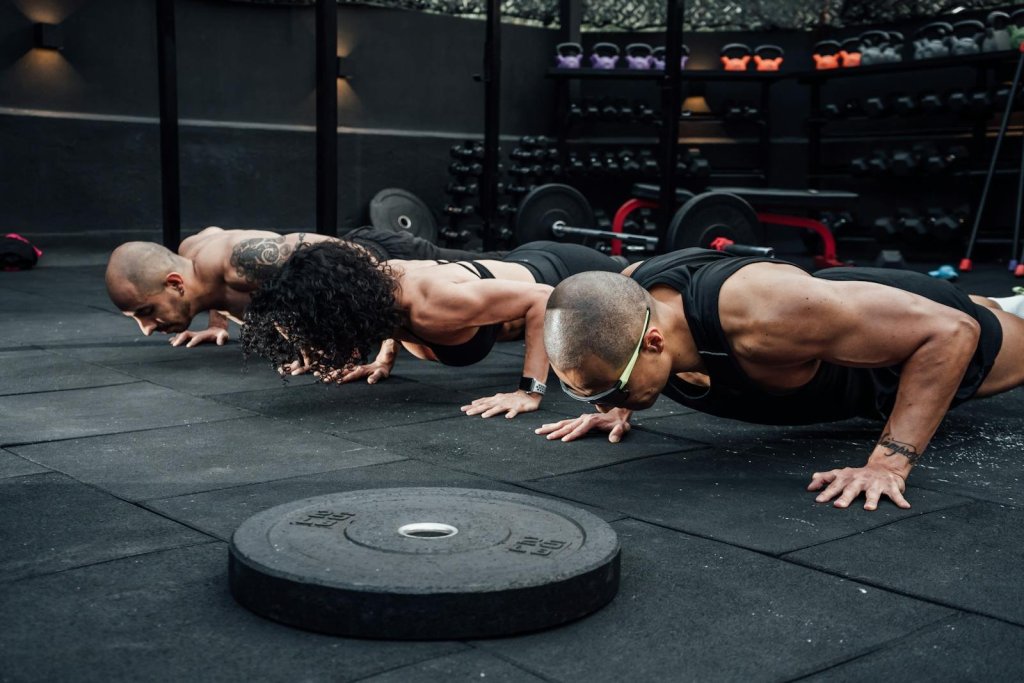
According to the NSCA, plyometric training uses rapid force production and tissue elasticity to improve power and rate of force development. The strongest topic-specific review I found, a 2023 systematic review and meta-analysis published in PMC, concluded that these programs may improve maximal strength, medicine ball throw performance, sport-specific throwing performance, and upper-body muscle volume in healthy youth and young adults.
What Are Upper Body Plyometric Exercises?
Upper body plyometric exercises are explosive drills built around a quick loading phase followed by a rapid push, throw, or release. In practice, that usually means movements like clap push-ups, medicine ball chest passes, rotational wall throws, or overhead slams. The goal is not just to move weight. The goal is to move with speed and intent.
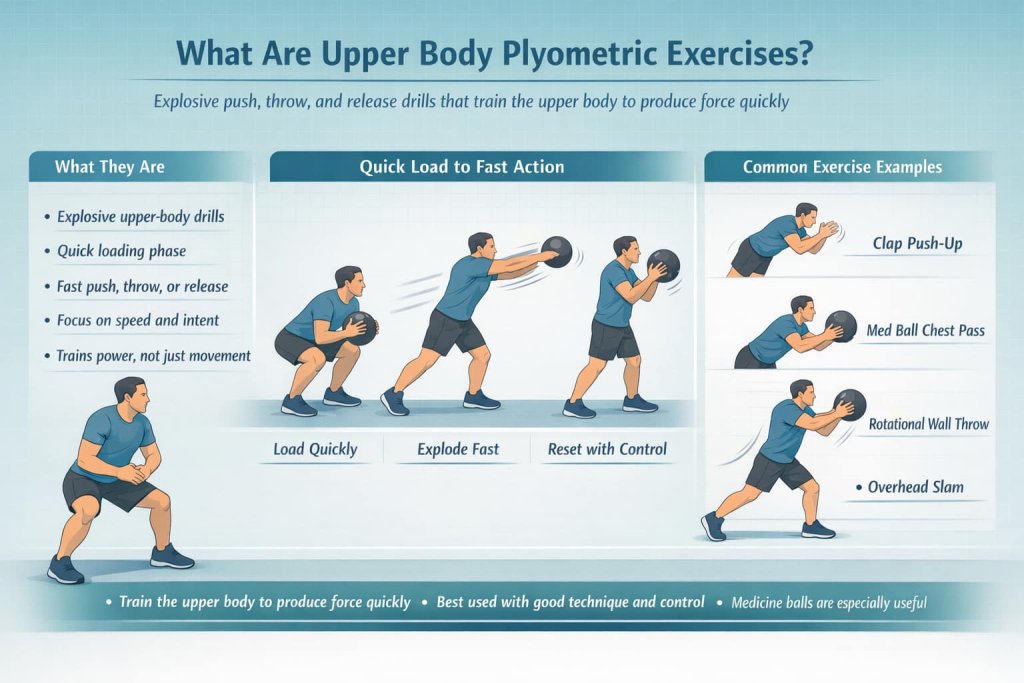
Guidance from ACE is especially useful here because medicine balls allow fast catches and throws that fit the plyometric concept well.
Do Upper Body Plyometric Exercises Actually Work?
Yes, for many people they can help, especially for power-focused goals. The 2023 review on upper-body plyometric training found positive effects on several upper-body fitness outcomes, while also noting that evidence certainty was often low to very low.
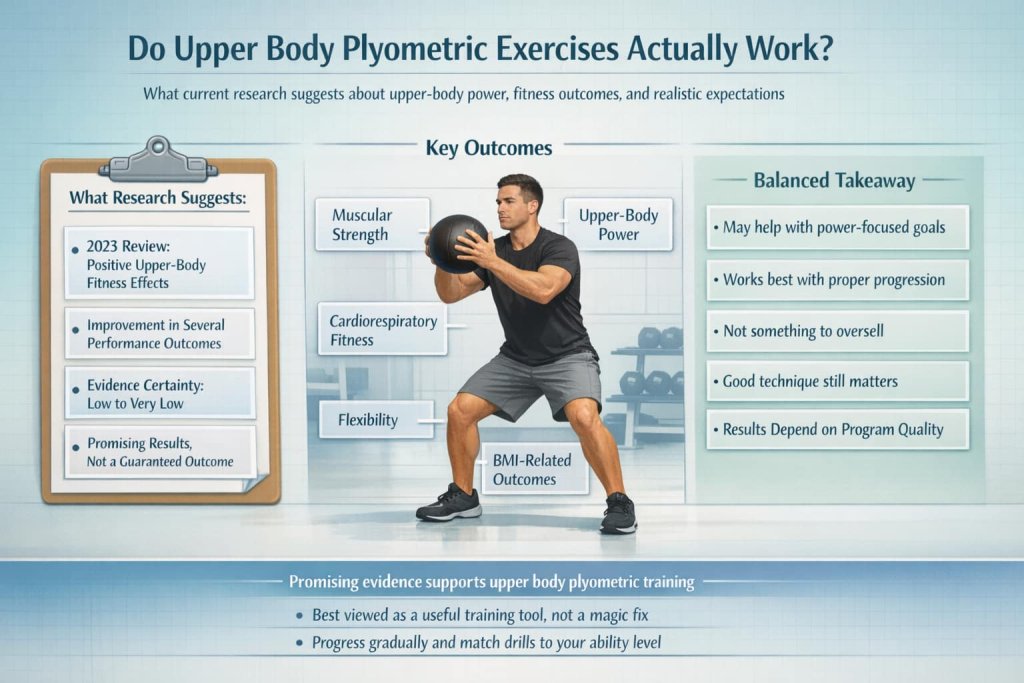
A 2024 meta-analysis in Scientific Reports found plyometric training improved muscular strength, cardiorespiratory fitness, flexibility, and BMI-related outcomes compared with controls. That makes the case for plyometrics promising, but not something to oversell.
11 Best Upper Body Plyometric Exercises
Build explosive strength, upper-body power, and athletic performance with these 11 upper body plyometric exercises. From beginner-friendly push-up variations to medicine ball throws, this list helps you train fast, safely, and effectively.
1. Incline Plyometric Push-Up
How to do it:
- Place your hands on a bench, box, or sturdy bar.
- Set your body in a straight line.
- Lower under control.
- Push hard enough for the hands to leave the surface briefly, or become very light.
- Land softly and reset before the next rep.
Why it works: This is one of the best entry points into upper body plyometric exercises because the incline reduces body weight demand while still teaching explosive pressing.
Muscles worked: Chest, front shoulders, triceps, serratus anterior, and core.
Trainer Tip: Start with a higher surface than you think you need. Clean, fast reps matter more than trying to look advanced.
2. Plyometric Push-Up
How to do it:
- Begin in a standard push-up position.
- Lower your chest with control.
- Drive into the floor as hard and fast as possible.
- Let the hands leave the ground.
- Land with soft elbows and immediately stabilize.
Why it works: This is the classic bodyweight upper-body power drill. It trains rapid force production through the chest, shoulders, and triceps.
Muscles worked: Chest, shoulders, triceps, core, and serratus anterior.
Trainer Tip: Keep your ribs down and hips level. A sloppy rep is not a powerful rep.
3. Clap Push-Up
How to do it:
- Set up as you would for a plyometric push-up.
- Lower with control.
- Explosively press off the floor.
- Clap quickly in front of the chest.
- Place the hands back down and absorb the landing.
Why it works: The clap adds a higher speed and flight demand than a basic plyometric push-up, making it a clear progression.
Muscles worked: Chest, shoulders, triceps, core, and stabilizers around the shoulder girdle.
Trainer Tip: Only use this variation after you can do regular plyometric push-ups with smooth takeoff and landing.
4. Medicine Ball Chest Pass
How to do it:
- Stand facing a wall or partner with the ball at chest level.
- Brace your trunk and keep a slight athletic stance.
- Pull the ball in quickly.
- Drive it forward explosively like a powerful chest pass.
- Catch the rebound under control and repeat.
Why it works: This is one of the most practical upper body plyometric exercises because it lets you move explosively without the full impact of push-up landings. The seated medicine ball throw is also widely used in testing and training for upper-body power, as discussed by the NSCA TSAC Report.
Muscles worked: Chest, triceps, shoulders, upper back, and core.
Trainer Tip: Think “throw through the wall,” but keep your ribs stacked over your hips.
5. Kneeling Medicine Ball Chest Pass
How to do it:
- Kneel tall facing a wall or partner.
- Hold the medicine ball at chest height.
- Squeeze glutes and brace the trunk.
- Throw the ball forward explosively.
- Catch and reset without leaning back.
Why it works: The kneeling position limits help from the legs and hips, so the upper body and trunk have to do more of the work.
Muscles worked: Chest, shoulders, triceps, and core.
Trainer Tip: Use a half-kneeling version first if tall kneeling feels unstable.
6. Overhead Medicine Ball Slam
How to do it:
- Stand tall with the ball overhead.
- Brace your trunk and keep feet about shoulder width apart.
- Drive the ball down hard into the floor.
- Pick it up safely and reset.
- Repeat with full intent.
Why it works: This exercise trains total-body power with a strong upper-body contribution, especially through shoulder flexion, trunk stiffness, and forceful extension.
Muscles worked: Shoulders, lats, triceps, abdominals, and upper back.
Trainer Tip: Slam the ball with intent, but do not overextend your low back at the top.
7. Rotational Medicine Ball Wall Throw
How to do it:
- Stand sideways to a wall.
- Hold the medicine ball near your torso.
- Load the hips and trunk slightly away from the wall.
- Rotate fast and throw the ball into the wall.
- Catch the rebound and reset before repeating.
Why it works: This develops rotational power that carries over well to many sports. It also teaches the upper body to transfer force rather than just create it in isolation.
Muscles worked: Obliques, chest, shoulders, upper back, and hips.
Trainer Tip: Rotate through the trunk and hips together. Do not twist only through the lower back.
8. Scoop Toss
How to do it:
- Hold a medicine ball near hip level.
- Hinge slightly and load the legs.
- Drive upward and forward in one explosive motion.
- Release the ball toward a wall or open space if appropriate.
- Reset with control.
Why it works: The scoop toss blends lower-body drive with upper-body speed, making it useful for whole-body power expression.
Muscles worked: Chest, shoulders, upper back, core, glutes, and legs.
Trainer Tip: Use this as a power exercise, not a conditioning drill. Rest enough to keep the throws explosive.
9. Side-to-Side Medicine Ball Throw
How to do it:
- Stand in an athletic position with a medicine ball.
- Shift your weight side to side under control.
- On each loaded side, rotate and throw explosively into a wall.
- Catch the rebound.
- Repeat evenly on both sides.
Why it works: This adds frontal-plane movement and dynamic weight shift, which can improve coordination and reactive power.
Muscles worked: Shoulders, chest, obliques, upper back, and hips.
Trainer Tip: Keep the movement smooth. Fast does not mean rushed.
10. Explosive Bench Throw
How to do it:
- Use a Smith machine or a setup designed for safe bench throws.
- Lie on the bench with a light load.
- Lower the bar under control.
- Press explosively so the bar leaves the hands if the setup allows safe release.
- Catch or receive the bar only in a controlled, properly supervised setup.
Why it works: Bench throw variations can train pressing power more specifically than slower strength work.
Muscles worked: Chest, shoulders, triceps, and upper back stabilizers.
Trainer Tip: This is not a casual gym-floor exercise. Use it only with proper equipment, coaching, and spotting procedures.
11. Dead-Stop Plyometric Push-Up
How to do it:
- Start at the bottom position with your chest close to the floor.
- Pause fully to remove momentum.
- Press explosively so the hands leave the floor.
- Land softly and reset from a dead stop.
- Repeat for low reps.
Why it works: Removing the usual bounce makes force production more honest. You have to create speed from a true stop.
Muscles worked: Chest, shoulders, triceps, core, and serratus anterior.
Trainer Tip: Use fewer reps here than with easier push-up variations. Quality drops fast.
How to Program Upper Body Plyometric Exercises
For most people, these drills work best near the start of the workout, after a thorough warm-up and before heavy fatigue sets in. That is when your nervous system is fresh enough to move fast.
A practical weekly setup looks like this:
- 2 sessions per week for beginners
- 3 sessions per week for more experienced lifters or athletes
- 3 to 5 sets of 3 to 6 reps for push-up variations
- 3 to 6 sets of 4 to 8 throws for medicine ball drills
- 60 to 120 seconds of rest between sets
- stop the set once speed clearly drops
The research does not support one perfect formula, but the upper-body review found that many effective programs used 2 to 4 sessions per week over at least 4 weeks.
Before You Start Upper Body Plyometric Exercises
Upper body plyometrics put fast force through the wrists, elbows, shoulders, and chest. That means exercise selection matters. Start with lower-impact drills if you are new, recently returning to training, or still working on push-up strength and shoulder control.
A practical starting point from the research is:
- 2 to 3 sessions per week
- at least 48 hours between harder sessions
- 1 to 6 exercises per session
- low total volume at first
- full recovery between explosive sets
The upper-body systematic review reported common interventions lasting at least 4 weeks, with 2 to 4 sessions weekly and 48 to 96 hours between sessions.
Skip these drills or get personalized guidance first if you have current shoulder, elbow, wrist, or chest pain, poor landing control, or cannot do standard push-ups with solid form.
Best Exercise Order for Upper Body Plyometric Exercises
A smart sequence is:
- easy explosive drill
- more demanding explosive drill
- primary strength exercise
- accessory work
- conditioning or finisher
Example:
- incline plyometric push-up
- medicine ball chest pass
- bench press or dumbbell press
- row variation
- shoulder stability work
Common Mistakes to Avoid
Doing Them Before You Have Enough Strength
If you cannot control a regular push-up, advanced plyometric push-ups are usually too much too soon.
Using Too Much Fatigue
Plyometrics are about speed and intent. Once reps slow down, the training effect changes.
Progressing Impact Too Quickly
Clap push-ups and high-force landings can irritate the wrists, elbows, or shoulders when rushed.
Turning Power Work Into Cardio
Very long sets usually reduce movement quality. Explosive work needs recovery.
Ignoring Landing Mechanics
Soft, controlled landings help manage force and protect joint position.
Are Upper Body Plyometric Exercises Good for Beginners?
They can be, but the right version matters. Beginners usually do better with incline plyometric push-ups, kneeling medicine ball passes, and basic chest passes before they try clap push-ups or advanced reactive drills. The 2024 meta-analysis in untrained participants suggests plyometric training can help less-trained populations too, which supports beginner use when progression is appropriate.
Who Benefits Most From Upper Body Plyometric Exercises?
These drills tend to make the most sense for people who want to improve:
- upper-body power
- throwing speed
- pushing explosiveness
- athletic performance
- reactive strength
- training variety after building a basic strength base
They are often especially relevant for athletes in sports that involve sprinting, contact, striking, serving, passing, or throwing. They can also work for general exercisers, but beginners usually do better with low-impact versions first. The 2024 meta-analysis on untrained participants supports that plyometrics can still be useful outside advanced athletic populations when progression is sensible.
FAQ About Upper Body Plyometric Exercises
How often should I do upper body plyometric exercises?
Most people do well with 2 to 3 sessions per week, with at least 48 hours between harder sessions for recovery. That fits the common training patterns reported in the 2023 upper-body review.
Are medicine balls better than push-ups for upper body plyometrics?
Not always better, but often easier to scale. Medicine-ball drills can reduce landing impact and make explosive intent easier to maintain, while push-up variations challenge body control more.
Can upper body plyometric exercises build muscle?
They can support muscle development, especially when paired with regular strength training. The 2023 systematic review found positive effects on upper-body muscle volume in the populations studied.
What rep range works best?
Low reps usually work best because power drops when fatigue rises. A common starting point is 3 to 6 reps per set for push-up variations and 4 to 8 reps for throws.
Should I do upper body plyometric exercises before or after lifting?
Usually before your main strength work, after your warm-up. You want to do them while fresh enough to move fast.
Are upper body plyometric exercises safe for sore shoulders?
Not always. If you have current shoulder pain, limited control, or pain during pressing, get individual guidance before doing explosive drills.
Conclusion
Upper body plyometric exercises can be a strong addition to your training if your goal is to build explosive strength, improve power, and move more athletically. Start with the variation that matches your current ability, keep the reps crisp, and progress only when your form stays solid. For most people, the smartest plan is simple: master the basics, use low volume, and prioritize speed over exhaustion. If you are building a routine, start with 2 or 3 of the exercises above and track how your power and control improve over the next 4 to 6 weeks.
References
- Effects of Upper-Body Plyometric Training on Physical Fitness in Healthy Youth and Young Adult Participants
- Effects of Plyometric Training on Physical Performance: An Umbrella Review
- Effects of Combined Upper and Lower Limb Plyometric Training on Physical Fitness in Athletes: A Systematic Review with Meta-Analysis
- Effect of a 16-Week Combined Strength and Plyometric Training Program on Physical Performance in Young Volleyball Players
- Similar Adaptive Responses in the Upper Body Physical Performance After Different Plyometric and Resistance Training Set Configurations