
Yoga breathing exercises can help calm your mind and body by slowing your breathing, improving breath awareness, and supporting relaxation. Often called pranayama, these practices are commonly used in yoga to help with stress management, focus, and nervous system regulation when done gently and correctly. NCCIH notes that yoga combines movement, breathing, and meditation, while Mayo Clinic explains that yoga may help ease stress and anxiety.
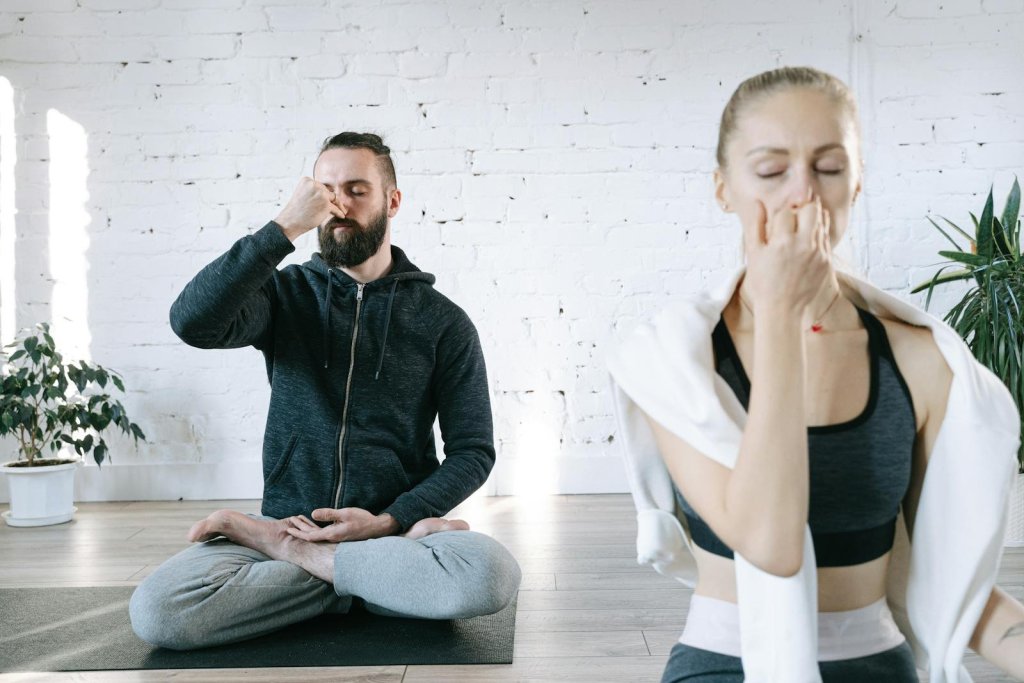
Understanding yoga breathing exercises matters because many people breathe quickly and shallowly when stressed. Slower, more controlled breathing may help shift the body toward a calmer state. Research reviews indexed by PubMed and PubMed suggest that slow breathing and diaphragmatic breathing may support stress reduction and relaxation.
The key is to start simple, avoid forcing the breath, and choose techniques that feel smooth and comfortable. Below, you will find 11 of the best yoga breathing exercises, plus safety tips, common mistakes, and answers to the most common questions.
What Are Yoga Breathing Exercises?
Yoga breathing exercises are structured breath practices used in yoga to guide the pace, depth, and rhythm of breathing. In yoga, these techniques are often called pranayama. They may include belly breathing, equal breathing, alternate nostril breathing, humming breaths, and gentle slow-breathing patterns.
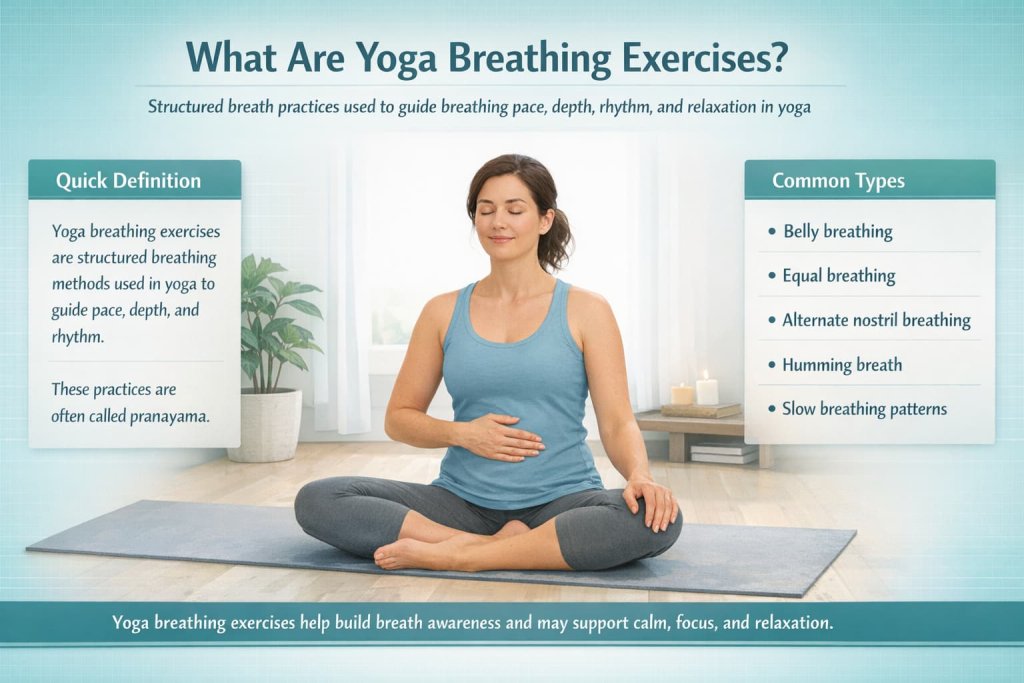
According to Cleveland Clinic, breathing exercises are one of the core tools used in yoga-based practices for relaxation and stress support.
Why Yoga Breathing Exercises May Help
Breathing patterns affect how you feel. Slow, controlled breathing may support calmness, relaxation, and emotional regulation. A systematic review in PubMed found that slow breathing techniques under 10 breaths per minute were linked to psychophysiological changes associated with relaxation. Another review in PubMed found that diaphragmatic breathing may reduce stress based on both physical and self-reported measures.
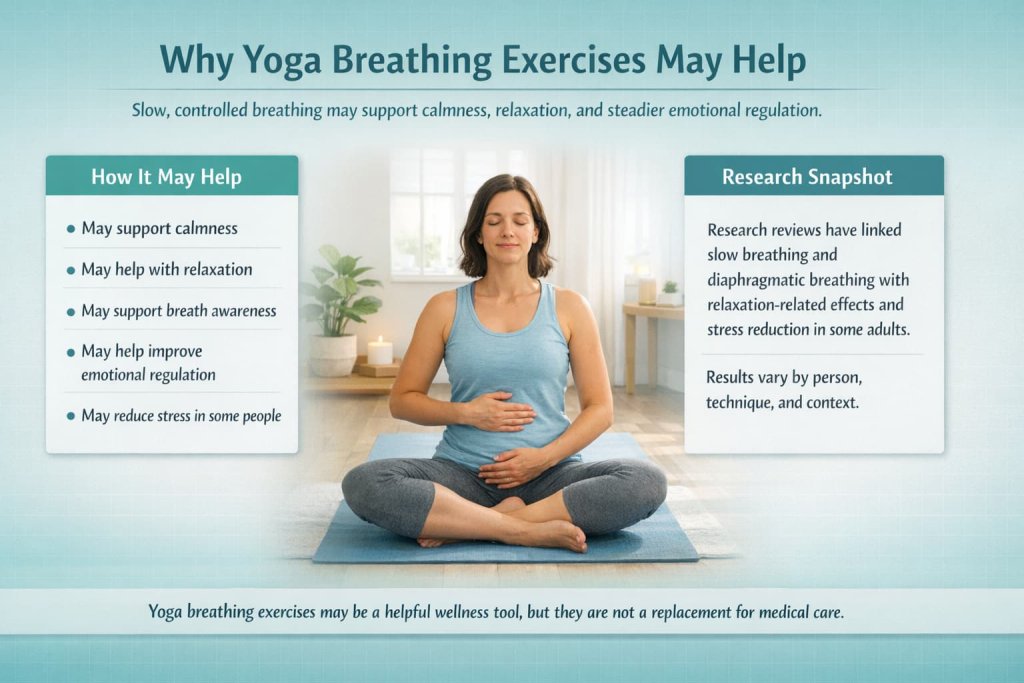
That does not mean every breathing exercise works the same way for every person. Results vary, and breathing exercises should be viewed as a supportive wellness tool, not a replacement for medical care.
Who Should Be Careful Before Trying Yoga Breathing Exercises?
Most gentle breathing exercises are low risk for healthy adults, but not every technique suits every person. NCCIH says yoga is generally considered safe when done properly, and NHS advises letting the breath go only as deep as is comfortable, without forcing it.
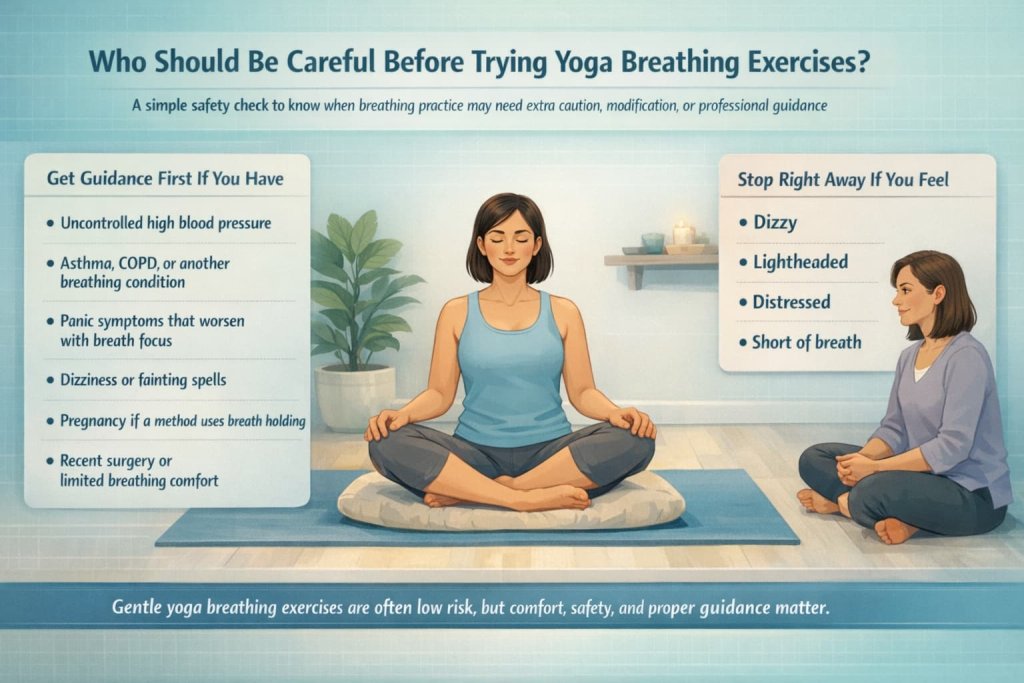
Use extra caution or get guidance first if you have:
- uncontrolled high blood pressure
- asthma, COPD, or another breathing condition
- panic symptoms that worsen with breath focus
- dizziness or fainting spells
- pregnancy, especially if a technique uses breath holding
- a recent surgery or a condition that affects breathing comfort
Stop right away if you feel dizzy, lightheaded, distressed, or short of breath.
11 Best Yoga Breathing Exercises
Try these 11 best yoga breathing exercises to calm your mind, ease stress, and improve breath awareness. From beginner-friendly belly breathing to alternate nostril breathing, each technique can support a more relaxed and focused daily routine.
1. Diaphragmatic Breathing
How to do it:
- Sit or lie comfortably with one hand on your chest and one on your belly.
- Inhale slowly through your nose.
- Let your belly rise more than your chest.
- Exhale slowly and let your belly fall.
- Continue for 1 to 5 minutes.
Why it works:
Diaphragmatic breathing helps you use the diaphragm more effectively instead of relying on shallow upper-chest breathing. Reviews in PubMed and guidance from Cleveland Clinic support it as a simple technique that may help with relaxation and stress reduction.
Trainer Tip:
Do not try to make the breath huge. A smaller, softer belly rise usually feels better than forcing a deep inhale.
2. Three-Part Breath
How to do it:
- Sit tall or lie on your back.
- Inhale gently into your belly first.
- Continue the inhale into the rib cage.
- Finish by letting the upper chest expand slightly.
- Exhale slowly in reverse order: chest, ribs, then belly.
- Repeat for 5 to 8 rounds.
Why it works:
Three-part breath teaches breath awareness and helps many beginners feel where the breath is moving. It can also slow the pace of breathing and reduce tension.
Trainer Tip:
Keep the final chest lift subtle. This should feel smooth and relaxed, not like filling yourself to maximum capacity.
3. Equal Breathing
How to do it:
- Sit comfortably with relaxed shoulders.
- Inhale through your nose for a steady count of 4.
- Exhale through your nose for the same count of 4.
- Keep the inhale and exhale matched.
- Continue for 1 to 3 minutes.
Why it works:
Equal breathing gives your mind a simple rhythm to follow. That steady pattern can be grounding and can help reduce scattered attention.
Trainer Tip:
If a count of 4 feels too long, start with 3. Comfort matters more than the number.
4. Extended Exhale Breathing
How to do it:
- Sit or lie comfortably.
- Inhale gently through your nose for a count of 3 or 4.
- Exhale slowly for a count of 4 to 6.
- Keep the exhale a little longer than the inhale.
- Continue for 1 to 5 minutes.
Why it works:
A longer exhale is often used to encourage relaxation. NHS recommends slow, gentle breathing without forcing, and many people find extended exhale breathing easier than techniques with breath holds.
Trainer Tip:
Make the exhale longer by softening it, not by pushing air out hard.
5. Alternate Nostril Breathing
How to do it:
- Sit tall and relax your face.
- Use your right hand to gently close your right nostril.
- Inhale through your left nostril.
- Close the left nostril and open the right.
- Exhale through the right nostril.
- Inhale through the right, switch sides, then exhale through the left.
- Continue for 4 to 8 rounds.
Why it works:
Alternate nostril breathing can be helpful when you want a practice that feels focused and meditative. It gives the mind a pattern to follow and may encourage slower breathing.
Trainer Tip:
Use very light pressure on the nostrils. If one side feels blocked because of allergies or a cold, skip this one that day.
6. Ocean Breath
How to do it:
- Sit comfortably.
- Inhale through your nose.
- Slightly narrow the back of your throat.
- Exhale through your nose while keeping that gentle throat narrowing.
- Aim for a soft ocean-like sound.
- Continue for 5 to 10 slow breaths.
Why it works:
Ocean breath, often called ujjayi, can make it easier to pace the breath during yoga. The soft sound also gives your mind something steady to focus on. Berkshire Healthcare NHS describes ocean breath as slowing the breath with a sound like gently breathing onto a mirror.
Trainer Tip:
The sound should be soft and quiet. If your throat feels dry or strained, ease off.
7. Humming Bee Breath
How to do it:
- Sit tall and relax your jaw.
- Inhale gently through your nose.
- Exhale with a soft humming sound.
- Keep the hum smooth and comfortable.
- Repeat for 5 to 8 rounds.
Why it works:
Humming bee breath can feel soothing because the vibration gives the brain a simple sensory cue to focus on. Berkshire Healthcare NHS describes a bumble bee style breath as creating a gentle vibration on the exhale.
Trainer Tip:
Keep the hum low and easy. It should feel calming, not loud or forced.
8. Cooling Breath
How to do it:
- Sit comfortably.
- Curl your tongue if you can, or gently part your lips if you cannot.
- Inhale slowly through the curled tongue or parted lips.
- Close your mouth.
- Exhale slowly through your nose.
- Repeat for 5 rounds.
Why it works:
Cooling breaths are traditional yoga techniques often used when you feel overheated or mentally restless. Many people find them refreshing in warm environments.
Trainer Tip:
Skip this in very cold air or if mouth breathing feels irritating.
9. Breath Awareness Meditation
How to do it:
- Sit or lie down comfortably.
- Let your breathing stay natural.
- Notice the air moving in and out of your nose.
- Observe the rise and fall of your chest or belly.
- When your mind wanders, gently return to the breath.
- Continue for 2 to 5 minutes.
Why it works:
This is one of the easiest yoga breathing exercises for beginners because it does not require changing the breath. Mayo Clinic recommends slow, deep breathing and body awareness as part of mindfulness practice.
Trainer Tip:
This is a great option when structured counting makes you tense rather than calm.
10. Victorious Breath With Movement
How to do it:
- Start in a comfortable seated position.
- Use a gentle ocean-breath pattern.
- Raise your arms slowly as you inhale.
- Lower your arms slowly as you exhale.
- Move in sync with your breath for 5 to 8 rounds.
Why it works:
Pairing breath with slow movement can make breathing easier to follow and may help reduce mental clutter. It also fits naturally into beginner yoga sessions.
Trainer Tip:
Move only as fast as your breathing allows. Let the breath lead the movement, not the other way around.
11. Simple Resonant Slow Breathing
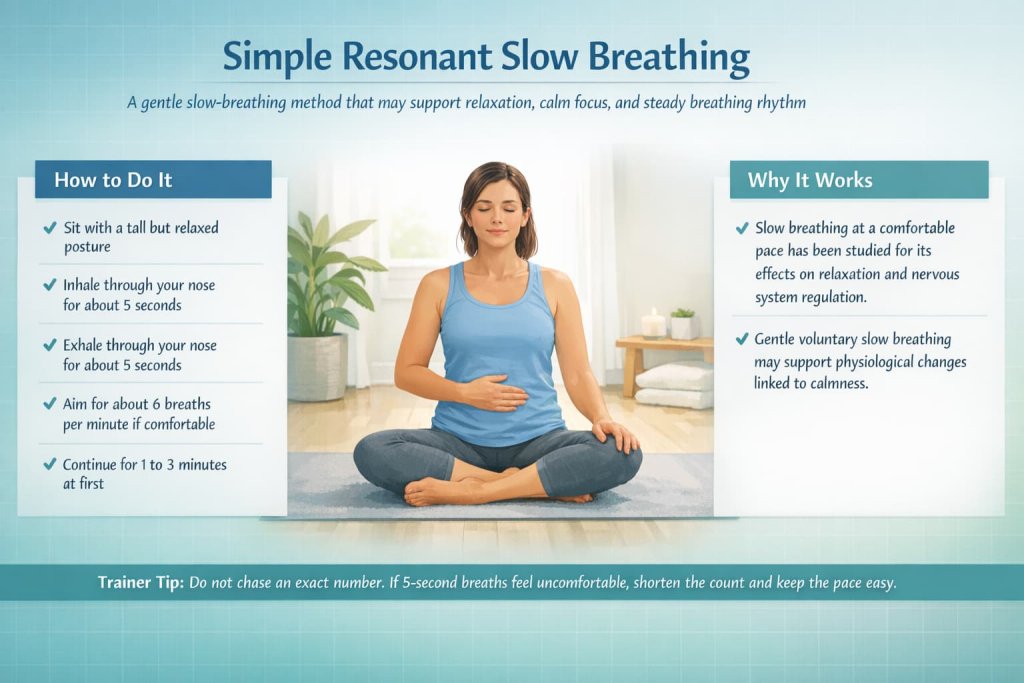
How to do it:
- Sit with a tall but relaxed posture.
- Inhale through your nose for about 5 seconds.
- Exhale through your nose for about 5 seconds.
- Aim for a total of about 6 breaths per minute if that feels comfortable.
- Continue for 1 to 3 minutes at first.
Why it works:
Slow breathing at a comfortable pace has been studied for its effects on relaxation and nervous system regulation. Reviews in PubMed and PubMed suggest that voluntary slow breathing can influence physiological markers linked to calmness.
Trainer Tip:
Do not chase an exact number. If 5-second breaths feel uncomfortable, shorten the count and keep the pace easy.
How to Get the Most From Yoga Breathing Exercises
A few simple habits can make yoga breathing exercises safer and more effective:
- Sit tall or lie down in a comfortable position
- Keep your shoulders, jaw, and belly relaxed
- Breathe gently through your nose unless the technique says otherwise
- Start with 1 to 3 minutes
- Build gradually if the exercise feels easy and calming
- Never strain, gasp, or force a deeper breath than feels natural
Common Mistakes to Avoid With Yoga Breathing Exercises
Breathing Too Hard
Gentle breathing is usually better than exaggerated breathing. NHS specifically advises breathing only as deeply as is comfortable, without forcing it.
Holding the Breath When You Are Not Ready
Breath retention can be uncomfortable for some people. Beginners often do better with smooth inhale-exhale patterns first.
Lifting the Shoulders on Every Inhale
This often turns the exercise into shallow upper-chest breathing. Try to keep the neck and shoulders soft.
Going Too Long Too Soon
A short practice done consistently is usually more helpful than a long session that leaves you tense or dizzy.
How Often Should You Do Yoga Breathing Exercises?
For most people, 5 to 10 minutes a day is a practical starting point. Even 1 to 3 minutes can be useful when you are learning. The goal is consistency, not intensity. Research on slow breathing and diaphragmatic breathing often uses brief, repeatable sessions rather than long practices.
A simple beginner plan could look like this:
- 1 to 2 minutes of diaphragmatic breathing
- 1 to 2 minutes of equal breathing
- 1 to 2 minutes of extended exhale breathing
- optional 1 to 2 minutes of breath awareness at the end
FAQ About Yoga Breathing Exercises
Are yoga breathing exercises good for beginners?
Yes, many are beginner-friendly. Breath awareness, diaphragmatic breathing, equal breathing, and extended exhale breathing are usually the easiest places to start.
How long should I do yoga breathing exercises?
Start with 1 to 3 minutes per exercise. You can build to 5 to 10 minutes total if the practice feels calm and comfortable.
Can yoga breathing exercises help with stress?
They may help support stress relief and relaxation. Mayo Clinic includes deep breathing and yoga among common relaxation techniques.
Is it normal to feel dizzy during breathing exercises?
No. Stop if you feel dizzy, lightheaded, or uncomfortable. That can happen if you breathe too deeply, too quickly, or force a technique that does not suit you.
Should I breathe through my nose or mouth?
Most yoga breathing exercises use nasal breathing, though some techniques may use the mouth for part of the practice. Follow the method, but do not force it if nasal congestion is severe.
Can I do yoga breathing exercises every day?
Yes, gentle breathing exercises are often practiced daily. A short daily routine is usually more realistic and more comfortable than occasional long sessions.
What is the best yoga breathing exercise for relaxation?
There is no single best option for everyone, but diaphragmatic breathing, extended exhale breathing, and breath awareness are often the easiest and most calming for beginners.
Conclusion
Yoga breathing exercises are a simple way to slow down, focus your attention, and support a calmer body and mind. The best approach is to start with easy techniques, keep the breath soft, and practice consistently. Choose one or two methods that feel comfortable, then build from there.
If you are creating a daily wellness routine, start with diaphragmatic breathing or equal breathing for just a few minutes today. Small, steady practice usually works better than trying to do too much at once.