
Weight-bearing exercises for seniors are movements done on your feet that work against gravity to help strengthen bones, muscles, and balance. These exercises include walking, stair climbing, squats, and other standing activities that safely load your bones.
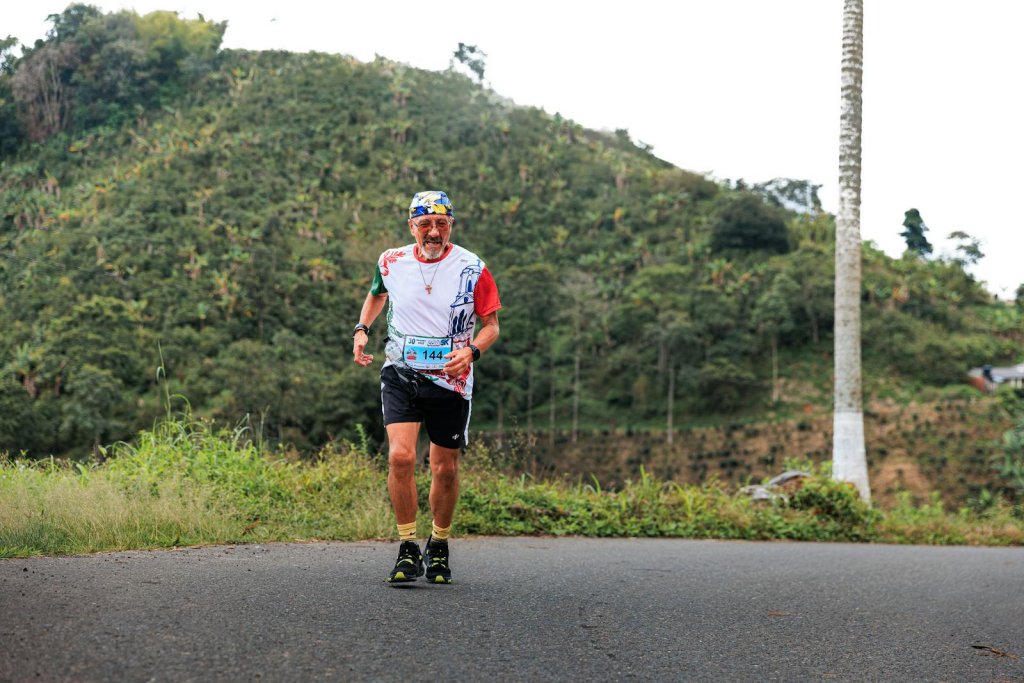
Understanding weight-bearing exercise is important because it helps slow age-related bone loss, improves strength, prevents falls, and supports daily independence. Seniors can choose from simple low-impact movements like walking or stair stepping and more challenging options like light lunges or controlled balance drills.
This guide explains the 10 best weight-bearing exercises for seniors, how to do them safely, and how often to include them in your weekly routine—all based on current senior fitness and bone-health guidelines.
Why Weight-Bearing Exercises for Seniors Matter
Weight-bearing exercises are important for seniors because they support the strength, stability, and independence needed for healthy aging. Key reasons include:
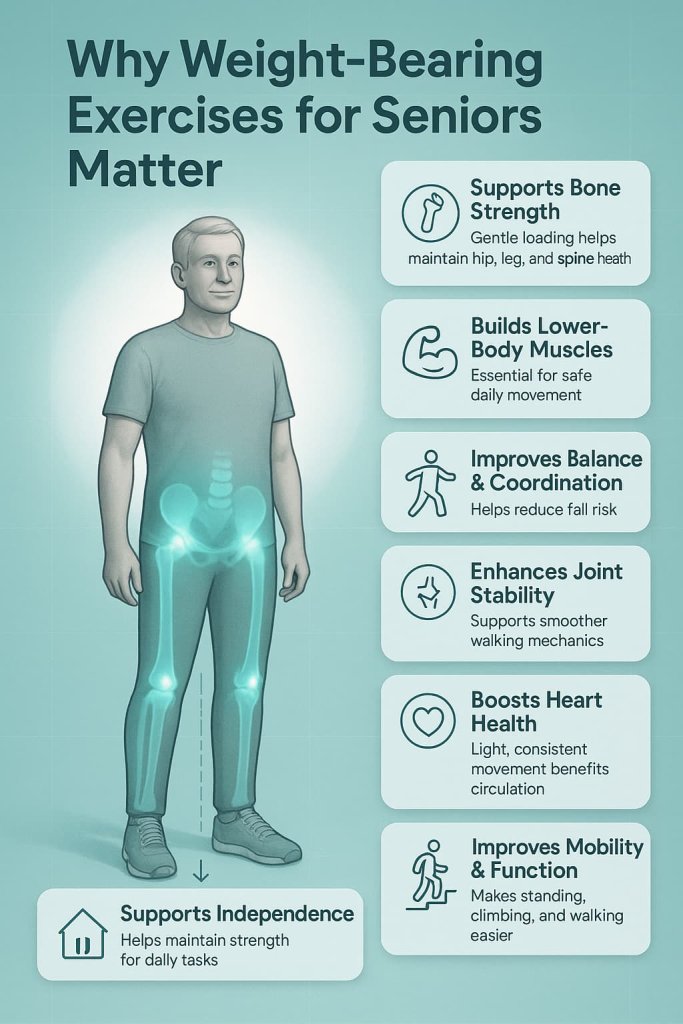
- Help maintain and improve bone strength by gently loading the hips, legs, and spine
- Support muscle strength in the lower body, which is essential for daily movement
- Improve balance and coordination, reducing the risk of falls
- Enhance joint stability and support better walking mechanics
- Promote cardiovascular health through light-to-moderate intensity movement
- Improve posture, mobility, and functional independence
- Make daily tasks easier, such as standing up, climbing stairs, and carrying groceries
- Support overall confidence and safety during everyday movement
10 Best Weight-Bearing Exercises for Seniors
These weight-bearing exercises help seniors strengthen bones, improve balance, and maintain mobility safely. Each movement is simple, effective, and designed to support everyday independence.
1. Brisk Walking
Why it works:
Brisk walking is a low-impact weight-bearing activity that loads the hips, legs, and spine with every step. This gentle repetitive loading helps maintain bone strength, improves circulation, and boosts cardiovascular health without excessive joint stress. It also enhances balance and supports daily mobility.
Muscles worked:
Calves, quadriceps, hamstrings, glutes, hip stabilizers, core muscles.
How to do it:
- Walk 10–20 minutes at a pace that allows comfortable conversation.
- Keep posture tall with shoulders relaxed.
- Swing arms naturally to support rhythm and balance.
- Gradually increase to 25–30 minutes most days of the week.
Trainer Tip:
Choose well-lit, even surfaces for safety and wear supportive walking shoes to reduce joint strain.
2. Stair Climbing or Step-Ups
Why it works:
Stair climbing provides stronger gravitational loading than flat walking, which helps stimulate bone growth at the hips and legs. It strengthens the lower body and improves power for everyday activities such as getting out of a chair or climbing real stairs.
Muscles worked:
Quadriceps, glutes, hamstrings, calves, core stabilizers.
How to do it:
- Use a sturdy step or staircase.
- Step up with one foot, then bring the other foot to join it.
- Step down with control.
- Start with 1–2 sets of 8–10 steps per leg.
Trainer Tip:
Hold a railing or countertop if needed. Slow, controlled pacing builds more strength than rushing.
3. Sit-to-Stand (Chair Squats)
Why it works:
This functional movement mimics daily actions and strengthens the major muscles used for standing and rising. It promotes hip, thigh, and core strength and helps improve balance and fall prevention without heavy equipment.
Muscles worked:
Quadriceps, glutes, hamstrings, core stabilizers.
How to do it:
- Sit on a sturdy chair with feet hip-width apart.
- Lean slightly forward and stand up slowly.
- Lower back down with control.
- Perform 2–3 sets of 8–12 reps.
Trainer Tip:
If standing fully is too difficult, start by pushing halfway up and holding for 2–3 seconds before sitting back down.
4. Heel Raises (Standing Calf Raises)
Why it works:
This simple weight-bearing movement strengthens the lower legs and improves ankle stability—critical for walking balance and fall prevention. Strong calves also enhance push-off power during steps.
Muscles worked:
Calves, ankles, foot stabilizers, lower-leg muscles.
How to do it:
- Stand behind a chair for support.
- Rise slowly onto your toes.
- Lower down with control.
- Do 10–15 repetitions.
Trainer Tip:
Pause for one second at the top of each lift to improve muscle activation and balance.
5. Gentle Lunges (Supported)
Why it works:
Supported lunges strengthen the major leg muscles and activate the hips, helping improve stability, stair-climbing ability, and daily movement control. This low-impact movement also encourages multi-directional bone loading.
Muscles worked:
Quadriceps, glutes, hamstrings, hip stabilizers, calves.
How to do it:
- Hold a wall or chair for balance.
- Step one foot forward.
- Bend both knees slightly to lower your body.
- Push back to the starting position.
- Do 6–10 reps per side.
Trainer Tip:
Keep your stride shorter at first. A long step can make it harder to control balance.
6. Side Leg Steps / Lateral Stepping
Why it works:
Lateral stepping works muscles not traditionally engaged in forward motions like walking. This side-to-side movement enhances hip strength, improves stability, and provides different directions of bone loading beneficial for fall prevention.
Muscles worked:
Outer hips (gluteus medius), thighs, core stabilizers.
How to do it:
- Stand tall with feet hip-width apart.
- Step sideways 8–10 steps in one direction.
- Step back the other way.
- Repeat 2–3 rounds.
Trainer Tip:
Add a mini resistance band around your legs once you are confident—it strengthens the hips even more.
7. Light Dancing or Low-Impact Aerobics
Why it works:
Dancing adds rhythmic weight-bearing movement while improving coordination, balance, and cardiovascular fitness. Gentle patterns help stimulate bone health in the hips and spine without stressing the joints.
Muscles worked:
Hips, glutes, quadriceps, calves, core, arms (if moving).
How to do it:
- Choose senior-friendly dance videos or simple side-step patterns.
- Start with 10–15 minutes at a comfortable pace.
- Keep movements smooth and controlled.
Trainer Tip:
Music with a steady beat helps maintain pacing and reduces the risk of losing balance.
8. Standing Marching in Place
Why it works:
Marching raises each leg against gravity, enhancing hip mobility and leg strength. It improves walking mechanics and helps prepare the body for standing and moving with confidence.
Muscles worked:
Hip flexors, quadriceps, calves, glutes, core stabilizers.
How to do it:
- Stand behind a chair.
- Lift one knee, then the other, marching in place.
- Continue 30–60 seconds.
- Repeat 2–3 rounds.
Trainer Tip:
Lift knees only as high as comfortable. Smooth, controlled lifting is more beneficial than speed.
9. Modified Standing Balances (Weight-Bearing + Stability)
Why it works:
Balance training strengthens the small stabilizing muscles in the feet, ankles, and hips. Balancing on one leg also increases bone-loading on the standing leg, improving control and fall prevention.
Muscles worked:
Ankle stabilizers, calves, hips, core muscles.
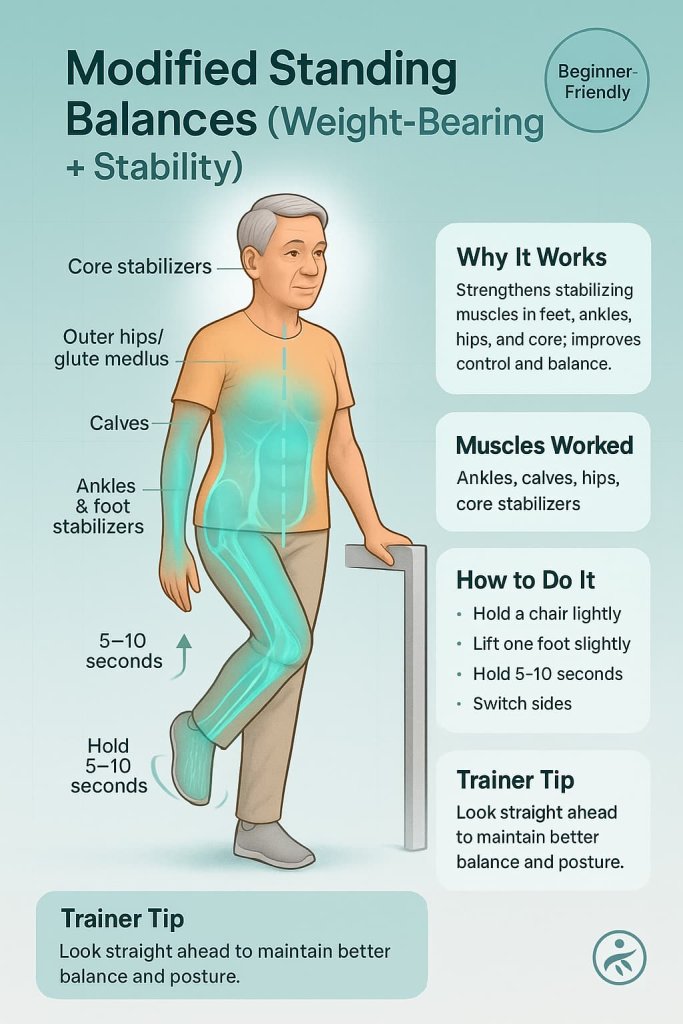
How to do it:
- Hold a chair lightly for support.
- Lift one foot an inch off the floor.
- Hold for 5–10 seconds.
- Switch sides.
Trainer Tip:
Try looking straight ahead instead of down—this improves balance by reinforcing proper posture.
10. Gentle Hiking or Outdoor Hill Walking
Why it works:
Walking on a mild incline increases the muscle and bone load on the hips, thighs, and calves. Even gentle hills strengthen the lower body and improve endurance. The uneven terrain also enhances balance and coordination.
Muscles worked:
Glutes, quadriceps, hamstrings, calves, hips, core.
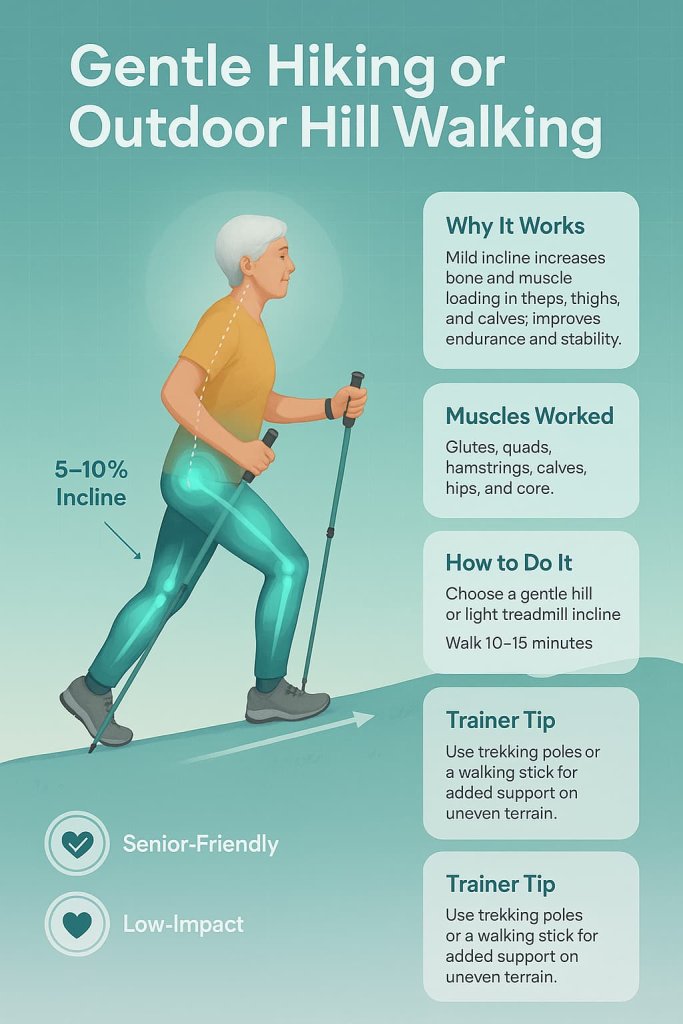
How to do it:
- Find a mild outdoor incline or use a treadmill set to a light grade.
- Walk 10–15 minutes at a steady pace.
- Keep strides short and posture upright.
Trainer Tip:
Use trekking poles or a walking stick for added stability and upper-body support on uneven terrain.
How Often Should Seniors Do Weight-Bearing Exercises?
Evidence-based guidelines (CDC, ACSM, WHO, Bone Health & Osteoporosis Foundation) recommend:
Weekly Weight-Bearing Activity
- 150 minutes per week of moderate activity (walking, dancing, hiking)
- OR 75 minutes of vigorous activity
Strength Training
- 2–3 sessions per week covering major muscle groups
- Includes squats, step-ups, heel raises
Balance Work
- 3 or more days per week
- Single-leg stands, heel-to-toe walking, weight shifts
Progression
- Add time (2–5 minutes), steps, or reps weekly
- Move slowly and increase intensity gradually
Common Mistakes Seniors Should Avoid
- Moving too quickly or without control
- Using improper footwear
- Skipping warm-ups
- Holding the breath during movements
- Bending forward excessively during squats or lunges
- Attempting high-impact movements without medical clearance
- Exercising on uneven or unsafe surfaces
Avoiding these mistakes improves both safety and effectiveness.
Safety Guidelines for Seniors
- Use a chair, railing, or wall for support
- Wear proper shoes with good grip
- Avoid fast twisting movements
- Start with low-impact exercises
- Stop if you feel sharp or sudden pain
- Check with a healthcare provider if you have osteoporosis, heart conditions, or mobility issues
When to Seek Professional Guidance
Consult a healthcare provider or certified fitness professional if you:
- Experience dizziness, shortness of breath, or chest discomfort
- Recently had a fall or injury
- Have osteoporosis, arthritis, or balance disorders
- Use mobility aids or assistive devices
- Are unsure which exercises are right for your ability level
Professional input ensures the exercises are appropriate and safe.
FAQs
1. What counts as weight-bearing exercise for seniors?
Any standing activity where your body works against gravity—walking, stair climbing, squats, dancing, marching, and balance drills.
2. Are weight-bearing exercises safe for seniors with osteoporosis?
Yes, low-impact weight-bearing exercises are generally safe but should be done with slow, controlled movements and medical approval.
3. How often should seniors do these exercises?
Aim for daily low-impact weight-bearing activity and 2–3 strength sessions weekly.
4. Do weight-bearing exercises improve balance?
Yes. They strengthen leg and core muscles that support stability and reduce fall risk.
5. Can beginners start with these exercises?
Absolutely—start with chair squats, marching, heel raises, and walking.
6. Do seniors need equipment?
Most weight-bearing exercises require no equipment—just supportive shoes and a stable chair.
7. Are high-impact exercises necessary?
Not for most seniors. Low- and moderate-impact movements offer excellent benefits without excessive joint stress.
Conclusion
Weight-bearing exercises are one of the most effective ways for seniors to improve bone strength, mobility, balance, and independence. Even a few simple movements—like walking, stair stepping, sit-to-stands, and gentle balance drills—can make a powerful difference.
Start small, be consistent, and choose movements that feel comfortable and safe.
References
- Centers for Disease Control and Prevention (CDC) –
Physical Activity Guidelines for Older Adults - World Health Organization (WHO) –
WHO Guidelines on Physical Activity and Sedentary Behaviour (Adults and Older Adults) - Bone Health & Osteoporosis Foundation (BHOF) –
Exercise for Strong Bones and Safe Movement - International Osteoporosis Foundation (IOF) –
Exercise Depending on Age – Older Adults - Royal Osteoporosis Society (UK) –
Exercise for Bone Health - Healthy Bones Australia –
Exercise and Bone Health