
The best exercises to lose belly fat are a combination of cardio, strength training, and high-intensity interval training (HIIT) because no single movement can burn belly fat on its own. Fat loss happens across the entire body—not in just one area—so the most effective approach mixes calorie-burning workouts with muscle-building exercises.
Understanding the right exercise types matters because reducing belly fat, especially visceral fat, supports better heart health, metabolism, and long-term weight management.
This guide explains the 15 most effective exercises, how they work, and how often you should do them based on up-to-date research and expert guidelines.
What You Need to Know About Losing Belly Fat (Science Explained)
No exercise can directly burn belly fat. Research shows that fat loss happens across the whole body—not in one specific area. But the right mix of aerobic exercise, strength training, and interval workouts may help reduce total body fat and visceral fat, especially when combined with healthy eating, sleep, and stress control.

Two Types of Belly Fat
- Subcutaneous fat: under the skin; less harmful.
- Visceral fat: deeper fat around organs; more linked to metabolic health issues.
Harvard Health explains that regular physical activity may help reduce visceral fat even without major weight loss:
Aerobic exercise, resistance training, and HIIT have all been shown to support reductions in abdominal fat over time.
Can Exercise Really Reduce Belly Fat?
Yes—indirectly. Exercise increases total calorie burn, improves metabolic health, supports muscle development, and may help reduce abdominal fat when performed consistently.
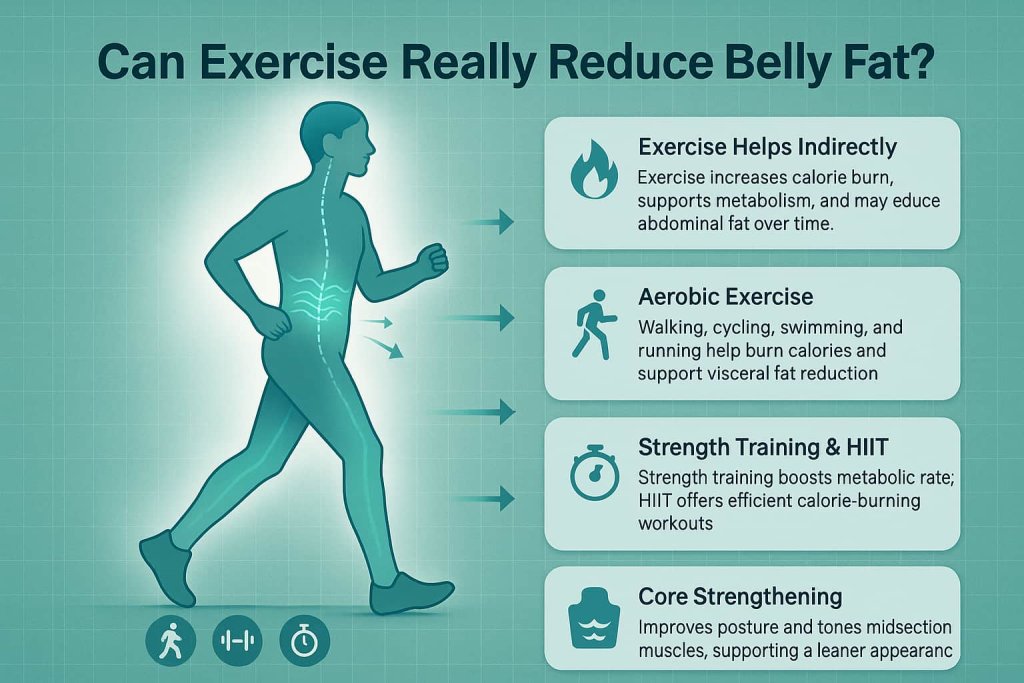
The most effective training categories are:
- Moderate–vigorous aerobic activity (walking, cycling, swimming, running)
- Strength training (increases metabolic rate via muscle growth)
- High-intensity interval training (HIIT) (efficient calorie burn)
- Core strengthening (tones midsection; improves posture and stability)
The 15 exercises below represent the strongest evidence-based options.
The 15 Best Exercises to Lose Belly Fat Fast
These exercises combine calorie-burning cardio, metabolism-boosting strength training, and core activation to help reduce overall and abdominal fat. Each move is beginner-friendly, effective, and supported by research for improving fat loss and midsection strength.
1. Brisk Walking
Why it works:
Brisk walking increases heart rate in a safe, low-impact way, helping you burn calories steadily over time. It also improves cardiovascular health and may help reduce abdominal fat when done consistently.
Muscles worked:
Glutes, hamstrings, quadriceps, calves, core stabilizers.
How to do it:
- Walk at a pace that makes talking slightly difficult but still comfortable.
- Keep your shoulders relaxed and maintain a natural arm swing.
- Aim for 30–45 minutes per session.
- Walk on flat or slightly inclined surfaces for added challenge.
Trainer Tip:
Use a fitness tracker or phone app to maintain a brisk pace of 3–4+ mph for optimal fat-burning benefits.
2. Jogging or Light Running
Why it works:
Jogging elevates cardiovascular intensity, increasing total calorie burn. It may help reduce visceral fat—the deeper abdominal fat linked to metabolic health—when combined with a consistent routine.
Muscles worked:
Glutes, quadriceps, hamstrings, calves, hip flexors, core.
How to do it:
- Start with a light jog at a conversational pace.
- Keep posture upright with slight forward lean from the ankles.
- Run 15–30 minutes depending on fitness level.
- Alternate between jogging and walking if you’re a beginner.
Trainer Tip:
Shorter, more frequent jogs (4–5 days/week) often work better for fat loss than long, infrequent runs.
3. Cycling (Indoor or Outdoor)
Why it works:
Cycling elevates heart rate while minimizing joint stress. It uses large leg muscles, enabling high calorie burn and improved endurance.
Muscles worked:
Quadriceps, hamstrings, glutes, calves, lower back, core stabilizers.
How to do it:
- Adjust seat height so knees have a slight bend at the bottom of each pedal stroke.
- Maintain smooth pedaling at moderate intensity.
- Ride 20–40 minutes continuously.
- Use interval bursts (30–60 seconds faster pace) for extra fat-burning.
Trainer Tip:
Indoor bikes with resistance settings let you simulate hills, which boosts muscle engagement and energy expenditure.
4. Rowing Machine
Why it works:
Rowing blends strength and cardio by engaging your legs, core, and upper body in one fluid movement, maximizing calorie burn per minute.
Muscles worked:
Glutes, hamstrings, quadriceps, lats, upper back, shoulders, biceps, core.
How to do it:
- Start with knees bent and arms extended.
- Push through your legs first, then lean slightly back and pull the handle to your chest.
- Reverse the motion to return to the starting position.
- Row for 10–20 minutes at a steady pace or use intervals.
Trainer Tip:
Focus on leg drive—about 60% legs, 20% core, 20% arms—to improve efficiency and reduce strain.
5. Swimming
Why it works:
Swimming is full-body, low-impact, and highly effective for burning calories without overloading joints. It improves endurance and functional strength.
Muscles worked:
Shoulders, chest, back, core, glutes, quads, hamstrings.
How to do it:
- Choose a stroke you can maintain comfortably (freestyle, backstroke, breaststroke).
- Swim continuously for 10–30 minutes.
- Maintain long, smooth strokes for efficiency.
- Rest briefly between laps as needed.
Trainer Tip:
Rotate between strokes to avoid fatigue and engage more muscle groups.
6. Jump Rope
Why it works:
Jump rope is one of the highest calorie-burning exercises per minute. It elevates heart rate quickly, improving cardiovascular fitness and coordination.
Muscles worked:
Calves, quads, hamstrings, glutes, shoulders, forearms, core.
How to do it:
- Hold the rope handles at hip height.
- Jump lightly on the balls of your feet.
- Keep elbows close to your body and rotate the rope with wrists.
- Start with 20–30 seconds and gradually increase to longer intervals.
Trainer Tip:
Short intervals (20–40 seconds) repeated multiple times burn more calories than long, continuous sessions.
7. Jumping Jacks
Why it works:
Jumping jacks create full-body movement that increases energy expenditure and heart rate. They’re simple, quick, and effective for fat-burning circuits.
Muscles worked:
Shoulders, glutes, quadriceps, calves, core.
How to do it:
- Stand tall with feet together and arms at sides.
- Jump feet wider while raising arms overhead.
- Jump back to the starting position.
- Repeat for 30–60 seconds.
Trainer Tip:
If high-impact jumps bother your joints, try step jacks—stepping one foot out at a time.
Best Strength Exercises to Reduce Belly Fat
Strength training builds lean muscle, increasing resting metabolic rate and supporting long-term fat loss.
8. Squats
Why it works:
Squats engage multiple large muscle groups, making them one of the best calorie-burning strength exercises.
Muscles worked:
Glutes, quads, hamstrings, calves, core.
How to do it:
- Stand with feet shoulder-width apart.
- Push hips back and bend knees as if sitting into a chair.
- Keep chest lifted and core braced.
- Stand back up and repeat.
Trainer Tip:
Drive through your heels to engage glutes more effectively.
9. Lunges
Why it works:
Lunges challenge balance while activating the entire lower body, increasing overall energy expenditure.
Muscles worked:
Glutes, quads, hamstrings, calves, core.
How to do it:
- Step one foot forward.
- Lower until both knees are bent at 90 degrees.
- Push through the front heel to return to standing.
- Alternate legs.
Trainer Tip:
Shorter steps target quads; longer steps emphasize glutes.
10. Deadlifts or Hip Hinge Movements
Why it works:
Hip hinge exercises work large posterior-chain muscles, which require more energy and support metabolic health.
Muscles worked:
Glutes, hamstrings, lower back, core.
How to do it:
- Stand with feet hip-width apart.
- Push hips back while keeping spine neutral.
- Lower weights (or hands) toward shins.
- Stand tall by driving hips forward.
Trainer Tip:
Imagine holding a broomstick along your spine—head, upper back, and hips should stay aligned.
11. Push-Ups
Why it works:
Push-ups strengthen upper body and core while raising heart rate, improving calorie burn.
Muscles worked:
Chest, shoulders, triceps, core, upper back.
How to do it:
- Place hands slightly wider than shoulder-width.
- Keep body in a straight line from head to heels.
- Lower chest toward the floor.
- Push back up.
Trainer Tip:
If full push-ups are too hard, start on knees or against a wall.
12. Dumbbell or Kettlebell Rows
Why it works:
Rows build upper-back muscles and improve posture, increasing total muscle mass that supports fat burning.
Muscles worked:
Lats, rhomboids, traps, biceps, core.
How to do it:
- Hinge at hips with a flat back.
- Pull the weight toward your ribcage.
- Lower slowly with control.
- Alternate arms or do both sides.
Trainer Tip:
Pause for one second at the top of each rep for better muscle engagement.
Core Exercises That Support a Leaner Waist (Not Spot Reduction)
Core exercises strengthen the muscles under belly fat, improving posture, stability, and midsection tone.
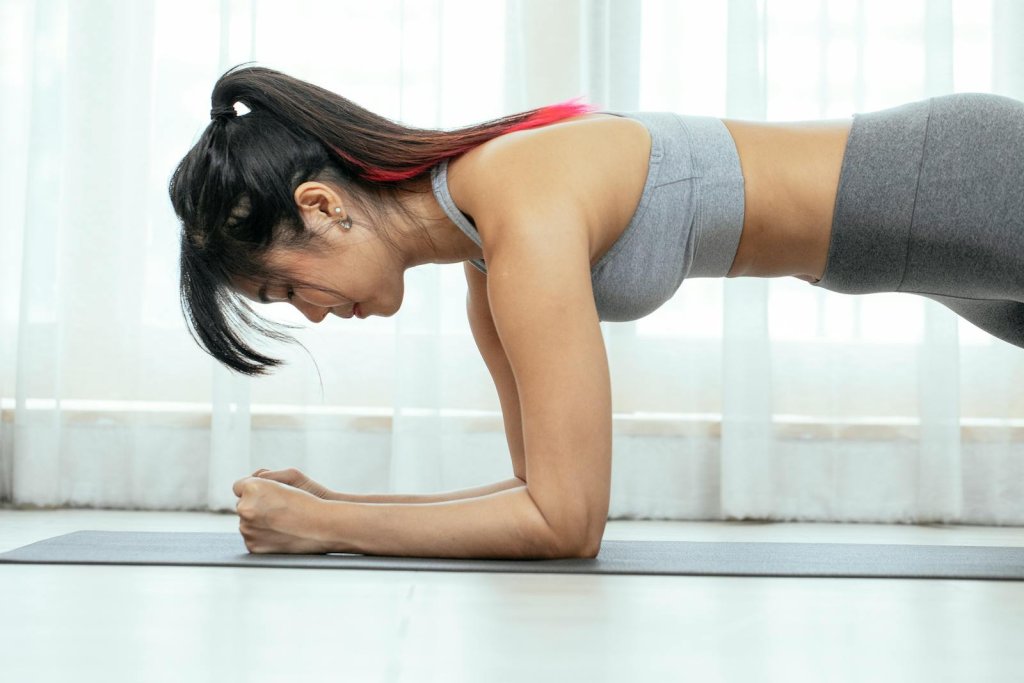
13. Planks
Why it works:
Planks activate deep core muscles, improving stability and supporting better spinal alignment.
Muscles worked:
Rectus abdominis, transverse abdominis, obliques, shoulders, glutes.
How to do it:
- Place forearms on the floor.
- Keep body in a straight line from head to heels.
- Hold for 20–40 seconds.
- Maintain steady breathing.
Trainer Tip:
Don’t let your lower back sag; keep ribs and pelvis gently pulled toward each other.
14. Bicycle Crunches
Why it works:
This dynamic movement activates the obliques and upper/lower abs simultaneously.
Muscles worked:
Upper abs, lower abs, obliques, hip flexors.
How to do it:
- Lie on your back with hands behind head.
- Lift shoulders and legs.
- Bring opposite elbow to knee while extending the other leg.
- Alternate sides smoothly.
Trainer Tip:
Move with control—not speed—to avoid neck strain and maximize core engagement.
15. Mountain Climbers
Why it works:
Mountain climbers combine core engagement with cardio intensity, helping you burn more calories.
Muscles worked:
Core, hip flexors, shoulders, chest, triceps, quads.
How to do it:
- Start in a plank position.
- Drive one knee toward chest.
- Switch legs quickly.
- Continue for 20–40 seconds.
Trainer Tip:
Keep hips level and avoid bouncing—smooth, controlled motion burns more calories.
How Often Should You Do These Exercises?
Based on CDC, AHA, and ACSM guidelines:
- 150–300 minutes/week moderate cardio
or - 75–150 minutes/week vigorous cardio
- Strength training: 2–3 days per week
- Core training: 1–2 days per week
- HIIT (optional): 1–2 sessions per week
Consistency across several weeks is the key to reducing abdominal fat.
Diet, Sleep, and Lifestyle Factors That Affect Belly Fat
Exercise alone cannot produce sustained belly-fat reduction. Supporting habits matter:
- Nutrition: A balanced calorie-appropriate diet with whole foods, fiber, and lean proteins supports healthy weight management.
- Sleep: 7–9 hours per night helps support appetite regulation and metabolic health.
- Stress Management: Chronic stress may influence eating patterns. Mindfulness and daily activity can help.
- Daily Movement: Small choices—standing breaks, walking more, taking stairs—add meaningful calorie burn to your day.
Safety Tips Before Starting Belly-Fat Workouts
- Warm up 3–5 minutes before exercising.
- Increase intensity gradually.
- Choose low-impact options if you have joint concerns.
- Stop if you experience unusual pain or dizziness.
- Consult a healthcare provider if you have chronic conditions or mobility limitations.
FAQs About Losing Belly Fat
1. What exercise burns the most belly fat?
HIIT, running, cycling, rowing, and brisk walking support higher calorie burn.
2. Can I lose belly fat without dieting?
Exercise helps, but nutrition plays a major role in overall fat reduction.
3. How long does it take to lose belly fat?
Timelines vary by lifestyle, consistency, and starting point.
4. Do core exercises burn belly fat?
They strengthen the midsection but do not directly burn belly fat.
5. Is walking enough to lose belly fat?
Yes—if done briskly and consistently as part of a weekly routine.
Conclusion
Losing belly fat requires a combination of cardio, strength training, core work, and supportive lifestyle habits. These 15 exercises may help you burn more calories, build muscle, and improve overall wellness. Start gradually, stay consistent, and combine movement with balanced nutrition for the best long-term results.
References
- Harvard Health Publishing – “Taking Aim at Belly Fat”
Core explanation of subcutaneous vs visceral fat, health risks, and why exercise + lifestyle matter more than spot reduction. - Harvard Health Publishing – “How to Get Rid of Belly Fat”
Practical overview of how exercise, diet, and lifestyle work together for abdominal fat reduction—perfect support for your intro and lifestyle sections. - CDC – Physical Activity Guidelines for Adults
Primary source for your “How often should you exercise?” section (150–300 min/week, plus strength training). - Physical Activity Guidelines for Americans, 2nd Edition (U.S. HHS)
Detailed federal guideline document backing your weekly minute ranges and intensity recommendations. - ACSM Position Stand – “Appropriate Physical Activity Intervention Strategies for Weight Loss and Prevention of Weight Regain for Adults”
Supports your statements about 150–250+ minutes/week, long-term weight management, and combining exercise types. - Slentz et al. – “Effects of Aerobic vs. Resistance Training on Visceral and Liver Fat” (AJP Endocrinology, 2011)
Key RCT showing aerobic training is especially effective for visceral/abdominal fat, while resistance training still helps overall composition. - Poon et al. – “Efficacy of Interval Training in Improving Body Composition and Visceral Fat” (Sports Medicine, 2024)
Strong modern evidence that interval training (including HIIT) can significantly reduce fat mass, visceral fat, and android fat. - American Heart Association – Physical Activity Recommendations for Adults
Additional authority backing your cardio + strength frequency recommendations and heart-health framing.