
Rear delt exercises strengthen the back of your shoulders, helping improve shoulder balance, posture, and pulling strength. Understanding how to train the rear delts correctly matters because these muscles are often undertrained compared to the front delts, which can contribute to poor shoulder mechanics and discomfort over time.
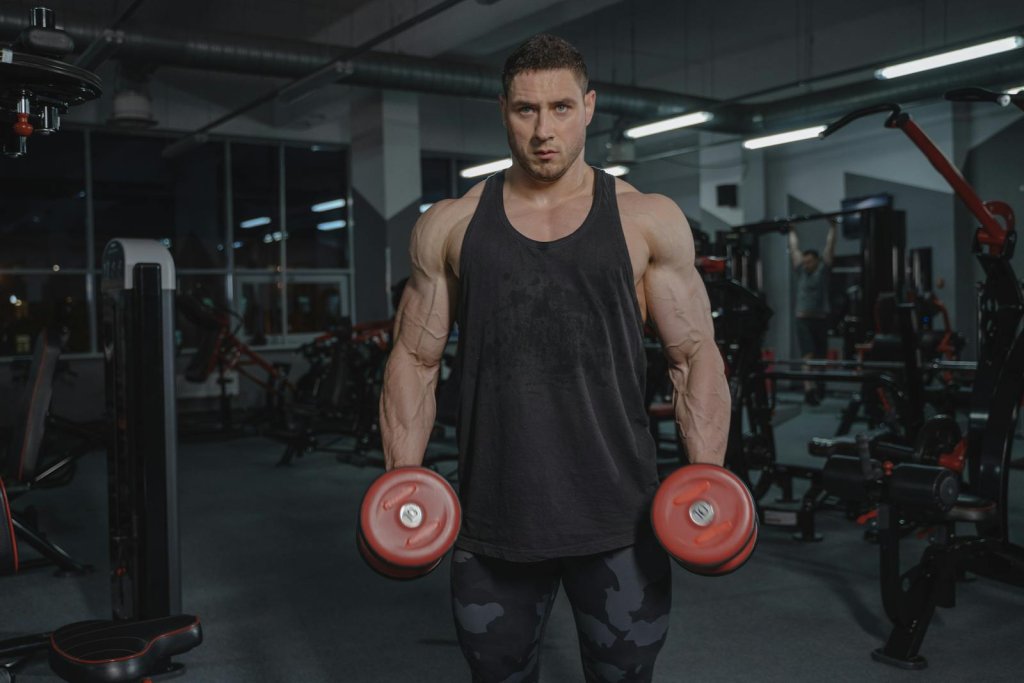
In this guide, you’ll learn what rear delt exercises are, why they matter, and the 12 best rear delt exercises you can use to build stronger, more stable shoulders—whether you train at home or in the gym.
What Are Rear Delt Exercises?
Rear delt exercises are movements that primarily target the posterior deltoid, the muscle located on the back of the shoulder. The rear delts assist with:
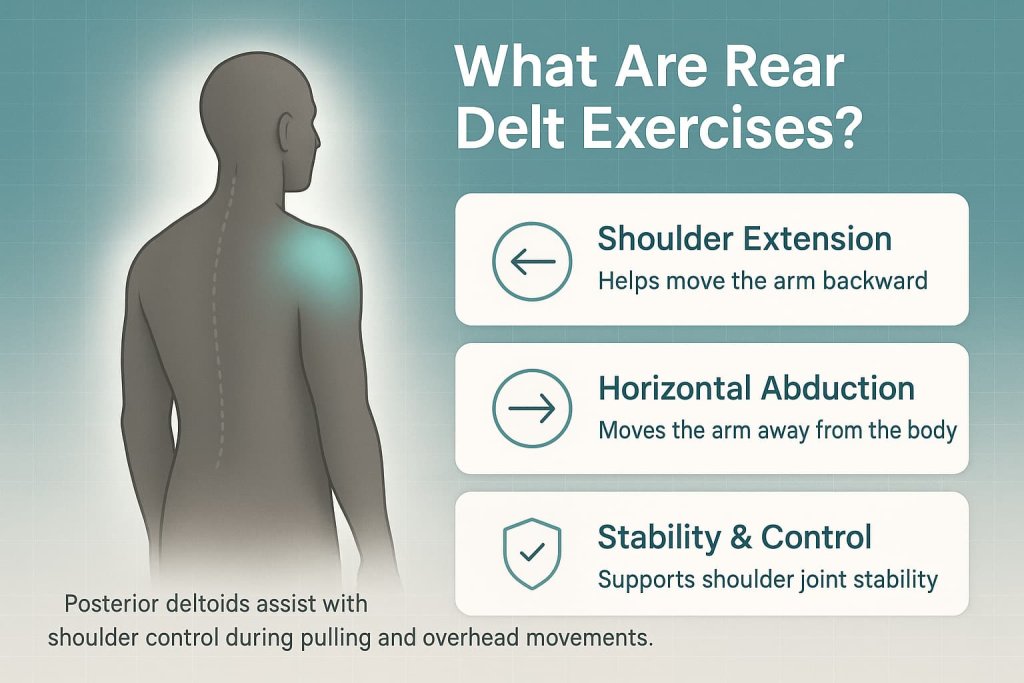
- Shoulder extension
- Horizontal abduction (moving the arm backward)
- External rotation and shoulder stability
According to Physiopedia, the posterior deltoid plays a key role in controlling arm movement and stabilizing the shoulder joint during pulling and overhead activities.
12 Best Rear Delt Exercises for Stronger, More Balanced Shoulders
Below are some of the most effective and widely recommended rear delt exercises used by trainers, physiotherapists, and strength professionals.
1. Bent-Over Dumbbell Reverse Fly
Why it works:
This movement trains shoulder horizontal abduction, one of the primary functions of the rear delts. The hip-hinged position minimizes assistance from the chest and front delts, allowing the posterior shoulder to work more directly while the upper back stabilizers support controlled motion.
How to do it:
- Hinge at the hips until torso is nearly parallel to the floor
- Keep a neutral spine with core lightly braced
- Let dumbbells hang directly under the shoulders
- Lift arms out to the sides with a slight elbow bend
- Stop when upper arms align with the torso
- Lower slowly back to the start position
Trainer tip:
If you feel this mostly in your traps, reduce the weight and slow the lowering phase.
2. Cable Reverse Fly
Why it works:
Unlike dumbbells, cables provide consistent resistance throughout the entire range of motion. This continuous tension increases time under load for the rear delts, which may help improve muscular endurance and control.
How to do it:
- Set dual cables at shoulder height
- Grab opposite handles with arms crossed
- Step back slightly to create tension
- Pull arms outward in a wide arc
- Keep chest tall and shoulders down
- Return slowly to the start position
Trainer tip:
Keep your ribs down and avoid leaning back to maintain rear delt focus.
3. Reverse Pec Deck Fly
Why it works:
The machine stabilizes the torso, reducing momentum and external variables. This allows greater isolation of the rear delts, making it useful for beginners or lifters struggling with strict form.
How to do it:
- Sit facing the pec deck with chest against the pad
- Adjust handles so arms are at shoulder height
- Maintain a slight bend in the elbows
- Pull handles backward in a controlled motion
- Squeeze shoulder blades briefly
- Return slowly to the start
Trainer tip:
Focus on moving your arms, not squeezing your hands—grip tension can shift work away from the shoulders.
4. Face Pulls
Why it works:
Face pulls integrate rear delt activation with scapular retraction and external rotation, supporting shoulder stability. This makes them valuable for posture-focused training and balanced shoulder programs.
How to do it:
- Attach a rope to a cable at face height
- Hold the rope with thumbs pointing back
- Pull toward your face while flaring elbows outward
- Squeeze shoulder blades together
- Control the return phase
Trainer tip:
Think about pulling the rope apart at the end rather than pulling it straight back.
5. Chest-Supported Rear Delt Row
Why it works:
Chest support removes lower-body momentum and reduces spinal loading. The flared elbow position shifts emphasis away from the lats and toward the rear delts and upper back.
How to do it:
- Set an incline bench at a low to moderate angle
- Lie chest-down with dumbbells hanging
- Pull elbows outward and back
- Stop when elbows reach torso level
- Lower slowly with control
Trainer tip:
Use lighter weights than standard rows and prioritize elbow path over load.
6. Wide-Grip Seated Cable Row
Why it works:
A wider grip and higher elbow position reduce lat dominance and increase posterior shoulder involvement, making this row variation more rear-delt friendly.
How to do it:
- Attach a wide bar to the cable row station
- Sit tall with chest lifted
- Pull bar toward upper chest
- Keep elbows flared out to the sides
- Pause briefly, then return slowly
Trainer tip:
If you feel this mostly in your lats, widen your grip or reduce the range slightly.
7. Single-Arm Cable Rear Delt Fly
Why it works:
Single-arm training improves neuromuscular control and highlights side-to-side imbalances, which are common in shoulder musculature.
How to do it:
- Stand sideways to the cable stack
- Hold the handle with the far arm
- Pull arm across the body and backward
- Keep torso stable and shoulders level
- Return slowly under control
Trainer tip:
Light resistance works best—this is a control exercise, not a max-effort lift.
8. Incline Dumbbell Reverse Fly
Why it works:
The incline bench reduces body sway and minimizes lower-back involvement, allowing the rear delts to perform most of the work.
How to do it:
- Lie chest-down on an incline bench
- Let arms hang straight down
- Raise dumbbells outward with slight elbow bend
- Stop at torso level
- Lower slowly and evenly
Trainer tip:
Count the lowering phase to 3–4 seconds to increase rear delt time under tension.
9. Band Pull-Apart
Why it works:
Band pull-aparts reinforce shoulder positioning and scapular control with minimal joint stress, making them ideal for warm-ups or posture-focused routines.
How to do it:
- Hold a resistance band at shoulder height
- Keep arms straight but relaxed
- Pull hands apart until arms form a “T”
- Pause briefly
- Return with control
Trainer tip:
Avoid arching the lower back—maintain a stacked ribcage and pelvis.
10. Rear Delt Raises (Standing)
Why it works:
This simple movement targets the rear delts through controlled shoulder extension and abduction, making it accessible for home workouts.
How to do it:
- Hinge slightly forward at the hips
- Hold dumbbells with palms facing inward
- Raise arms diagonally backward
- Keep neck neutral and shoulders relaxed
- Lower slowly
Trainer tip:
If range shortens, reduce weight rather than forcing momentum.
11. High Row with Elbows Out
Why it works:
Pulling with elbows flared increases horizontal abduction demands, shifting work toward the rear delts instead of the lats.
How to do it:
- Use a barbell, machine, or cables
- Pull toward the upper chest
- Keep elbows wide throughout the movement
- Pause briefly at the top
- Lower under control
Trainer tip:
Avoid excessive load—this variation prioritizes shoulder mechanics over strength.
12. Y-Raise on Incline Bench
Why it works:
The Y-raise emphasizes shoulder control, endurance, and coordination between the rear delts and lower trapezius, which supports healthy shoulder mechanics.
How to do it:
- Lie chest-down on an incline bench
- Hold light dumbbells with thumbs up
- Raise arms overhead in a “Y” shape
- Keep shoulders down and neck relaxed
- Lower slowly
Trainer tip:
This exercise should feel challenging with very light weights—control matters more than load.
How Often Should You Train Rear Delt Exercises?
General resistance-training guidelines from ACSM recommend training each major muscle group at least two times per week. Rear delts are relatively small and often respond well to moderate volume and controlled technique.
A common approach is:
- 2–3 rear delt exercises per session
- 2–4 sets per exercise
- 10–15 controlled repetitions
Rear delt exercises are often placed later in the workout, after large compound pulling movements.
Why Rear Delt Exercises Matter for Shoulder Health
Rear delt exercises matter because the shoulder is a highly mobile joint that relies on muscular balance for stability. Many workouts emphasize pressing movements, which heavily recruit the front delts and chest, while the rear delts receive far less direct work.
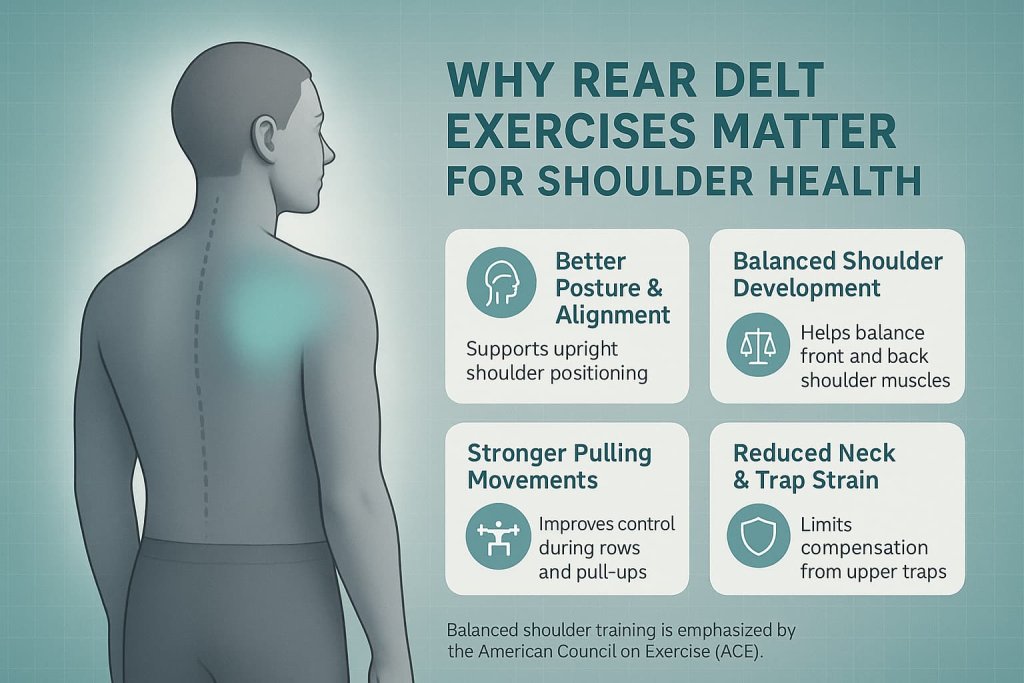
Well-programmed rear delt exercises may help support:
- Better shoulder posture and alignment
- Balanced shoulder development
- Improved pulling strength for rows and pull-ups
- Reduced compensatory strain on the neck and upper traps
The American Council on Exercise (ACE) emphasizes balanced shoulder training to support joint health and long-term performance.
Warm-Up Before Rear Delt Exercises
Warming up before rear delt exercises helps prepare the shoulder joint, upper back, and nervous system for controlled pulling movements. A proper warm-up may support better muscle activation and reduce unnecessary strain.
A simple rear-delt-focused warm-up can include:
- Light band pull-aparts to activate the posterior shoulders
- Scapular retractions to encourage proper shoulder blade movement
- Low-load reverse fly motions with slow, controlled tempo
Keep the warm-up short and easy, focusing on movement quality rather than fatigue.
Common Mistakes During Rear Delt Exercises
Some of the most frequent errors include:
- Using weights that are too heavy
- Shrugging shoulders instead of moving arms
- Rushing through repetitions
- Letting the lower back generate momentum
Keeping movements slow and controlled helps ensure the rear delts do the work.
How the Rear Delts Work During Shoulder Movements
The rear delts (posterior deltoids) help control arm movement and stabilize the shoulder joint, particularly during pulling and overhead actions. They are most active when the arm moves backward or away from the body.
Key rear delt functions include:
- Shoulder horizontal abduction
- Shoulder extension
- Assisting external rotation with the rotator cuff
During exercises like rows, reverse flys, and face pulls, the rear delts work with the upper back to guide the arms backward and support proper shoulder blade movement. When rear delts are weak or undertrained, other muscles—such as the upper traps or lower back—may compensate, which can affect movement quality and shoulder control.
Breathing and Shoulder Control During Rear Delt Exercises
Proper breathing supports shoulder control and overall movement efficiency during rear delt exercises. Controlled breathing may help maintain stability through the torso and prevent excessive upper-trap tension.
General breathing guidelines:
- Exhale gently during the pulling or lifting phase
- Inhale during the controlled lowering phase
- Keep ribs stacked over the pelvis to avoid excessive arching
Smooth breathing encourages better coordination between the shoulders and upper back, especially during slow, controlled repetitions.
Who Should Avoid or Modify Rear Delt Exercises
Most people can safely perform rear delt exercises when using appropriate resistance and proper form. However, some individuals may need to modify or temporarily avoid certain movements.
Extra caution is recommended for people who:
- Have ongoing shoulder pain or limited shoulder mobility
- Are recovering from a shoulder, neck, or upper-back injury
- Experience sharp pain, numbness, or tingling during pulling movements
In these cases, reducing range of motion, using lighter resistance, or choosing supported exercises may be more appropriate. If symptoms persist, seeking guidance from a qualified healthcare or fitness professional is advised.
Frequently Asked Questions About Rear Delt Exercises
Are rear delt exercises necessary?
Yes. Rear delt exercises help balance shoulder development and support joint stability.
Can I train rear delts every day?
Rear delts are small muscles, but they still need recovery. Two to three sessions per week is usually sufficient.
Do rows work the rear delts?
Some row variations activate the rear delts, but isolation exercises improve targeted engagement.
Are bands effective for rear delt exercises?
Yes. Resistance bands provide joint-friendly tension and are effective for endurance and activation.
Should rear delt exercises be light or heavy?
Most people benefit from lighter weights with higher control and repetition ranges.
Can rear delt exercises improve posture?
They may help support better posture by strengthening muscles involved in scapular control.
Conclusion
Rear delt exercises are essential for building stronger, more balanced shoulders. By consistently training the back of your shoulders with controlled, well-selected movements, you support better posture, improved pulling strength, and healthier shoulder mechanics.
If you want balanced shoulder development, don’t skip rear delt exercises—add them to your routine and progress gradually with good form.
References
- Deltoid muscle anatomy and function (Kenhub)
- Shoulder (glenohumeral) joint movements and stability (TeachMeAnatomy)
- Deltoid overview (Physiopedia)
- Adult Physical Activity Guidelines (CDC)
- Physical Activity Guidelines for Americans, 2nd edition (health.gov PDF)
- Progression Models in Resistance Training for Healthy Adults (ACSM Position Stand – PubMed)
- Hand position and EMG activity of posterior shoulder muscles during horizontal abduction (PubMed)
- Deltoid activation differs across shoulder exercises in trained individuals (PMC)