
Glute exercises at home are one of the most effective ways to build a stronger, firmer butt without gym equipment. When done correctly, bodyweight glute exercises can activate all three glute muscles, improve lower-body strength, and support better posture and daily movement.
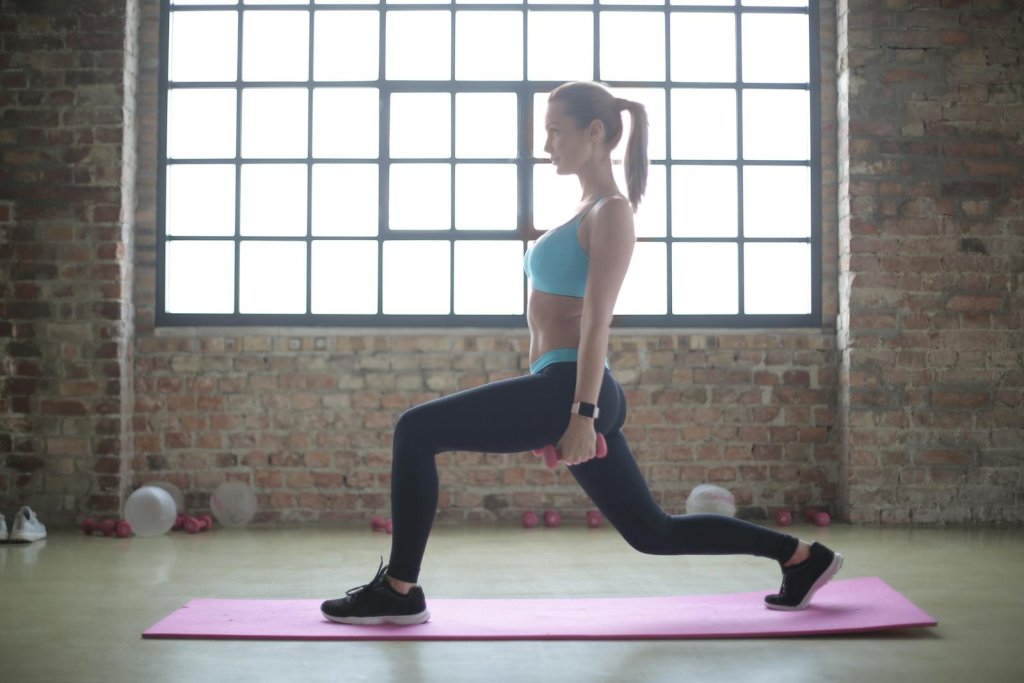
Training your glutes at home matters because the glute muscles play a key role in walking, standing, lifting, climbing stairs, and stabilizing your hips and lower back. A balanced at-home routine should include hip extension, single-leg strength, and side-to-side stability exercises to fully train the glutes.
This guide covers the 12 best glute exercises at home, based on exercise science, and physiotherapy principles.
Why Glute Exercises at Home Matter
Glute exercises at home matter because the glute muscles are essential for everyday movement, posture, and joint support. Strong glutes help control hip motion, stabilize the pelvis, and reduce unnecessary strain on the lower back and knees. Training them at home allows for consistent, low-impact strength work that supports long-term mobility and functional fitness.
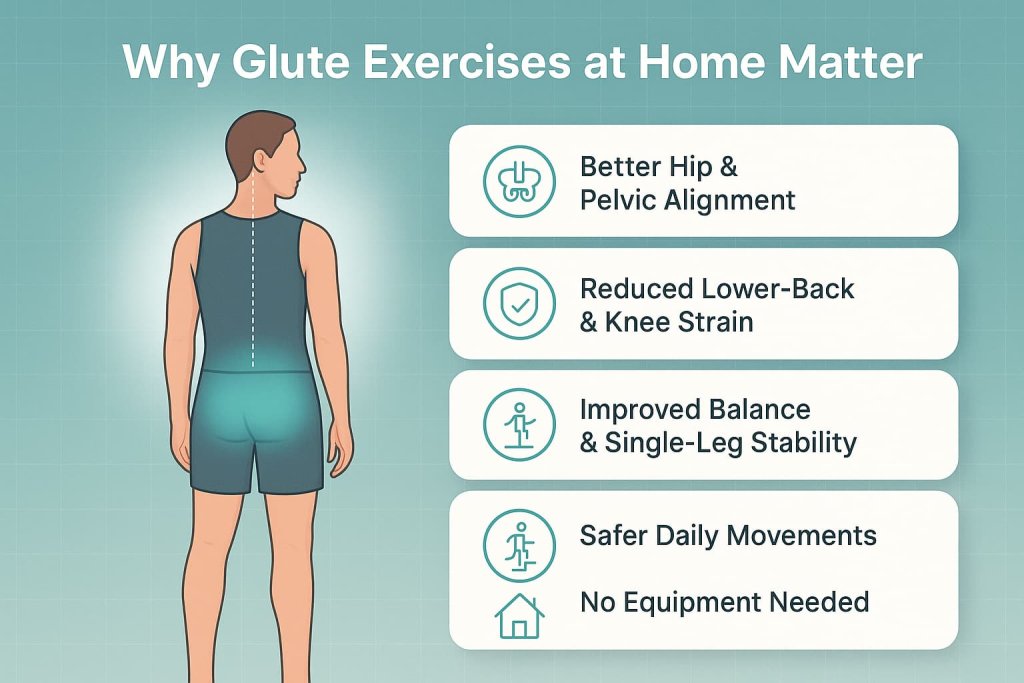
Key reasons glute exercises at home matter include:
- Support proper hip and pelvic alignment during walking and standing
- Help reduce compensation from the lower back and hamstrings
- Improve balance and single-leg stability for daily activities
- Support safer lifting, stair climbing, and sit-to-stand movements
- Allow consistent strength training without gym equipment
What Are the Glute Muscles?
The glutes are a group of three muscles located in the buttocks:
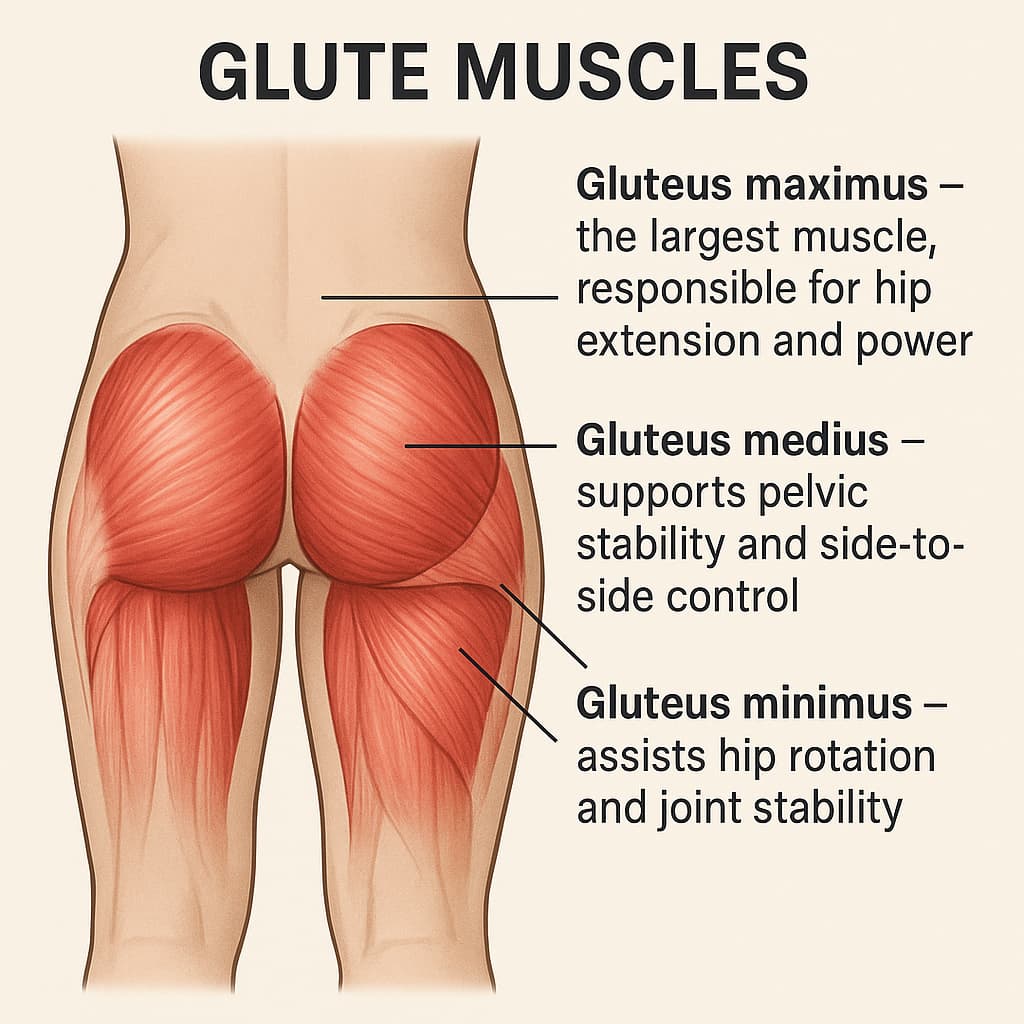
- Gluteus maximus – the largest muscle, responsible for hip extension and power
- Gluteus medius – supports pelvic stability and side-to-side control
- Gluteus minimus – assists hip rotation and joint stability
According to the American Council on Exercise, effective glute exercises should target both hip extension (for strength and shape) and hip abduction (for balance and injury prevention).
12 Best Glute Exercises at Home
Glute exercises at home strengthen the muscles of the hips and butt without equipment, making them accessible and effective for all fitness levels. These exercises focus on hip extension, stability, and balance to support stronger movement and a firmer, more functional lower body.
1. Glute Bridge
Why it works:
The glute bridge is one of the most effective at-home exercises for activating the gluteus maximus. It reinforces proper hip extension mechanics while minimizing stress on the knees and lower back. Because the spine stays supported on the floor, it allows beginners to feel and learn correct glute engagement.
Muscles worked:
The primary muscle is the gluteus maximus. Secondary muscles include the hamstrings, erector spinae (stabilizing), and deep core muscles that help maintain pelvic control.
How to do it:
- Lie on your back with knees bent and feet flat on the floor
- Place feet hip-width apart, heels close to the glutes
- Press through your heels and squeeze your glutes
- Lift hips until knees, hips, and shoulders form a straight line
- Pause briefly, then lower slowly with control
Trainer Tip:
If you feel the movement mostly in your lower back or hamstrings, bring your heels slightly closer to your hips and focus on gently tucking the pelvis before lifting.
2. Single-Leg Glute Bridge
Why it works:
The single-leg glute bridge increases demand on one side at a time, helping correct strength imbalances between the hips. It also challenges pelvic stability, which is important for walking, running, and stair climbing.
Muscles worked:
Primarily targets the gluteus maximus of the working leg. The gluteus medius, hamstrings, and core stabilizers assist to keep the pelvis level.
How to do it:
- Start in a standard glute bridge position
- Extend one leg straight while keeping thighs aligned
- Press through the planted heel
- Lift hips without letting them tilt
- Lower slowly and switch sides
Trainer Tip:
Keep your hips square. If one side drops or twists, reduce the range of motion until control improves.
3. Hip Thrust (Couch or Bed)
Why it works:
Hip thrusts allow a greater range of hip extension than floor bridges, which may increase glute activation. Elevating the upper body shifts more work to the glutes and reduces reliance on the lower back.
Muscles worked:
The gluteus maximus is the primary mover. Hamstrings and core muscles assist for stability.
How to do it:
- Place your upper back on a couch or bed
- Bend knees and plant feet flat on the floor
- Brace your core and drive hips upward
- Squeeze glutes at the top
- Lower under control
Trainer Tip:
Your chin should stay tucked, not tilted back. Looking straight ahead helps keep the ribs down and glutes engaged.
4. Frog Pumps
Why it works:
Frog pumps shorten the hip extension range and reduce hamstring involvement, allowing you to focus almost entirely on glute contraction. This makes them useful for mind-muscle connection and high-rep activation.
Muscles worked:
Primarily the gluteus maximus, with minimal assistance from the hamstrings and core.
How to do it:
- Lie on your back with knees bent outward
- Bring the soles of your feet together
- Press hips upward using glute contraction
- Lower with control and repeat
Trainer Tip:
Think about driving your hips up rather than pushing your feet into the floor. The movement should feel glute-dominant.
5. Bodyweight Squat
Why it works:
Bodyweight squats train the glutes through functional hip and knee movement patterns. They reinforce coordinated lower-body strength used in daily activities like sitting and standing.
Muscles worked:
Gluteus maximus and medius, quadriceps, hamstrings, and core stabilizers.
How to do it:
- Stand with feet shoulder-width apart
- Sit hips back and down
- Keep chest tall and spine neutral
- Push through heels to stand up
Trainer Tip:
If your knees move inward, slightly widen your stance and focus on pushing the knees outward during the ascent.
6. Reverse Lunge
Why it works:
Stepping backward reduces knee stress and shifts more load onto the glutes compared to forward lunges. This makes reverse lunges a joint-friendly option for glute strengthening.
Muscles worked:
Gluteus maximus, gluteus medius, quadriceps, hamstrings, and core stabilizers.
How to do it:
- Step one leg backward
- Lower into a lunge under control
- Push through the front heel
- Return to standing and switch sides
Trainer Tip:
Maintain a slight forward torso lean to increase glute involvement without rounding the back.
7. Bulgarian Split Squat (Chair)
Why it works:
This exercise places high demand on the front-leg glutes while improving balance and single-leg strength. It is one of the most effective bodyweight exercises for glute development.
Muscles worked:
Gluteus maximus, gluteus medius, quadriceps, hamstrings, and core.
How to do it:
- Place rear foot on a chair
- Stand tall with front foot planted
- Lower straight down into a split squat
- Drive through the front heel to stand
Trainer Tip:
If balance is difficult, lightly hold a wall or chair. Stability improves with practice.
8. Step-Ups (Stairs or Bench)
Why it works:
Step-ups replicate everyday movements like climbing stairs and strongly activate the gluteus medius for hip stability. They also promote symmetrical strength between legs.
Muscles worked:
Gluteus maximus, gluteus medius, quadriceps, hamstrings.
How to do it:
- Step onto a stair or bench
- Push through the heel to stand
- Bring the trailing foot up
- Step down slowly and switch sides
Trainer Tip:
Avoid pushing off the bottom foot. The working leg should do most of the work.
9. Single-Leg Romanian Deadlift (Bodyweight)
Why it works:
This hip-hinge movement strengthens the glutes while challenging balance and coordination. It helps improve posterior-chain strength and movement control.
Muscles worked:
Gluteus maximus, hamstrings, gluteus medius, spinal stabilizers.
How to do it:
- Stand on one leg
- Hinge at the hips while extending the free leg back
- Keep spine neutral and hips level
- Return to standing under control
Trainer Tip:
Move slowly. Balance improves when you control the descent rather than rushing the movement.
10. Donkey Kicks
Why it works:
Donkey kicks isolate hip extension in a low-impact position, making them ideal for beginners or activation work before compound exercises.
Muscles worked:
Gluteus maximus primarily, with assistance from the core stabilizers.
How to do it:
- Start on hands and knees
- Keep core braced
- Lift one heel toward the ceiling
- Lower slowly and switch sides
Trainer Tip:
Avoid arching your lower back. The movement should come from the hip, not the spine.
11. Fire Hydrants
Why it works:
Fire hydrants train hip abduction and external rotation, which are essential for pelvic stability and knee alignment during walking and running.
Muscles worked:
Gluteus medius, gluteus minimus, deep hip rotators.
How to do it:
- Stay on all fours
- Lift one knee out to the side
- Keep hips level
- Lower with control
Trainer Tip:
Imagine balancing a glass of water on your lower back to prevent hip shifting.
12. Side-Lying Leg Raises
Why it works:
This exercise isolates the gluteus medius, a key muscle for balance, hip stability, and knee health. Strong side glutes help reduce compensation patterns.
Muscles worked:
Gluteus medius and gluteus minimus.
How to do it:
- Lie on your side with legs stacked
- Slightly move the top leg backward
- Lift the leg upward under control
- Lower slowly without swinging
Trainer Tip:
Smaller, controlled movements are more effective than lifting the leg high with momentum.
How Often Should You Do Glute Exercises at Home?
Based on ACSM and CDC guidelines:
- Frequency: 2–3 times per week
- Sets: 2–4 sets per exercise
- Reps: 8–15 reps (or 20–30 seconds for holds)
- Rest: 30–60 seconds between sets
How to Safely Do Glute Exercises at Home
Performing glute exercises at home safely requires attention to form, control, and progression. Because many glute movements involve the hips and spine, maintaining proper alignment and using controlled ranges of motion is important for injury prevention.
Important safety guidelines to follow:
- Warm up the hips and lower body before starting
- Use slow, controlled repetitions rather than momentum
- Keep the spine neutral and avoid excessive lower-back arching
- Work within pain-free ranges of motion
- Use stable, non-slip surfaces for support
- Breathe steadily and avoid holding your breath
Common Mistakes to Avoid
- Overarching the lower back instead of using glutes
- Letting knees cave inward
- Rushing through reps without control
- Skipping side-glute exercises
Are Glute Exercises and Butt Exercises the Same?
Glute exercises and butt exercises refer to the same muscle group, but the terms are used differently. “Butt” is a casual term, while “glutes” refers to the three gluteal muscles that contribute to strength, stability, and movement control. Effective training should target all parts of the glutes, not just the visible muscle.
Key distinctions to understand:
- The gluteus maximus supports hip extension and overall butt shape
- The gluteus medius helps with balance, pelvic stability, and knee alignment
- The gluteus minimus assists with hip control and joint support
- A complete program includes extension, single-leg, and side-hip exercises
This balanced approach supports both functional movement and overall lower-body strength.
Frequently Asked Questions
1. Are glute exercises at home effective without weights?
Yes. Bodyweight exercises can strongly activate the glutes when performed with proper form and tempo.
2. How long does it take to see results?
Many people notice strength improvements within 2–4 weeks and visible changes in 6–8 weeks with consistency.
3. Can beginners do these exercises?
Yes. All exercises can be modified for beginners by reducing range of motion or reps.
4. Do glute exercises help lower-back pain?
Strong glutes may help support better movement patterns and reduce stress on the lower back.
5. Are glutes and butt exercises the same?
Yes. “Butt” is a common term for the glute muscles, especially the gluteus maximus.
6. Can I train glutes every day?
It’s best to allow at least 24–48 hours of rest between hard glute sessions for recovery.
Conclusion
Glute exercises at home are a simple, effective way to build strength, improve stability, and support a firmer, more functional lower body. By combining hip extension, single-leg movements, and side-glute exercises, you can train your glutes thoroughly without equipment.
Start with a few exercises, focus on form, and progress gradually for the best results.
References
- CDC: Adult Physical Activity Guidelines Overview
- U.S. HHS: Physical Activity Guidelines for Americans, 2nd Edition (PDF)
- WHO: Physical Activity Recommendations
- ACSM Position Stand (2009): Progression Models in Resistance Training (PubMed)
- ACE (2025): Strength Training the Glutes—An Evidence-Based Approach
- ACE (2006): Glutes to the Max—EMG Study (PDF)
- Cleveland Clinic: 8 of the Best Glute Exercises (Form + safety cues)
- McBeth et al. (2012): Hip Muscle Activity During Side-Lying Hip-Strengthening Exercises (PMC)