
Stretching exercises for office workers are simple, low-impact movements that help reduce stiffness, support better posture, and improve comfort during long hours of sitting.
If you spend most of your day at a desk, regular stretching can help counter the effects of prolonged sitting on the neck, shoulders, back, hips, and wrists.
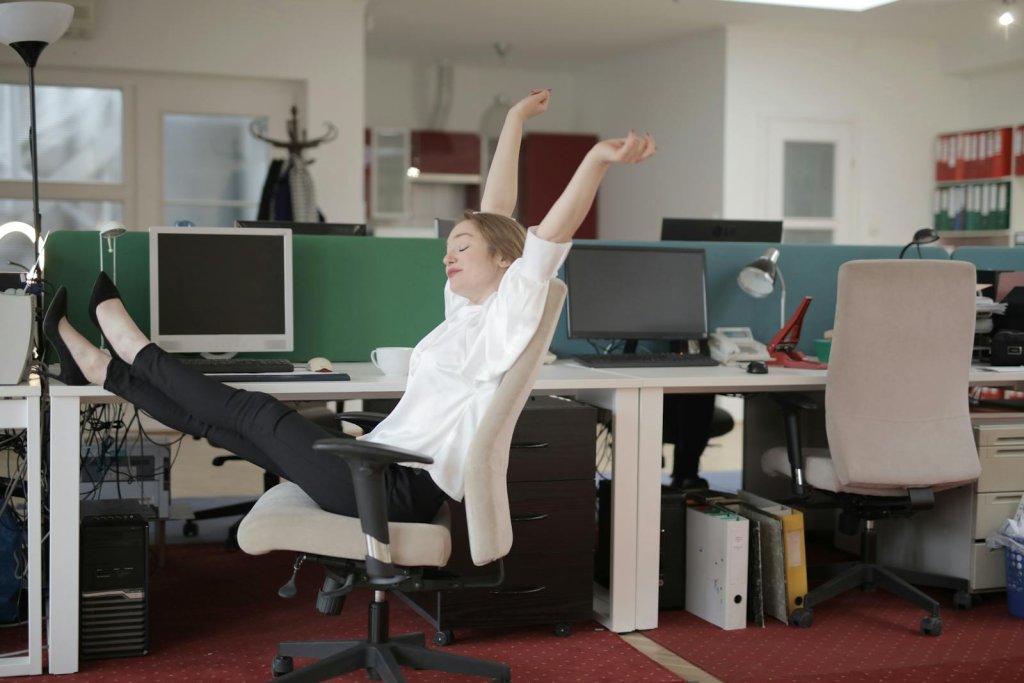
Understanding how and when to stretch is important because long periods of sitting are associated with muscle tightness, reduced joint mobility, and postural strain. Short, consistent stretching breaks—combined with proper ergonomics and regular movement—can make your workday feel noticeably more comfortable.
Why Stretching Exercises for Office Workers Matter
Office work often involves prolonged sitting, forward head posture, rounded shoulders, and repetitive hand movements. Over time, this can contribute to discomfort and reduced mobility.
Regular stretching exercises may help support:
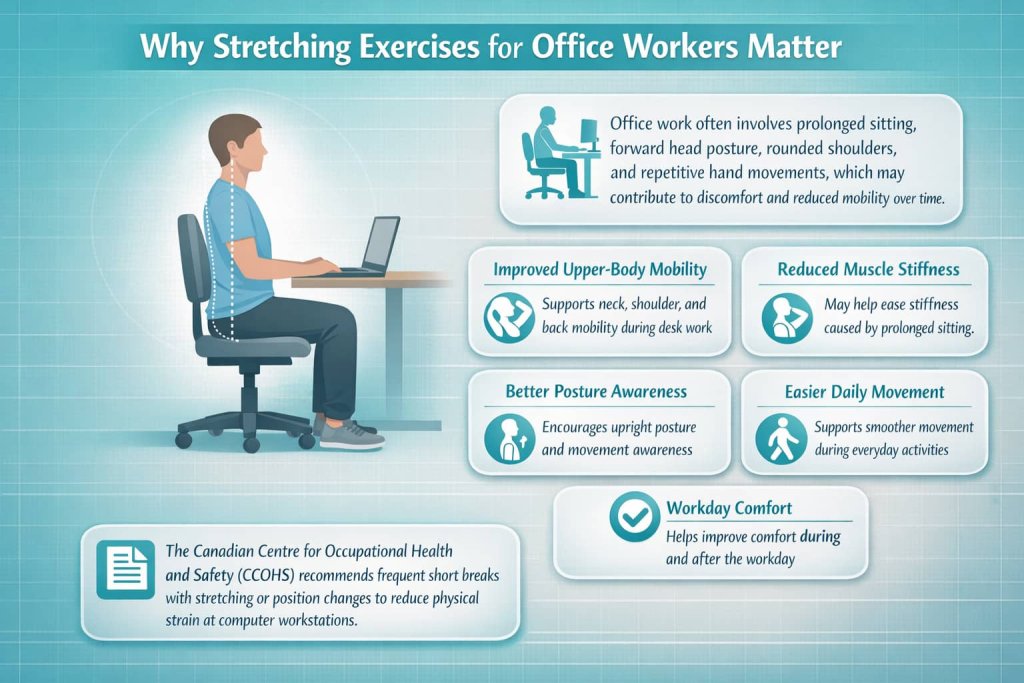
- Improved neck, shoulder, and back mobility
- Reduced muscle stiffness from long sitting periods
- Better posture awareness during desk work
- Easier movement during daily activities
- Improved comfort during and after the workday
According to the Canadian Centre for Occupational Health and Safety (CCOHS), frequent short breaks that include stretching or position changes are recommended to reduce physical strain at computer workstations.
11 Best Stretching Exercises for Office Workers
Regular stretching exercises for office workers help reduce stiffness, support better posture, and improve comfort during long hours of sitting. Practicing these simple stretches throughout the workday encourages gentle movement and may help offset the effects of prolonged desk work.
1. Neck Side Stretch
Why it works:
Prolonged screen use often leads to sustained tension in the side-neck muscles due to forward head posture. This stretch gently lengthens those tissues and may help reduce stiffness and postural strain.
How to do it:
- Sit upright with shoulders relaxed and feet flat on the floor
- Slowly tilt your head toward one shoulder
- Keep the opposite shoulder relaxed and down
- Hold the stretch comfortably for 10–30 seconds
- Return to center and repeat on the other side
Trainer Tip:
Avoid pulling the head with your hand; let gravity create the stretch for better comfort and control.
2. Neck Rotation Stretch
Why it works:
Holding the head still for long periods can limit cervical mobility. Gentle rotation helps maintain normal neck range of motion and reduce stiffness.
How to do it:
- Sit tall with your chin level
- Slowly turn your head to one side as far as comfortable
- Keep shoulders relaxed and facing forward
- Hold for 10–30 seconds
- Return to center and switch sides
Trainer Tip:
Move slowly and smoothly—avoid forcing the rotation beyond a comfortable range.
3. Shoulder Rolls
Why it works:
Shoulder rolls encourage movement in the shoulder girdle, helping relieve tension that builds up from typing, mouse use, and rounded posture.
How to do it:
- Sit or stand upright with arms relaxed at your sides
- Lift shoulders up toward your ears
- Roll them backward in a circular motion
- Perform 8–10 slow repetitions
- Reverse direction and repeat
Trainer Tip:
Focus on slow, controlled circles rather than fast movements to maximize relaxation.
4. Chest Opener Stretch
Why it works:
Desk work commonly shortens chest muscles, contributing to rounded shoulders. Opening the chest may help improve posture awareness and shoulder comfort.
How to do it:
- Sit or stand tall
- Interlace fingers behind your back
- Gently straighten your arms and lift them slightly
- Open your chest without arching the lower back
- Hold for 10–30 seconds
Trainer Tip:
Think “tall posture” rather than pushing the ribs forward.
5. Seated Spinal Twist
Why it works:
Gentle rotation helps maintain spinal mobility and may reduce stiffness caused by staying in one position for long periods.
How to do it:
- Sit upright near the edge of your chair
- Place one hand on the opposite knee
- Gently rotate your torso toward that side
- Keep your spine tall
- Hold for 10–30 seconds, then switch sides
Trainer Tip:
Twist from the upper back rather than forcing the movement from the lower spine.
6. Wrist and Forearm Stretch
Why it works:
Repetitive typing and mouse use can increase tension in the forearms. Stretching these muscles may help improve comfort during desk tasks.
How to do it:
- Extend one arm forward with palm facing down
- Use the other hand to gently pull fingers upward
- Hold for 10–30 seconds
- Turn palm upward and repeat
- Switch arms
Trainer Tip:
Apply light pressure only—these muscles respond best to gentle stretching.
7. Seated Figure-4 Hip Stretch
Why it works:
Sitting can limit hip mobility and tighten the glutes. This stretch targets the outer hip area to support comfortable movement.
How to do it:
- Sit upright in a chair
- Place one ankle over the opposite knee
- Keep the spine tall
- Gently lean forward until a stretch is felt
- Hold for 10–30 seconds and switch sides
Trainer Tip:
If knee discomfort occurs, reduce the range or keep the foot lower on the leg.
8. Standing Hip Flexor Stretch
Why it works:
Hip flexors often shorten with prolonged sitting. Stretching them may help support better posture and walking comfort.
How to do it:
- Stand with one foot forward and one foot back
- Slightly bend the front knee
- Keep torso upright
- Shift weight forward until a stretch is felt in the back hip
- Hold for 10–30 seconds and switch sides
Trainer Tip:
Avoid arching the lower back—keep the pelvis neutral.
9. Hamstring Stretch
Why it works:
Tight hamstrings from sitting may affect posture and movement mechanics. Gentle stretching helps maintain flexibility.
How to do it:
- Stand behind a chair for support
- Place one heel forward on the floor
- Keep the knee straight but relaxed
- Hinge slightly at the hips
- Hold for 10–30 seconds and switch legs
Trainer Tip:
Think “long spine” rather than bending forward aggressively.
10. Seated Cat–Cow Stretch
Why it works:
This movement promotes gentle spinal flexion and extension, helping reduce stiffness from static sitting.
How to do it:
- Sit upright with hands on knees
- Inhale and gently arch your back (cow)
- Exhale and round your spine (cat)
- Move slowly between positions
- Perform 8–12 controlled repetitions
Trainer Tip:
Let breathing guide the movement for a smoother, more relaxing effect.
11. Calf and Ankle Stretch
Why it works:
Prolonged sitting can reduce circulation in the lower legs. Stretching calves and ankles supports mobility and blood flow.
How to do it:
- Stand upright behind your chair
- Rise slowly onto the balls of your feet
- Lower heels back down with control
- Repeat 10–15 times
Trainer Tip:
Move through the full range slowly to encourage circulation rather than rushing repetitions.
How Often Should Office Workers Stretch?
General evidence-based guidance suggests:
- Take a short movement or stretching break every 30–60 minutes
- Hold gentle static stretches for 10–30 seconds
- Repeat each stretch 1–3 times, staying pain-free
- Stretch more frequently on days with longer sitting hours
The American Heart Association and CDC also emphasize reducing total sitting time by incorporating light movement throughout the day.
Warm-Up Before Desk Stretching
Even gentle desk stretches benefit from a brief warm-up. A short warm-up helps increase circulation and prepares joints and muscles for movement.
A simple desk-friendly warm-up may include:
- Light shoulder rolls or arm movements
- Gentle neck motions within a comfortable range
- Standing up and walking for 1–2 minutes
- A few deep, relaxed breaths
Warming up does not need to be formal or time-consuming. The goal is simply to ease the body out of stillness before stretching.
How Prolonged Sitting Affects the Body
Spending long hours sitting at a desk places the body in a fixed position for extended periods. Over time, this may contribute to muscle tightness, reduced joint mobility, and postural strain—especially when movement breaks are limited.
Common effects associated with prolonged sitting include:
- Tightness in the neck and shoulders from forward head posture
- Reduced upper-back mobility from rounded sitting positions
- Shortened hip flexors due to constant hip flexion
- Increased stiffness in the lower back and hamstrings
- Reduced circulation in the legs and ankles
Occupational health guidance emphasizes that the human body is designed for regular movement, not sustained stillness. Stretching helps reintroduce gentle motion, but it works best when combined with regular posture changes and brief standing or walking breaks.
When to Stretch During the Workday
Stretching does not need to be long or intense to be helpful. For office workers, short and frequent stretching sessions are generally more practical and effective than infrequent long routines.
General guidance suggests:
- Stretch briefly every 30–60 minutes during desk work
- Perform stretches when stiffness or tension begins to build
- Use stretching during natural breaks, such as after meetings or phone calls
- Stretch again at the end of the workday if muscles feel tight
Stretching should feel comfortable and controlled. It should never be forced or painful, especially during work hours.
Common Stretching Mistakes Office Workers Should Avoid
Stretching is generally safe when done correctly, but certain habits may reduce its effectiveness or increase discomfort.
Common mistakes include:
- Stretching into pain rather than mild tension
- Holding the breath during stretches
- Bouncing or using momentum
- Slouching or collapsing posture while stretching
- Skipping movement breaks and relying on stretching alone
Stretching should feel slow, controlled, and relaxed. Quality of movement matters more than how far you stretch.
Who Should Be Cautious With Desk Stretching
Most office workers can perform gentle stretching safely, but some individuals should take extra care.
Use caution if you:
- Have a recent injury or surgery
- Experience dizziness or numbness during movement
- Have known joint instability or spinal conditions
- Feel sharp, worsening, or unexplained pain
In these situations, it’s best to keep movements very gentle and consult a qualified healthcare or fitness professional before starting a stretching routine.
Tips for Safe and Effective Office Stretching
- Stretch only to mild tension, never pain
- Move slowly and avoid bouncing
- Breathe normally during each stretch
- Maintain an upright sitting posture when stretching at your desk
- Combine stretching with standing or short walks for best results
If discomfort worsens or persists, consider reviewing workstation ergonomics or consulting a qualified professional.
Can Stretching Replace Ergonomic Changes?
Stretching is helpful, but it works best alongside proper workstation setup. Harvard Health and OSHA both emphasize that chair height, screen position, keyboard placement, and regular movement are equally important for long-term comfort.
Frequently Asked Questions
How long should office workers hold stretches?
Most adults can hold gentle stretches for 10–30 seconds, repeating 1–3 times, according to ACSM guidelines.
How often should I stretch during work?
Brief stretching or movement breaks every 30–60 minutes are commonly recommended by occupational health organizations.
Can stretching help with desk-related neck and back discomfort?
Stretching may help support comfort and mobility, especially when combined with posture awareness and movement breaks.
Are desk stretches safe to do at work?
Yes, when done gently and pain-free. Stretches should never cause sharp or worsening pain.
Do office stretches improve posture?
Stretching may help improve posture awareness by reducing muscle tightness that pulls the body out of alignment.
Should I stretch before or after work?
Both can be helpful. Many office workers benefit from short stretches during the day and a longer routine after work.
Conclusion
Stretching exercises for office workers are a practical way to support comfort, posture, and mobility during long workdays. When practiced regularly and paired with movement breaks and good ergonomics, these simple stretches can make desk work feel easier on your body.
Start small, stay consistent, and listen to your body.
References
- Harvard Health — Calling All Desk Jockeys: Stretching to Ease Neck and Shoulder Pain
- BMJ Open (2021) — Office Work and Stretch Training (OST) and Musculoskeletal Complaints
- Brazilian Journal of Physical Therapy (2018) — Stretching Training + Ergonomic Modifications (RCT)
- PubMed Central — Workplace Exercise Interventions in Office Workers (Systematic Review)
- PubMed Central — Micro-Breaks, Well-Being, and Performance (Systematic Review + Meta-Analysis)
- PubMed Central (2012) — Current Concepts in Muscle Stretching for Exercise and Rehabilitation