
Bodyweight hamstring exercises are effective strength movements that train the hamstrings using only your body weight—no equipment required. When done consistently, they may help improve leg strength, support better movement mechanics, and reduce injury risk, all while being accessible at home.
Understanding how to train your hamstrings properly matters because these muscles play a major role in walking, running, bending, and lifting. This guide covers the best bodyweight hamstring exercises, how to use them safely, who they’re best for, and how to program them into your routine—based on current training guidelines and research-backed principles.
What Are Bodyweight Hamstring Exercises?
Bodyweight hamstring exercises are lower-body movements that strengthen the hamstrings through hip extension, knee flexion, or controlled eccentric loading, using only body weight for resistance.
The hamstrings consist of three muscles:
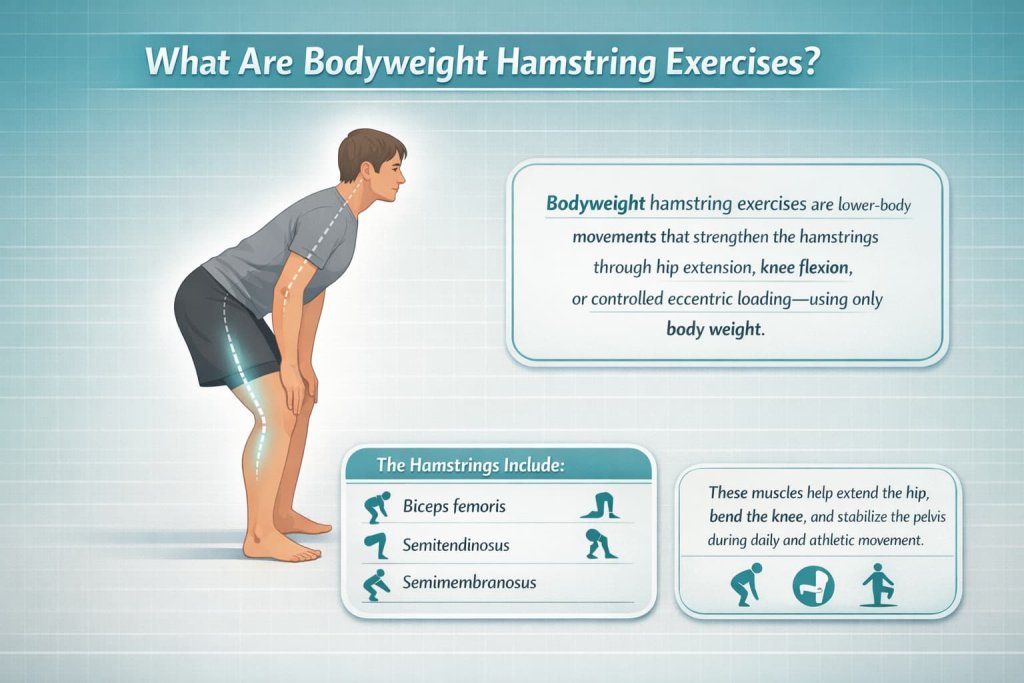
- Biceps femoris
- Semitendinosus
- Semimembranosus
Together, they help extend the hip, bend the knee, and stabilize the pelvis during daily and athletic movements.
12 Best Bodyweight Hamstring Exercises
These exercises strengthen your hamstrings using only body weight, making them ideal for home workouts. They support stronger, leaner legs while improving balance, mobility, and posterior-chain control.
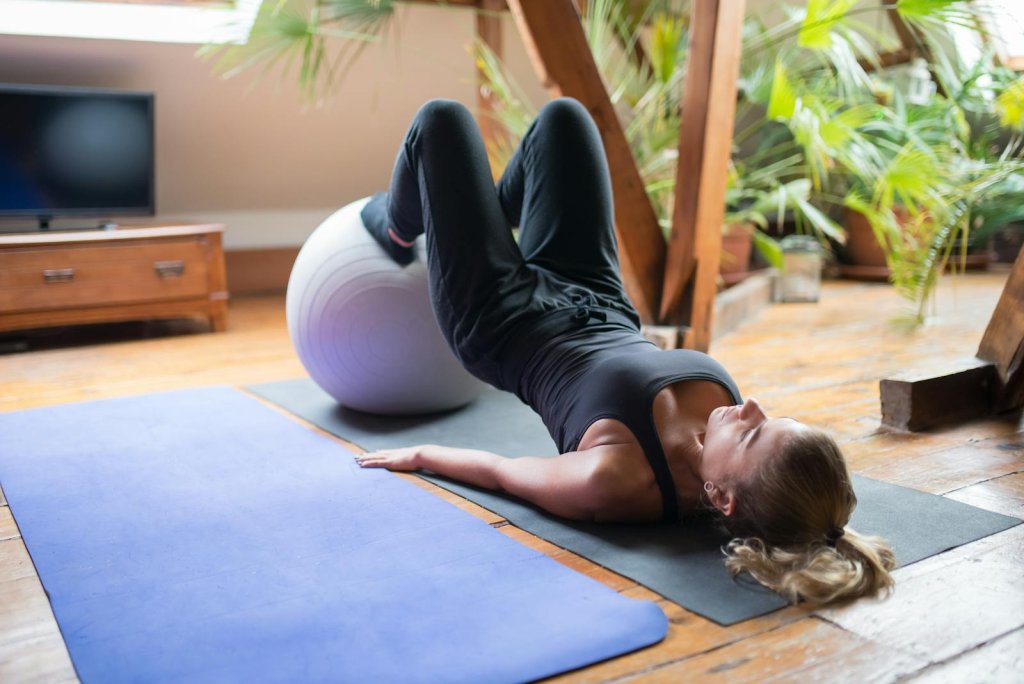
1. Glute Bridge
How to do it
- Lie on your back with knees bent and feet flat on the floor, hip-width apart
- Place arms at your sides with palms down
- Brace your core and squeeze your glutes
- Lift hips until your body forms a straight line from shoulders to knees
- Lower slowly with control
Why it works
The glute bridge trains the hamstrings through hip extension while minimizing spinal load. It reinforces proper posterior-chain activation and teaches controlled hip movement, making it ideal for beginners and rehabilitation-focused strength work.
Muscles worked
Hamstrings, gluteus maximus, erector spinae, deep core stabilizers
Trainer Tip
Avoid arching your lower back—think about tucking your pelvis slightly and driving through your heels.
2. Single-Leg Glute Bridge
How to do it
- Lie on your back with one foot planted and the other leg extended
- Keep hips level and core braced
- Press through the planted heel to lift hips
- Pause briefly at the top
- Lower slowly and switch sides
Why it works
Unilateral loading increases hamstring demand while exposing side-to-side imbalances. This exercise also challenges pelvic stability, which is essential for walking, running, and athletic movement.
Muscles worked
Hamstrings, glutes, hip stabilizers, core
Trainer Tip
If hips drop or twist, regress to a two-leg bridge and rebuild control.
3. Hamstring Walkouts
How to do it
- Start in a glute bridge position
- Slowly walk heels away from your body one step at a time
- Keep hips lifted as long as possible
- Walk heels back in with control
- Reset and repeat
Why it works
Hamstring walkouts progressively increase tension as the legs extend, placing the hamstrings under long-lever load. This strengthens both concentric and eccentric control without equipment.
Muscles worked
Hamstrings, glutes, core stabilizers
Trainer Tip
Move slowly—speed reduces tension and shifts work away from the hamstrings.
4. Hip Hinge (Bodyweight Good Morning)
How to do it
- Stand tall with feet hip-width apart
- Place hands on hips or cross arms over chest
- Push hips back while keeping spine neutral
- Lower torso until you feel a hamstring stretch
- Return to standing by driving hips forward
Why it works
This movement teaches proper hip hinging, a foundational pattern for lifting and athletic performance. It loads the hamstrings through hip flexion while reinforcing spinal control.
Muscles worked
Hamstrings, glutes, erector spinae
Trainer Tip
Imagine closing a car door with your hips—movement comes from the hips, not the lower back.
5. Elevated Glute Bridge (Feet on Chair)
How to do it
- Lie on your back with heels elevated on a chair or bench
- Keep knees bent and core braced
- Drive heels down to lift hips
- Pause briefly at the top
- Lower slowly
Why it works
Elevating the feet increases hamstring involvement by placing them in a longer working position. This progression builds strength without adding external load.
Muscles worked
Hamstrings, glutes, core
Trainer Tip
Keep ribs down and avoid flaring the chest as hips rise.
6. Sliding Hamstring Curl (Towels or Socks)
How to do it
- Lie on your back with heels on towels or sliders
- Lift hips into a bridge
- Slowly slide heels away from your body
- Pull heels back in while maintaining lifted hips
- Lower hips and reset
Why it works
This exercise trains knee-flexion strength and eccentric control—critical for sprinting, deceleration, and injury resilience.
Muscles worked
Hamstrings, glutes, core
Trainer Tip
If hips drop early, shorten the range until strength improves.
7. Single-Leg Sliding Curl
How to do it
- Start in a bridge with one heel on a slider
- Extend the free leg off the floor
- Slide the working heel away slowly
- Pull back in under control
- Switch sides
Why it works
Single-leg loading dramatically increases hamstring demand while improving limb symmetry and control.
Muscles worked
Hamstrings, glutes, hip stabilizers
Trainer Tip
Quality matters more than range—stop before losing hip height.
8. Stability Ball Hamstring Curl (Optional)
How to do it
- Lie on your back with heels on a stability ball
- Lift hips into a bridge
- Bend knees to roll the ball toward you
- Extend legs slowly
- Maintain hip height throughout
Why it works
The unstable surface increases neuromuscular demand, improving hamstring activation and core coordination simultaneously.
Muscles worked
Hamstrings, glutes, core stabilizers
Trainer Tip
If control is limited, perform isometric bridge holds on the ball first.
9. Reverse Plank
How to do it
- Sit with legs extended and hands behind you
- Press hands and heels into the floor
- Lift hips until body forms a straight line
- Hold while breathing steadily
- Lower with control
Why it works
Reverse planks load the hamstrings isometrically while reinforcing full posterior-chain tension and postural strength.
Muscles worked
Hamstrings, glutes, spinal extensors, shoulders
Trainer Tip
Think “long spine” rather than forcing hips high.
10. Nordic Hamstring Exercise (Assisted)
How to do it
- Kneel with ankles anchored or held by a partner
- Keep torso tall and core braced
- Slowly lower body forward
- Catch yourself with hands as needed
- Push lightly to return
Why it works
Nordics heavily load the hamstrings eccentrically, a key mechanism linked to improved strength and reduced injury risk when progressed gradually.
Muscles worked
Hamstrings (especially biceps femoris)
Trainer Tip
Use full assistance early—control matters more than depth.
11. Bridge Hold with March
How to do it
- Start in a glute bridge position
- Lift one knee toward the chest
- Lower and alternate sides
- Keep hips level throughout
- Continue for controlled reps
Why it works
This variation adds dynamic movement to an isometric hold, enhancing neuromuscular coordination and pelvic control.
Muscles worked
Hamstrings, glutes, core stabilizers
Trainer Tip
If hips sway, slow the march or return to static holds.
12. Single-Leg Romanian Deadlift (Bodyweight)
How to do it
- Stand on one leg with slight knee bend
- Hinge at the hips while extending the free leg back
- Keep spine neutral and hips square
- Return to standing with control
- Switch sides
Why it works
This exercise places the hamstrings under tension through a long range of motion while improving balance and hip control.
Muscles worked
Hamstrings, glutes, calves, core
Trainer Tip
Focus on reaching the heel back, not the chest down.
How to Program Bodyweight Hamstring Exercises
For general fitness and leg strength:
- Train hamstrings 2–3 times per week
- Choose 3–5 exercises per session
- Perform 2–4 sets per exercise
- Aim for 8–15 controlled reps or 20–40 seconds for holds
- Rest 45–75 seconds between sets
Focus on slow, controlled movements—especially during the lowering (eccentric) phase.
Why Bodyweight Hamstring Exercises Important
Regular hamstring training may help support:
- Stronger, more balanced legs
- Improved posture and pelvic control
- Better performance in walking, running, and lifting
- Reduced strain on the knees and lower back
- Long-term joint and tendon resilience when progressed gradually
Major organizations such as the Centers for Disease Control and Prevention and the American College of Sports Medicine recommend strength training all major muscle groups at least two days per week as part of a balanced fitness routine.
Who Should Do Bodyweight Hamstring Exercises?
These exercises are suitable for:
- Beginners building lower-body strength
- Home exercisers without equipment
- Runners and athletes seeking posterior-chain balance
- Desk workers aiming to counter prolonged sitting
- Older adults when appropriately modified
Who Should Be Cautious or Seek Professional Guidance
Use caution or consult a qualified professional if you:
- Have a recent hamstring strain or tear
- Experience sharp pain, numbness, or tingling
- Have unresolved lower-back or hip injuries
- Are returning to training after a long break
Progress gradually and stop any exercise that causes pain rather than muscular effort.
Common Mistakes to Avoid
- Rushing through reps without control
- Overarching the lower back during bridges
- Neglecting eccentric (lowering) phases
- Training hamstrings infrequently or inconsistently
- Skipping warm-ups before harder progressions
Frequently Asked Questions
Are bodyweight hamstring exercises effective?
Yes. When performed with proper form and progression, they can meaningfully strengthen the hamstrings.
Can I build muscle without weights?
You can stimulate strength and muscle development using tempo, unilateral work, and volume—especially as a beginner or intermediate.
How often should I train hamstrings?
Most adults benefit from training hamstrings 2–3 times per week, allowing recovery between sessions.
Are these exercises safe for beginners?
Yes, especially when starting with basic bridges and hinges before progressing.
Do hamstrings help protect the knees?
Strong hamstrings may help support knee stability and balanced leg mechanics.
Can I do these exercises every day?
Light activation work can be done often, but intense sessions should include rest days.
Conclusion
Bodyweight hamstring exercises are a practical, effective way to build stronger, leaner legs at home. By training consistently, progressing gradually, and focusing on control, you can improve lower-body strength, movement quality, and long-term resilience—without stepping into a gym.
Start with the basics, master your form, and progress with intention.
References
- CDC — Adult Physical Activity Guidelines (strength training 2+ days/week)
- Health.gov — Physical Activity Guidelines for Americans, 2nd Edition (PDF)
- World Health Organization — Physical activity recommendations (includes muscle-strengthening 2+ days/week)
- ACSM Position Stand (Garber et al., 2011) — Quantity and Quality of Exercise (PubMed)
- BMJ Open Sport & Exercise Medicine (2019) — Programs including Nordic Hamstring Exercise reduce hamstring injuries (PubMed)
- SAGE Journals (2025) — Review on Nordic Hamstring Exercise and hamstring injury prevention
- Cleveland Clinic — Hamstring muscle anatomy & function (hip extension and knee flexion)
- NHS — Hamstring injury (symptoms, recovery guidance, when to get help)