
Lower glute exercises focus on strengthening the lower (inferior) fibers of the gluteus maximus to improve underbutt shape, hip extension strength, and overall glute balance.
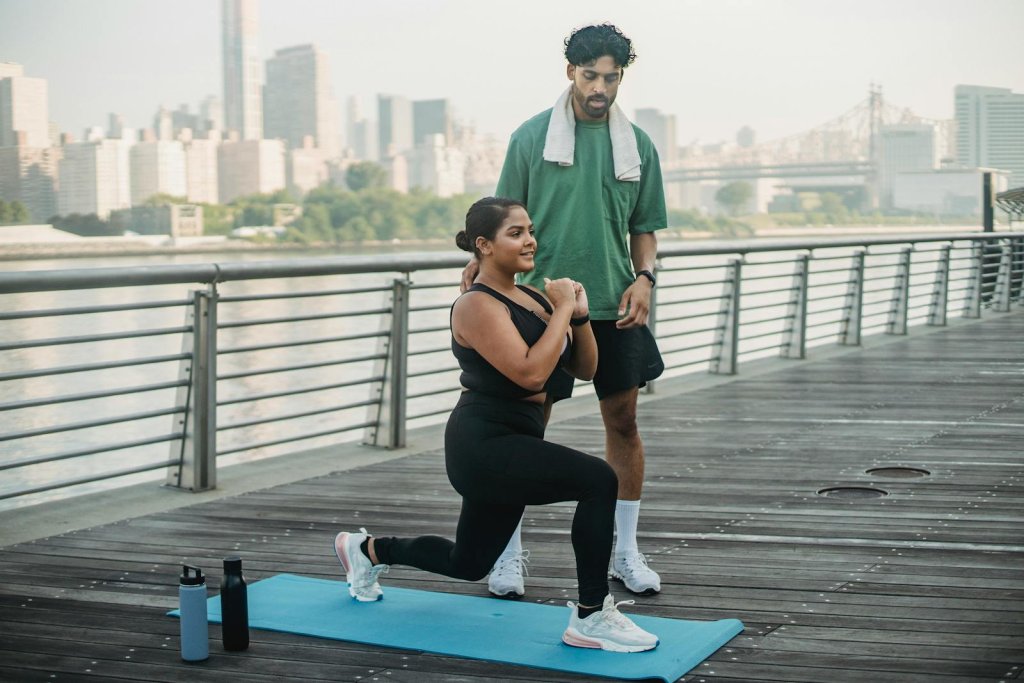
Training this area matters because it supports powerful lower-body movement, better posture during walking and lifting, and a more balanced glute appearance—especially if your workouts overemphasize quads or upper glutes.
Below is a research-informed, practical guide to the best lower glute exercises, how to use them, and how to train safely and effectively.
What Are Lower Glute Exercises?
Lower glute exercises emphasize hip extension—the primary function of the gluteus maximus—especially through movements where the hips move from flexion to full extension under control and load.
Although the “lower glute” is not a separate muscle, adjusting exercise selection, stance, and range of motion can increase emphasis on the lower portion of the gluteus maximus.
Why Lower Glute Exercises Matter
Targeted lower glute training may help support:
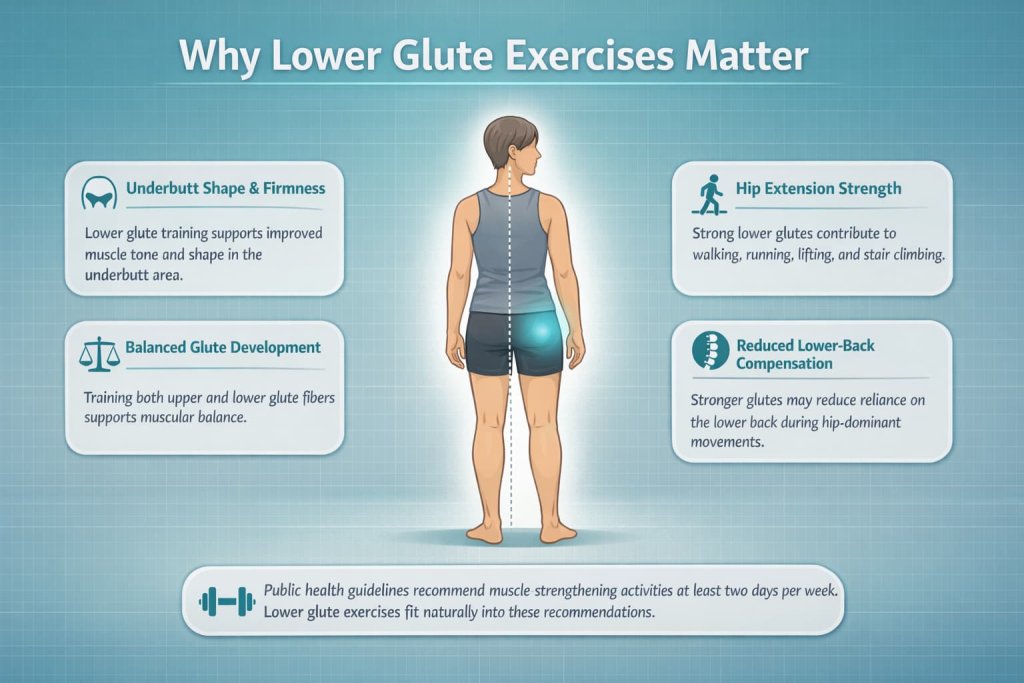
- Improved underbutt firmness and shape
- Better hip extension strength for walking, running, and lifting
- More balanced glute development (upper vs. lower fibers)
- Reduced reliance on lower-back muscles during hip-dominant lifts
Public-health guidance from organizations such as the Centers for Disease Control and Prevention and the World Health Organization emphasizes regular muscle-strengthening activity at least two days per week—lower glute exercises fit naturally into these recommendations.
12 Best Lower Glute Exercises
Lower glute exercises target the lower fibers of the gluteus maximus through hip-extension-focused movements. Training them helps support better underbutt shape, stronger hip drive, and balanced glute development when performed consistently with proper form.
1. Barbell Hip Thrust
A top choice for loading hip extension through a large range of motion, especially near full lockout where glutes contribute most.
How to do it
- Sit on the floor with your upper back against a bench
- Roll a barbell over your hips and plant feet shoulder-width apart
- Drive through your heels to lift hips until thighs are parallel to the floor
- Pause briefly at the top, then lower with control
Why it works
The hip thrust places the greatest tension on the gluteus maximus at full hip extension, where lower glute fibers contribute strongly. This makes it one of the most effective exercises for underbutt development.
Muscles worked
Gluteus maximus (lower fibers emphasized), hamstrings, adductors, core stabilizers
Trainer Tip
Keep your ribs down and chin tucked to avoid arching the lower back at lockout.
2. Dumbbell Romanian Deadlift
Keeps constant tension on the glutes while emphasizing controlled hip hinging and posterior-chain engagement.
How to do it
- Hold dumbbells in front of thighs with a neutral grip
- Push hips back while keeping a slight knee bend
- Lower dumbbells until you feel a strong glute stretch
- Drive hips forward to stand tall
Why it works
The Romanian deadlift loads the glutes in a lengthened position, which may help stimulate hypertrophy in the lower portion of the gluteus maximus when performed with control.
Muscles worked
Gluteus maximus, hamstrings, adductors, erector spinae
Trainer Tip
Think “hips back, chest long” rather than bending at the waist.
3. Bulgarian Split Squat (Long Stride)
Using a longer stance shifts work toward the glutes, particularly the lower fibers during hip extension.
How to do it
- Place rear foot on a bench behind you
- Step the front foot far enough forward to create a long stride
- Lower hips straight down while keeping torso slightly forward
- Drive through the front heel to stand
Why it works
A longer stride increases hip flexion and reduces knee dominance, increasing lower-glute contribution during the upward phase.
Muscles worked
Gluteus maximus, gluteus medius, quadriceps, hamstrings
Trainer Tip
If you feel this mostly in your quads, lengthen your stance further.
4. Step-Ups (Knee-Height or Higher)
Driving through the heel onto an elevated surface strongly recruits the gluteus maximus.
How to do it
- Stand in front of a knee-height box or bench
- Place one foot fully on the platform
- Drive through the heel to step up
- Lower under control and repeat
Why it works
Step-ups mimic real-world hip extension patterns and strongly activate the glutes, especially when the step height increases hip demand.
Muscles worked
Gluteus maximus, quadriceps, hamstrings, gluteus medius
Trainer Tip
Avoid pushing off the trailing leg—let the lead leg do the work.
5. Reverse Lunges
Stepping backward reduces knee stress and increases hip-dominant glute involvement.
How to do it
- Stand tall with feet hip-width apart
- Step one leg backward into a lunge
- Lower hips until front thigh is near parallel
- Push through the front heel to return
Why it works
Reverse lunges allow a more vertical shin and greater hip loading, shifting emphasis toward the lower glutes.
Muscles worked
Gluteus maximus, quadriceps, hamstrings
Trainer Tip
Slightly lean your torso forward to further bias the glutes.
6. Cable Pull-Through
A beginner-friendly hinge pattern that reinforces glute activation without heavy spinal loading.
How to do it
- Attach a rope handle to a low cable pulley
- Face away from the machine holding the rope between legs
- Push hips back while keeping spine neutral
- Drive hips forward to stand tall
Why it works
The cable provides constant horizontal resistance, encouraging strong hip extension without compressive spinal load.
Muscles worked
Gluteus maximus, hamstrings, core
Trainer Tip
Let the hips move back freely—don’t squat the movement.
7. Single-Leg Hip Thrust
Adds unilateral demand, increasing lower glute activation and pelvic stability.
How to do it
- Set up like a regular hip thrust
- Lift one foot off the floor
- Drive hips up using the planted leg
- Lower slowly and repeat
Why it works
Single-leg loading increases demand on each glute, improving strength symmetry and lower glute engagement.
Muscles worked
Gluteus maximus, gluteus medius, hamstrings
Trainer Tip
Keep hips level—avoid letting one side drop.
8. Deficit Reverse Lunge
Increasing depth places the glutes under greater stretch, which may support hypertrophy when controlled.
How to do it
- Stand on a small platform or weight plate
- Step backward into a lunge
- Allow hips to sink deeper than floor level
- Push through the front heel to stand
Why it works
The added range of motion increases glute stretch and mechanical tension, key factors in muscle growth.
Muscles worked
Gluteus maximus, quadriceps, hamstrings
Trainer Tip
Control the descent—don’t drop into the bottom position.
9. Sumo Deadlift
A wider stance shortens knee travel and increases hip extension demand.
How to do it
- Stand with feet wider than shoulder-width
- Toes slightly turned out
- Grip the bar inside your knees
- Drive through heels and extend hips to stand
Why it works
The wide stance increases hip contribution and reduces quad dominance, placing more stress on the glutes.
Muscles worked
Gluteus maximus, adductors, hamstrings, lower back
Trainer Tip
Push knees outward to maintain hip engagement.
10. Smith Machine Hip Thrust
Provides stability, allowing focused loading of the glutes with less balance limitation.
How to do it
- Set the bar on a Smith machine at hip height
- Position upper back on a bench
- Place feet firmly on the floor
- Drive hips upward against the fixed bar path
Why it works
Stability allows higher loading and consistent tension on the lower glutes without coordination limits.
Muscles worked
Gluteus maximus, hamstrings, core
Trainer Tip
Adjust foot placement to ensure full hip extension without lower-back strain.
11. 45-Degree Back Extension (Glute-Biased)
When performed with a rounded upper back and hip drive, this variation shifts emphasis to the glutes.
How to do it
- Set up on a 45-degree back extension bench
- Round upper back slightly
- Lower torso by hinging at the hips
- Drive hips forward to rise
Why it works
Reducing spinal extension limits lower-back involvement, allowing the glutes to take over the movement.
Muscles worked
Gluteus maximus, hamstrings, erector spinae (secondary)
Trainer Tip
Think “push hips into the pad,” not “lift your chest.”
12. Frog Pumps
A high-rep accessory movement useful for metabolic stress and glute pump at the end of sessions.
How to do it
- Lie on your back with feet together and knees wide
- Press arms into the floor for stability
- Drive hips upward
- Lower slowly and repeat for high reps
Why it works
Frog pumps reduce hamstring involvement and keep continuous tension on the glutes, making them ideal for burnout sets.
Muscles worked
Gluteus maximus, hip external rotators
Trainer Tip
Pause briefly at the top to increase time under tension.
How to Program Lower Glute Exercises
For most people, effective lower glute training includes:
- Frequency: 2–3 sessions per week
- Volume: 8–15 total working sets per week
- Reps:
- Heavy compounds: 5–8 reps
- Accessories: 10–20 reps
- Tempo: Controlled lowering (2–3 seconds) with strong hip extension
Pair hip-thrust or hinge patterns with split-squat or step-up variations for balanced stimulus.
Common Mistakes to Avoid
- Cutting range of motion short at the top of hip extension
- Over-arching the lower back instead of driving through the hips
- Letting quads dominate due to short stance or upright torso
- Training glutes only once per week
Who Should Be Careful With Lower Glute Exercises
Use extra caution if you:
- Have unresolved hip, knee, or lower-back pain
- Are returning from surgery or injury
- Experience sharp discomfort during hip extension
In these cases, start with bodyweight or supported variations and consider guidance from a qualified professional.
FAQs About Lower Glute Exercises
Are lower glutes a separate muscle?
No. The lower glutes refer to the lower fibers of the gluteus maximus.
Can lower glute exercises help lift the underbutt?
They may help improve muscle tone and shape when combined with proper nutrition and consistency.
Are hip thrusts better than squats for lower glutes?
Hip thrusts emphasize hip extension more directly, which often increases glute involvement.
Can beginners do lower glute exercises?
Yes. Start with bodyweight bridges, step-ups, and light hinges.
How long does it take to see results?
Visible changes may take 6–12 weeks with consistent training and adequate recovery.
Do I need equipment to train lower glutes?
No, but resistance helps. Bodyweight variations still provide benefit.
Conclusion
Lower glute exercises play a key role in building strong, balanced, and functional glutes. By prioritizing hip-extension-focused movements and using smart programming, you can support underbutt shape, strength, and performance safely and effectively.
References
- Gluteus Maximus Activation During Common Strength and Hypertrophy Exercises: A Systematic Review (Neto et al., 2020)
- Gluteus Maximus EMG in Bodyweight Hip-Extension Exercises: A Systematic Review (Macadam et al., 2019)
- Comparison of Superior vs Inferior Gluteus Maximus EMG Activity (Selkowitz et al., 2016)
- Hip Thrust vs Back Squat EMG: Gluteus Maximus, Biceps Femoris, Vastus Lateralis (Contreras et al., 2015)
- Activation of the Gluteus Maximus During Barbell Hip Thrust, Back Squat, and Split Squat (Williams et al., 2021, JSCR)
- Electromyography of Gluteus Muscles in Single-Leg Squat, Step-Up, and Lunge Variations (Muyor et al., 2020, PLOS ONE)
- ACSM Position Stand: Progression Models in Resistance Training for Healthy Adults (Ratamess et al., 2009)
- CDC Physical Activity Guidelines for Adults (Muscle-Strengthening 2+ Days/Week)