
Long head bicep exercises are the most effective way to build taller biceps peaks and a thicker outer arm. The long head of the biceps brachii plays a major role in arm height and shape, especially when the arm is positioned slightly behind the body or trained in a lengthened position. Understanding how to train it properly helps you get more visible arm development without unnecessary shoulder strain.
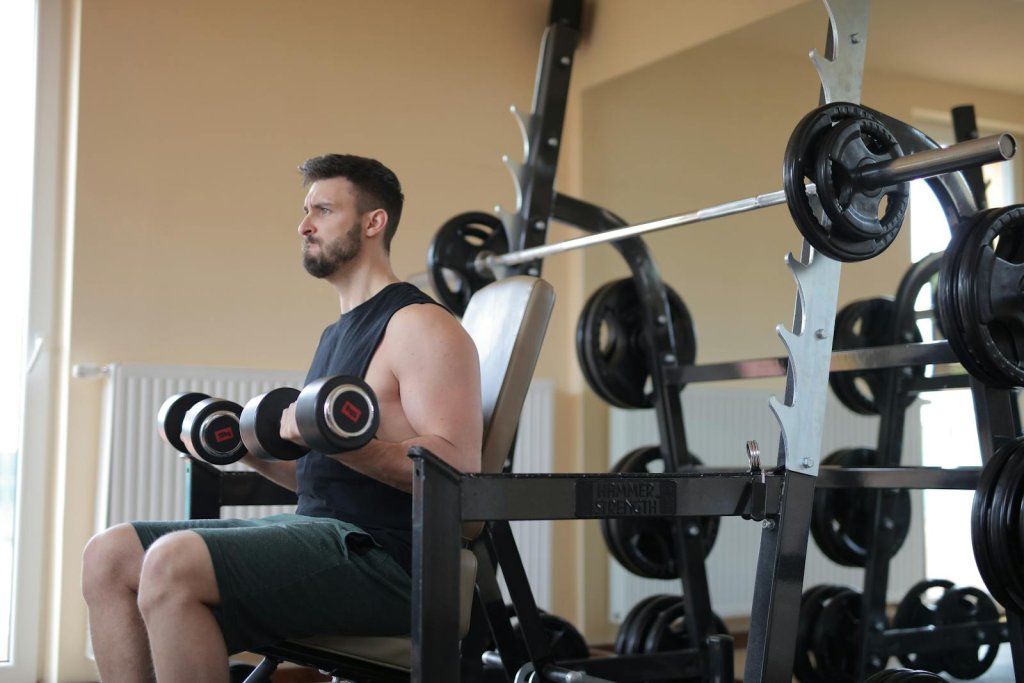
This guide explains exactly how long head bicep exercises work, which movements emphasize it most, and how to program them safely for muscle growth. The recommendations are based on established resistance-training principles.
What Are Long Head Bicep Exercises?
Long head bicep exercises are curl variations that place the biceps in a lengthened position at the shoulder, increasing the contribution of the long head during elbow flexion.
The biceps brachii has two heads:
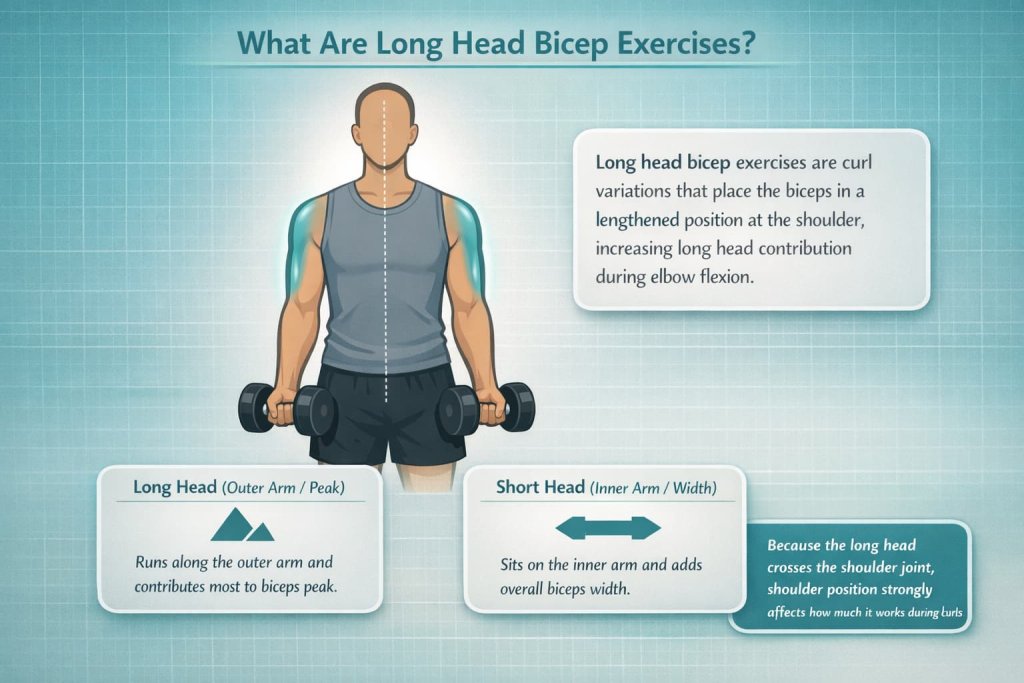
- Long head – runs along the outer arm and contributes most to biceps peak
- Short head – sits more on the inner arm and adds width
Because the long head crosses the shoulder joint, shoulder position directly affects how much it works during a curl.
9 Best Long Head Bicep Exercises
These exercises specifically target the long head of the biceps to help build taller peaks and a thicker outer arm. When performed with proper form and progression, they support balanced biceps development while keeping shoulder stress in check.
1. Incline Dumbbell Curl
How to do it
- Set an incline bench to 45–60 degrees
- Sit back fully so your shoulders rest on the bench
- Let both arms hang straight down, slightly behind your torso
- Curl the dumbbells up while keeping elbows fixed
- Squeeze at the top, then lower slowly to full extension
Why it works
The incline position places the biceps in a lengthened state at the shoulder, which increases long head involvement. Training the muscle from a stretched position can enhance mechanical tension, a key driver of hypertrophy.
Trainer Tip
Start lighter than standing curls—this position increases strain on the long head tendon if overloaded.
2. Bayesian Cable Curl (Behind-the-Body Cable Curl)
How to do it
- Attach a single handle to a low cable pulley
- Stand slightly forward so your working arm stays behind your torso
- Keep your elbow close to your side
- Curl the handle forward while maintaining elbow position
- Lower slowly under control
Why it works
The cable maintains constant tension while the shoulder stays extended, keeping the long head active throughout the entire range of motion.
Trainer Tip
Pause for 1–2 seconds at peak contraction to increase time under tension.
3. Narrow-Grip Barbell Curl
How to do it
- Grip the bar just inside shoulder width
- Stand tall with chest up and elbows slightly behind your body
- Curl the bar upward without leaning back
- Lower slowly until arms are fully extended
Why it works
A narrower grip reduces short-head dominance and shifts more load toward the outer biceps, increasing long head contribution.
Trainer Tip
If you have to swing the bar, the weight is too heavy.
4. Incline Hammer Curl
How to do it
- Sit on an incline bench with arms hanging down
- Hold dumbbells with palms facing each other
- Curl upward without rotating the wrists
- Lower slowly to full extension
Why it works
The neutral grip combined with shoulder extension loads the long head while also recruiting the brachialis, adding thickness beneath the biceps.
Trainer Tip
Use a slow 3–4 second lowering phase for better hypertrophy stimulus.
5. Drag Curl
How to do it
- Hold a barbell against your thighs
- Curl the bar upward while dragging it along your torso
- Pull elbows backward instead of lifting them forward
- Lower slowly while keeping the bar close
Why it works
Pulling the elbows back minimizes shoulder flexion and increases long head activation while reducing momentum.
Trainer Tip
Think “elbows back, not bar up” to keep tension where it belongs.
6. Close-Grip EZ-Bar Curl
How to do it
- Use the inner angled grips of an EZ-bar
- Stand upright with elbows slightly behind your hips
- Curl the bar upward under control
- Lower slowly to full extension
Why it works
The close grip emphasizes the outer biceps while the EZ-bar reduces wrist strain, making it joint-friendly for higher volume training.
Trainer Tip
Avoid letting your elbows drift forward during the curl.
7. Alternating Dumbbell Curl with Elbow Back
How to do it
- Hold dumbbells at your sides
- Curl one arm at a time while keeping the elbow behind the torso
- Fully straighten the arm before switching sides
- Maintain strict control throughout
Why it works
Alternating allows greater focus and control, while the elbow-back position increases long head involvement.
Trainer Tip
Add a slight outward rotation of the pinky at the top for a stronger contraction.
8. Cable Rope Curl (Low Pulley)
How to do it
- Attach a rope to a low cable pulley
- Step back to create tension at the start
- Curl while separating the rope slightly at the top
- Keep elbows pinned to your sides
Why it works
Cables provide even resistance throughout the movement, which keeps the long head under consistent tension from start to finish.
Trainer Tip
Slow tempo beats heavy weight for this exercise.
9. Chin-Ups (Underhand Grip)
How to do it
- Use a shoulder-width underhand grip
- Start from a dead hang with arms fully extended
- Pull your chest toward the bar
- Lower slowly under control
Why it works
Chin-ups allow heavy loading through elbow flexion, making them one of the most effective compound movements for long head growth.
Trainer Tip
If bodyweight is too challenging, use assistance rather than swinging.
How to Emphasize the Long Head of the Biceps
You cannot completely isolate one biceps head, but you can bias the long head using smart exercise selection and positioning.
Key technique principles:
- Keep elbows slightly behind the torso when possible
- Use incline or behind-the-body setups
- Avoid excessive shoulder flexion during curls
- Control the eccentric (lowering) phase
- Use moderate loads with strict form
How to Program Long Head Bicep Exercises
For most lifters:
- Train biceps 2–3 times per week
- Choose 2–3 long head–focused exercises per session
- Perform 2–4 sets per exercise
- Use 8–12 reps for hypertrophy
- Rest 60–90 seconds
These guidelines align with ACSM resistance-training recommendations.
Why Long Head Bicep Exercises Matter for Peak Development
Training the long head is essential if your goal is arm shape, not just size.
Regular long head–focused training may help support:
- Taller, more visible biceps peaks
- Improved outer-arm thickness
- Better arm symmetry
- Stronger elbow flexion in stretched positions
- More balanced biceps development overall
Safety Guidelines for Long Head Bicep Training
- Warm up shoulders and elbows thoroughly
- Avoid heavy loads in extreme stretch positions
- Stop if sharp front-shoulder pain occurs
- Reduce volume if elbow or shoulder irritation develops
If pain persists, consult a qualified professional.
Common Mistakes to Avoid
- Swinging the weights
- Letting elbows drift forward
- Using excessive load
- Ignoring shoulder discomfort
- Training biceps every day
Frequently Asked Questions
Are long head bicep exercises better for peaks?
Yes. The long head contributes most to visible biceps peak height.
Can beginners train the long head?
Yes, using lighter loads and controlled form.
Are incline curls safe?
They are safe when performed with proper load and shoulder positioning.
How long does it take to see biceps peaks?
Most people notice changes in 6–10 weeks with consistent training.
Can cables replace dumbbells?
Yes. Cable curls are excellent for long head tension.
Should I avoid preacher curls?
Preacher curls emphasize the short head more than the long head.
Conclusion
Long head bicep exercises are essential for building bigger peaks, better arm shape, and balanced biceps development. By choosing movements that place the biceps in a lengthened position and using proper programming, you can maximize results while minimizing joint stress.
If your goal is arms that look taller, fuller, and stronger, prioritizing long head bicep exercises is a smart and evidence-based approach.
References
- Effect of the shoulder position on the biceps brachii EMG in different dumbbell curls (Oliveira et al., 2009)
- The long head of biceps at the shoulder: a scoping review (Diplock et al., 2023)
- Differences in electromyographic activity during three curl variants (Marcolin et al., 2018)
- ACE Study Reveals Best Biceps Exercises (EMG comparison)
- Loading Recommendations for Muscle Strength, Hypertrophy, and Local Endurance (Schoenfeld et al., 2021)
- ACSM Position Stand: Progression Models in Resistance Training for Healthy Adults (2009)
- Electromyographic analysis of muscle activation during pull-up variations (Dickie et al., 2017)
- Biceps Tendinitis (AAOS OrthoInfo)