
Knee exercises for seniors are low-impact, joint-friendly movements designed to improve strength, stability, and mobility without overloading the knees. When done consistently and correctly, these exercises may help reduce stiffness, support daily activities like walking and standing, and improve confidence with movement.
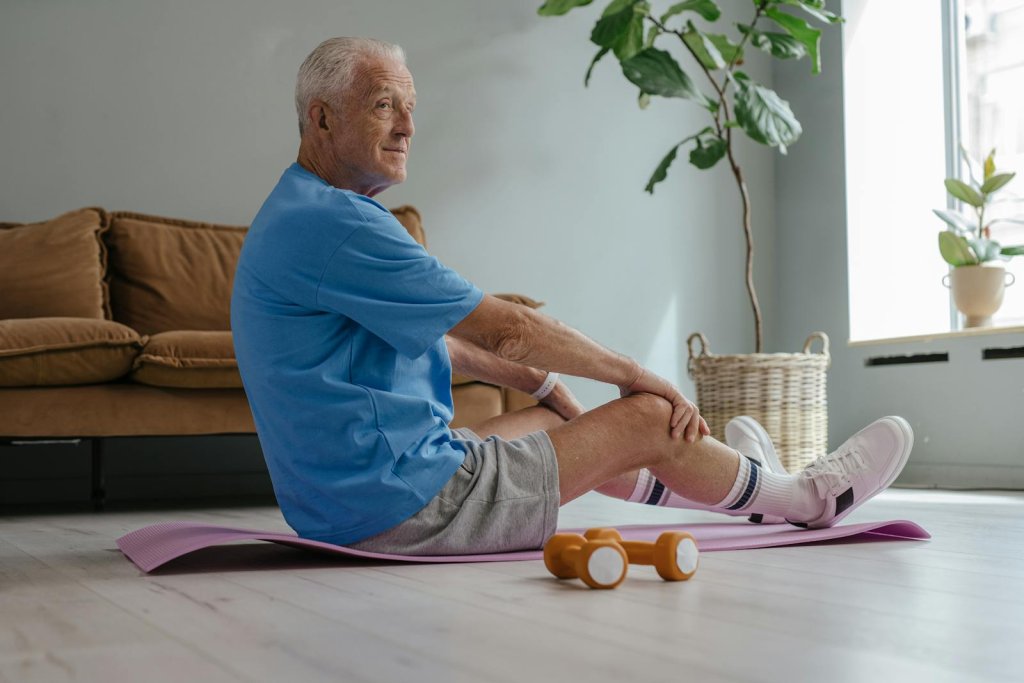
Understanding how to exercise safely is important because aging joints benefit most from gentle strengthening, controlled motion, and proper balance support.
What Are Knee Exercises for Seniors?
Knee exercises for seniors focus on strengthening the muscles that support and stabilize the knee joint—especially the quadriceps, hamstrings, glutes, and calves—while minimizing joint stress.
These exercises are typically:
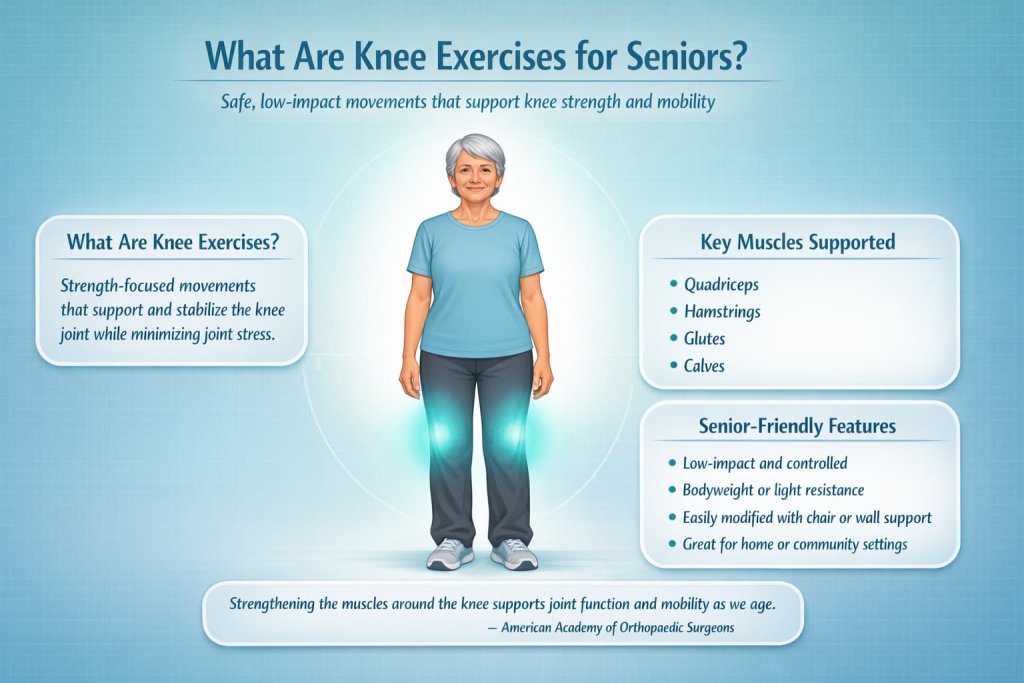
- Low-impact and controlled
- Performed with bodyweight or light resistance
- Easy to modify using a chair or wall for support
- Suitable for home or community settings
According to guidance from the American Academy of Orthopaedic Surgeons, strengthening the muscles around the knee is a key component of maintaining knee function and joint health as we age.
10 Best Knee Exercises for Seniors
These gentle, low-impact exercises are designed to support knee strength, balance, and mobility while minimizing joint stress. They focus on safe, functional movements that help seniors stay active and confident in daily life.
1. Quad Sets
How to do it
- Sit or lie down with one leg extended and the other bent if comfortable
- Tighten the thigh muscle by gently pressing the back of the knee toward the floor or bed
- Hold the contraction for 5 seconds
- Relax completely and repeat
Why it works
Quad sets activate the quadriceps without requiring knee movement, which makes them especially useful for seniors who experience stiffness, pain, or limited mobility. Because the joint stays still, this exercise helps maintain muscle strength while minimizing stress on the knee structures.
Trainer Tip
Think about squeezing the front of your thigh rather than pushing the knee downward. The contraction should feel controlled and gentle, not forced.
2. Straight-Leg Raises
How to do it
- Lie on your back with one knee bent and the other leg straight
- Tighten the thigh of the straight leg
- Slowly lift the straight leg until it reaches the height of the bent knee
- Lower the leg back down with control
Why it works
Straight-leg raises strengthen the quadriceps while keeping the knee joint supported and stable. This exercise helps improve leg control for walking and standing without placing bending stress on the knee.
Trainer Tip
Keep the lifting leg fully straight and move slowly. If the lower back arches, lower the leg slightly to maintain comfort.
3. Seated Knee Extensions
How to do it
- Sit upright in a sturdy chair with both feet flat on the floor
- Slowly straighten one leg until the knee is fully extended
- Hold briefly at the top
- Lower the foot back down with control
Why it works
Seated knee extensions improve knee extension strength, which is essential for walking, standing up, and climbing stairs. Performing the movement seated reduces balance demands and joint strain.
Trainer Tip
Avoid using momentum. Lift and lower the leg smoothly to keep the muscles working throughout the movement.
4. Sit-to-Stand (Chair Squats)
How to do it
- Sit near the edge of a sturdy chair with feet hip-width apart
- Lean slightly forward and press through your heels to stand up
- Slowly lower yourself back down to the chair
- Use armrests or hands on thighs if needed
Why it works
Sit-to-stand exercises train one of the most important daily movements for independence. They strengthen the muscles that support the knees while reinforcing proper movement patterns.
Trainer Tip
Keep your knees aligned with your toes and avoid letting them collapse inward as you stand.
5. Standing Hamstring Curls
How to do it
- Stand behind a chair and hold the backrest for support
- Bend one knee, bringing the heel toward your buttocks
- Lower the foot back to the floor slowly
- Switch legs after completing repetitions
Why it works
Strong hamstrings help control knee movement and reduce strain on the joint. This exercise improves knee stability and supports smoother walking mechanics.
Trainer Tip
Stand tall and avoid leaning forward or swinging the leg. Slow, controlled motion is more effective.
6. Heel Raises
How to do it
- Stand while holding a chair or counter for balance
- Slowly rise up onto the balls of your feet
- Pause briefly at the top
- Lower your heels back to the floor with control
Why it works
Heel raises strengthen the calf muscles, which play an important role in supporting knee alignment and absorbing impact during walking and standing.
Trainer Tip
Move evenly through both feet and avoid rocking side to side. Control the lowering phase for better muscle engagement.
7. Mini Squats (Supported)
How to do it
- Stand holding a chair, countertop, or railing
- Bend your knees slightly as if sitting back a few inches
- Keep your chest upright
- Return to standing
Why it works
Mini squats build functional strength in the knees and hips without requiring deep bending. This makes them safer and more comfortable for seniors.
Trainer Tip
Only lower as far as you can without pain or loss of balance. Comfort and control are more important than depth.
8. Step-Ups (Low Step)
How to do it
- Stand in front of a low step or platform
- Step up with one foot and straighten the leg
- Step back down carefully
- Alternate legs
Why it works
Step-ups improve knee strength and coordination for stair climbing and stepping movements commonly used in daily life.
Trainer Tip
Use a handrail or wall for balance, and keep movements slow to protect the knees.
9. Side Leg Raises
How to do it
- Stand holding a chair or counter
- Lift one leg out to the side while keeping toes forward
- Lower the leg back down slowly
- Switch sides
Why it works
Side leg raises strengthen the hip muscles that help keep the knees aligned during walking and standing, reducing unnecessary knee stress.
Trainer Tip
Avoid leaning your body to the side. Keep your torso upright and movement controlled.
10. Heel-to-Toe Walk
How to do it
- Stand near a wall or counter for support
- Step forward, placing the heel of one foot directly in front of the toes of the other
- Continue walking slowly in a straight line
Why it works
Heel-to-toe walking improves balance, coordination, and lower-body control, which helps protect the knees by reducing fall risk.
Trainer Tip
Take short, deliberate steps and keep your eyes forward rather than looking down.
How to Warm Up Before Knee Exercises
A gentle warm-up prepares joints and muscles for movement:
- 5 minutes of easy walking or marching in place
- Gentle knee bends while seated
- Light leg swings holding a chair
How Often Should Seniors Do Knee Exercises?
Most older adults can benefit from:
- Strength exercises: 2–3 days per week
- Balance exercises: 2–3 days per week
- Light mobility movements: daily, as tolerated
Exercises should be performed slowly, within a comfortable range of motion, and stopped if sharp pain occurs.
Who Can Benefit From Knee Exercises for Seniors
Knee exercises for seniors are suitable for many older adults who want to maintain or improve lower-body strength, stability, and confidence with daily movement. These exercises are designed to be adaptable, making them appropriate for a wide range of ability levels.
They may benefit:
- Seniors who experience knee stiffness or reduced mobility
- Older adults who want to improve walking, standing, or stair-climbing ability
- Individuals aiming to maintain independence in daily activities
- Seniors looking to improve balance and reduce fall risk
- Adults returning to activity after periods of inactivity, with appropriate modifications
Because these exercises are low-impact and controlled, they can often be adjusted for comfort and performed with chair or wall support when needed.
Safety Guidelines Before Starting Knee Exercises
Following basic safety guidelines helps reduce the risk of discomfort or injury and ensures exercises remain supportive rather than stressful to the knees.
- Start with gentle movements and progress slowly
- Use a chair, wall, or railing for balance support when needed
- Perform exercises within a comfortable, pain-free range of motion
- Avoid sudden or jerky movements
- Breathe normally and do not hold your breath during exercises
- Stop exercising if you feel sharp pain, dizziness, or joint instability
If you have existing joint conditions, recent injuries, or concerns about starting an exercise routine, seeking guidance from a qualified healthcare or fitness professional is recommended.
Common Mistakes Seniors Should Avoid
- Holding breath during exercises
- Locking the knees forcefully
- Rushing through movements
- Ignoring balance support when needed
When to Stop and Seek Professional Guidance
Stop exercising and consult a healthcare or fitness professional if you experience:
- Sharp or worsening knee pain
- Swelling that does not improve
- Joint instability or locking sensations
FAQs About Knee Exercises for Seniors
1. Are knee exercises safe for seniors?
Yes, when exercises are low-impact, controlled, and matched to ability level.
2. Can seniors do knee exercises at home?
Many knee exercises can be done safely at home with a chair for support.
3. How long before results are noticeable?
Many seniors notice improved strength and confidence within a few weeks of consistent practice.
4. Should seniors exercise with knee pain?
Gentle exercise may help, but sharp pain should be avoided and evaluated.
5. Do knee exercises replace walking?
They complement walking by strengthening muscles that support safe movement.
6. Is balance training important for knee health?
Yes. Balance exercises help reduce fall risk and protect the knees.
Conclusion
Knee exercises for seniors play an important role in maintaining mobility, independence, and confidence with movement. By focusing on gentle strengthening, balance, and controlled motion, seniors can support knee health safely and effectively. Start slowly, stay consistent, and choose exercises that feel comfortable and manageable.
References
- CDC: Older Adult Physical Activity Guidelines (strength + balance)
- National Institute on Aging (NIH): Exercise and Physical Activity for Older Adults
- AAOS OrthoInfo: Knee Conditioning Program
- ACR/Arthritis Foundation Guideline (2019) for Osteoarthritis Management (PMC full text)
- OARSI: Osteoarthritis Treatment Guidelines (official page)
- Exercise Therapy for Knee Osteoarthritis (PMC review)
- CDC STEADI: What You Can Do to Prevent Falls (PDF)
- Arthritis Foundation: Knee Movements and Exercises Library