
Regular, low-impact exercise may help lower blood pressure by improving blood vessel function, heart efficiency, and overall cardiovascular health.
If you’re looking for simple, safe ways to move more, understanding which exercises are easiest to start—and how to do them correctly—can make a real difference.
Below are three easy, beginner-friendly exercises that fit well with current public-health guidance and can be done at home or outdoors with minimal equipment.
Why Exercise Matters for Blood Pressure Control
Regular physical activity may support blood pressure regulation by:
- Helping blood vessels relax and widen more efficiently
- Reducing resting heart rate over time
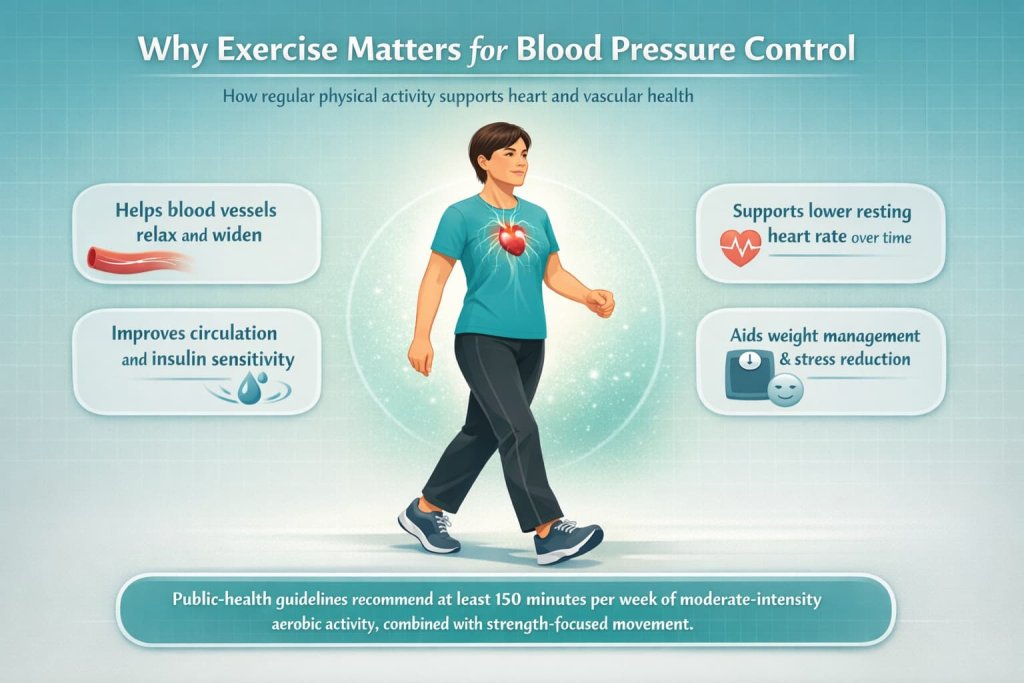
- Improving insulin sensitivity and circulation
- Supporting weight management and stress reduction
Guidelines from organizations such as the World Health Organization recommend at least 150 minutes per week of moderate-intensity aerobic activity, combined with strength-focused movement, for overall cardiovascular health.
3 Easy Exercises to Lower Blood Pressure
Regular physical activity may support healthier blood pressure by improving circulation, heart efficiency, and stress control. These three easy, beginner-friendly exercises are simple to perform and can be done safely at home or outdoors.
1. Brisk Walking
How to do it
- Walk at a pace that raises your heart rate while still allowing you to speak in full sentences
- Keep your head upright, chest open, and shoulders relaxed
- Swing your arms naturally in rhythm with your steps
- Start on flat, safe surfaces before adding hills or longer distances
Why it works
Brisk walking is a moderate-intensity aerobic activity that may help support healthier blood pressure by improving circulation and encouraging blood vessels to relax more efficiently. Regular walking can also support heart efficiency, stress management, and metabolic health, all of which play a role in blood pressure regulation. Because it is low-impact and easy to control, it is widely recommended as a first-line exercise for beginners and adults of all ages.
Trainer Tip
Consistency matters more than speed. Start with short walks and gradually increase total weekly time rather than pushing intensity too quickly.
2. Wall Sit (Isometric Hold)
How to do it
- Stand with your back flat against a wall
- Slowly slide down until your knees are bent at a comfortable angle
- Keep feet flat on the floor and hip-width apart
- Engage your core and breathe steadily throughout the hold
Why it works
Wall sits are an isometric exercise, meaning the muscles work without joint movement. Isometric training may help support blood pressure management by improving muscle activation and vascular responsiveness when performed with controlled effort and breathing. Because the movement is static, wall sits allow strength development without rapid heart-rate spikes, making them approachable for many beginners.
Trainer Tip
Stop the hold before form breaks down. Shaking is normal, but steady breathing should always be maintained.
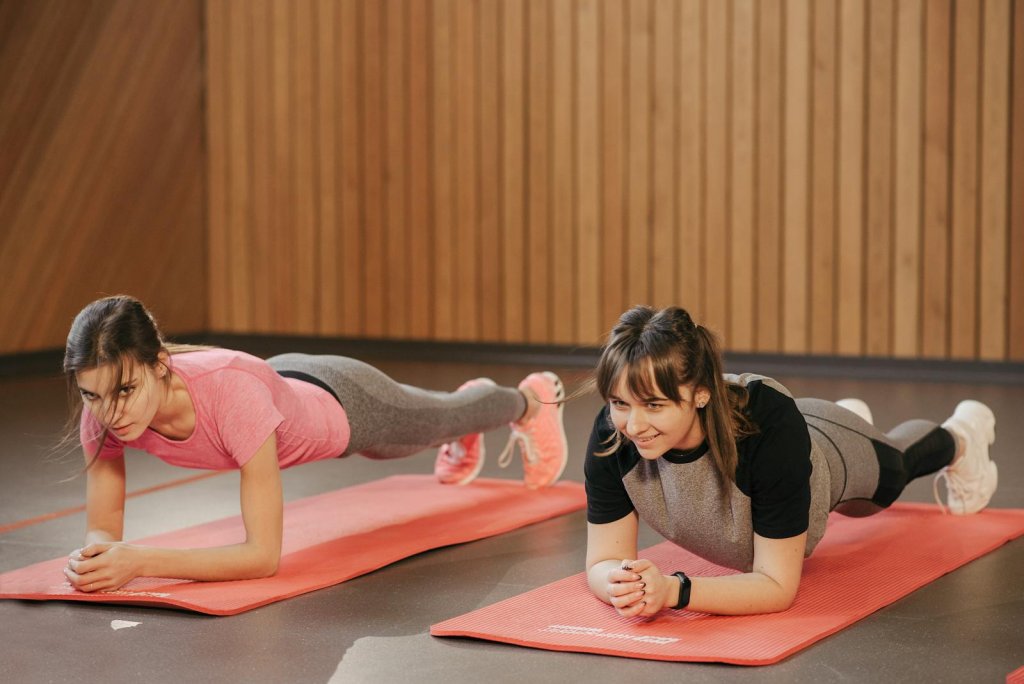
3. Modified Plank
How to do it
- Place forearms on the floor with knees down, or use hands on an elevated surface
- Align your head, shoulders, hips, and knees in a straight line
- Gently brace your core and squeeze your glutes
- Breathe slowly and evenly for the duration of the hold
Why it works
The modified plank is another isometric exercise that engages large muscle groups while encouraging controlled breathing and posture awareness. This combination may support blood pressure regulation by promoting muscular coordination, trunk stability, and nervous system control. The ability to adjust plank difficulty makes it suitable for beginners and those easing into strength work.
Trainer Tip
End the set as soon as breathing becomes strained. Proper alignment and relaxed breathing are more important than longer hold times.
How Often Should You Do These Exercises?
A practical weekly structure may look like:
- Brisk walking: 30 minutes, 5 days per week
- Wall sits: 2–3 sets, 3–4 days per week
- Planks: 2–3 sets, 3–4 days per week
This approach aligns with general recommendations from organizations such as the American College of Sports Medicine for combining aerobic and strength-based activity.
Safety Guidelines to Keep in Mind
- Breathe continuously; avoid holding your breath
- Stop if you feel dizzy, lightheaded, or unwell
- Progress gradually rather than increasing intensity too quickly
- If you have diagnosed hypertension or other medical conditions, consult a qualified healthcare professional before starting a new exercise routine
Who Should Be Extra Cautious or Consult a Professional
Some people should seek professional guidance before starting or increasing exercise, including those with uncontrolled high blood pressure, heart disease, recent medication changes, or symptoms such as dizziness or chest discomfort. Extra caution is also advised for beginners returning after long inactivity or anyone with mobility limitations. Professional advice helps ensure safe intensity and appropriate exercise choices.
- Uncontrolled or newly diagnosed high blood pressure
- Heart disease, stroke history, or other cardiovascular conditions
- Recent changes in blood pressure medication
- Dizziness, chest discomfort, or unusual shortness of breath during activity
- Long periods of inactivity or existing mobility limitations
Professional guidance helps ensure exercises are safe and appropriately tailored.
Frequently Asked Questions
Can exercise really lower blood pressure?
Exercise may help lower blood pressure over time by improving cardiovascular efficiency and vascular function, especially when done consistently.
How long does it take to see results?
Some people notice improvements within a few weeks, while others may take longer. Results vary based on consistency, intensity, and overall lifestyle.
Is walking enough to lower blood pressure?
Walking is an excellent foundation. Combining walking with strength or isometric exercises may provide additional benefits.
Are isometric exercises safe for people with high blood pressure?
They may be appropriate when performed at moderate intensity with proper breathing, but medical guidance is recommended for those with existing conditions.
Should I stop medication if I exercise regularly?
No. Exercise supports overall health but does not replace prescribed medical treatment.
Can beginners do these exercises?
Yes. All three exercises can be modified to match beginner fitness levels.
Conclusion
Simple, consistent movement can play a meaningful role in supporting healthy blood pressure. Brisk walking, wall sits, and modified planks are easy to start, require little equipment, and align well with current public-health recommendations. Focus on steady progress, proper breathing, and long-term habits rather than quick fixes.
If you’re ready to begin, start small, stay consistent, and build gradually.
References
- American Heart Association: Getting Active to Control High Blood Pressure
- American Heart Association: Physical Activity Recommendations for Adults
- CDC: Adult Physical Activity Guidelines (150 minutes/week)
- CDC: Benefits of Physical Activity (Includes Blood Pressure Support)
- World Health Organization: Hypertension Fact Sheet
- European Society of Cardiology: 2024 Guidelines on Elevated Blood Pressure and Hypertension
- British Journal of Sports Medicine (2023): Exercise Training and Resting Blood Pressure (Systematic Review and Network Meta-Analysis)
- ACSM: Exercise for the Prevention and Treatment of Hypertension (Practical Guidance)