
Easy core exercises are simple, low-impact movements that help strengthen the muscles around your abdomen, lower back, hips, and pelvis without complex equipment or advanced skill. They are ideal for beginners because they focus on control, posture, and stability rather than intensity or heavy resistance.
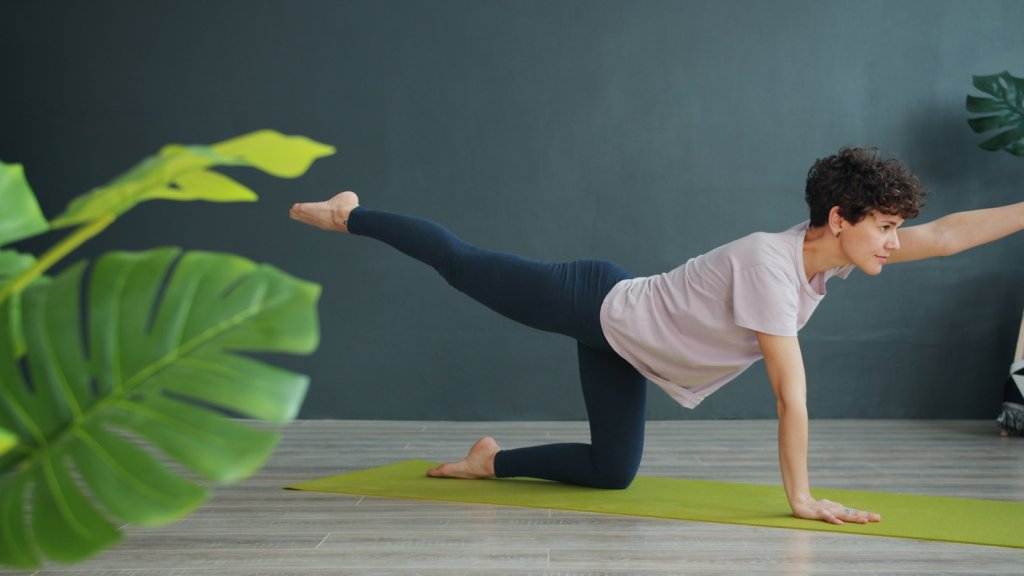
Understanding how to train your core safely is important for everyday movement, balance, and overall strength. When done correctly, easy core exercises can support better posture, improve movement control, and help you build a strong foundation for more advanced workouts later.
What Are Easy Core Exercises?
Easy core exercises are beginner-friendly movements that train the trunk muscles using bodyweight and controlled motion. Unlike advanced ab workouts, they avoid fast twisting, heavy loading, or high spinal stress.
These exercises typically:
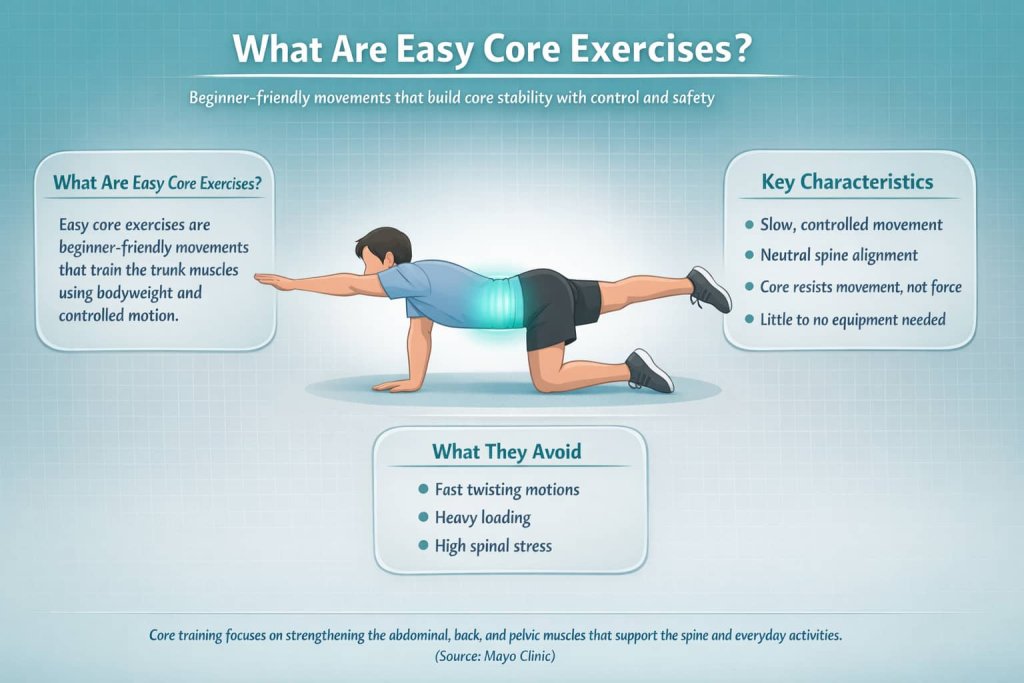
- Emphasize slow, controlled movement
- Keep the spine in a neutral position
- Train the core to resist movement rather than force it
- Require little to no equipment
Health organizations such as the Mayo Clinic describe core training as strengthening the abdominal, back, and pelvic muscles that support the spine and everyday activities.
12 Best Easy Core Exercises for Beginners
Each exercise below can be done at home, with minimal space, and modified as needed.
1. Dead Bug
How to do it
- Lie on your back with your arms extended toward the ceiling
- Bend your hips and knees to 90 degrees so shins are parallel to the floor
- Gently brace your core to keep your lower back neutral against the floor
- Slowly lower your opposite arm and leg toward the floor
- Return to the starting position and repeat on the other side
Why it works
The dead bug teaches your core to stabilize the spine while your arms and legs move independently. This anti-extension exercise reinforces proper trunk control, which is essential for beginners learning how to protect the lower back during daily activities and strength training.
Trainer Tip
Move with control rather than speed. If your lower back arches off the floor, shorten the range of motion until you can maintain proper alignment.
2. Bird Dog
How to do it
- Start on hands and knees with wrists under shoulders and knees under hips
- Brace your core and keep your spine neutral
- Extend one arm forward and the opposite leg backward
- Hold briefly, then return to the starting position
- Switch sides and repeat
Why it works
Bird dogs improve coordination and stability by training the core to resist rotation. This movement helps beginners develop balance, posture awareness, and spinal control with minimal stress on the joints.
Trainer Tip
Imagine balancing a glass of water on your back. If your hips or shoulders rotate, slow down and reduce the lift height.
3. Glute Bridge
How to do it
- Lie on your back with knees bent and feet flat on the floor
- Place your arms at your sides for support
- Press through your heels and lift your hips upward
- Pause briefly at the top, then lower slowly with control
Why it works
The glute bridge strengthens the posterior chain while encouraging pelvic stability. Strong glutes support the core and reduce excessive strain on the lower back during standing and lifting movements.
Trainer Tip
Focus on squeezing your glutes at the top rather than pushing your hips too high, which can cause lower-back arching.
4. Modified Plank (Knees Down)
How to do it
- Place your forearms on the floor under your shoulders
- Lower your knees to the ground
- Keep your body in a straight line from head to knees
- Hold the position while breathing steadily
Why it works
This plank variation builds full-core endurance without excessive spinal loading. It allows beginners to develop strength safely while maintaining proper alignment.
Trainer Tip
Quality matters more than duration. Stop the hold if your hips sag or your shoulders collapse.
5. Side Plank (Knees Bent)
How to do it
- Lie on your side with knees bent and stacked
- Place your elbow directly under your shoulder
- Lift your hips off the floor while keeping your body aligned
- Hold briefly, then lower with control
Why it works
Side planks target the lateral core muscles that support posture and balance. These muscles play an important role in everyday movements like walking and carrying objects.
Trainer Tip
Keep your neck relaxed and your head aligned with your spine to avoid unnecessary tension.
6. Pelvic Tilt
How to do it
- Lie on your back with knees bent and feet flat
- Gently tighten your core and flatten your lower back into the floor
- Hold for a few seconds, then relax
Why it works
Pelvic tilts help beginners learn how to activate the core muscles and control pelvic position. This movement builds awareness that carries over to all other core exercises.
Trainer Tip
The movement should be subtle. Avoid pressing aggressively or holding your breath.
7. Heel Slides
How to do it
- Lie on your back with knees bent and feet on the floor
- Brace your core to keep your pelvis stable
- Slowly slide one heel away from your body
- Slide it back to the starting position
- Alternate sides
Why it works
Heel slides encourage controlled leg movement while the core remains stable. This helps beginners improve coordination and core engagement without high effort.
Trainer Tip
If your pelvis tilts or your back arches, shorten the slide distance.
8. Marching in Place (Core Focused)
How to do it
- Stand tall with feet hip-width apart
- Brace your core gently
- Lift one knee at a time in a slow, controlled rhythm
- Maintain upright posture throughout
Why it works
This standing exercise introduces functional core control that carries over into walking, stair climbing, and balance tasks.
Trainer Tip
Use a wall or chair for support if balance feels unstable.
9. Seated Knee Lifts
How to do it
- Sit upright on a chair with feet flat on the floor
- Brace your core
- Lift one knee slightly off the floor
- Lower slowly and switch sides
Why it works
Seated knee lifts provide a gentle core challenge for beginners, including older adults or those who prefer chair-based exercises.
Trainer Tip
Avoid leaning back as you lift your leg—stay tall through your spine.
10. Wall Plank
How to do it
- Place your forearms against a wall at shoulder height
- Step your feet back slightly
- Keep your body aligned from head to heels
- Hold while breathing steadily
Why it works
Wall planks reduce bodyweight load while preserving plank mechanics, making them ideal for beginners building core endurance.
Trainer Tip
Increase difficulty gradually by stepping your feet farther away from the wall.
11. Standing Core Brace
How to do it
- Stand tall with feet hip-width apart
- Gently tighten your core as if preparing to lift something light
- Hold for a few seconds, then relax
Why it works
This exercise teaches core engagement during everyday tasks like standing, carrying, or reaching.
Trainer Tip
Breathe normally throughout the brace—never hold your breath.
12. Bear Hold (Beginner)
How to do it
- Start on hands and knees with spine neutral
- Brace your core
- Lift your knees slightly off the floor
- Hold briefly, then rest
Why it works
The bear hold creates full-core activation with minimal movement, helping beginners develop strength and control safely.
Trainer Tip
Begin with very short holds and increase time only when you can maintain proper form.
Why Easy Core Exercises Are Important for Beginners
For beginners, core training is not about visible abs—it is about building control and stability.
Easy core exercises may help:
- Support posture and spinal alignment
- Improve balance and coordination
- Prepare the body for strength training and daily movement
- Reduce unnecessary strain during lifting, walking, or sitting
Public-health guidelines recommend including muscle-strengthening activities at least two days per week, and core exercises fit directly into that recommendation.
How to Program Easy Core Exercises for Beginners
For beginners, easy core exercises should be performed in a structured but flexible way. Consistency and recovery are more important than intensity.
General programming guidelines:
- Perform core exercises 2–3 days per week
- Choose 4–6 exercises per session
- Complete 1–2 sets of each exercise
- Use 8–12 controlled repetitions or 10–30 second holds, depending on the movement
- Rest briefly between exercises as needed
As strength and control improve, you can gradually increase repetitions, hold time, or total exercises. Progress should always be slow and manageable, especially when training at home.
Safety Guidelines Before Starting Easy Core Exercises
Before beginning easy core exercises, it is important to focus on safety and proper movement control. Core exercises should feel controlled and purposeful—not rushed or painful.
Key safety guidelines include:
- Maintain a neutral spine throughout each movement
- Move slowly and with control rather than speed
- Breathe normally and avoid holding your breath
- Stop any exercise that causes sharp pain, dizziness, or discomfort
- Use modified versions if full movements feel challenging
Beginner core exercises are designed to build stability gradually. Proper form and awareness matter more than the number of repetitions or how long you hold a position.
Who Should Modify or Be Cautious With Core Exercises
While easy core exercises are suitable for many beginners, some individuals may need to modify movements or proceed with extra care.
Extra caution or modification may be appropriate for:
- Individuals with ongoing back, hip, or abdominal discomfort
- Anyone recovering from recent injury or surgery
- Pregnant or postpartum individuals
- Older adults with balance or mobility limitations
In these cases, choosing supported or seated versions and focusing on gentle, controlled movements may be more appropriate. If uncertainty exists, seeking guidance from a qualified fitness or healthcare professional can help ensure safe participation.
Common Beginner Mistakes to Avoid
- Holding your breath during exercises
- Rushing through movements
- Arching or rounding the lower back
- Ignoring discomfort or pain
If an exercise causes pain, stop and modify or skip it.
Frequently Asked Questions
Are easy core exercises effective?
Yes. When done consistently, they can improve core strength, stability, and posture.
Do beginners need equipment?
No. Most easy core exercises use only bodyweight.
Are planks safe for beginners?
Modified planks are generally safe when performed with proper form.
How long should a beginner core workout last?
About 10–20 minutes is sufficient.
Can seniors do easy core exercises?
Yes, many movements can be seated or supported.
Should I do core exercises every day?
Rest days are recommended. Two to three sessions per week is appropriate for beginners.
Conclusion
Easy core exercises provide a safe and effective way for beginners to build strength at home. By focusing on controlled movement, proper posture, and gradual progress, you can develop a stronger, more stable core that supports everyday life and future fitness goals.
If you are new to exercise, start slowly, listen to your body, and focus on consistency rather than intensity.
References
- Harvard Health: The Many Benefits of the Dead Bug
- UC Davis Sports Medicine: Fundamental Core (PDF)
- CDC: Adult Physical Activity Guidelines
- Physical Activity Guidelines for Americans, 2nd Edition (PDF)
- World Health Organization: Physical Activity Recommendations
- American Heart Association: Physical Activity Recommendations for Adults
- ACSM: Physical Activity Guidelines Resource Page