
Slam ball exercises are powerful, full-body movements that build strength, speed, and conditioning by using a non-bouncing weighted ball designed for high-impact training. They are especially effective for developing explosive power, improving coordination, and adding intensity to strength or cardio workouts.
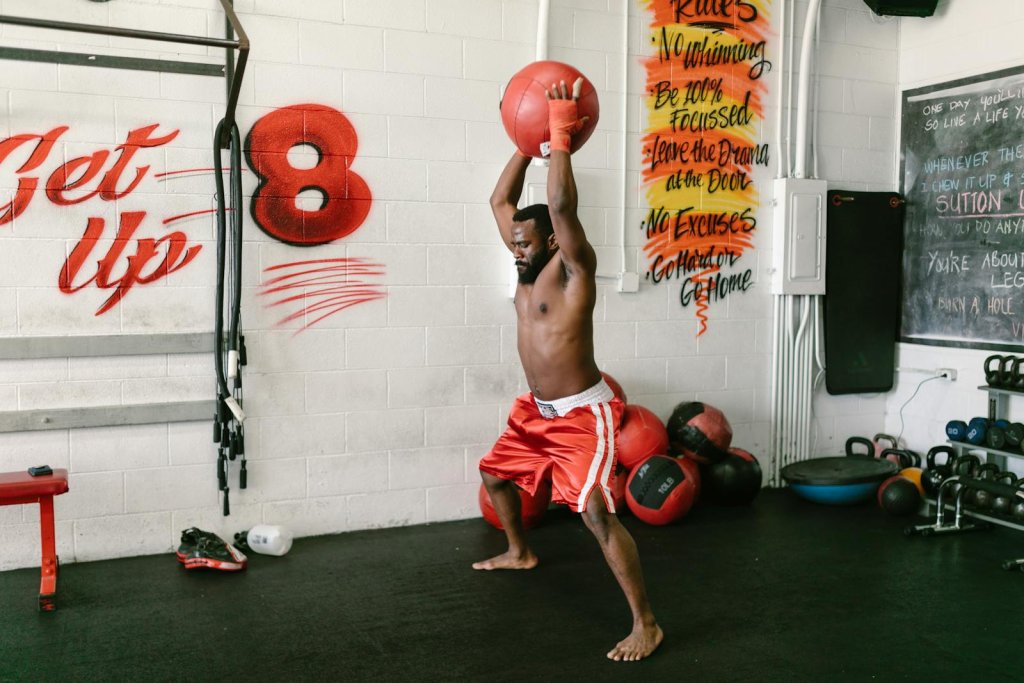
Understanding how slam ball exercises work—and how to perform them correctly—helps you train harder while staying safe. These movements combine strength, core engagement, and athletic power, making them popular in functional fitness, sports conditioning, and general strength programs.
What Are Slam Ball Exercises?
Slam ball exercises use a slam ball (also called a dead ball)—a sand-filled ball designed to absorb impact when thrown to the ground. Unlike many medicine balls, slam balls have minimal bounce, which helps reduce rebound risk during explosive movements.
Most slam ball workouts focus on:
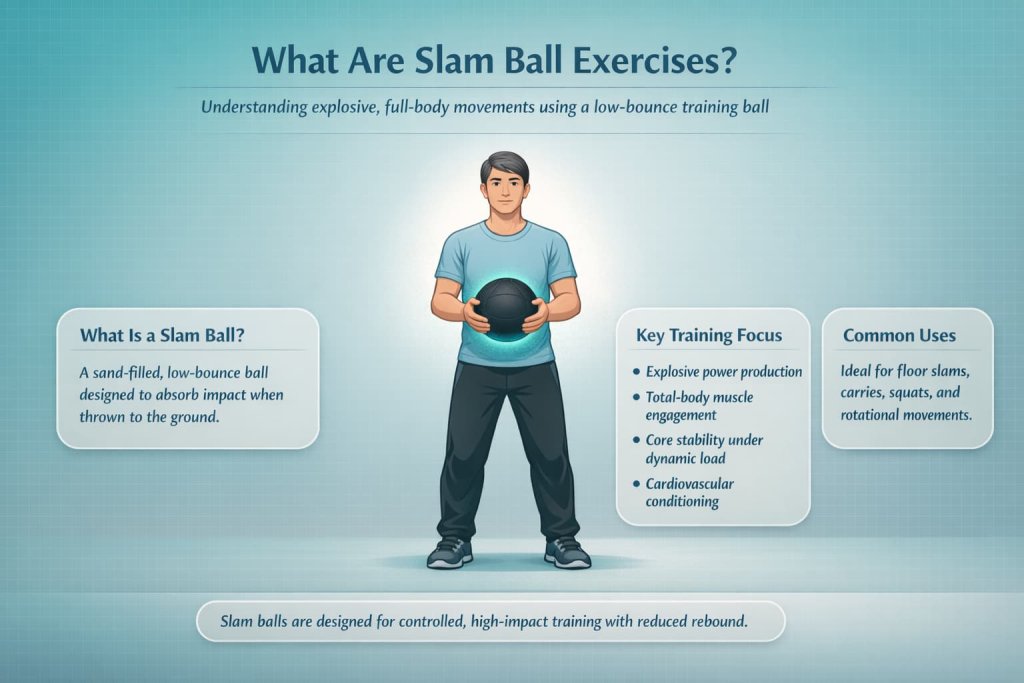
- Explosive power production
- Total-body muscle engagement
- Core stability under dynamic load
- Cardiovascular conditioning
Because of their design, slam balls are well suited for floor slams, carries, squats, and rotational movements.
10 Best Slam Ball Exercises for Explosive Full-Body Strength
Slam ball exercises combine explosive power, full-body strength, and core control in one highly effective training tool. The 10 exercises below target major muscle groups while supporting coordination, conditioning, and safe strength progression.
1. Overhead Slam
How to do it:
- Stand with feet shoulder-width apart and hold the slam ball with both hands
- Lift the ball overhead, extending your hips, knees, and arms
- Brace your core and forcefully slam the ball straight down in front of you
- Hinge at the hips and bend your knees to pick the ball up safely
- Reset your posture and repeat
Why it works:
The overhead slam trains full-body power by linking the lower body, core, and upper body in one explosive movement. The rapid force production helps develop coordination and power transfer through the kinetic chain.
Muscles worked:
Glutes, hamstrings, core, shoulders, lats
Trainer Tip:
Think “slam the hips first.” Power should start from the legs and hips, not just the arms.
2. Squat to Slam
How to do it:
- Hold the slam ball at chest height with feet shoulder-width apart
- Lower into a squat while keeping your chest upright
- Drive through your heels to stand up powerfully
- As you rise, lift the ball overhead and slam it to the floor
- Reset and repeat
Why it works:
This exercise combines lower-body strength with upper-body explosiveness, reinforcing proper squat mechanics while increasing power output and heart rate.
Muscles worked:
Quads, glutes, core, shoulders
Trainer Tip:
Maintain control in the squat—speed comes from the upward drive, not rushing the descent.
3. Rotational Slam
How to do it:
- Stand with feet slightly wider than shoulder-width
- Hold the slam ball with both hands and rotate your torso to one side
- Pivot through the hips as you bring the ball overhead
- Slam the ball diagonally across your body toward the floor
- Alternate sides with each repetition
Why it works:
Rotational slams train transverse-plane power, which supports athletic movement, coordination, and core control during twisting actions.
Muscles worked:
Obliques, glutes, shoulders
Trainer Tip:
Rotate through the hips and torso together—avoid twisting only from the lower back.
4. Chest Pass to Floor
How to do it:
- Hold the slam ball at chest height with elbows bent
- Slightly bend your knees and brace your core
- Forcefully press and throw the ball straight down in front of you
- Catch or retrieve the ball safely
- Reset and repeat
Why it works:
This movement emphasizes upper-body power while requiring core stability to control the force of the throw.
Muscles worked:
Chest, triceps, shoulders, core
Trainer Tip:
Keep your ribs down and core tight to prevent excessive arching during the throw.
5. Slam Ball Deadlift
How to do it:
- Place the slam ball on the floor between your feet
- Hinge at the hips with a neutral spine and grip the ball
- Drive through your heels to stand tall
- Squeeze your glutes at the top
- Lower the ball back down with control
Why it works:
The slam ball deadlift reinforces proper hip-hinge mechanics while strengthening the posterior chain in a joint-friendly way.
Muscles worked:
Hamstrings, glutes, lower back
Trainer Tip:
Think “push the floor away” rather than pulling the ball up with your arms.
6 . Lateral Slam
How to do it:
- Stand with feet shoulder-width apart
- Hold the slam ball overhead
- Shift your weight slightly to one side
- Slam the ball down next to your outside foot
- Alternate sides
Why it works:
Lateral slams build side-to-side power and help improve hip stability and movement control.
Muscles worked:
Obliques, glutes, shoulders
Trainer Tip:
Stay tall through the torso—avoid collapsing sideways during the slam.
7. Slam Ball Squat Hold
How to do it:
- Hold the slam ball at chest level
- Lower into a squat and pause at the bottom
- Keep your chest upright and core braced
- Hold for the desired time
- Stand up and repeat
Why it works:
Isometric holds increase time under tension, helping build strength, endurance, and postural control.
Muscles worked:
Quads, glutes, core
Trainer Tip:
Press the ball lightly into your chest to activate the core during the hold.
8. Overhead Carry
How to do it:
- Lift the slam ball overhead with both arms fully extended
- Keep ribs down and core engaged
- Walk forward with slow, controlled steps
- Maintain stable shoulders throughout
- Lower the ball safely after the set
Why it works:
Overhead carries improve shoulder stability and core endurance while reinforcing upright posture.
Muscles worked:
Shoulders, upper back, core
Trainer Tip:
If your lower back arches, lower the ball or reduce distance.
9 . Reverse Lunge With Slam
How to do it:
- Hold the slam ball at chest height
- Step one leg back into a reverse lunge
- As you return to standing, lift the ball overhead
- Slam the ball down in front of you
- Alternate legs
Why it works:
This movement combines unilateral leg strength with explosive upper-body action, improving balance and coordination.
Muscles worked:
Glutes, quads, core, shoulders
Trainer Tip:
Use a controlled lunge—power should come from the upward transition.
10. Burpee Slam
How to do it:
- Start standing with the slam ball at your feet
- Squat down and place your hands on the ball
- Step or jump back into a plank position
- Return to standing, lift the ball overhead
- Slam the ball down and repeat
Why it works:
The burpee slam elevates heart rate while engaging nearly every major muscle group, supporting strength and conditioning simultaneously.
Muscles worked:
Trainer Tip:
Step back instead of jumping if you need a lower-impact option.
How to Choose the Right Slam Ball Weight
Selecting the right weight depends on your experience level and training goal.
General guidance
- Beginners often start with 8–12 lb to learn proper form
- Intermediate users commonly use 15–25 lb
- Advanced trainees may progress to 30 lb or more, depending on the exercise
Choose a weight you can control through the entire range of motion without sacrificing technique.
How to Program Slam Ball Exercises for Best Results
Slam ball exercises can support strength and conditioning when programmed properly.
- Train 2–3 days per week with rest between sessions
- For power: 3–5 sets of 5–8 explosive reps
- For conditioning: 20–40 seconds of work per set
- Perform slams early in the workout while fresh
- Progress gradually by improving control or increasing load slowly
Balanced programming helps maximize benefits while reducing overuse risk.
Why Slam Ball Exercises Matter for Strength and Power
Explosive strength training helps your muscles generate force quickly, which supports athletic performance and everyday movement. Slam ball exercises may help by:
- Improving full-body coordination
- Training the core to stabilize during forceful movements
- Supporting power development in the hips, legs, and upper body
- Increasing heart rate for conditioning benefits
Strength and conditioning guidance summarized by organizations like the American College of Sports Medicine notes that power-based training uses lighter loads moved with speed to improve force production and movement efficiency.
Safety Guidelines Before Starting Slam Ball Exercises
Slam ball exercises involve explosive movement, so basic safety principles are important.
- Use a slam ball made for floor impact with minimal bounce
- Train on a stable, non-slip surface with enough open space
- Start with a manageable weight and prioritize control
- Keep a neutral spine and brace your core during lifts and slams
- Warm up shoulders, hips, and legs before training
- Modify or stop if you feel joint discomfort or loss of control
If you have existing injuries or movement limitations, seek guidance from a qualified professional.
Common Mistakes to Avoid
- Using a ball that is too heavy to control
- Relying on the lower back instead of hips and legs
- Letting the ball rebound toward your face
- Rushing repetitions without proper setup
Good technique matters more than speed or weight.
FAQs About Slam Ball Exercises
Are slam ball exercises good for beginners?
Yes, when performed with light weights and proper instruction, slam ball exercises can be beginner-friendly.
Can slam ball exercises build muscle?
They can support muscle development, especially when combined with progressive overload and resistance training.
Are slam balls better than medicine balls?
Slam balls are better for floor slams due to minimal bounce, while medicine balls are often used for throws and wall work.
How heavy should a slam ball be?
Choose a weight that allows controlled, powerful movement without compromising form.
Can slam ball workouts help with conditioning?
Yes, many slam ball exercises elevate heart rate and can support cardiovascular conditioning.
Do slam ball exercises improve core strength?
Most movements require active core engagement, which helps build core stability.
Conclusion
Slam ball exercises are a versatile way to train explosive full-body strength, core control, and conditioning in one workout. Whether you are new to fitness or looking to add intensity to your routine, these movements offer scalable options for many ability levels.
Start with proper technique, choose the right weight, and progress gradually to get the most benefit from slam ball training. Add these exercises to your weekly routine to build power, improve movement quality, and keep workouts challenging and engaging.
References
- ACSM Position Stand: Progression Models in Resistance Training for Healthy Adults (PubMed)
- CDC Physical Activity Guidelines for Adults
- WHO Physical Activity Guidance
- WHO 2020 Guidelines on Physical Activity and Sedentary Behaviour (Full Paper)
- ACE Exercise Library: Rotational Slam
- CDC Physical Activity Guidelines Overview