
Spinal stenosis exercises are targeted movements designed to support flexibility, strength, and daily mobility while helping manage symptoms such as back pain, leg discomfort, and walking difficulty. For many people, especially those with lumbar spinal stenosis, the right exercises may help reduce discomfort, improve posture, and make everyday activities easier when performed safely and consistently.
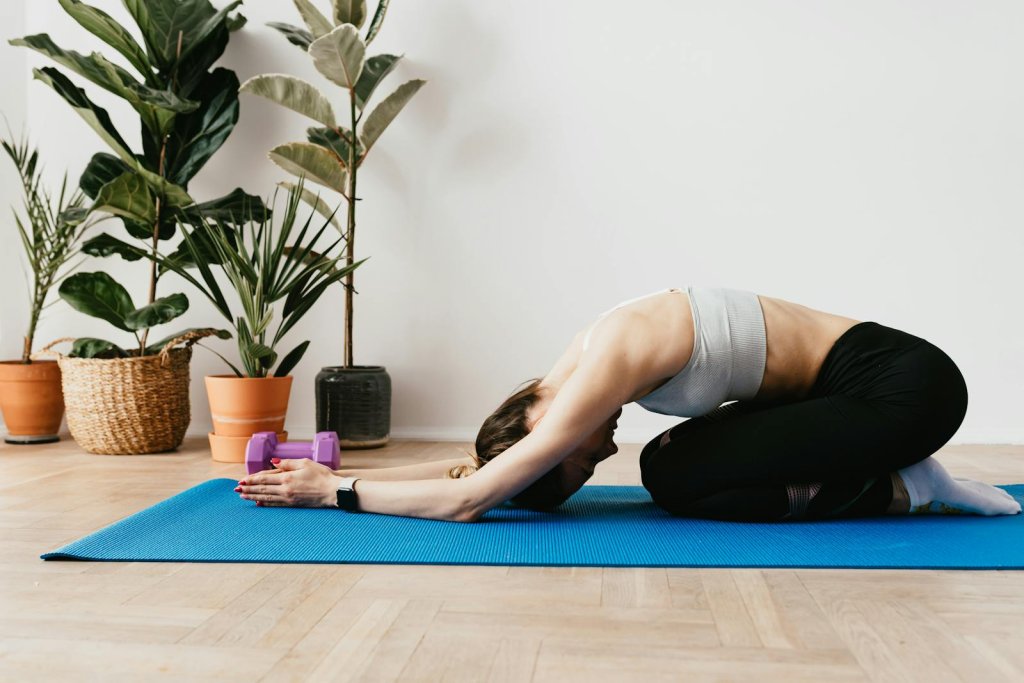
Below is a clear, evidence-informed guide to the 10 best spinal stenosis exercises, along with safety guidance, FAQs, and practical tips.
What Are Spinal Stenosis Exercises?
Spinal stenosis exercises are low-impact movements that focus on:
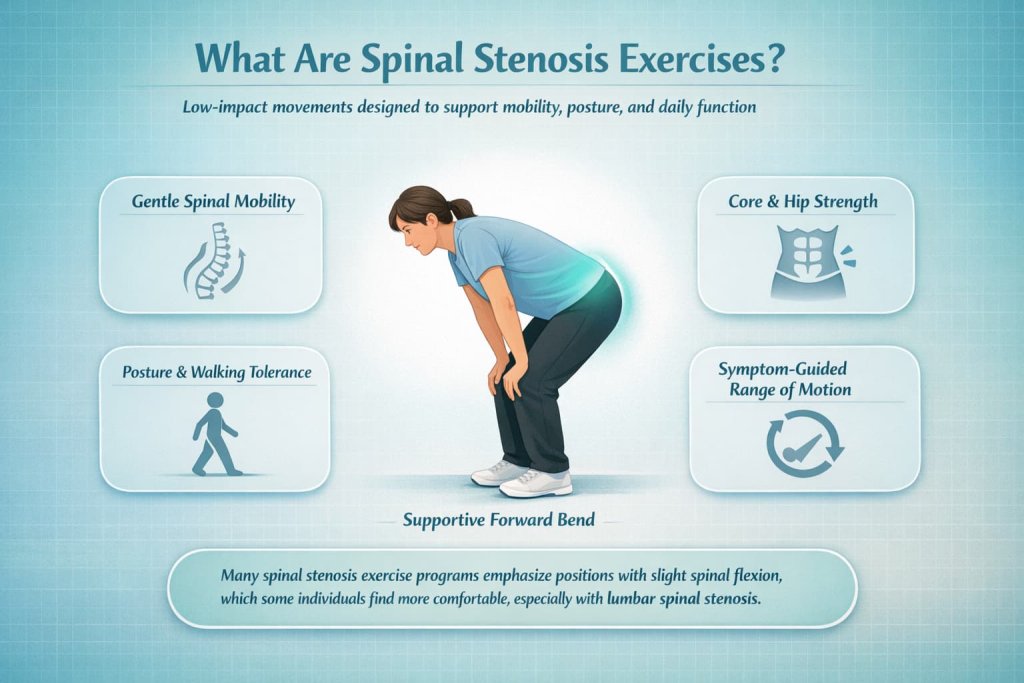
- Gentle spinal mobility
- Core and hip strength
- Posture and walking tolerance
- Symptom-guided range of motion
Many programs emphasize positions that slightly flex the spine, which some people find more comfortable, especially with lumbar spinal stenosis.
How Exercise May Help With Spinal Stenosis
Exercise is commonly included as part of conservative care for spinal stenosis when symptoms allow. While exercise does not change the structural narrowing of the spinal canal, it may help support how the body moves, tolerates activity, and manages day-to-day discomfort.
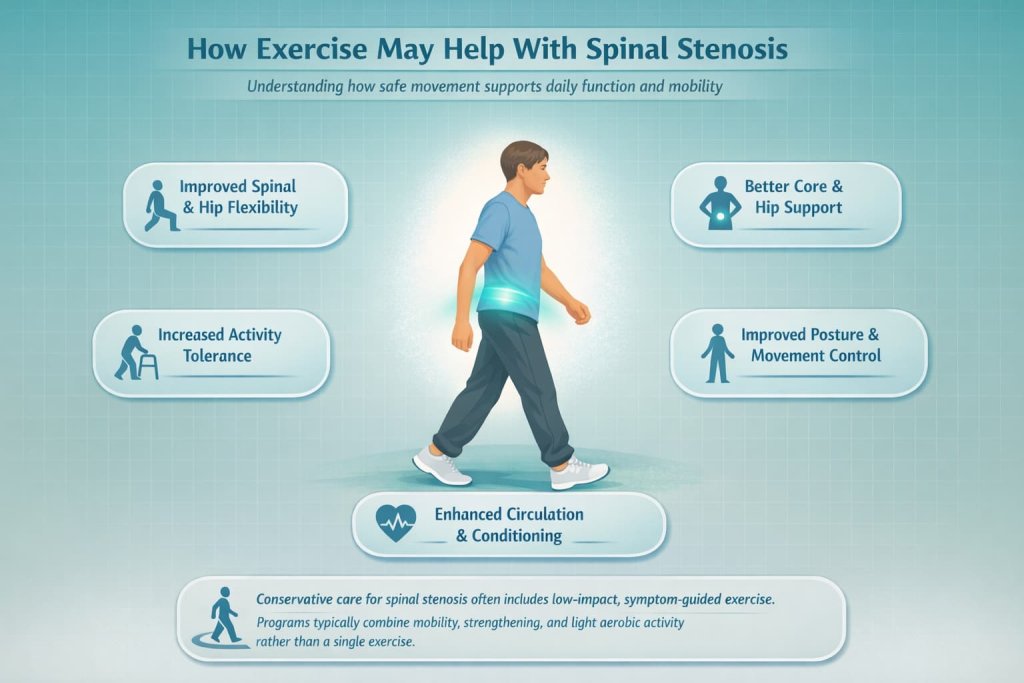
Regular, well-chosen exercises may help by:
- Improving flexibility of the spine and hips, which can reduce stiffness during daily movements
- Supporting core and hip strength, helping the spine stay more stable during walking and standing
- Increasing tolerance for physical activity, such as walking or household tasks
- Encouraging better posture and movement control
- Promoting circulation and general physical conditioning
Clinical guidance from organizations such as the Mayo Clinic and the North American Spine Society often emphasizes low-impact, symptom-guided exercise as a first-line, non-surgical approach. Programs typically combine gentle mobility work, strengthening, and aerobic activity rather than relying on a single exercise.
10 Best Spinal Stenosis Exercises
These exercises focus on gentle mobility, core and hip support, and low-impact movement to help improve daily function and walking tolerance. All movements are designed to be performed in a controlled, symptom-guided range.
1. Posterior Pelvic Tilt
This gentle core exercise helps reduce excessive lower-back arching and supports spinal control.
How to do it
- Lie on your back with knees bent and feet flat on the floor
- Gently tighten your abdominal muscles as if bracing for a cough
- Tilt your pelvis to flatten your lower back against the floor
- Hold for 5–10 seconds, then relax and repeat
Why it works
Posterior pelvic tilts encourage controlled lumbar flexion and improve awareness of neutral spine positioning. This may reduce strain on spinal structures and support better posture during daily activities.
Trainer Tip
Avoid pushing through pain. The movement should feel gentle and controlled, not forced.
2. Single Knee-to-Chest Stretch
This stretch promotes spinal flexion and may ease lower-back stiffness.
How to do it
- Lie on your back with both knees bent
- Slowly bring one knee toward your chest
- Keep the opposite foot resting on the floor
- Hold for 15–30 seconds, then switch sides
Why it works
This movement gently flexes the lower spine and hips, which many people with spinal stenosis find more comfortable than extended positions.
Trainer Tip
Keep your shoulders relaxed and your neck neutral while holding the stretch.
3. Double Knee-to-Chest Stretch
A progression of the previous exercise, often used if symptoms allow.
How to do it
- Lie on your back with knees bent
- Bring both knees toward your chest slowly
- Hold briefly while breathing normally
- Lower one leg at a time with control
Why it works
This exercise increases spinal flexion slightly more than the single-leg version, which may help reduce spinal compression symptoms for some individuals.
Trainer Tip
If symptoms increase, return to the single knee-to-chest variation.
4. Seated Forward Bend
This movement supports flexibility without placing load on the spine.
How to do it
- Sit upright on a sturdy chair with feet flat
- Slowly hinge forward from the hips
- Let your arms relax toward your legs
- Stop before discomfort and return upright
Why it works
Seated forward bending allows spinal flexion in a supported position, which can be easier to tolerate than standing stretches.
Trainer Tip
Move slowly and avoid bouncing at the bottom of the stretch.
5. Cat–Cow (Modified Range)
This mobility drill encourages gentle spinal movement without forcing range.
How to do it
- Start on hands and knees with a neutral spine
- Slowly round your back upward
- Return to a neutral position (not excessive arching)
- Repeat within a comfortable range
Why it works
Controlled spinal movement helps maintain mobility and circulation without sustained loading in one position.
Trainer Tip
Keep the motion slow and pain-free; smaller ranges are often more effective.
6. Standing Hip Flexor Stretch
Tight hip flexors can increase strain on the lower back during walking.
How to do it
- Stand in a staggered stance with one foot back
- Gently shift weight forward
- Keep the torso upright and pelvis neutral
- Hold, then switch sides
Why it works
Improving hip flexibility may reduce compensatory strain on the lumbar spine during standing and walking.
Trainer Tip
Avoid arching your lower back; think of gently tucking the pelvis.
7. Glute Bridge (Small Range)
Strengthening the glutes may help reduce load on the lumbar spine.
How to do it
- Lie on your back with knees bent and feet hip-width apart
- Gently lift hips a small distance off the floor
- Keep ribs down and core lightly braced
- Lower slowly with control
Why it works
Stronger glutes support hip extension and posture, which can decrease compensatory stress on the lower back.
Trainer Tip
Focus on control rather than height—higher is not better.
8. Abdominal Bracing
This exercise trains core stability without spinal movement.
How to do it
- Sit or lie in a comfortable position
- Gently tighten your abdominal muscles
- Keep breathing normally
- Hold for 10–20 seconds
Why it works
Abdominal bracing improves spinal stability by activating deep core muscles without bending or twisting the spine.
Trainer Tip
You should be able to breathe and talk while holding the brace.
9. Stationary Cycling
Often recommended because it places the spine in a flexed position.
How to do it
- Sit on a stationary bike with upright or slightly forward posture
- Start with low resistance
- Pedal for short, comfortable durations
- Increase time gradually as tolerated
Why it works
Cycling provides low-impact cardiovascular activity while keeping the spine in a position many people with spinal stenosis tolerate well.
Trainer Tip
Seat height should allow a slight bend in the knee at the bottom of the pedal stroke.
10. Short, Frequent Walking Sessions
Walking remains important but is often better tolerated in intervals.
How to do it
- Walk at a comfortable pace
- Stop and rest before pain increases
- Resume walking after symptoms settle
- Repeat short bouts as tolerated
Why it works
Interval-style walking helps maintain mobility and endurance without prolonged symptom aggravation.
Trainer Tip
Many people benefit from slightly leaning forward or using walking poles for support.
How Often Should You Do Spinal Stenosis Exercises?
Many clinical resources suggest exercising 2–3 times per week, with light activity or walking on other days. The American Academy of Orthopaedic Surgeons and Mayo Clinic both emphasize gradual progression and consistency rather than intensity.
Safety Guidelines Before Starting Spinal Stenosis Exercises
Before beginning spinal stenosis exercises, it’s important to prioritize safety and symptom awareness. Because spinal stenosis can vary in severity and presentation, exercises should always be performed in a controlled, pain-free range.
General safety guidelines include:
- Move slowly and avoid sudden or jerky motions
- Use symptoms as your guide; mild discomfort is different from sharp or worsening pain
- Stop any exercise that increases leg pain, numbness, or tingling
- Maintain steady breathing and avoid holding your breath
- Start with shorter sessions and increase volume gradually
If you are new to exercise, returning after a long break, or experiencing changing symptoms, guidance from a qualified healthcare or physical therapy professional may help ensure exercises are appropriate for your individual condition.
Exercises to Avoid or Modify With Spinal Stenosis
Some exercises may place additional stress on the spine or aggravate symptoms in people with spinal stenosis. These movements are not automatically unsafe for everyone, but they often require modification or professional guidance.
Exercises commonly avoided or modified include:
- Deep spinal extension movements, especially repeated or loaded back bending
- High-impact activities such as running or jumping
- Heavy lifting that places compressive load on the spine
- Rapid twisting or rotational movements under resistance
- Prolonged standing or walking without rest breaks
If an exercise causes worsening pain, leg symptoms, or loss of control, it should be stopped or adjusted. Safer alternatives typically emphasize controlled movement, low impact, and positions that allow for symptom relief.
Frequently Asked Questions
Can exercise make spinal stenosis worse?
Exercise performed incorrectly or at too high an intensity may aggravate symptoms. Symptom-guided, low-impact exercises are generally emphasized.
Are spinal stenosis exercises safe for seniors?
Many exercises can be adapted for older adults, especially seated or supported movements.
How long does it take to see improvement?
Some people notice changes within a few weeks, while others require longer-term consistency.
Is walking good for spinal stenosis?
Walking can be beneficial when done in short, manageable intervals with good posture.
Should I stretch every day?
Light stretching may be done daily if it remains pain-free and controlled.
Do I need equipment?
Most spinal stenosis exercises use body weight or simple tools like a chair or stationary bike.
Conclusion
Spinal stenosis exercises focus on gentle mobility, core and hip strength, and low-impact conditioning to support daily function. When performed safely and consistently, they may help improve comfort, walking tolerance, and overall quality of life. Start slowly, listen to your body, and seek professional guidance when needed.
References
- Mayo Clinic: Spinal stenosis—Diagnosis and treatment
- NIAMS (NIH): Spinal stenosis—Diagnosis, treatment, and steps to take
- AANS: Lumbar spinal stenosis (patient overview)
- North American Spine Society: Clinical guideline—Degenerative lumbar spinal stenosis (PDF)
- Mass General Brigham: Conservative management rehab guideline for lumbar spinal stenosis (PDF)
- Exercise treatments for lumbar spinal stenosis: Systematic review (PMC full text)
- Non-operative treatment for lumbar spinal stenosis with neurogenic claudication (BMJ Open)
- Surgery vs nonsurgical treatment for lumbar spinal stenosis (Annals of Internal Medicine)