
VMO exercises are strength and control exercises designed to support the vastus medialis portion of the quadriceps, helping improve knee stability and tracking. While the VMO (vastus medialis obliquus) is not a completely separate muscle, targeted quadriceps training—often combined with hip strengthening—plays an important role in supporting healthy knee movement.
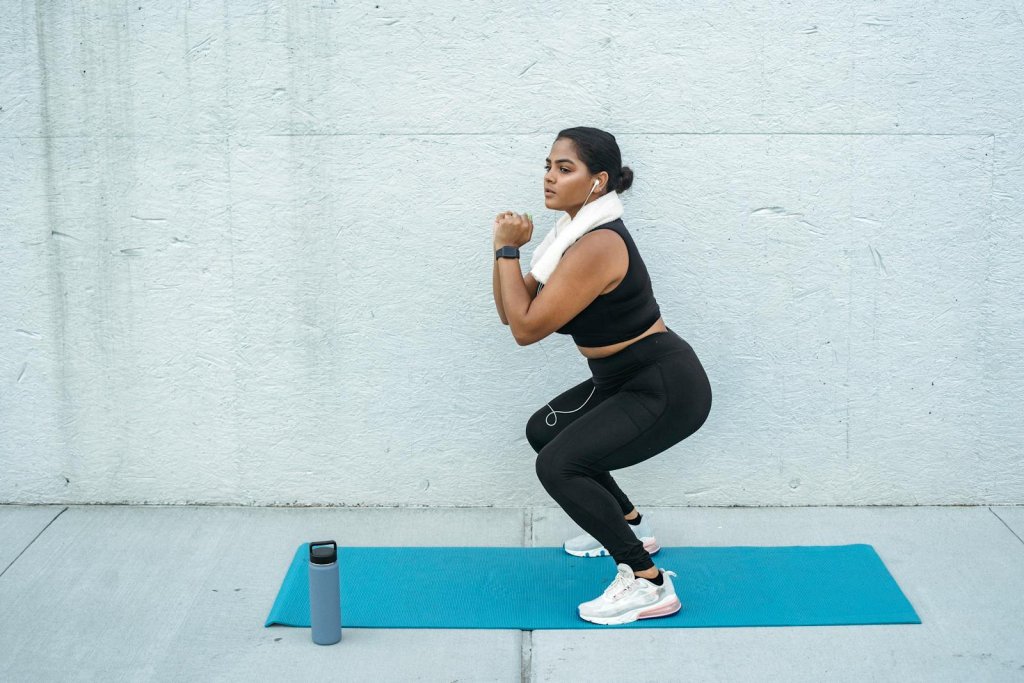
Understanding how VMO exercises work matters because poor knee control is commonly linked with issues such as patellofemoral pain, instability during daily activities, and reduced confidence with stairs, squats, or running.
This guide explains the most effective VMO-focused exercises, how they work, and how to program them safely.
What Are VMO Exercises?
VMO exercises focus on strengthening the vastus medialis, the inner portion of the quadriceps that helps control knee extension and supports proper patellar tracking.
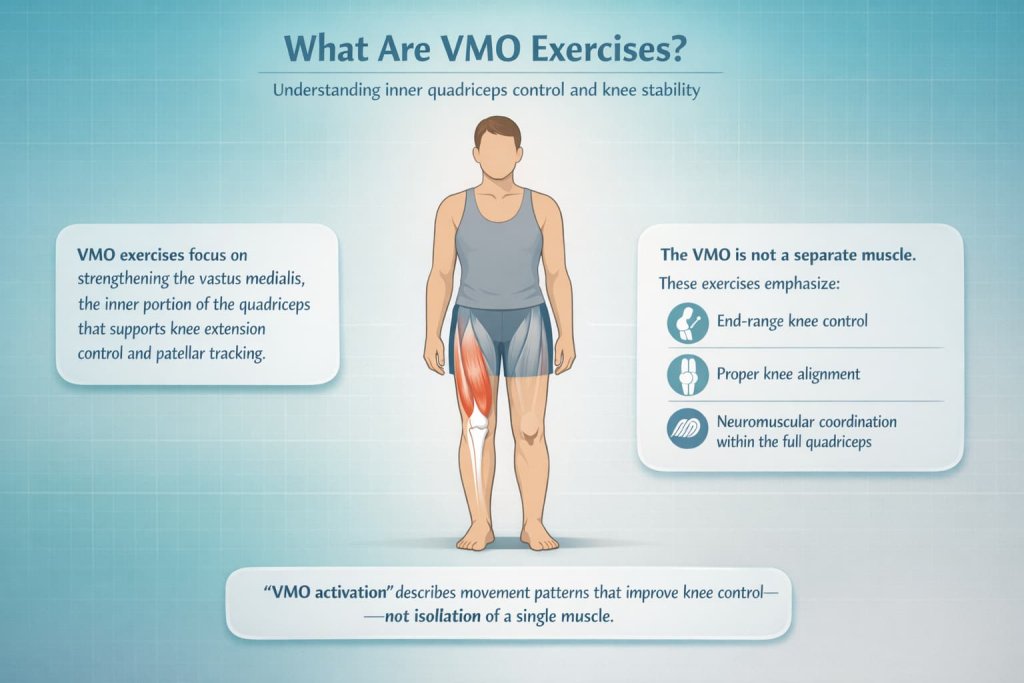
Although research shows the VMO cannot be isolated in complete separation from the rest of the quadriceps, certain movement patterns emphasize end-range knee control, alignment, and neuromuscular coordination, which are commonly described as “VMO activation” in clinical and fitness settings.
Why VMO Exercises Matter for Knee Stability
VMO-focused training may help by:
- Supporting smoother knee tracking during bending and straightening
- Improving control near full knee extension, where weakness often appears
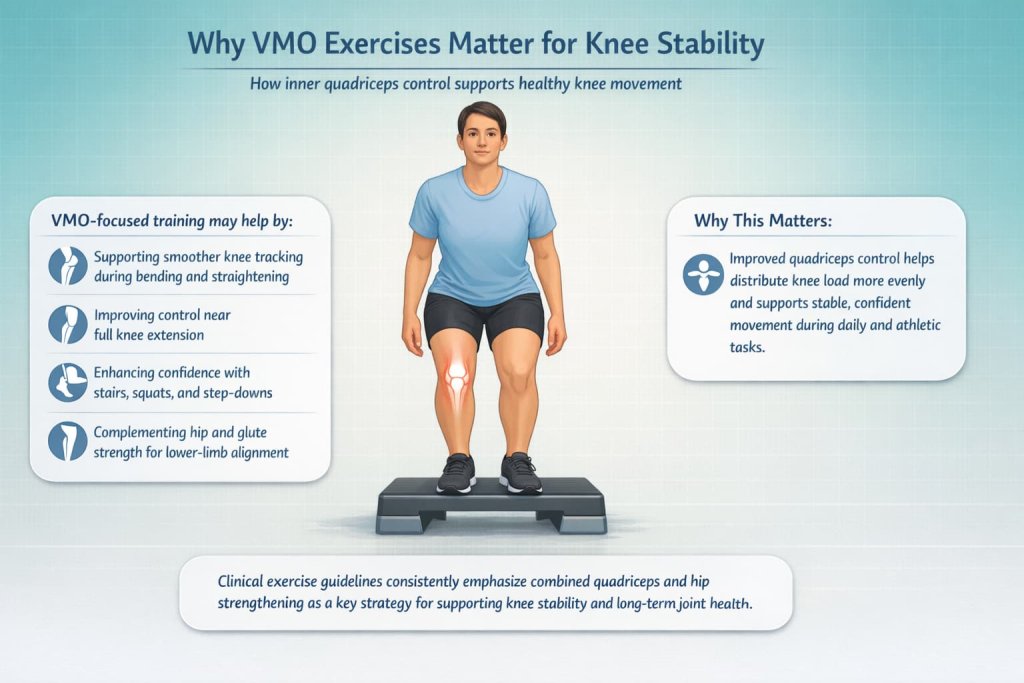
- Enhancing confidence with stairs, squats, and step-down movements
- Complementing hip and glute strength for overall lower-limb alignment
Clinical exercise guidelines summarized by the American College of Sports Medicine and British Journal of Sports Medicine consistently highlight combined quadriceps and hip strengthening as a key strategy for knee health.
11 Best VMO Exercises for Stronger Knees
Vastus medialis exercises focus on strengthening the inner portion of the quadriceps to support knee alignment and stability. The following 11 exercises emphasize controlled knee extension, proper tracking, and safe strength progression for healthier knees.
1. Terminal Knee Extensions (TKE)
How to do it:
- Anchor a resistance band behind knee height
- Loop the band behind one knee
- Start with the knee slightly bent and foot flat on the floor
- Slowly straighten the knee against the band
- Pause briefly at full extension, then return with control
Why it works:
TKEs load the final portion of knee extension, where quadriceps activation—particularly the vastus medialis—is often weakest. This improves end-range control rather than brute strength.
Muscles worked:
Vastus medialis, rectus femoris, lateral quadriceps, knee stabilizers
Trainer Tip:
Focus on locking out smoothly, not snapping the knee straight. Control matters more than resistance.
2. Straight Leg Raises
How to do it:
- Lie on your back with one knee bent and the other leg straight
- Tighten the thigh of the straight leg
- Lift the leg until it matches the height of the opposite knee
- Lower slowly without relaxing the quad
Why it works:
Straight leg raises activate the quadriceps without knee movement, making them ideal when joint tolerance is limited.
Muscles worked:
Quadriceps (including vastus medialis), hip flexors
Trainer Tip:
If the knee bends during the lift, reset and reduce the height.
3. Wall Sits With Ball Squeeze
How to do it:
- Stand with your back against a wall
- Slide down until knees are bent about 60–90 degrees
- Place a soft ball or pillow between the knees
- Gently squeeze while holding the position
Why it works:
Isometric tension builds quad endurance, while the inward squeeze encourages medial thigh and inner quad engagement.
Muscles worked:
Quadriceps, adductors, glute stabilizers
Trainer Tip:
Squeeze gently—this is about control, not maximal force.
4. Step-Downs
How to do it:
- Stand on a low step or platform
- Slowly lower one foot toward the floor
- Keep the standing knee aligned over the toes
- Lightly tap the heel, then return to standing
Why it works:
Step-downs emphasize eccentric quad control, which improves knee tracking and stability during everyday movements.
Muscles worked:
Quadriceps, gluteus medius, hamstrings
Trainer Tip:
Lower slower than you lift—this is where the benefit happens.
5. Spanish Squats
How to do it:
- Loop a thick resistance band behind both knees
- Anchor the band securely behind you
- Sit back into a squat while keeping the torso upright
- Push through the heels to return to standing
Why it works:
The band reduces shear stress while maintaining continuous quadriceps tension, making this squat variation knee-friendly.
Muscles worked:
Quadriceps, glutes, core stabilizers
Trainer Tip:
Keep the shins mostly vertical to maintain quad focus.
6. Heel-Elevated Squats
How to do it:
- Place heels on a small wedge or plates
- Stand with feet shoulder-width apart
- Squat down under control
- Drive up through mid-foot
Why it works:
Heel elevation allows greater knee travel, increasing quadriceps demand—especially the vastus medialis.
Muscles worked:
Quadriceps, glutes, calves
Trainer Tip:
Use light depth at first; progress range before adding load.
7. Seated Knee Extensions
How to do it:
- Sit upright in a chair
- Extend one knee until the leg is straight
- Pause briefly at the top
- Lower slowly and repeat
Why it works:
This open-chain movement allows focused quadriceps strengthening with clear control over range and effort.
Muscles worked:
Quadriceps, especially vastus medialis
Trainer Tip:
Add ankle weights only after mastering slow control.
8. Single-Leg Press (Light to Moderate Load)
How to do it:
- Sit in a leg press machine with one foot on the platform
- Lower the sled under control
- Press through the mid-foot to extend the knee
- Avoid locking out aggressively
Why it works:
Single-leg loading exposes asymmetries and reinforces controlled knee alignment under resistance.
Muscles worked:
Quadriceps, glutes, hamstrings
Trainer Tip:
If the knee drifts inward, reduce weight immediately.
9. Reverse Lunges
How to do it:
- Stand tall with feet hip-width apart
- Step one leg backward into a lunge
- Lower under control, keeping front knee stable
- Push through the front heel to stand
Why it works:
Reverse lunges reduce forward knee stress while still loading the quadriceps effectively.
Muscles worked:
Quadriceps, glutes, hamstrings
Trainer Tip:
Think “sit straight down,” not forward.
10. Peterson Step-Ups
How to do it:
- Stand on a low step with one foot
- Let the opposite heel hang just off the edge
- Slowly straighten the standing knee
- Lower back down with control
Why it works:
This small-range movement targets terminal knee extension strength and fine motor control.
Muscles worked:
Vastus medialis, quadriceps, ankle stabilizers
Trainer Tip:
Use a very low step—height matters more than load.
11. Isometric Quad Sets
How to do it:
- Sit or lie with legs straight
- Tighten the thigh muscle by pressing the knee downward
- Hold for 5–10 seconds
- Relax and repeat
Why it works:
Isometric contraction reinforces neuromuscular activation when movement is limited.
Muscles worked:
Quadriceps, especially vastus medialis
Trainer Tip:
Visualize pulling the kneecap upward during the contraction.
How the VMO Fits Into Quadriceps Function
The vastus medialis obliquus (VMO) is not a separate muscle, but rather the distal, oblique fiber portion of the vastus medialis, one of the four quadriceps muscles. Its fibers run at an angle that contributes to knee extension control and patellar guidance, especially near full knee straightening.
Current research shows that the VMO cannot be isolated independently from the rest of the quadriceps. Instead, exercises described as “VMO-focused” work by emphasizing:
- End-range knee extension control
- Proper knee alignment during loaded movement
- Coordination between the quadriceps and hip muscles
Clinical guidance summarized by organizations such as the American Academy of Orthopaedic Surgeons and the Mayo Clinic consistently supports global quadriceps strengthening combined with good movement mechanics, rather than attempting to target one small muscle region in isolation.
How to Program VMO Exercises Safely
Safe and effective VMO training prioritizes control, tolerance, and gradual progression rather than aggressive loading.
General evidence-based programming guidelines include:
- Frequency: 2–3 sessions per week
- Volume: 2–4 sets of 8–15 repetitions, or 20–45 second holds for isometric exercises
- Tempo: Slow, controlled movement—especially during lowering phases
- Progression: Increase resistance, depth, or complexity gradually, not all at once
Exercises should feel challenging but manageable. Mild muscular effort is expected, but sharp pain, joint catching, or worsening symptoms are signals to reduce load or stop.
Common Mistakes With VMO Training
Several common errors reduce effectiveness and may increase knee stress:
- Trying to “isolate” the VMO instead of strengthening the full quadriceps
- Allowing the knee to collapse inward during squats, lunges, or step-downs
- Progressing load or depth too quickly without mastering control
- Ignoring hip and glute strength, which strongly influences knee alignment
- Performing movements quickly or bouncing through knee extension
Correcting these issues improves knee tracking, load tolerance, and long-term results far more than adding extra exercises.
Who Should Be Cautious With VMO Exercises
VMO exercises are generally safe when performed correctly, but extra caution is recommended for individuals who:
- Have persistent or worsening knee pain
- Experience swelling, locking, or a feeling of instability
- Are recovering from recent knee surgery or acute injury
- Have been advised to limit knee loading by a healthcare professional
In these cases, exercises may need to be modified, regressed, or temporarily avoided. Working with a licensed physical therapist or qualified clinician can help ensure exercises are appropriate for your specific condition and stage of recovery.
Frequently Asked Questions
Are VMO exercises different from quad exercises?
VMO exercises are a subset of quadriceps training that emphasizes knee control and alignment rather than a completely separate muscle.
Can VMO exercises help knee pain?
They may help support knee stability and movement when used as part of a balanced strengthening program, especially alongside hip exercises.
How long does it take to see results?
Many people notice improved control and confidence within 4–8 weeks of consistent training.
Do I need special equipment?
No. Many VMO exercises use body weight, resistance bands, or simple household items.
Should VMO exercises be done every day?
Most guidelines recommend rest days between sessions to allow recovery.
Are these exercises safe for beginners?
Yes, when started with low resistance and proper technique.
Conclusion
VMO exercises play an important role in building knee stability, improving movement control, and supporting long-term joint health. By focusing on controlled quadriceps strengthening and smart progression, you can improve how your knees feel and function during everyday activities.
If you’re building a knee-friendly routine, start conservatively, focus on form, and progress gradually for the best results.
References
- Best practice guide for patellofemoral pain (British Journal of Sports Medicine, 2024)
- Patellofemoral Pain Clinical Practice Guideline (JOSPT, 2019)
- Quadriceps vs hip exercise programs for patellofemoral pain (BJSM / PubMed record, 2023)
- Patellofemoral pain syndrome: diagnosis and treatment (Mayo Clinic)
- Knee Conditioning Program PDF (AAOS OrthoInfo)
- APTA-linked guidance summary on patellofemoral pain (AAFP, 2020)
- Isolation of the VMO during selected exercises (PubMed, 1999)
- Systematic review on conservative treatment/strengthening for patellofemoral pain (PMC, 2025)