
Hip exercises help strengthen the muscles that support balance, posture, walking, and pain-free movement. They may also reduce stiffness, improve mobility, and support healthier knee and lower-back mechanics. Because the hips are central to nearly every movement you make—standing, climbing stairs, sitting, bending—keeping them strong and mobile is essential for long-term joint health.
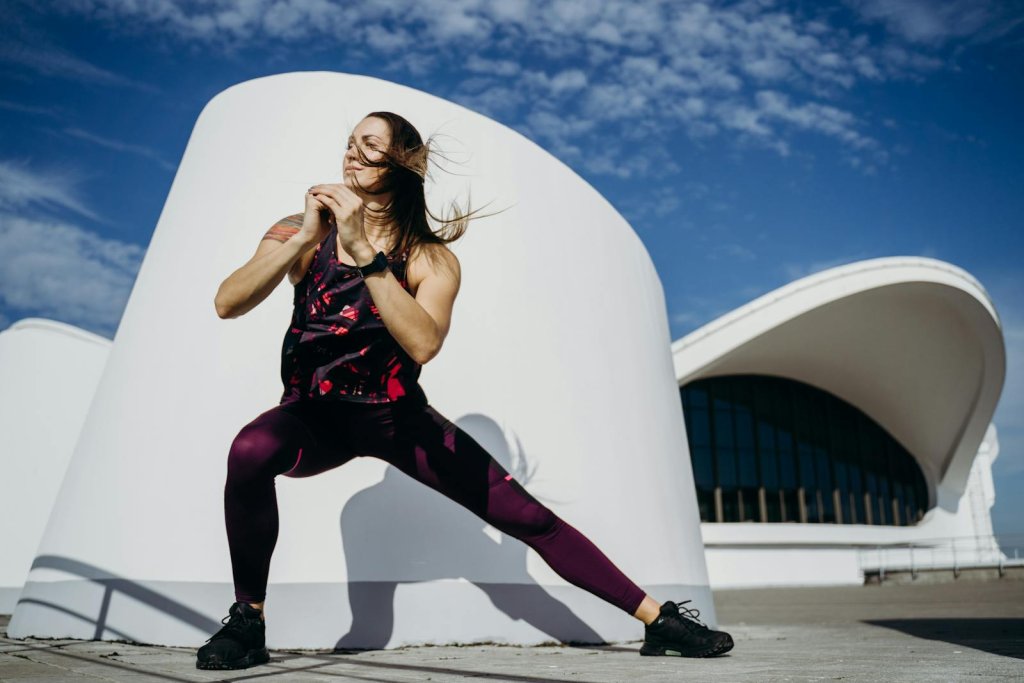
This guide covers the 17 best hip exercises backed by recent research and clinical guidelines. You’ll learn how to strengthen weak areas, improve mobility, and safely progress your routine.
Why Hip Exercises Matter
Strong hips provide stability and power during everyday activities. Research from ACSM and recent systematic reviews shows that hip strengthening may:
- Improve balance and single-leg stability
- Build glute and hip strength essential for walking and stair climbing
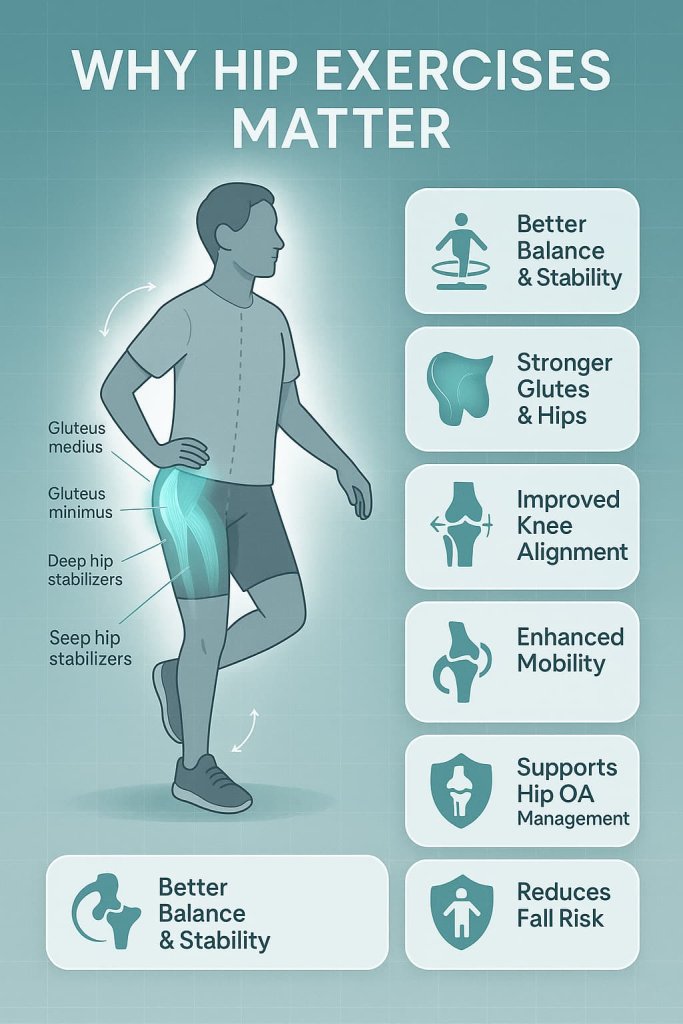
- Support better knee alignment and reduce excess joint stress
- Enhance mobility and movement control
- Help manage symptoms of hip osteoarthritis when combined with mobility exercises
- Reduce fall risk in older adults
Because hip muscles work as stabilizers for your spine, pelvis, and knees, consistent strengthening supports safer movement in daily life.
How Often Should You Do Hip Exercises?
Most adults benefit from:
- 2–3 hip-strengthening sessions per week
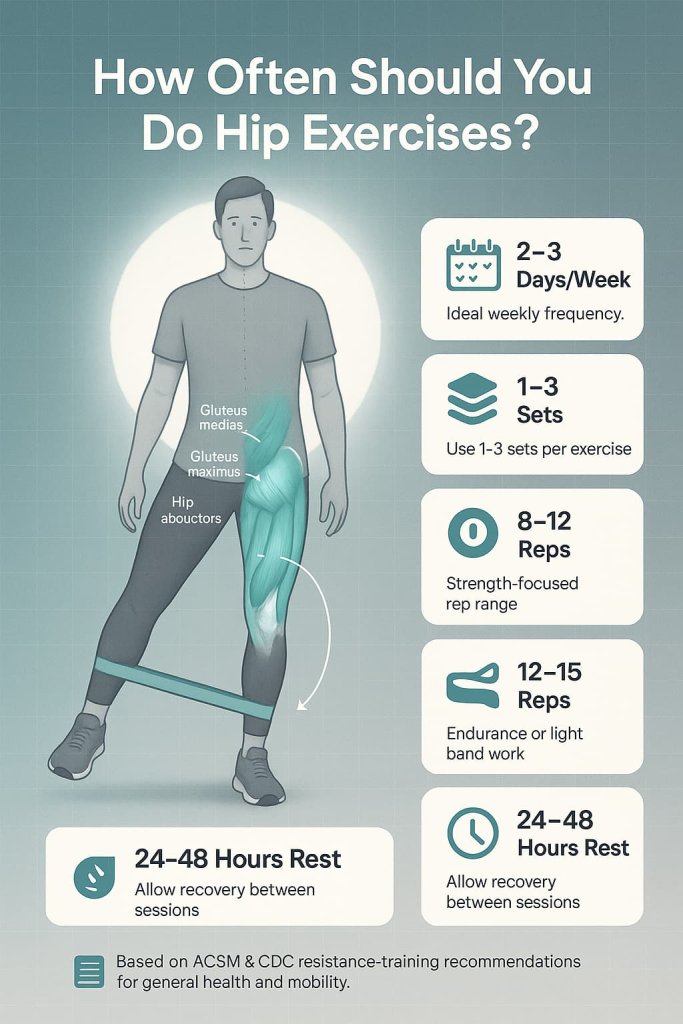
- 1–3 sets per exercise
- 8–12 reps per set for strength
- 12–15 reps for endurance or lighter-tension band work
- 24–48 hours of rest between strengthening sessions
These guidelines follow ACSM and CDC resistance-training recommendations for general health and mobility.
Warm-Up Before Hip Workouts
A short warm-up boosts circulation, activates stabilizers, and improves joint mobility.
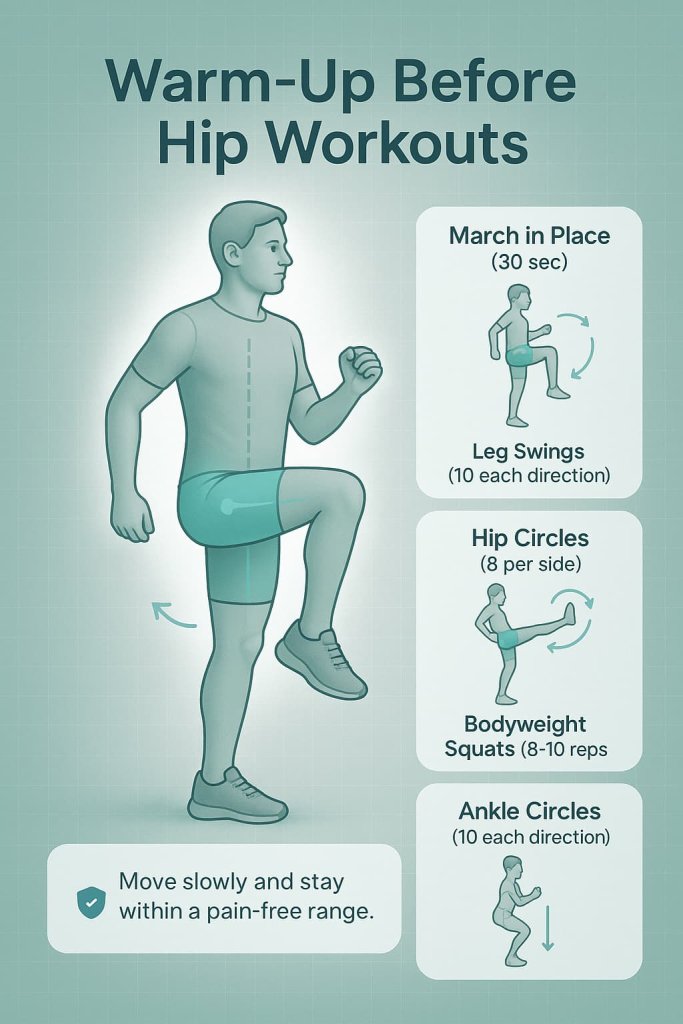
Quick 2–3 minute warm-up:
- March in place — 30 seconds
- Leg swings — 10 each direction
- Hip circles — 8 per side
- Bodyweight squats — 8–10 reps
- Ankle circles — 10 per direction
Move slowly and stay within a pain-free range.
The 17 Best Hip Exercises for Strength & Mobility
Strengthening the hips improves stability, movement control, and lower-body power during everyday activities. These 17 exercises target the key muscles responsible for mobility, balance, and pain-free movement.
Hip Abductor Strengthening (Outer Hip / Glute Medius)
1. Side-Lying Hip Abduction
Why it works:
This move isolates the gluteus medius, a key stabilizer responsible for keeping your pelvis level during walking, running, and single-leg activities. Strengthening this muscle supports better knee alignment and reduces hip drop.
Muscles worked:
Gluteus medius, gluteus minimus.
How to do it:
- Lie on your side with legs stacked and straight.
- Keep bottom leg slightly bent for support.
- Lift the top leg upward 12–18 inches without rotating the hips.
- Pause briefly, then lower slowly with control.
- Repeat for all reps before switching sides.
Trainer Tip:
Slightly point your toes downward to keep the glutes engaged and prevent turning the leg outward.
2. Clamshell
Why it works:
This exercise activates the deep hip rotators and glute medius, improving pelvic stability and helping correct inward knee collapse.
Muscles worked:
Glute medius, glute minimus, deep external rotators.
How to do it:
- Lie on your side with hips stacked and knees bent at 90°.
- Keep feet together as you open the top knee.
- Lift only as far as your hips stay still.
- Lower slowly and repeat for full control.
Trainer Tip:
Place a mini-band above your knees to increase resistance and activation.
3. Lateral Band Walk
Why it works:
Strengthens lateral hip muscles responsible for hip stability during squats, lunges, and daily movements like stepping sideways or changing direction.
Muscles worked:
Glute medius, glute max, hip rotators.
How to do it:
- Place a resistance band around ankles or just above knees.
- Slightly bend your knees and hinge hips back a few inches.
- Step sideways while keeping constant band tension.
- Bring the other foot in without letting the band go slack.
- Continue stepping in one direction, then switch.
Trainer Tip:
Stay upright—avoid leaning or shifting your torso to compensate for weak hips.
4. Standing Hip Abduction
Why it works:
Improves hip abductor strength in a functional, upright position that directly carries over to walking and balance.
Muscles worked:
Glute medius, hip abductors, core stabilizers.
How to do it:
- Stand tall while holding a wall or chair for support.
- Lift one leg outward to the side.
- Pause briefly at the top.
- Lower with control and repeat.
- Switch sides after completing reps.
Trainer Tip:
Keep toes pointing straight ahead to target the correct muscles.
Hip Extensor Strengthening (Back of Hips / Glute Max)
5. Glute Bridge
Why it works:
Strengthens glute max and posterior chain, supporting safer lifting mechanics, walking power, and reduced lower-back strain.
Muscles worked:
Gluteus maximus, hamstrings, core.
How to do it:
- Lie on your back with knees bent and feet hip-width apart.
- Press through your heels to lift hips upward.
- Squeeze glutes at the top.
- Lower slowly with control.
- Repeat for all reps.
Trainer Tip:
Keep ribs down to avoid arching your lower back.
6. Hip Thrust
Why it works:
Creates higher glute activation than most floor-based exercises, making it ideal for developing hip power and strength.
Muscles worked:
Glute max, hamstrings, posterior chain.
How to do it:
- Sit with upper back against a bench.
- Roll feet under knees and lift hips.
- Squeeze glutes as torso becomes parallel to floor.
- Lower hips slowly and repeat.
Trainer Tip:
Tuck your chin slightly and keep ribs down to maintain neutral spine.
7. Romanian Deadlift (Bodyweight or Weights)
Why it works:
Strengthens glutes and hamstrings while improving hip hinge mechanics, which are essential for bending, lifting, and daily movement.
Muscles worked:
Glute max, hamstrings, lower back stabilizers, core.
How to do it:
- Stand tall with feet hip-width apart.
- Hinge hips backward while keeping spine straight.
- Lower torso until you feel hamstring stretch.
- Push hips forward to return to standing.
- Keep movement controlled.
Trainer Tip:
If using dumbbells, keep them close to your thighs to protect your back.
8. Step-Ups
Why it works:
Builds practical strength for stair climbing and single-leg activities, helping improve balance and hip stability.
Muscles worked:
Glutes, quads, hip stabilizers.
How to do it:
- Stand in front of a step or sturdy box.
- Step up with one leg, pressing through heel.
- Bring the other foot up lightly.
- Step down with control.
- Switch legs after completing reps.
Trainer Tip:
Avoid pushing off the back leg—drive through the working hip.
Hip Flexor Strengthening (Front of Hips)
9. Standing March with Band
Why it works:
Strengthens hip flexors and improves gait mechanics while building core stability.
Muscles worked:
Hip flexors, lower abs, stabilizing core muscles.
How to do it:
- Anchor a resistance band behind you.
- Loop the band around one foot.
- March knee upward against resistance.
- Lower slowly and alternate sides.
Trainer Tip:
Stand tall, avoiding backward lean as you lift your knee.
10. Supine March (Dead-Bug Style)
Why it works:
Trains hip flexors and deep core muscles at the same time, enhancing control and alignment.
Muscles worked:
Hip flexors, deep core stabilizers, lower abs.
How to do it:
- Lie on your back with hips and knees bent to 90°.
- Lower one foot toward the floor.
- Return to starting position.
- Alternate legs with slow, controlled movement.
Trainer Tip:
Keep your lower back lightly pressed into the floor to protect your spine.
Hip Rotator & Stability Exercises
11. Fire Hydrant
Why it works:
Targets hip rotators and abductors, improving pelvic control and preventing knee collapse during movement.
Muscles worked:
Glute medius, deep hip rotators, core stabilizers.
How to do it:
- Start on hands and knees.
- Lift one knee outward like a “hydrant” position.
- Pause briefly.
- Lower slowly and repeat.
Trainer Tip:
Keep your torso still—movement should come from the hip, not the spine.
12. Monster Walk
Why it works:
Develops combined lateral strength and rotational control—crucial for stability during walking, athletic moves, and daily tasks.
Muscles worked:
Glutes, hip rotators, core.
How to do it:
- Place a band around ankles or shins.
- Bend knees slightly and hinge hips back.
- Step forward diagonally while maintaining tension.
- Alternate legs in a smooth pattern.
Trainer Tip:
Focus on slow, controlled steps rather than speed.
Functional Hip Strength & Balance
13. Split Squat
Why it works:
Improves hip stability, leg strength, and pelvic control while addressing left–right imbalances.
Muscles worked:
Glutes, quads, hip stabilizers, core.
How to do it:
- Step one leg back into a split stance.
- Lower down into a lunge.
- Push through the front heel to rise.
- Complete reps, then switch legs.
Trainer Tip:
Keep hips square—avoid letting one side rotate or drop.
14. Side Lunge
Why it works:
Strengthens hips through a lateral range of motion, improving mobility and balance.
Muscles worked:
Glutes, quads, adductors (inner thigh).
How to do it:
- Step to one side.
- Sit back into the hip while keeping the other leg straight.
- Push off the working leg to return.
- Repeat on both sides.
Trainer Tip:
Ensure your knee tracks in line with your toes.
15. Single-Leg Deadlift
Why it works:
Enhances hip stability, glute strength, and balance—mimicking real-world single-leg movement patterns.
Muscles worked:
Glute max, glute medius, hamstrings, core stabilizers.
How to do it:
- Stand on one leg with soft knee bend.
- Hinge forward, lifting opposite leg behind you.
- Keep spine long and stable.
- Return to standing using glutes.
Trainer Tip:
Use a wall or chair lightly for balance if needed.
16. Step-Down
Why it works:
Trains eccentric (lowering) control of hips, which is essential for stepping off curbs and descending stairs safely.
Muscles worked:
Glute medius, glute max, quads, stabilizers.
How to do it:
- Stand on a step or box.
- Slowly lower one foot toward the ground.
- Maintain level hips throughout.
- Return to start and repeat.
Trainer Tip:
Control the lowering phase—this is where strength builds.
Hip Mobility & Flexibility
17. 90/90 Hip Rotation
Why it works:
Improves both internal and external rotation of the hips, which enhances overall mobility and reduces stiffness.
Muscles worked:
Deep hip rotators, glutes, hip capsule structures.
How to do it:
- Sit with one leg in front at 90° and the other behind at 90°.
- Hinge forward slightly over the front shin.
- Hold briefly, then switch sides.
- Move slowly through the rotation.
Trainer Tip:
Focus on controlled motion—avoid forcing the stretch or bouncing.
Safety & Progression Tips
- Start with low intensity and progress slowly.
- Mild muscle soreness is normal; sharp joint pain is not.
- Add bands or light weights when movements feel easy.
- Hold onto support for balance-based exercises.
- If you have hip osteoarthritis or recent injury, speak with a healthcare professional before starting.
FAQ
1. Are hip exercises good for hip pain?
They may help strengthen stabilizing muscles and improve mobility, which can support hip joint function. For persistent or worsening pain, consult a healthcare professional.
2. How long does it take to feel improvement?
Most people notice changes in 4–8 weeks with consistent training 2–3 days per week.
3. Should I stretch or strengthen for tight hips?
Both. Strength supports alignment and movement quality, while mobility work improves flexibility.
4. Can beginners do these hip exercises?
Yes—start with bridges, clamshells, and side-lying leg raises before progressing to banded or single-leg moves.
5. Do hip exercises help with lower-back discomfort?
Strong hips may support the pelvis and spine, reducing stress on the lower back during daily movement.
6. How long should a hip workout be?
Most routines take 10–20 minutes. You can combine strength and mobility exercises for balanced results.
7. Are these exercises safe for seniors?
Yes—when done with controlled movement, proper support, and slow progression. Consult a professional if balance or pain is a concern.
Conclusion
Strengthening your hips is one of the most effective ways to improve mobility, stability, and daily comfort. By consistently practicing these exercises, you support better balance, reduce stiffness, and build the foundation for pain-free movement. Start slowly, progress gradually, and stay consistent each week.
If you have ongoing pain or a medical condition, consult a healthcare professional before beginning a new program.
This content is for informational purposes only and not medical advice.
References
- Kraemer WJ, Ratamess NA. Progression Models in Resistance Training for Healthy Adults. Med Sci Sports Exerc. 2009.
Evidence-based ACSM position stand on sets, reps, frequency, and progression for strength training. - U.S. Department of Health and Human Services. Physical Activity Guidelines for Americans, 2nd Edition.
Core federal guidelines: 150–300 minutes of moderate activity + 2+ days/week of muscle-strengthening. - Lanza MB et al. The Importance of Hip Muscle Strength, Activation, and Structure in Balance and Mobility Tasks: A Systematic Review. Arch Phys Med Rehabil. 2022.
Shows hip abductor strength is critical for balance, mobility, and functional tasks. - Gafner SC et al. Hip Abductor and Adductor Strength in the Elderly and Its Relation to Falls. J Aging Res. 2017.
Links hip strength to falls risk, supporting abductor-focused training in older adults. - Inacio M et al. Low-Dose Hip Abductor–Adductor Power Training Improves Lateral Balance Recovery in Older Individuals. Clin Nutr ESPEN. 2018.
Demonstrates that targeted hip training improves lateral balance recovery. - American Academy of Orthopaedic Surgeons (AAOS). Clinical Practice Guideline: Management of Osteoarthritis of the Hip. J Am Acad Orthop Surg. 2020 + updates.
Recommends exercise therapy and education as first-line treatment for hip osteoarthritis. - AAOS. Management of Osteoarthritis of the Hip – 2023 Clinical Practice Guideline (Full PDF).
Detailed guideline on non-surgical management, including strengthening and mobility exercises. - NHS – Osteoarthritis and Hip Exercise Advice (Patient Guidance).
Practical recommendations on hip exercises, pacing, and symptom management.