
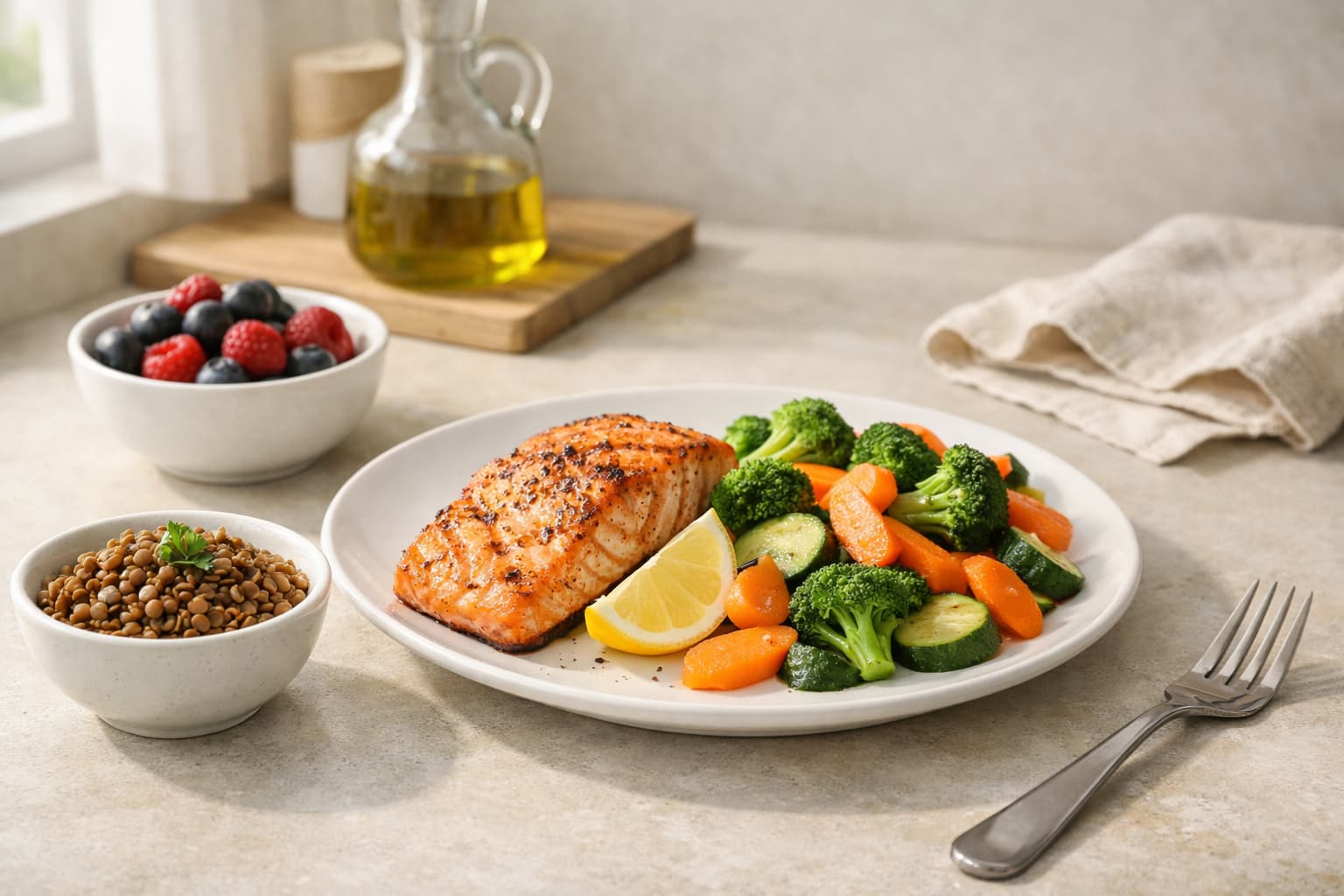
Foods to lower triglycerides most consistently include fatty fish (omega-3s), high-fiber foods (beans, oats, vegetables), and minimally processed meals that keep added sugar, refined carbs, and alcohol low. The goal is a realistic eating pattern you can repeat—because day-to-day choices strongly influence triglyceride levels and overall heart-health habits, as outlined by the National Lipid Association.
What triglycerides are and why they matter for overall wellness
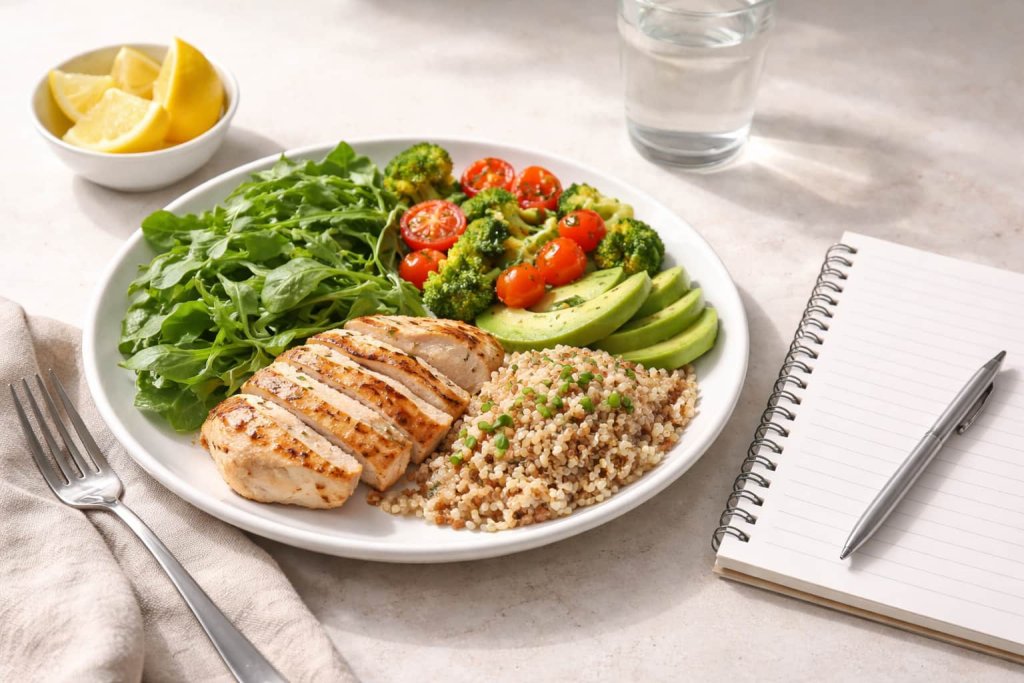
Triglycerides are a type of fat in your blood that your body uses for energy. When levels are high—especially alongside other lipid issues—it can be a sign your current routine (food, drinks, activity, sleep) may need a reset. The CDC explains triglycerides as part of the broader cholesterol picture and why lifestyle habits matter.
A common set of reference ranges used in patient education comes from the National Lipid Association: normal is under 150 mg/dL; 150–199 is borderline; 200–499 is high; and 500+ is very high.
Triglyceride results can look different depending on whether your blood test was done fasting or not. Triglycerides may be higher after eating, especially after a meal or snack that’s higher in refined carbs, added sugar, or alcohol. Some clinics and labs use non-fasting lipid tests, while your clinician may request a fasting test based on your personal history and the kind of follow-up needed. For the most useful picture, avoid self-interpreting a single result—look at patterns over time and review your numbers with your healthcare team, as explained by the CDC.
Foods to lower triglycerides: the highest-impact nutrition moves
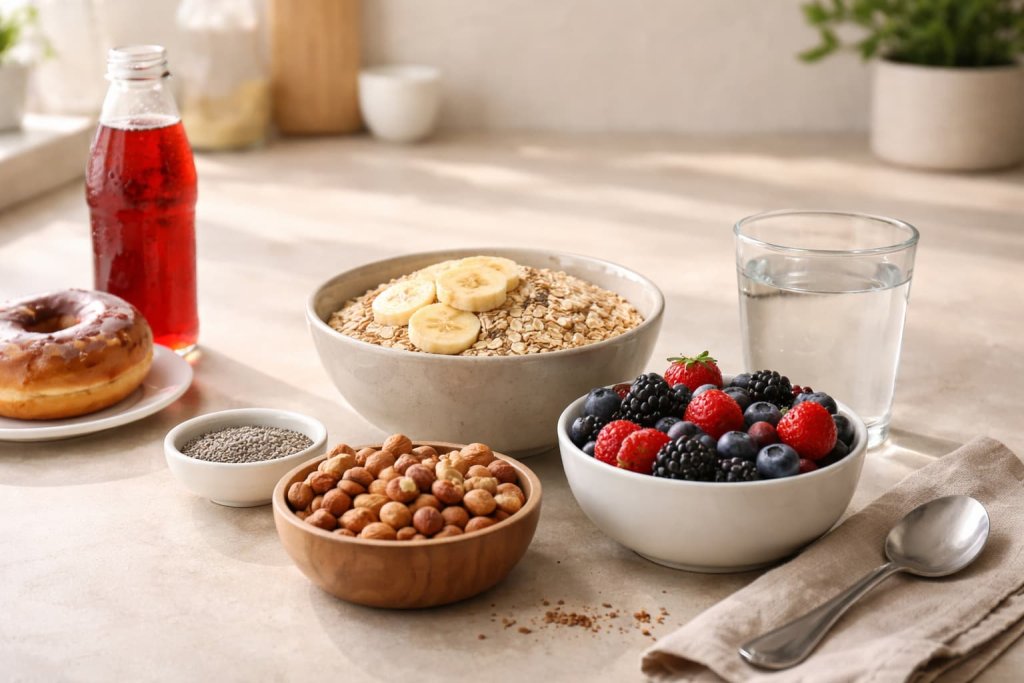
If you want changes that typically make the biggest difference, start here.
Reduce added sugar and sugary drinks first
Added sugar is one of the fastest ways many people accidentally push triglycerides up. A practical target used in triglyceride guidance from the National Lipid Association references the American Heart Association’s daily limit of up to 6 teaspoons for women and 9 teaspoons for men (from added sugars).
Also worth noting from the same triglyceride guidance: limit fruit juice (even 100% juice) to 1/2 cup per day, and choose whole fruit more often.
Swap refined carbs for fiber-rich carbs
Many “carb” foods aren’t equal for triglycerides. Large portions of refined starches (like white bread, white rice, many crackers) can be a problem for some people. The National Lipid Association emphasizes keeping starchy portions smaller and choosing fiber-rich options like oats, dried beans, and peas, plus whole grains when you do choose grains.
Eat fatty fish regularly for omega-3s
Omega-3 fats (EPA and DHA) are strongly linked with lower triglyceride levels. The NIH Office of Dietary Supplements notes that getting more EPA and DHA from foods or supplements lowers triglycerides.
For a simple food-first target, the American Heart Association recommends two servings of fish per week, with a serving about 3 ounces cooked (about ¾ cup flaked fish).
Choose unsaturated fats more often than saturated fats
A triglyceride-friendly pattern usually includes modest portions of healthy fats (like nuts, seeds, avocado, olive/canola oils) and fewer high-saturated-fat choices. The National Lipid Association encourages choosing “healthy fats” and being mindful of high-fat meats and desserts.
Alcohol can raise triglycerides in some people
Alcohol can increase triglycerides noticeably for some people. The National Lipid Association recommends avoiding alcohol or keeping it very limited if triglycerides are elevated.
Best foods to lower triglycerides by category
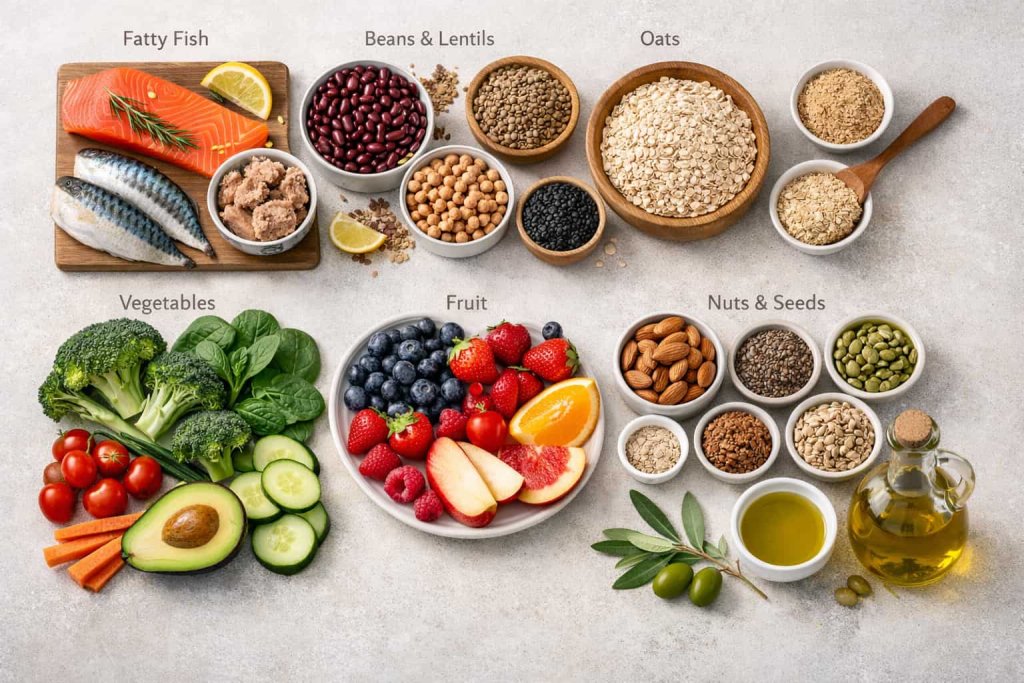
Use this as your “what to eat more often” cheat sheet.
Best picks table
| Category | Best picks (foods to eat more often) | Why it may help (nutrition + overall wellness) |
|---|---|---|
| Fatty fish (omega-3s) | Salmon, sardines, mackerel, herring, trout, anchovies | EPA/DHA omega-3s are linked with lower triglycerides in research summaries from the NIH Office of Dietary Supplements |
| Beans and lentils | Lentils, chickpeas, black beans, kidney beans, split peas | High fiber and plant protein support steadier carb intake and can help replace refined starches recommended to limit by the National Lipid Association |
| Oats and high-fiber cereals | Oatmeal, oat bran, unsweetened high-fiber cereal | Oats are a practical fiber-forward swap for refined breakfast carbs highlighted in triglyceride lifestyle guidance from the National Lipid Association |
| Non-starchy vegetables | Leafy greens, broccoli, cauliflower, peppers, tomatoes, zucchini | Adds volume, fiber, and nutrients with minimal added sugar; supports meal balance emphasized by the CDC |
| Whole fruit (not juice) | Berries, apples, oranges, pears, kiwi, melon | Whole fruit provides fiber; triglyceride lifestyle guidance from the National Lipid Association suggests limiting juice and choosing whole fruit more often |
| Nuts and seeds | Walnuts, almonds, pistachios, chia, flax, pumpkin seeds | Provides unsaturated fats and can replace sugary snacks; aligns with “healthy fats” guidance from the National Lipid Association |
| Healthy oils (measured) | Olive oil, canola oil | Using unsaturated oils in small amounts supports a healthier fat profile, consistent with lifestyle guidance from the National Lipid Association |
| Lower-sugar dairy options | Plain Greek yogurt, plain kefir, cottage cheese (check sodium) | Helps add protein without added sugar (a key TG driver); added sugar limits are emphasized in the National Lipid Association handout |
| Lean protein choices | Skinless poultry, eggs, tofu, tempeh | Supports balanced meals so you rely less on refined carbs; consistent with overall heart-healthy patterns from the American Heart Association |
| Whole grains (portion-aware) | Brown rice, quinoa, barley, 100% whole-wheat pasta/bread | When portions are controlled, whole grains can replace refined grains; TG-focused guidance recommends choosing 100% whole grains and watching starch portions per the National Lipid Association |
Portion sizes matter because even healthy foods can add up fast if servings grow too large. Here are quick, realistic portions to use as a starting point:
- Fatty fish: Aim for 2 servings per week, about 3 oz cooked per serving, as recommended by the American Heart Association.
- Nuts: A small handful (about 1 oz) most days can be a practical swap for sugary snacks.
- Oats: A common portion is ½ cup dry oats (before cooking), then add fiber-rich toppings like berries or chia.
- Beans and lentils: About ½ to 1 cup cooked works well for many meals (salads, bowls, soups).
- Added sugars: Keep them low overall, and avoid sugary drinks as a high-impact first move.
Foods and drinks to limit if triglycerides are high
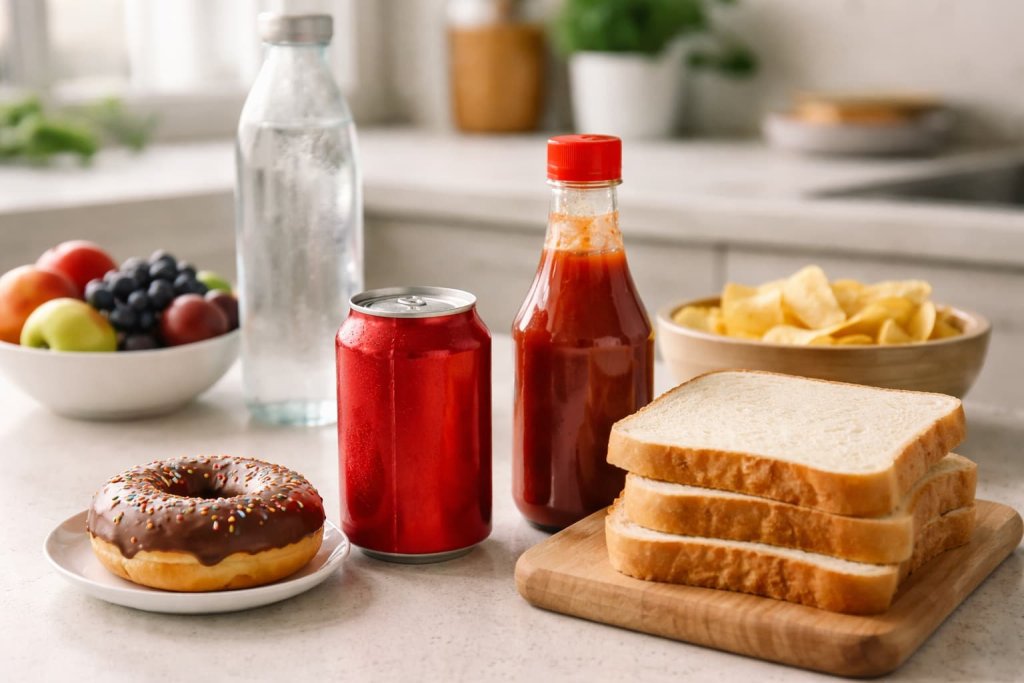
These don’t have to be “never foods,” but they’re often the most powerful levers to adjust.
Quick-reference swaps table
| Often raises triglycerides for many people | Smarter swap that supports lower triglycerides |
|---|---|
| Sugary drinks (soda, sweet tea, energy drinks) | Water, sparkling water, unsweetened tea/coffee |
| Dessert-style snacks (cookies, candy, pastries) | Fruit + nuts, plain yogurt + berries, chia pudding (lightly sweetened) |
| Large portions of refined starches (white bread/rice/pasta, many snack crackers) | Smaller portions + beans/lentils, oats, or more vegetables |
| Fruit juice (even 100% juice) | Whole fruit most days (juice limited to 1/2 cup/day) |
| Alcohol (especially if TGs are elevated) | Skip or keep very limited; choose alcohol-free options |
Even when meals look “healthy,” hidden added sugars and refined carbs can keep triglycerides elevated. Watch for these common everyday sources:
- Sweetened coffee drinks and flavored lattes
- Flavored yogurt and sweetened cereals
- Granola bars and many protein bars
- Ketchup, BBQ sauce, teriyaki, and other sweet sauces
- “Healthy” smoothies that are mostly juice (or large juice portions)
- Large portions of white rice, white bread, pastries, and refined snacks
A simple strategy is to compare labels on similar items (like yogurt or cereal) and choose the option with less added sugar and more fiber—an approach that aligns with heart-healthy prevention guidance from the CDC.
How to build a triglyceride-friendly plate for everyday wellness
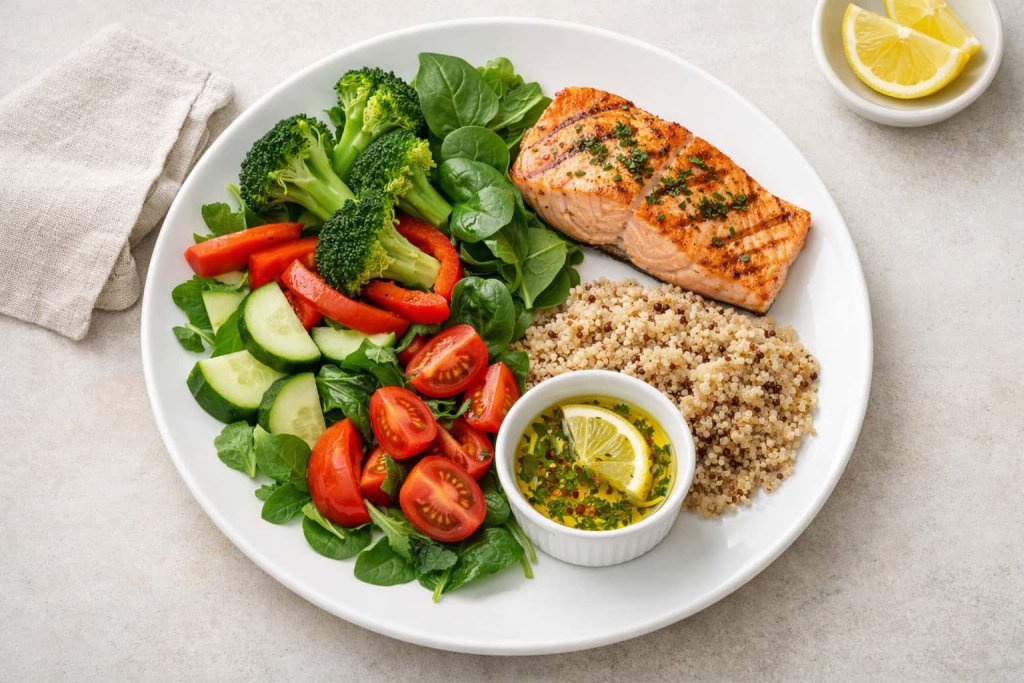
Aim for a simple, repeatable formula:
- Half the plate: non-starchy vegetables (fresh or frozen)
- Protein: fatty fish a couple times per week; otherwise lean proteins (poultry, eggs, tofu)
- Carb choice: beans/lentils or oats often; if using grains, keep portions moderate and choose whole grains
- Fat: a small amount of olive/canola oil, avocado, nuts, or seeds
- Drink: water or unsweetened beverages most of the time
If you want one high-impact “rule,” make it this: build meals around protein + fiber, then keep added sugars low.
If you prefer a “big picture” approach, a Mediterranean-style pattern can be a strong foundation: vegetables, beans/lentils, fish, olive oil, nuts/seeds, fruit, and whole grains in sensible portions, with added sugar kept low. This type of balanced pattern supports overall heart-healthy eating habits and is consistent with food-based guidance from the American Heart Association.
One-day sample menu using foods to lower triglycerides
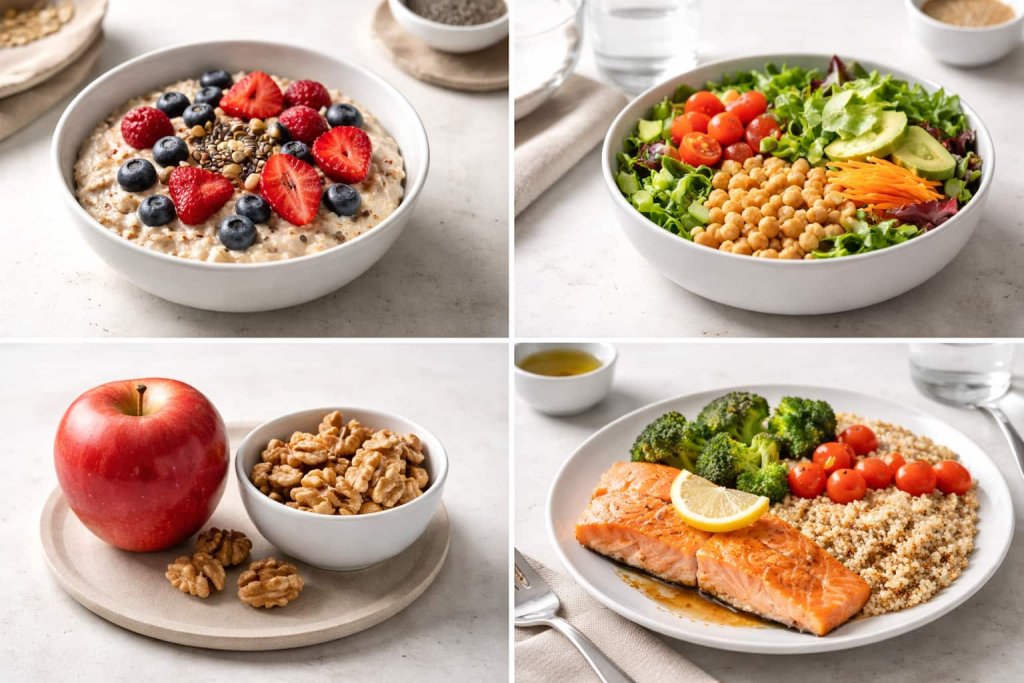
This is an example day you can copy and adjust.
- Breakfast: oatmeal topped with berries + chia/flax + a spoon of peanut butter
- Lunch: big salad bowl with chickpeas or lentils + mixed veggies + olive oil + vinegar
- Snack: apple + a handful of walnuts (or plain yogurt + berries)
- Dinner: 3 oz cooked salmon (or sardines) + roasted vegetables + a small side of brown rice or beans
This lines up with fish serving guidance from the American Heart Association and TG-focused food swaps in the National Lipid Association handout.
Grocery list: best picks to eat more often
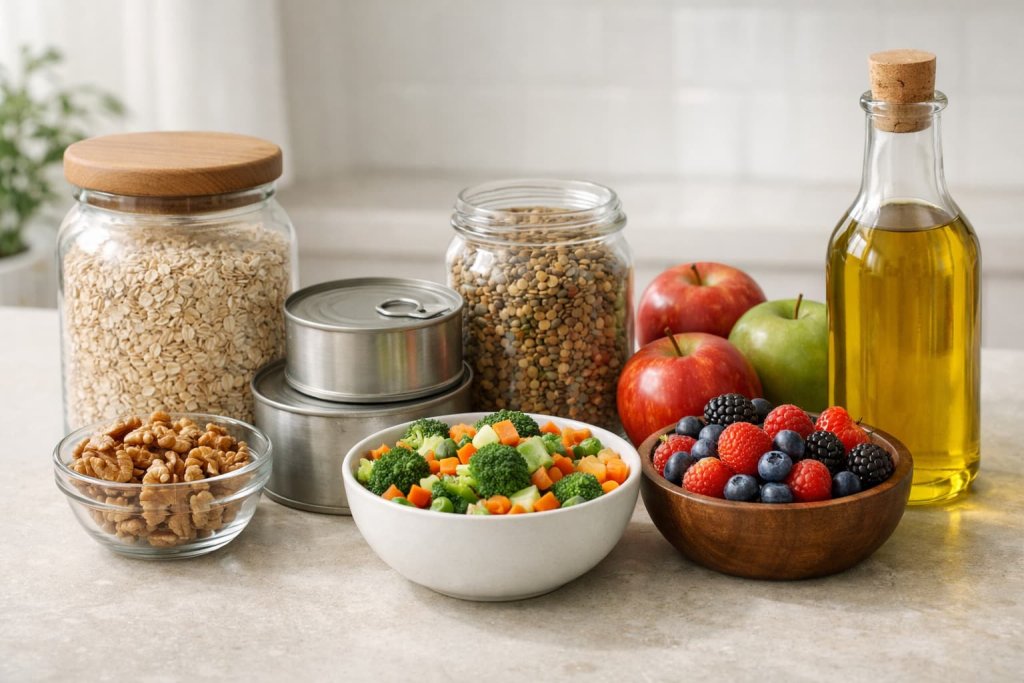
Use this list to make shopping easier:
- Seafood: salmon, sardines, mackerel (fresh/frozen/canned in water)
- Fiber staples: oats, lentils, chickpeas, black beans, split peas
- Vegetables: leafy greens, broccoli, peppers, mixed frozen veggies
- Fruit: berries, apples, oranges, melon
- Healthy fats: walnuts, chia/flax, avocado, olive oil
- Protein basics: eggs, tofu/tempeh, chicken/turkey
- Flavor boosters (help you avoid sugary sauces): lemon/lime, vinegar, garlic, herbs, chili flakes
People also ask about foods to lower triglycerides
What is the fastest diet change that may help lower triglycerides?
For many people, cutting sugary drinks and reducing added sugars is the fastest place to start, followed by smaller portions of refined carbs and adding fatty fish weekly.
Are bananas (or fruit) bad for high triglycerides?
Whole fruit is commonly recommended over juice because fiber helps. The key is portions and overall added sugar intake—juice is easier to overdo, which is why TG guidance often suggests limiting it.
How much fish should I eat for triglycerides?
A simple food-based goal is two servings of fish weekly, with a serving about 3 ounces cooked, per the American Heart Association.
If triglycerides are very high (500+): food priorities
If triglycerides are very high (500+ mg/dL), food choices may need to be more structured while you work with your clinician on next steps. Priorities that are commonly emphasized in triglyceride lifestyle guidance include:
- Avoid alcohol.
- Keep added sugars very low, especially sugary drinks and dessert-style snacks.
- Emphasize simple, minimally processed meals built around vegetables, lean proteins, and fiber-rich foods.
- Follow clinician guidance for testing, follow-up, and individualized recommendations.
These priorities align with lifestyle guidance from the National Lipid Association.
When it’s smart to check in with a clinician
If your triglycerides are very high (especially 500 mg/dL or higher) or you have other risk factors, it’s important to get personalized guidance and lab follow-up. The National Lipid Association ranges highlight when triglycerides are in the very high category.
FAQs
What foods should I avoid most if I’m trying to lower triglycerides?
Most people get the biggest benefit from cutting sugary drinks, desserts, and frequent refined-carb snacks, and being careful with alcohol.
What breakfast is best for high triglycerides?
A fiber-forward breakfast like oatmeal with berries and chia/flax is a strong default because it’s low in added sugar and supports steadier carbs.
Do omega-3 foods really lower triglycerides?
Yes—EPA and DHA intake is linked with lower triglyceride levels, according to the NIH Office of Dietary Supplements.
Is cutting carbs always necessary to lower triglycerides?
Not always. Many people do well by reducing refined carbs and added sugars while keeping fiber-rich carbs (beans, oats, vegetables, whole fruit).
Can I still eat rice or pasta?
You can, but portion size matters. Choosing whole grains and keeping starchy portions smaller is a common approach in triglyceride guidance.
Does weight loss affect triglycerides?
A modest change can matter. The National Lipid Association notes that losing about 5–10% of current weight may lower triglycerides for people who are overweight.
Should I stop alcohol completely?
Some people may need to avoid it, especially if triglycerides are elevated, because alcohol can raise triglycerides.
Conclusion
The most reliable “foods to lower triglycerides” strategy is simple: eat more omega-3 seafood and fiber-rich foods, keep added sugars and refined carbs low, and be cautious with alcohol. Start with one change you can keep this week—like swapping sugary drinks for water and adding one fatty-fish dinner—then build from there.
References
This content is for informational purposes only and not medical advice.