
Compound exercises with dumbbells are one of the most effective ways to build full-body strength because they work multiple muscles and joints at the same time. Instead of isolating one muscle, these movements train the body to move and produce force as a unit, which improves strength, coordination, and efficiency.
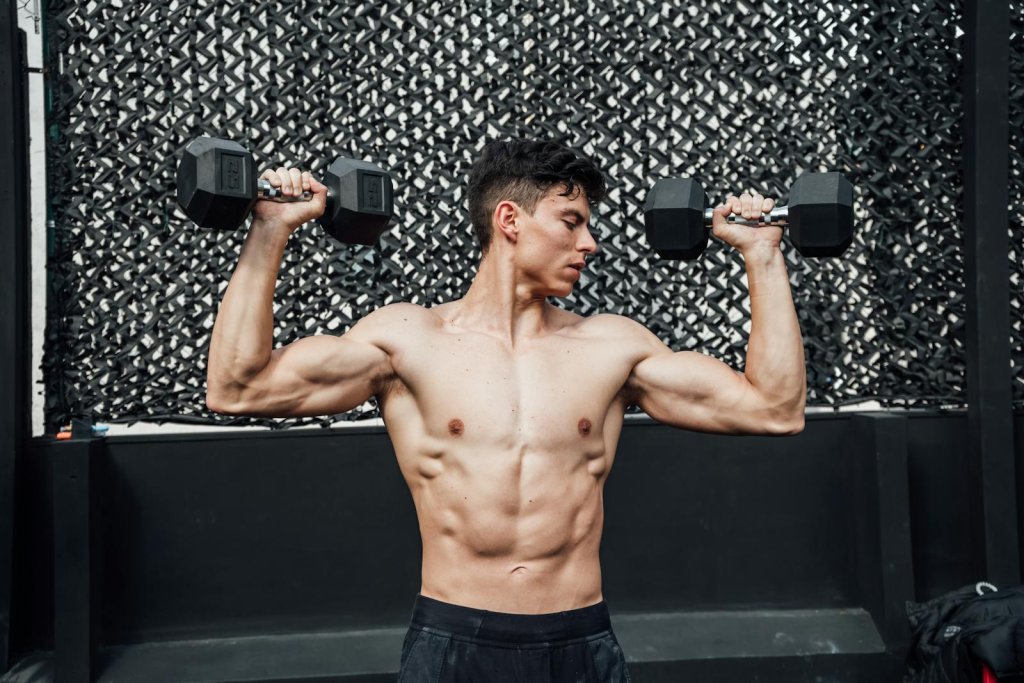
Understanding and using compound dumbbell exercises matters because they allow you to train your entire body with minimal equipment, whether at home or in the gym.
Below, you’ll find the 12 best compound exercises with dumbbells, why they matter, and how to use them safely and effectively.
What Are Compound Exercises With Dumbbells?
Compound exercises with dumbbells are multi-joint movements that engage more than one muscle group at the same time. For example, a dumbbell squat involves the hips, knees, ankles, core, and upper body stabilizers all working together.
Key characteristics include:
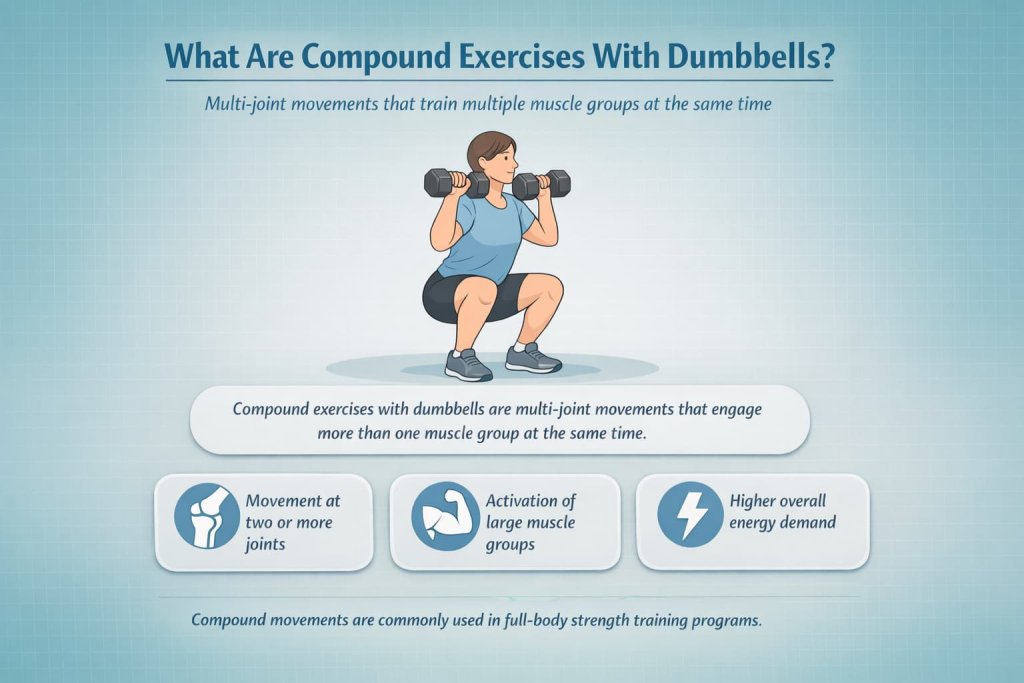
- Movement at two or more joints
- Activation of large muscle groups
- Higher overall energy demand than single-joint exercises
12 Best Compound Dumbbell Exercises
These compound dumbbell exercises work multiple muscle groups at the same time, making them an efficient way to build full-body strength with minimal equipment. They support functional movement, coordination, and balanced muscle development.
1. Dumbbell Goblet Squat
A foundational lower-body exercise that also challenges the core and upper back.
How to do it
- Hold one dumbbell vertically at chest height, close to your body
- Stand with feet shoulder-width apart and toes slightly turned out
- Sit the hips back and down into a squat
- Keep your chest tall and spine neutral
- Press through your heels to return to standing
Why it works
The goblet squat trains multiple joints simultaneously, reinforcing proper squat mechanics while keeping the load centered. Holding the dumbbell in front encourages an upright torso and increases core engagement, making it ideal for full-body strength development.
Muscles worked
Quadriceps, glutes, hamstrings, core, upper back, and hip stabilizers.
Trainer Tip
Think “sit between your hips” rather than straight down to reduce knee strain and improve depth control.
2. Dumbbell Romanian Deadlift
A hip-hinge movement that emphasizes the posterior chain.
How to do it
- Hold dumbbells at your sides with palms facing your thighs
- Soften the knees slightly
- Push the hips backward while keeping the spine neutral
- Lower the dumbbells along the legs until hamstring tension is felt
- Drive the hips forward to stand tall
Why it works
The Romanian deadlift loads the hips through a controlled hinge pattern, strengthening the posterior chain while minimizing knee stress. It reinforces proper lifting mechanics used in many daily and athletic movements.
Muscles worked
Hamstrings, glutes, spinal erectors, and core stabilizers.
Trainer Tip
Stop the descent when your back position changes—range of motion matters less than spinal control.
3. Dumbbell Reverse Lunge
A joint-friendly lunge variation that improves balance and leg strength.
How to do it
- Hold dumbbells at your sides
- Step one leg backward into a lunge
- Lower until both knees are bent comfortably
- Keep the torso upright
- Push through the front foot to return
Why it works
Stepping backward reduces forward knee stress while still loading the hips and thighs. The unilateral nature of the movement challenges balance and coordination, supporting functional lower-body strength.
Muscles worked
Glutes, quadriceps, hamstrings, calves, and core stabilizers.
Trainer Tip
Keep most of your weight over the front leg to maximize glute engagement.
4. Dumbbell Step-Up
A functional movement that mimics stair climbing.
How to do it
- Hold dumbbells at your sides
- Place one foot fully on a sturdy box or bench
- Drive through the elevated leg to stand up
- Bring the trailing leg up under control
- Step back down slowly
Why it works
Step-ups reinforce unilateral leg strength and hip stability while closely resembling real-world movements like stair climbing. They also help address side-to-side strength imbalances.
Muscles worked
Glutes, quadriceps, hamstrings, calves, and core.
Trainer Tip
Avoid pushing off the bottom leg—let the working leg do the work.
5. Dumbbell Deadlift
A full-body lift that reinforces proper lifting mechanics.
How to do it
- Place dumbbells on the floor near your feet
- Hinge at the hips and bend the knees
- Grip the dumbbells firmly
- Drive through the feet to stand up
- Maintain a neutral spine throughout
Why it works
The dumbbell deadlift trains coordinated force production through the hips, knees, and core. It reinforces safe lifting patterns used in daily activities such as picking objects up from the floor.
Muscles worked
Glutes, hamstrings, quadriceps, back muscles, core, and grip.
Trainer Tip
Think “push the floor away” rather than pulling with your back.
6. Dumbbell Bench Press
A compound upper-body pushing exercise.
How to do it
- Lie flat on a bench holding dumbbells at chest level
- Keep feet planted firmly on the floor
- Press the dumbbells upward until arms are extended
- Lower them slowly with control
Why it works
Dumbbells allow each arm to move independently, improving muscular balance and shoulder stability compared to fixed-bar movements.
Muscles worked
Chest, shoulders, triceps, and core stabilizers.
Trainer Tip
Lower the dumbbells slightly wider than the shoulders to protect the joints.
7. Dumbbell Floor Press
A shoulder-friendly alternative to the bench press.
How to do it
- Lie on your back on the floor with knees bent
- Hold dumbbells with elbows resting on the floor
- Press the dumbbells upward
- Lower until elbows gently touch the floor
Why it works
The floor limits shoulder extension, reducing strain while still allowing heavy pressing. This makes it useful for people with shoulder mobility limitations.
Muscles worked
Chest, triceps, shoulders, and core.
Trainer Tip
Pause briefly at the bottom to eliminate momentum.
8. Dumbbell Overhead Press
A key movement for shoulder and upper-body strength.
How to do it
- Hold dumbbells at shoulder height
- Brace the core and glutes
- Press the dumbbells overhead
- Lower slowly back to shoulder level
Why it works
Overhead pressing challenges shoulder strength while requiring full-body stabilization, particularly through the core and hips.
Muscles worked
Shoulders, triceps, upper chest, and core.
Trainer Tip
Avoid leaning back—ribs should stay stacked over hips.
9. Dumbbell Push Press
A power-focused version of the overhead press.
How to do it
- Hold dumbbells at shoulder height
- Dip slightly at the knees and hips
- Drive upward using the legs
- Press the dumbbells overhead
- Return under control
Why it works
The push press trains force transfer from the lower body to the upper body, improving power and coordination.
Muscles worked
Glutes, quadriceps, shoulders, triceps, and core.
Trainer Tip
The leg drive should be quick and controlled, not a squat.
10. One-Arm Dumbbell Row
A classic pulling exercise that builds back strength.
How to do it
- Place one hand and knee on a bench
- Hold the dumbbell in the opposite hand
- Pull the dumbbell toward your hip
- Lower slowly with control
Why it works
Single-arm rowing allows greater focus on each side of the back while challenging core stability and posture.
Muscles worked
Upper back, lats, rear shoulders, biceps, and core.
Trainer Tip
Lead with the elbow, not the hand, to improve back activation.
11. Renegade Row
A demanding core and upper-body compound exercise.
How to do it
- Start in a plank position holding dumbbells
- Feet slightly wider for stability
- Row one dumbbell at a time
- Keep hips and shoulders square
Why it works
Renegade rows combine pulling strength with anti-rotation core control, making them highly effective for total-body conditioning.
Muscles worked
Back, shoulders, arms, core, and glutes.
Trainer Tip
Reduce weight if your hips rotate excessively.
12. Dumbbell Farmer Carry
A simple but powerful full-body exercise.
How to do it
- Hold heavy dumbbells at your sides
- Stand tall with shoulders relaxed
- Walk forward with controlled steps
- Maintain upright posture
Why it works
Farmer carries build strength through sustained tension, improving grip, posture, and core stability simultaneously.
Muscles worked
Grip, forearms, shoulders, core, glutes, and legs.
Trainer Tip
Short, controlled steps help maintain posture and balance.
Who Should Use Compound Dumbbell Exercises
Compound dumbbell exercises are suitable for many fitness levels because they can be adjusted by weight, range of motion, and pace.
They are commonly used by:
- Beginners learning basic movement patterns
- Intermediate and advanced lifters seeking efficient full-body training
- Home exercisers with limited equipment
- Adults aiming to improve functional strength for daily activities
Individual ability, movement quality, and health status should always guide exercise selection.
Safety Guidelines Before You Start
Following basic safety principles helps reduce injury risk and supports long-term progress.
- Warm up with light cardio and dynamic mobility
- Choose weights you can control with good form
- Maintain a neutral spine during squats, hinges, and presses
- Move with control and avoid rushing repetitions
- Allow rest days between demanding full-body sessions
Stop exercising if you experience sharp pain, dizziness, or joint discomfort.
How to Program Compound Dumbbell Exercises
Compound dumbbell exercises fit well into most strength-training routines.
General programming guidelines include:
- Train 2–3 days per week
- Perform 6–10 compound exercises per session
- Use 2–4 sets of 8–12 reps for general strength
- Increase load or volume gradually as control improves
Beginners often benefit from full-body workouts, while experienced lifters may use split routines.
Common Mistakes to Avoid
Avoiding common errors helps keep training effective and safe.
- Using weights that are too heavy
- Sacrificing form for speed or repetitions
- Rounding the back during deadlifts or rows
- Overarching the lower back during overhead presses
- Skipping warm-ups or recovery days
Focus on quality movement and consistency rather than maximal load.
When to Seek Professional Guidance
Professional guidance may be helpful in certain situations.
Consider consulting a qualified professional if you:
- Have a history of joint or back injuries
- Experience ongoing pain during exercise
- Are returning after surgery or a long break
- Have a medical condition affecting movement
- Are unsure about proper technique or progression
Early guidance can support safe training and long-term strength development.
Frequently Asked Questions
Are compound dumbbell exercises enough for a full workout?
Yes. When properly programmed, they can train all major muscle groups effectively.
Can beginners do compound exercises with dumbbells?
Yes, dumbbells are often more beginner-friendly than barbells because they allow natural movement patterns.
How heavy should the dumbbells be?
Choose a weight that allows good form while still feeling challenging by the last few reps.
Are compound exercises better than isolation exercises?
They are more efficient, but isolation exercises can still be useful as accessories.
Can I build muscle with dumbbells only?
Yes. Progressive overload with dumbbells can build strength and muscle effectively.
How often should I train with compound exercises?
Most guidelines recommend at least two days per week.
Conclusion
Compound exercises with dumbbells offer an efficient, versatile, and evidence-based way to build full-body strength. By training multiple muscles at once, they help you get more results in less time while supporting functional movement and long-term health.
If you want a simple, equipment-light approach to strength training, start building your workouts around these compound dumbbell exercises and progress them consistently over time.
References
- CDC Physical Activity Guidelines for Adults
- WHO Physical Activity Recommendations (BeHealthy)
- Physical Activity Guidelines for Americans, 2nd edition (Official PDF)
- ACSM Position Stand: Progression Models in Resistance Training for Healthy Adults (PubMed)
- Mayo Clinic Strength Training: Benefits and Safety