
Compound exercises are multi-joint movements that work multiple muscle groups at the same time, making them the most efficient way to build full-body strength and muscle.
If you want better results in less time, compound exercises should be the foundation of your training program.
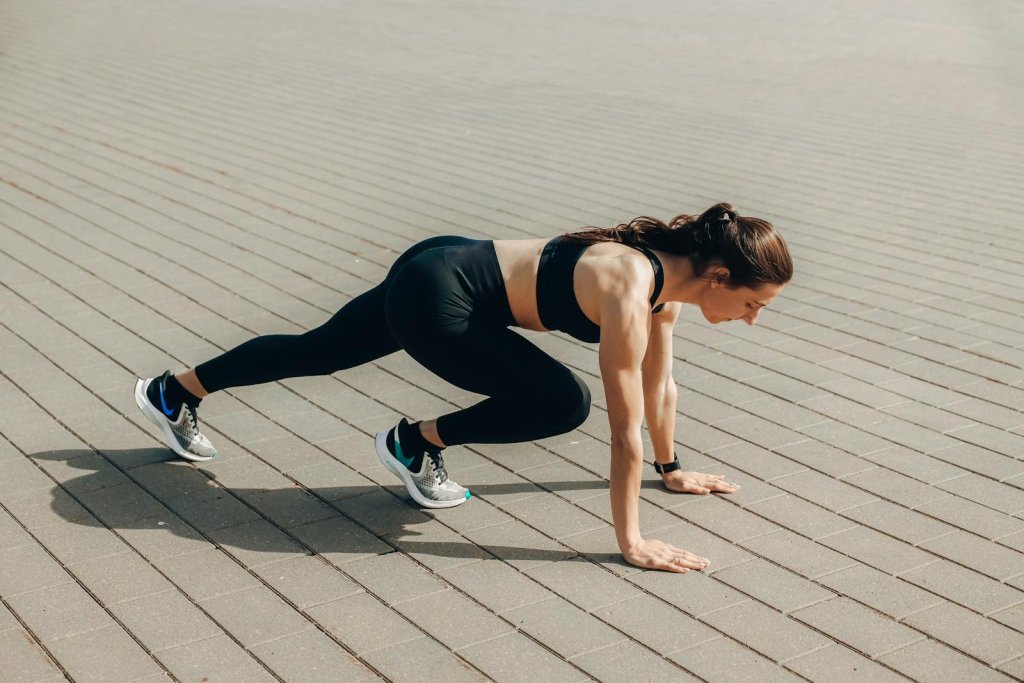
Understanding compound exercises matters because they:
- Train large muscle groups together
- Improve real-world strength and coordination
- Save time compared to isolation-only workouts
- Align with evidence-based strength-training guidelines
Major organizations such as the American College of Sports Medicine (ACSM) and the World Health Organization (WHO) recommend prioritizing multi-joint, full-body movements as part of regular strength training for adults.
What Are Compound Exercises?
Compound exercises are strength-training movements that involve two or more joints and multiple muscle groups working together in one exercise.
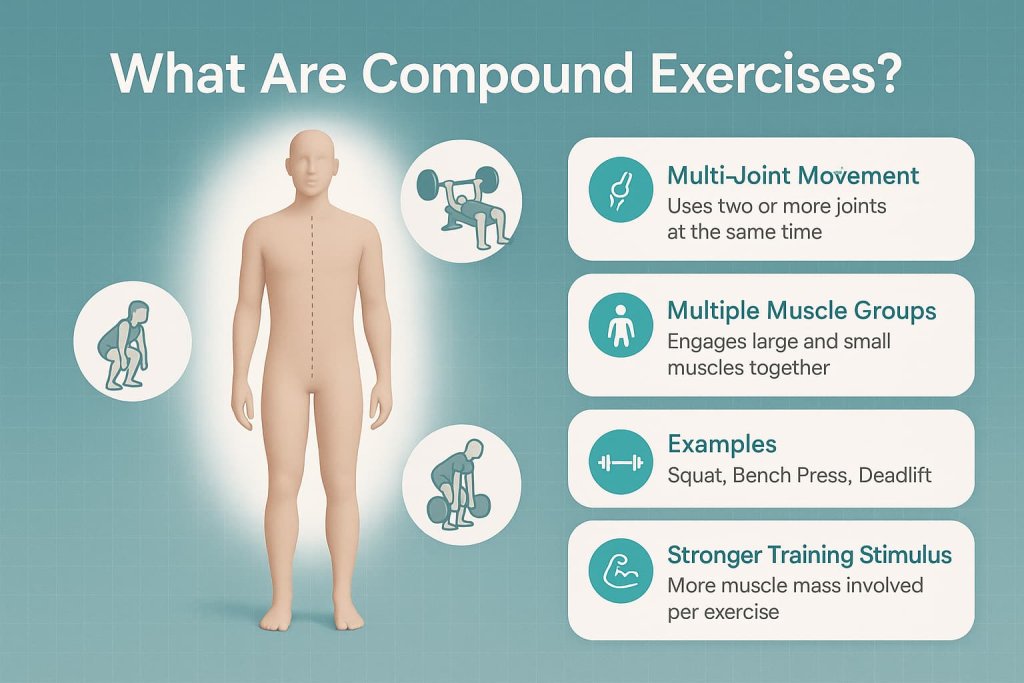
Examples:
- Squat → hips, knees, ankles
- Bench press → shoulders, elbows
- Deadlift → hips, knees, spine (stabilized)
Because they recruit more muscle mass, compound exercises create a stronger training stimulus than single-joint (isolation) exercises.
Why Compound Exercises Are So Effective
Compound exercises are considered the backbone of strength training because they may help support:
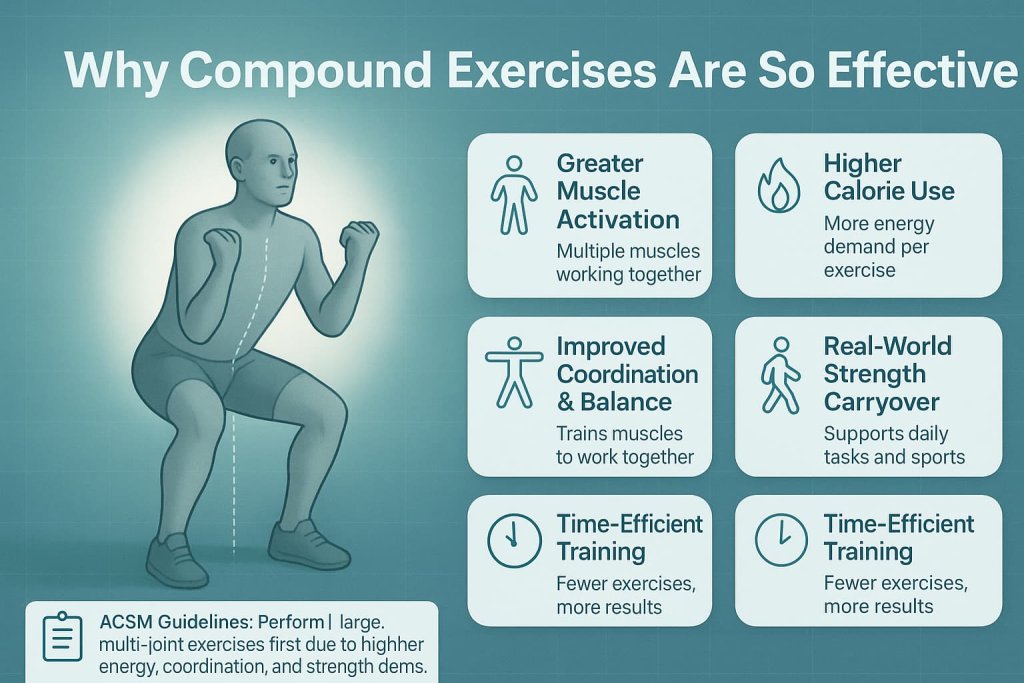
- Greater overall muscle activation
- Higher calorie expenditure per exercise
- Improved coordination and balance
- Better carryover to daily activities and sports
- More efficient workouts with fewer exercises
According to ACSM resistance-training guidelines, large, multi-joint exercises should be performed first in a workout because they require more energy, coordination, and strength.
16 Best Compound Exercises for Full-Body Strength and Muscle
Compound exercises train multiple muscle groups at once, making them highly efficient for building full-body strength and muscle. By prioritizing these multi-joint movements, you get more results with less time compared to isolation-only training.
1. Back Squat
Why it works:
The back squat is a foundational lower-body compound exercise that trains multiple joints simultaneously. It develops strength through the hips and knees while demanding core stability and upper-body control to maintain proper posture under load.
Muscles worked:
Gluteus maximus, quadriceps, hamstrings, adductors, erector spinae, and deep core stabilizers.
How to do it:
- Place the barbell across the upper back, not the neck
- Stand with feet shoulder-width apart
- Brace your core and keep your chest tall
- Sit back and down by bending hips and knees
- Lower until thighs are at least parallel to the floor
- Push through your heels to stand back up
Trainer Tip:
Keep your knees tracking over your toes and maintain a neutral spine throughout the movement to reduce unnecessary stress on the lower back.
2. Front Squat
Why it works:
The front squat shifts the load forward, increasing quad and core demand while encouraging a more upright torso. This makes it excellent for improving posture and knee-dominant strength.
Muscles worked:
Quadriceps, glutes, core stabilizers, upper back, and spinal erectors.
How to do it:
- Rest the bar on the front of your shoulders
- Keep elbows high and chest upright
- Stand with feet shoulder-width apart
- Sit straight down between your hips
- Drive through midfoot to stand
Trainer Tip:
If wrist mobility limits your grip, use a crossed-arm or strap-assisted grip to maintain proper bar position.
3. Deadlift
Why it works:
The deadlift trains the body to generate force from the ground using a hip hinge pattern. It builds full-body strength while reinforcing safe lifting mechanics used in daily life.
Muscles worked:
Glutes, hamstrings, erector spinae, lats, traps, core, and grip muscles.
How to do it:
- Stand with feet hip-width and bar over midfoot
- Grip the bar just outside your legs
- Brace your core and flatten your back
- Push the floor away while extending hips and knees
- Stand tall, then lower the bar with control
Trainer Tip:
Think “push the floor away” rather than pulling the bar to maintain proper leg drive.
4. Romanian Deadlift
Why it works:
The Romanian deadlift emphasizes controlled hip hinging with minimal knee bend, making it ideal for strengthening the posterior chain and improving hamstring flexibility.
Muscles worked:
Hamstrings, glutes, adductors, erector spinae, and core stabilizers.
How to do it:
- Hold the barbell at hip height
- Keep knees slightly bent
- Hinge at the hips while pushing them backward
- Lower the bar along your thighs and shins
- Drive hips forward to return upright
Trainer Tip:
Stop lowering when you feel a strong hamstring stretch—range of motion matters more than depth.
5. Hip Thrust
Why it works:
Hip thrusts place the glutes in a mechanically advantageous position, allowing strong activation through full hip extension without excessive spinal load.
Muscles worked:
Gluteus maximus, hamstrings, adductors, and core.
How to do it:
- Sit with upper back against a bench
- Place feet flat and knees bent
- Rest weight across hips if used
- Drive hips upward by squeezing glutes
- Lower hips under control
Trainer Tip:
Pause briefly at the top to maximize glute engagement and avoid overextending the lower back.
6. Walking Lunge
Why it works:
Walking lunges challenge unilateral strength, coordination, and balance while closely mimicking real-life stepping and gait patterns.
Muscles worked:
Glutes, quadriceps, hamstrings, calves, and core stabilizers.
How to do it:
- Step forward with one leg
- Lower hips until both knees bend
- Push through the front heel to stand
- Step forward with the opposite leg
- Continue alternating
Trainer Tip:
Keep your torso upright and avoid letting the front knee collapse inward.
7. Step-Up
Why it works:
Step-ups reinforce single-leg strength and joint control while reducing impact stress, making them effective and joint-friendly.
Muscles worked:
Glutes, quadriceps, hamstrings, calves, and core.
How to do it:
- Place one foot fully on a step or box
- Push through the heel to rise up
- Bring the other foot up
- Step back down with control
- Repeat on both sides
Trainer Tip:
Use a box height that allows control—higher is not always better.
8. Bulgarian Split Squat
Why it works:
This exercise increases muscle demand through an extended range of motion while improving balance and unilateral strength.
Muscles worked:
Glutes, quadriceps, hamstrings, adductors, and core.
How to do it:
- Place rear foot on a bench
- Stand tall with front foot planted
- Lower hips straight down
- Push through the front heel to rise
- Repeat before switching sides
Trainer Tip:
A slight forward torso lean increases glute involvement without compromising balance.
9. Bench Press
Why it works:
The bench press is a cornerstone upper-body pushing movement that allows progressive loading and measurable strength gains.
Muscles worked:
Chest (pectoralis major), triceps, anterior deltoids, and core stabilizers.
How to do it:
- Lie flat with feet planted
- Grip bar slightly wider than shoulders
- Lower bar to mid-chest
- Press upward until arms extend
- Control the bar throughout
Trainer Tip:
Keep shoulder blades tucked to protect the shoulders and improve pressing strength.
10. Push-Up
Why it works:
Push-ups train pressing strength while demanding core stability and full-body control using only bodyweight.
Muscles worked:
Chest, shoulders, triceps, core, and glutes.
How to do it:
- Start in a plank position
- Keep body straight from head to heels
- Lower chest toward the floor
- Press back up with control
Trainer Tip:
If full push-ups are difficult, elevate hands or drop to knees while maintaining good form.
11. Overhead Press
Why it works:
The overhead press builds shoulder strength while challenging core stability and total-body tension.
Muscles worked:
Deltoids, triceps, upper chest, traps, and core.
How to do it:
- Hold bar at shoulder height
- Brace core and squeeze glutes
- Press bar overhead in a straight path
- Lower under control
Trainer Tip:
Avoid excessive lower-back arching by keeping ribs down and core engaged.
12. Dips (Assisted if Needed)
Why it works:
Dips heavily load the upper body through a deep pressing range, making them highly effective for strength development.
Muscles worked:
Chest, triceps, shoulders, and core.
How to do it:
- Support body on parallel bars
- Lower body by bending elbows
- Push back up until arms straighten
- Use assistance if needed
Trainer Tip:
Lean slightly forward for more chest emphasis, or stay upright for triceps focus.
13. Pull-Up or Chin-Up
Why it works:
These vertical pulling movements develop upper-body strength and grip while reinforcing shoulder stability.
Muscles worked:
Latissimus dorsi, upper back, biceps, forearms, and core.
How to do it:
- Hang from bar with firm grip
- Pull chest toward the bar
- Lower slowly under control
- Use bands if needed
Trainer Tip:
Focus on pulling elbows down rather than just lifting your chin.
14. Barbell Row
Why it works:
Rows strengthen the upper back and improve posture while balancing pressing-heavy training programs.
Muscles worked:
Lats, rhomboids, traps, rear delts, biceps, and core.
How to do it:
- Hinge forward with neutral spine
- Pull bar toward lower ribs
- Squeeze shoulder blades
- Lower bar with control
Trainer Tip:
Avoid jerking the weight—controlled reps build better back engagement.
15. Inverted Row
Why it works:
Inverted rows are a scalable bodyweight pulling exercise that builds strength and confidence for pull-ups.
Muscles worked:
Upper back, lats, biceps, rear delts, and core.
How to do it:
- Lie under a bar or rings
- Keep body straight
- Pull chest toward the bar
- Lower slowly
Trainer Tip:
Bend knees to reduce difficulty or elevate feet to increase challenge.
16. Kettlebell Swing
Why it works:
The kettlebell swing trains explosive hip extension and conditioning while reinforcing proper hinge mechanics.
Muscles worked:
Glutes, hamstrings, core, lower back, and grip.
How to do it:
- Stand with kettlebell between feet
- Hinge hips back
- Drive hips forward explosively
- Let bell swing to chest height
Trainer Tip:
The swing is powered by hips—not arms. Think “snap the hips.”
How to Program Compound Exercises in a Weekly Workout
Compound exercises work best when they form the foundation of your training plan.
- Train compound lifts 2–4 days per week
- Perform them early in each workout
- Include squat, hinge, push, and pull patterns
- Use 3–4 sets of 6–12 reps for general muscle building
- Rest 1–3 minutes between sets
Isolation exercises can be added afterward for extra muscle focus if needed.
Compound Exercises vs Isolation Exercises
| Compound Exercises | Isolation Exercises |
|---|---|
| Work multiple muscles at once | Target one primary muscle |
| More time-efficient | Useful for muscle-specific focus |
| Improve functional strength | Helpful for symmetry or rehab |
| Higher systemic demand | Lower overall fatigue |
Best practice:
Use compound exercises as your foundation, then add isolation exercises if you need extra focus on specific muscles.
How to Use Compound Exercises Safely and Effectively
Compound exercises place higher demands on your joints and nervous system, so good technique and controlled progression are essential.
- Warm up joints and muscles before lifting
- Use proper form before increasing weight
- Start with manageable loads you can fully control
- Move through a comfortable, pain-free range
- Brace your core during squats, hinges, and presses
- Progress gradually and allow recovery between sessions
Stop any exercise that causes sharp pain or loss of control, and seek professional guidance if you have existing injuries.
Who Should Focus on Compound Exercises?
Compound exercises are suitable for:
- Beginners building a strength foundation
- Intermediate and advanced lifters
- Older adults (with appropriate modifications)
- Athletes and general fitness enthusiasts
They can be adapted using bodyweight, dumbbells, barbells, machines, or resistance bands.
Frequently Asked Questions (FAQs)
Are compound exercises better than isolation exercises?
Compound exercises are more time-efficient and train multiple muscles at once, but isolation exercises can still be useful for targeted development.
Can beginners do compound exercises?
Yes. Beginners should start with bodyweight or light loads and focus on technique before progressing.
Do compound exercises help with fat loss?
They may support fat loss by increasing calorie expenditure and preserving muscle when combined with proper nutrition.
How many compound exercises should I do per workout?
Most workouts include 3–6 compound movements, depending on training goals and experience level.
Are compound exercises safe for older adults?
Yes, when properly modified and performed with good technique. Chair-assisted and machine variations are often appropriate.
Can I build muscle using only compound exercises?
Many people can build significant muscle using mostly compound exercises, especially in the early and intermediate stages.
Conclusion
Compound exercises are the most effective and efficient way to build full-body strength, muscle, and functional fitness. By prioritizing multi-joint movements, you train more muscles in less time while following evidence-based training principles.
If your goal is better results with smarter training, make compound exercises the foundation of your workout program.
References
- ACSM Position Stand: Progression Models in Resistance Training for Healthy Adults (PubMed)
- WHO 2020 Guidelines on Physical Activity and Sedentary Behaviour (BJSM, 2020)
- Physical Activity Guidelines for Americans (Piercy et al., 2018 — PubMed)
- Single vs. Multi-Joint Resistance Exercises (Gentil et al., 2015 — Free Full Text)
- Single-Joint vs Multi-Joint Training Effects (Paoli et al., 2017 — Frontiers in Physiology)
- Harvard Health: Guide to Starting a Strength Training Program
- Harvard T.H. Chan: Strength Training Benefits and Evidence