
Multifidus exercises are spine-stability drills that train a deep back muscle (the lumbar multifidus) to help control small, segment-by-segment motion of your lower spine.
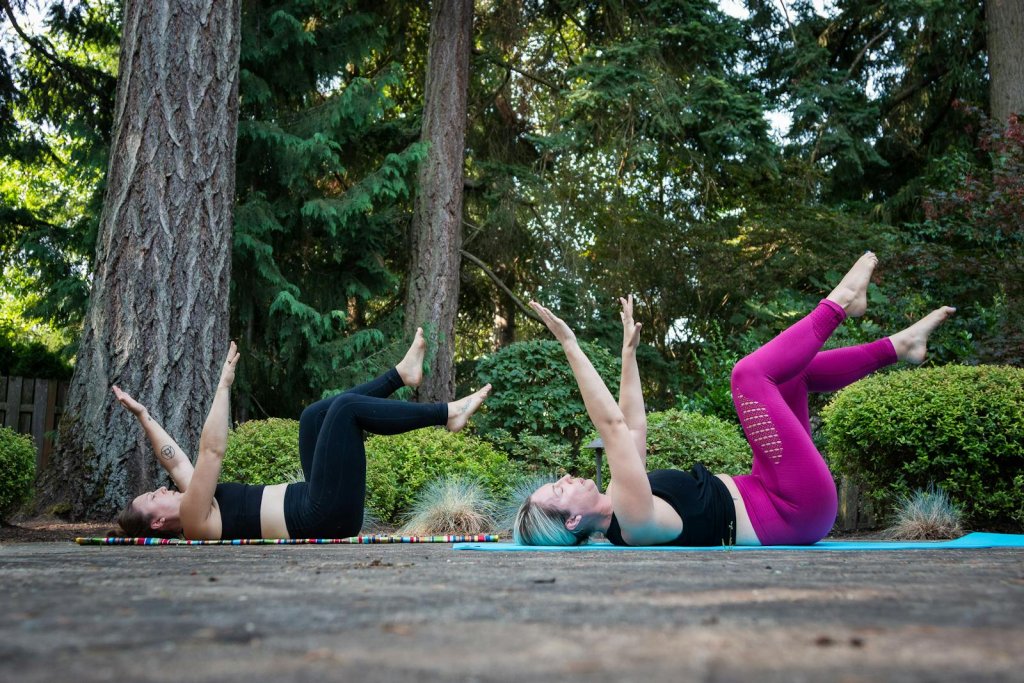
This matters because many evidence-based low back pain rehabilitation programs use trunk muscle activation and movement-control strategies to improve function and build a more resilient core system. Clinical practice guidelines published by the Journal of Orthopaedic & Sports Physical Therapy explain how physical therapists apply these approaches in people with low back pain.
What the multifidus does and why it matters
The lumbar multifidus sits close to the spine and contributes to segmental stability during everyday movements such as bending, lifting, walking, and changing direction. Research summarized by the National Institutes of Health describes how changes in multifidus structure and activation are commonly discussed in relation to low back pain and spinal control.
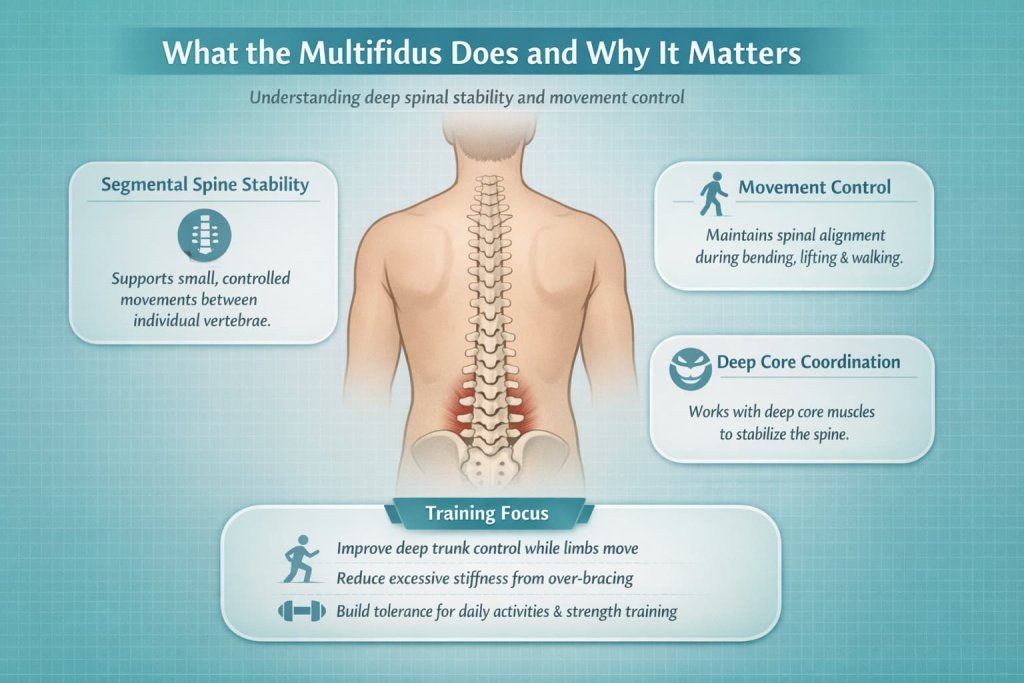
Multifidus-focused training typically aims to:
- Improve deep trunk control while limbs move
- Reduce excessive stiffness from over-bracing
- Build tolerance for daily activities and strength training
Who should be careful before doing multifidus exercises
Most people can begin with low-intensity stability drills, but caution is appropriate if you have:
- New, severe, or worsening back pain
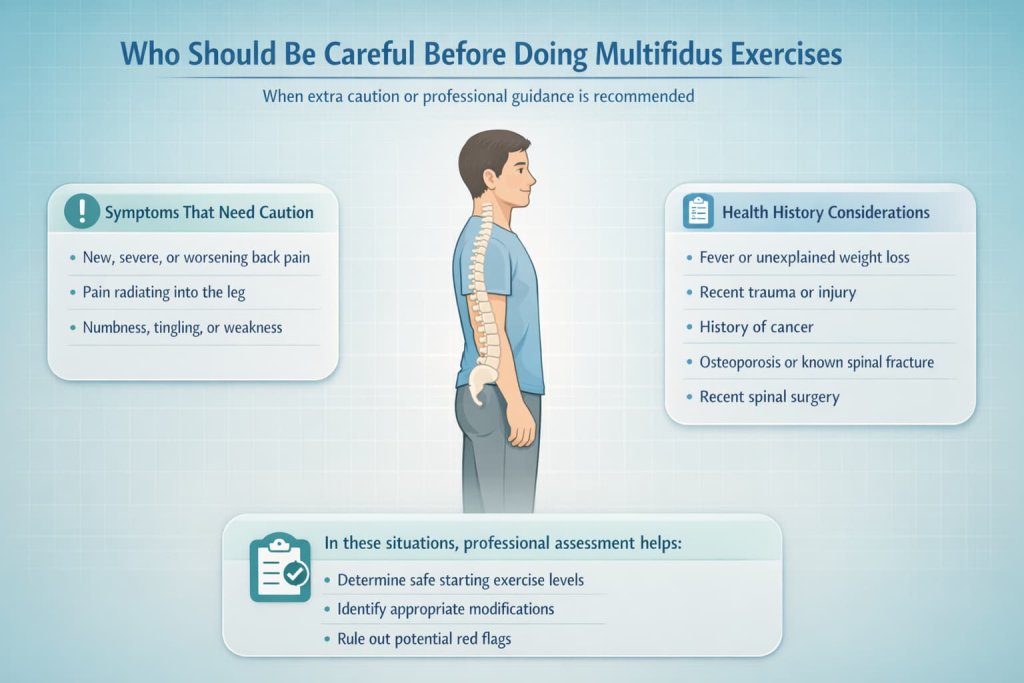
- Pain radiating into the leg with numbness, tingling, or weakness
- Fever, unexplained weight loss, recent trauma, or a history of cancer
- Osteoporosis, recent spinal surgery, or known spinal fracture
In these situations, professional assessment helps determine safe starting levels and rule out red flags.
8 Best Multifidus Exercises
These eight exercises focus on improving deep spinal control and stability through slow, precise movement.
Use them to build a stronger foundation for posture, daily activities, and safe lifting mechanics.
1) Quadruped abdominal brace
How to do it
- Get on hands and knees with shoulders stacked over hands and hips over knees
- Inhale gently through the nose to prepare
- Exhale slowly and lightly tighten around the waist without flattening or arching the lower back
- Keep the spine neutral and the neck long, eyes looking down
- Hold the brace for 5–10 seconds while breathing normally
- Relax and repeat for 5–8 controlled holds
Why it works
This exercise builds foundational spinal control by teaching the nervous system to stabilize the spine while breathing. It emphasizes low-level, sustained activation of the deep stabilizers rather than high-force bracing, which is essential for everyday posture and movement efficiency.
Trainer Tip
Think of gently tightening a belt one notch rather than pulling your stomach in hard. If your lower back sags or rounds, shorten the hold and reset your rib position before continuing.
2) Bird dog
How to do it
- Start on hands and knees in neutral spinal alignment
- Brace lightly without holding your breath
- Extend one leg straight back while keeping hips level
- Add the opposite arm only if balance and control are maintained
- Hold 5–8 seconds with steady breathing
- Switch sides and perform 6–10 reps per side
Why it works
Bird dog variations challenge the spine to remain stable while the limbs move, which closely mirrors real-life demands. This coordinated control places meaningful demand on the multifidus to resist rotation and extension, reinforcing spinal stability during dynamic tasks.
Trainer Tip
Prioritize spinal length and balance over limb height. A lower, more controlled leg position often improves multifidus engagement.
3) Heel slide
How to do it
- Lie on your back with knees bent and feet flat
- Find a neutral pelvis, avoiding forced flattening
- Gently brace the core without holding your breath
- Slowly slide one heel away from the body
- Stop the movement before the lower back changes position
- Return to start and alternate for 8–12 reps per side
Why it works
Heel slides train spinal control with very low load, making them ideal for beginners or people with sensitive backs. The exercise teaches the multifidus to stabilize the spine while the legs move independently.
Trainer Tip
Move slowly and keep the slide short. Loss of spinal control means the range is too large.
4) Dead bug (leg-lowering)
How to do it
- Lie on your back with hips and knees bent to 90 degrees
- Brace gently and keep ribs stacked over the pelvis
- Slowly lower one heel toward the floor with control
- Pause briefly, then return to the starting position
- Alternate sides for 6–10 reps per side
Why it works
Dead bug variations challenge anti-extension control, requiring the multifidus and deep core to prevent unwanted spinal movement as the legs lower. This improves coordination between breathing, core stability, and limb motion.
Trainer Tip
Lower the leg only as far as you can without arching the lower back. Smaller ranges build better control.
5) Bridge with rib control
How to do it
- Lie on your back with knees bent and feet hip-width apart
- Stack ribs over pelvis before lifting
- Press through the heels and lift hips until shoulders, hips, and knees align
- Pause briefly at the top
- Lower slowly with control
- Perform 8–12 repetitions
Why it works
This bridge variation strengthens the hips while reinforcing lumbar stability. The multifidus works to maintain spinal alignment as the glutes generate hip extension.
Trainer Tip
Stop lifting as soon as you feel the lower back arch. The goal is hip movement, not spinal extension.
6) Side plank (short lever)
How to do it
- Lie on your side with knees bent
- Support your upper body on the forearm with elbow under shoulder
- Lift hips to form a straight line from shoulders to knees
- Hold 10–20 seconds with steady breathing
- Repeat 2–4 times per side
Why it works
Side planks train lateral trunk stability and anti-rotation control. This complements multifidus function by improving the spine’s ability to stay aligned during side-to-side and rotational forces.
Trainer Tip
Maintain clean alignment rather than chasing longer hold times. Quality always comes first.
7) Standing hip hinge with dowel
How to do it
- Hold a dowel touching the back of your head, upper back, and tailbone
- Stand with feet hip-width apart and a slight bend in the knees
- Hinge at the hips while keeping all three dowel contact points
- Pause briefly, then return to standing
- Perform 8–10 slow, controlled repetitions
Why it works
This drill reinforces spinal stability during hip movement, teaching the multifidus to control spinal position while the hips generate motion. It directly supports safer lifting mechanics.
Trainer Tip
Use a small range of motion until control is consistent. Depth is secondary to alignment.
8) Pallof press
How to do it
- Stand sideways to a resistance band anchor
- Hold the band at chest height with both hands
- Brace lightly and press arms straight out in front
- Pause briefly while resisting rotation
- Return with control and repeat 8–12 reps per side
Why it works
Anti-rotation exercises challenge the spine to resist external forces, reinforcing stiffness and control through the multifidus and surrounding core muscles during upright movement.
Trainer Tip
If you feel twisting or swaying, reduce the resistance or move closer to the anchor.
How to know you are targeting the right deep core muscles
A common mistake is forcing a hard abdominal brace or exaggerating the arch in the lower back. Effective multifidus engagement feels controlled and subtle:
- Breathing stays relaxed
- Ribs remain stacked over the pelvis
- The spine stays neutral
- Effort feels steady rather than strained
Clinical research often uses ultrasound imaging to assess lumbar multifidus activation and muscle quality. Studies published in JOSPT Open describe how this method helps clinicians understand how deep spinal muscles behave during stabilization exercises, while imaging research from the National Institutes of Health highlights how small alignment changes can alter muscle engagement.
How to program multifidus exercises
A simple structure supported by clinical guidance:
- Train 3–4 days per week
- Choose 3–4 exercises per session
- Emphasize slow, controlled reps
- Progress one variable at a time
Movement-control exercise is commonly recommended in low back pain care when spinal stability or coordination deficits are present.
How to Tell If You’re Activating the Multifidus Correctly
Proper multifidus activation is subtle and controlled. You should not feel excessive tension or strain.
Signs you’re doing it correctly:
- You can breathe normally throughout the exercise
- The spine stays neutral without arching or flattening
- Movement feels steady and controlled, not forced
- You feel low-level effort rather than muscle fatigue
- You can maintain alignment as arms or legs move
If you feel gripping, breath-holding, or low back tension, reset the position and reduce the difficulty.
Common mistakes to avoid
- Holding your breath
- Over-bracing the abdomen
- Arching the lower back to “feel” the exercise
- Rushing repetitions
- Progressing difficulty too quickly
When to Seek Professional Guidance
Multifidus exercises are generally low risk, but professional input is important in certain situations.
Seek guidance from a qualified healthcare or physical therapy professional if you have:
- Persistent or worsening back pain
- Pain that travels into the leg
- Numbness, tingling, or weakness
- Difficulty controlling spinal position even with basic exercises
- A history of spinal surgery, fracture, or known spinal condition
Getting guidance early can help ensure exercises are appropriate and safely matched to your condition.
FAQs
Are multifidus exercises the same as core exercises?
They overlap, but multifidus exercises focus more on deep spinal control than large surface muscles.
How soon can I expect results?
Improved control may appear quickly, while strength and movement changes develop over weeks.
Should these exercises cause pain?
They should not increase pain. Modify or stop if symptoms worsen.
Can I do these with disc issues?
Some people can, but symptom-specific guidance is recommended.
Is bird dog effective for multifidus activation?
Yes. Imaging studies show measurable multifidus involvement during bird-dog variations.
Can I combine these with strength training?
Yes. They work well as warm-ups or technique primers.
Conclusion
Multifidus exercises emphasize precision, breathing, and spinal control, not maximal effort. When practiced consistently and progressed gradually, they support a more stable and resilient spine during daily life and training.
This content is for informational purposes only and not medical advice.
References
- Cochrane — Motor Control Exercise for Chronic Non-Specific Low Back Pain
- Journal of Orthopaedic & Sports Physical Therapy (JOSPT) — Motor Control and Low Back Pain Evidence Overview
- PubMed — Motor Control Exercise for Chronic Low Back Pain Randomized Controlled Trial
- National Institutes of Health (PMC) — Multifidus Thickness During Superman Exercises With and Without Abdominal Drawing-In