
The best osteoporosis exercises for seniors are low-impact weight-bearing moves, gentle strength training, and balance exercises that improve stability while avoiding risky spine-bending and twisting.
This matters because falls are a leading cause of injury in adults 65+, and more than one out of four older adults falls each year, according to the Centers for Disease Control and Prevention.
If you (or a loved one) have osteoporosis, the goal is simple: support bone and muscle strength, improve balance, and move with spine-safe form.
Quick safety checklist before you start
- If you’ve had a recent fracture, ongoing pain, dizziness, or balance problems, check in with a clinician or physical therapist first.
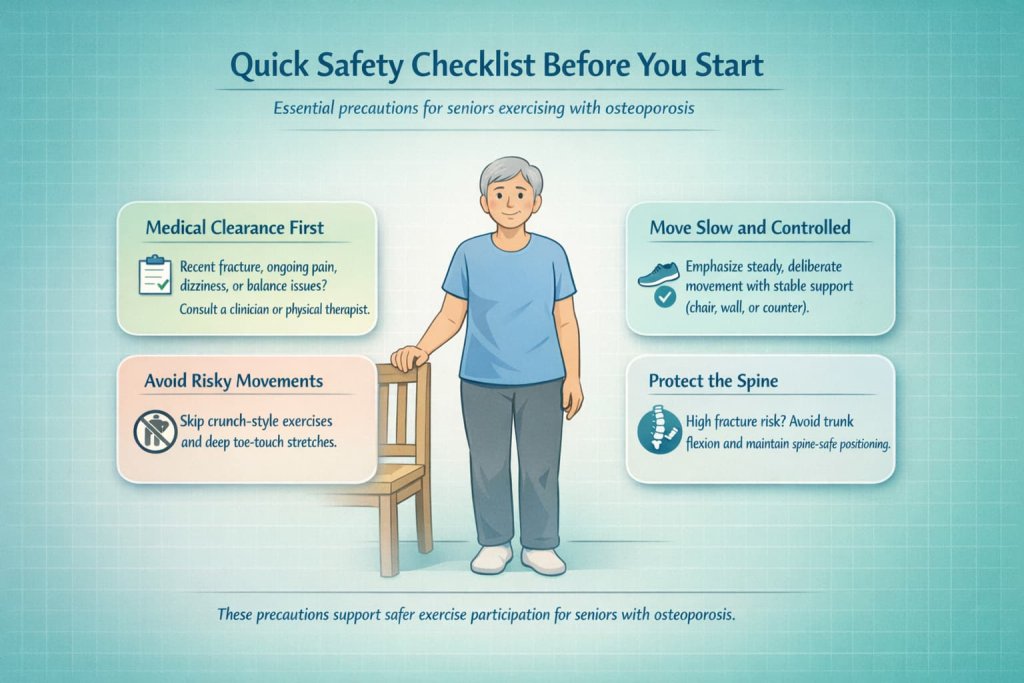
- Prioritize slow, controlled movements and stable support such as a chair, wall, or countertop.
- Avoid crunch-style exercises and deep toe-touch stretches.
- If you’re at high fracture risk, the International Osteoporosis Foundation advises avoiding trunk flexion and emphasizes spine-safe positioning.
What exercise plan works best for seniors with osteoporosis
Most evidence-based programs combine three key elements:
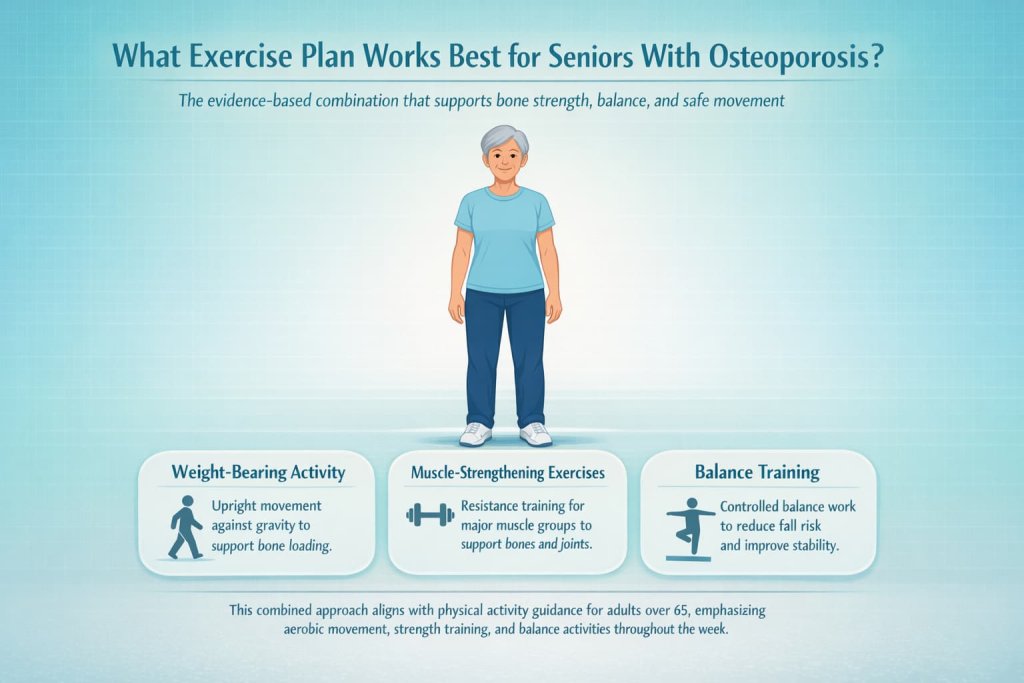
- Weight-bearing activity performed upright against gravity
- Muscle-strengthening exercises for major muscle groups
- Balance training to reduce fall risk
This approach aligns with physical activity guidance for adults over 65 from the Centers for Disease Control and Prevention, which emphasizes combining aerobic movement, strength training, and balance activities throughout the week.
8 best osteoporosis exercises for seniors
Use these as your core exercise options. Start with 2–4 exercises per session, two to four days per week, and progress gradually.
1) Brisk walking (low-impact weight-bearing)
How to do it
- Stand tall with eyes forward and shoulders relaxed
- Walk at a pace where you can talk but feel slightly breathless
- Begin with 10 minutes and increase gradually
Why it works
Walking provides consistent, low-impact loading through the hips and legs while supporting cardiovascular health.
Muscles worked
Glutes, quadriceps, hamstrings, calves, core stabilizers.
Trainer Tip
Choose flat, well-lit paths or walk near a handrail if balance is a concern.
2) Stair climbing or low step-ups
How to do it
- Hold a railing or sturdy surface
- Step up with one foot, stand tall, then step down slowly
- Alternate legs with controlled movement
Why it works
Step-based movements increase bone-loading forces in the lower body and support everyday functional strength.
Muscles worked
Glutes, quadriceps, hamstrings, calves.
Trainer Tip
Use the lowest step height that allows good posture without leaning forward.
3) Sit-to-stand from a chair
How to do it
- Sit near the front edge of a sturdy chair
- Feet hip-width apart, knees aligned over ankles
- Stand up smoothly, then sit back down with control
Why it works
This movement builds leg and hip strength essential for daily independence and fall recovery.
Muscles worked
Quadriceps, glutes, hamstrings, core.
Trainer Tip
Add a firm cushion to raise the seat height if needed.
4) Heel raises
How to do it
- Stand behind a chair and lightly hold the backrest
- Slowly rise onto your toes, pause briefly, then lower
- Keep posture upright throughout
Why it works
Stronger calves and ankles support steadier walking and better balance reactions.
Muscles worked
Calves, ankle stabilizers.
Trainer Tip
Focus on slow, controlled motion instead of speed.
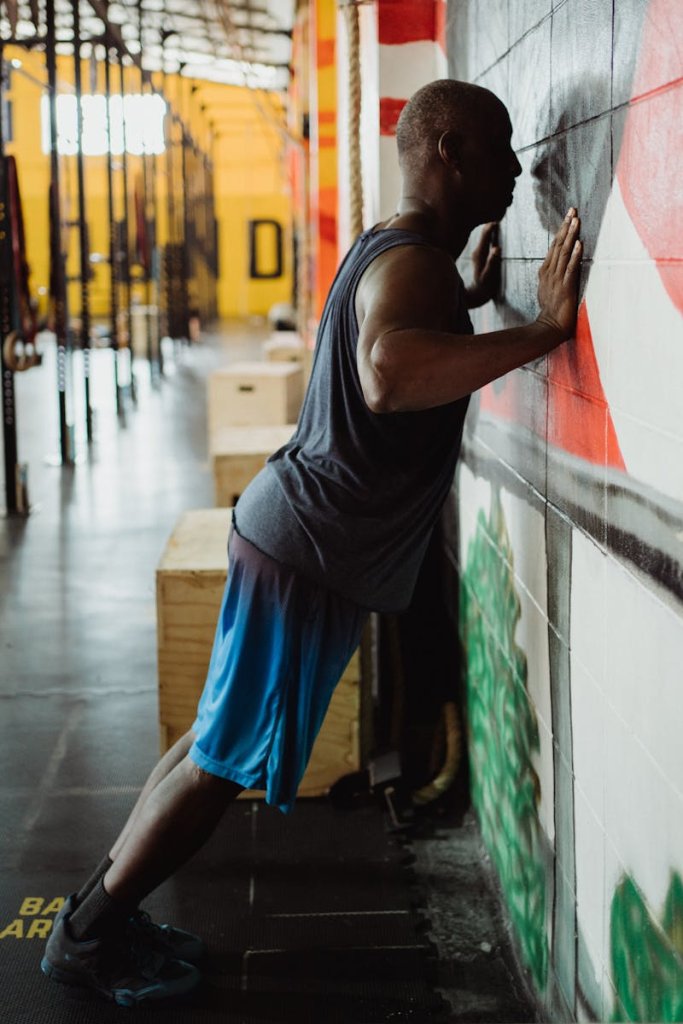
5) Wall push-ups
How to do it
- Face a wall with hands at shoulder height
- Step feet slightly back and keep body aligned
- Bend elbows toward the wall, then push away
Why it works
Wall push-ups strengthen the upper body while keeping spinal loading minimal.
Muscles worked
Chest, shoulders, triceps, core stabilizers.
Trainer Tip
Increase difficulty by stepping farther from the wall.
6) Resistance band row
How to do it
- Anchor a resistance band at chest height
- Stand tall with ribs stacked over hips
- Pull elbows back and squeeze shoulder blades gently
Why it works
Upper-back strength supports posture and spinal alignment, which is especially important in osteoporosis.
Muscles worked
Upper back, lats, rear shoulders, biceps.
Trainer Tip
Avoid leaning backward or twisting during the pull.
7) Heel-to-toe walk
How to do it
- Walk forward placing the heel of one foot directly in front of the toes of the other
- Use a wall or counter for light support if needed
- Take slow, deliberate steps
Why it works
Balance training reduces fall risk, a major contributor to osteoporotic fractures.
Muscles worked
Feet, ankles, hips, core stabilizers.
Trainer Tip
Start with short distances and build confidence gradually.
8) Tai chi
How to do it
- Follow a beginner-level routine
- Move slowly with controlled weight shifts
- Maintain upright posture and relaxed breathing
Why it works
The U.S. Preventive Services Task Force recommends exercise interventions to reduce fall risk in older adults, and tai chi is a widely used balance-focused option.
Muscles worked
Legs, hips, core, postural muscles.
Trainer Tip
Choose programs designed for seniors and avoid fast directional changes.
Exercises to avoid or modify with osteoporosis
If osteoporosis affects the spine or fracture risk is high, extra caution is needed with:
- Repeated spinal rounding or toe-touch stretching
- Sit-ups and crunches
- Forceful twisting at the waist
Forward spinal flexion is consistently identified as a higher-risk movement pattern.
Sample weekly routine for seniors
| Day | Focus | Example session |
|---|---|---|
| Monday | Weight-bearing + strength | Walking, sit-to-stand, wall push-ups |
| Tuesday | Balance | Heel-to-toe walk, tai chi |
| Wednesday | Strength | Step-ups, band rows, heel raises |
| Thursday | Active recovery | Easy walk, gentle mobility |
| Friday | Balance + strength | Tai chi, sit-to-stand |
| Saturday | Weight-bearing | Brisk walking |
| Sunday | Rest | Light activity as tolerated |
Common Mistakes Seniors Make With Osteoporosis Exercises
Even safe exercises can increase risk if done incorrectly. These are the most common mistakes to avoid:
- Moving too fast or using momentum, which reduces balance control
- Rounding or bending forward through the spine, especially during chair or step exercises
- Skipping support (chair, wall, railing) during balance movements
- Holding the breath during strength exercises
- Progressing too quickly by adding resistance or volume too fast
Correcting these habits helps reduce fall and fracture risk while keeping movements spine-safe.
How to Choose the Right Intensity and Progress Safely
Osteoporosis exercises should feel controlled, stable, and manageable, not exhausting or painful. Use these guidelines to progress safely:
- Start with bodyweight or light resistance
- Use small, controlled ranges of motion
- Prioritize perfect posture and balance over difficulty
Progress only one variable at a time:
- Increase repetitions before resistance
- Increase resistance before adding new exercises
- Increase balance challenge gradually (two hands → one hand → light support)
If soreness lasts longer than 48 hours or balance feels worse, reduce intensity. Safe progression means improving control and confidence—not rushing intensity.
When to seek professional guidance
Consider working with a clinician or physical therapist if you have:
- A history of spine or hip fractures
- Recent falls or balance problems
- Persistent or worsening pain
- Uncertainty about safe movement options
FAQs
What is the safest exercise for seniors with osteoporosis?
Low-impact weight-bearing activities combined with strength and balance training are generally considered safest when performed with proper form.
How often should seniors exercise with osteoporosis?
Most older adults benefit from activity on most days of the week, with strength and balance exercises included at least two days per week.
Are squats safe for seniors with osteoporosis?
Some squat variations can be safe when done with a neutral spine, but suitability depends on individual fracture risk.
Can exercise increase bone density in seniors?
Exercise supports bone health and may help slow bone loss while improving strength and balance.
Is tai chi good for osteoporosis?
Tai chi supports balance and coordination, which helps reduce fall-related fracture risk.
What if I’m afraid of falling during exercise?
Use stable support, reduce range of motion, and begin with supervised or guided programs if needed.
Conclusion
Osteoporosis exercises for seniors are most effective when they are consistent, spine-safe, and focused on strength, balance, and upright movement. Starting with simple, low-impact exercises and progressing gradually can help support bone health, confidence, and long-term independence.
This content is for informational purposes only and not medical advice.