
The best morning exercises are simple, full-body movements that gently raise your heart rate, loosen stiff joints, and activate key muscles in 5–15 minutes. When done consistently, they can help you feel more alert and gradually build toward weekly activity targets recommended by the Centers for Disease Control and Prevention.
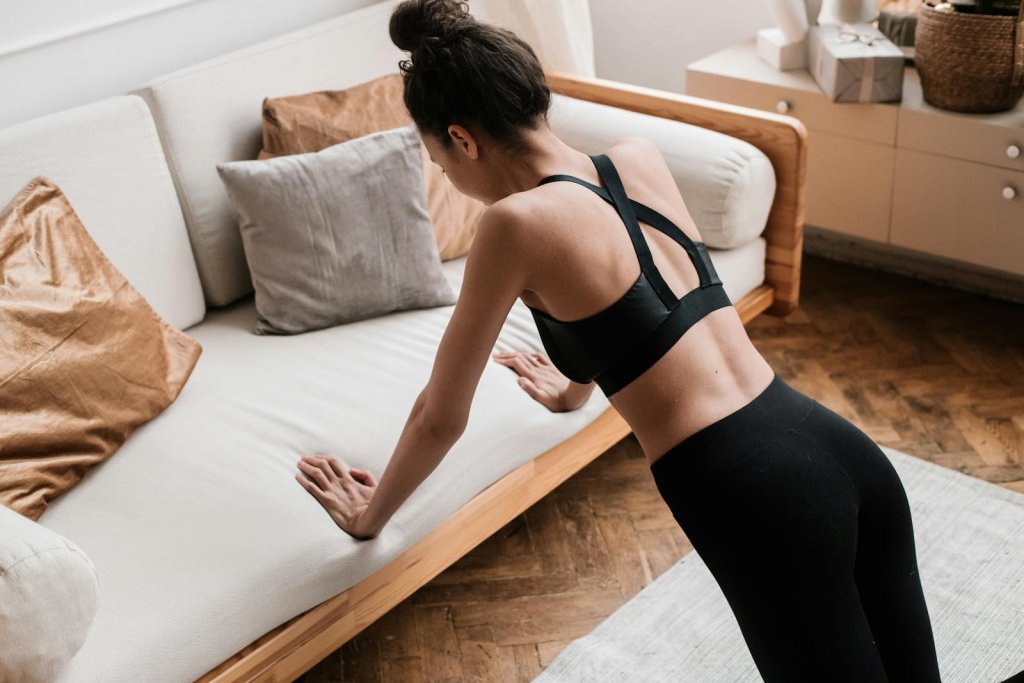
Morning movement matters because the body is often tighter after sleep and overnight inactivity. A short routine that combines a gradual warm-up, basic strength and mobility drills, and an easy finish can make the rest of your day feel smoother and more energized.
Why Morning Exercises Matter for Your Body and Mind
Morning exercises help your body shift smoothly from rest to movement and prepare you for daily activity.
Key benefits include:
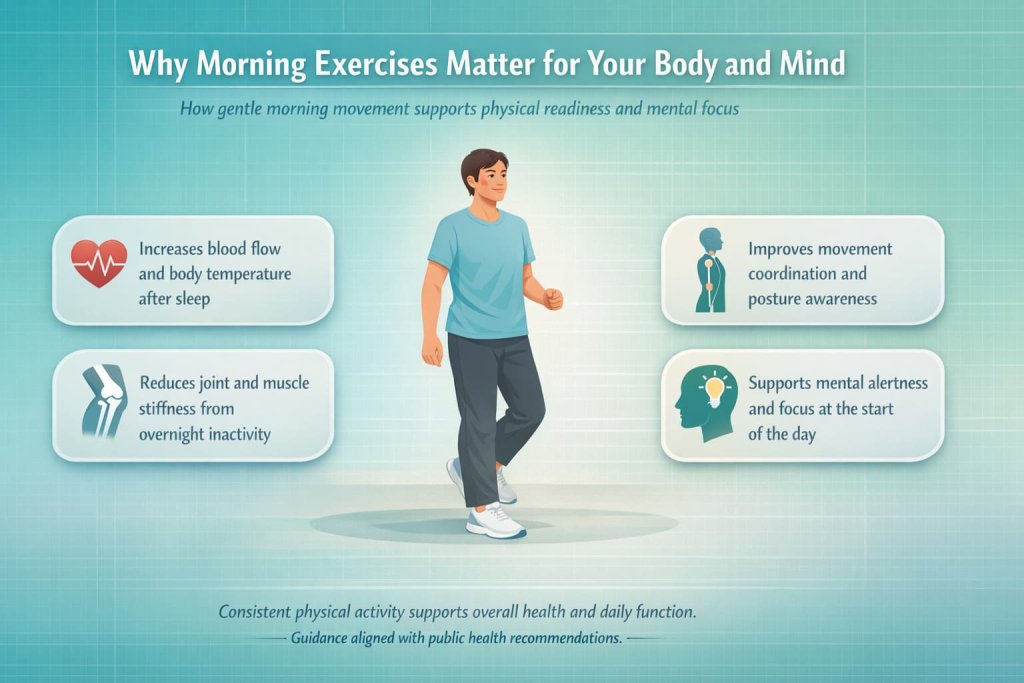
- Increased blood flow and body temperature after sleep
- Reduced joint and muscle stiffness
- Improved movement coordination and posture awareness
- Better mental alertness and focus to start the day
Regular physical activity supports overall health and well-being, which is why consistency is emphasized by the Centers for Disease Control and Prevention rather than exercise timing or intensity alone.
Quick safety checklist before you start
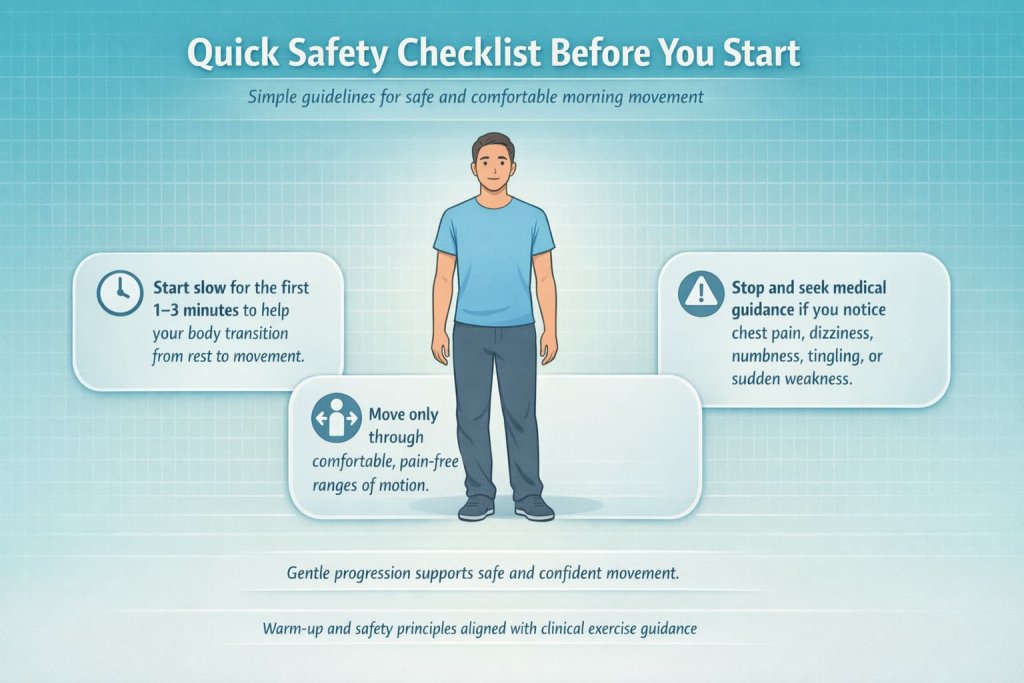
- Keep the first 1–3 minutes easy and gradual to help your body transition from rest to movement. The Mayo Clinic emphasizes warm-ups to prepare muscles and joints for activity.
- Move only through comfortable ranges of motion, especially first thing in the morning.
- Stop and seek medical guidance if you notice chest pain, dizziness, new numbness or tingling, or sudden weakness.
12 Best Morning Exercises
Use this list as a flexible menu. Start with one set and progress gradually as your body adapts.
1) March in Place
Why it works:
Marching in place gently increases heart rate and body temperature, helping your nervous system transition from rest to activity. It prepares joints and muscles for movement without the shock of high-impact exercise, making it ideal first thing in the morning.
How to do it:
- Stand tall with your head facing forward
- Lift one knee at a time in a controlled marching pattern
- Begin with slow, small steps
- Gradually increase pace and knee height
- Swing arms naturally with each step
Trainer Tip:
If you feel stiff, keep the range small for the first 30–60 seconds before increasing movement size.
2) Shoulder Rolls and Arm Circles
Why it works:
This movement counteracts overnight stiffness and rounded shoulder posture. It improves blood flow to the upper body and prepares the shoulders for pushing, pulling, and overhead movements later in the day.
How to do it:
- Roll shoulders up, back, and down for 8–10 repetitions
- Reverse the direction for another 8–10 repetitions
- Perform small arm circles forward for 10–15 seconds
- Perform small arm circles backward for 10–15 seconds
Trainer Tip:
Keep ribs stacked over hips to avoid compensating with your lower back.
3) Cat-Cow
Why it works:
Cat-cow gently mobilizes the spine and encourages awareness of spinal positioning. It may help reduce morning stiffness and improve comfort during sitting, standing, and bending tasks.
How to do it:
- Start on hands and knees with a neutral spine
- Inhale and gently lift chest and tailbone
- Exhale and round the upper back while tucking the pelvis
- Move slowly through each position
- Repeat for 6–10 controlled cycles
Trainer Tip:
Focus on smooth breathing rather than forcing large movements.
4) Hip Circles
Why it works:
Hip circles restore joint motion after prolonged stillness and improve hip awareness. This can support smoother walking, bending, and balance throughout the day.
How to do it:
- Stand upright and hold a wall or chair if needed
- Shift weight onto one leg
- Lift the opposite knee and circle it outward
- Circle inward with control
- Perform 6–8 circles in each direction per side
Trainer Tip:
Keep movements slow and controlled, avoiding lower-back twisting.
5) Ankle Rocks
Why it works:
Ankle mobility plays a key role in walking, stair climbing, and squatting. Gentle ankle rocking helps prepare the joints and lower legs for weight-bearing activity.
How to do it:
- Stand facing a wall with one foot forward
- Keep the front heel on the floor
- Gently move the knee toward the wall
- Rock back to the starting position
- Repeat for 8–12 repetitions per side
Trainer Tip:
Stop before the heel lifts or discomfort appears.
6) Glute Bridge
Why it works:
Glute bridges activate the glute muscles, which support the hips and lower back during standing and walking. This can improve movement efficiency and posture during the day.
How to do it:
- Lie on your back with knees bent and feet flat
- Brace your core lightly
- Press through heels to lift hips
- Pause briefly at the top
- Lower slowly with control
Trainer Tip:
If hamstrings dominate, bring feet slightly closer to your hips.
7) Chair Squat
Why it works:
Chair squats reinforce a fundamental daily movement pattern—sitting and standing—while building leg strength in a controlled, accessible way.
How to do it:
- Stand in front of a chair with feet hip-width apart
- Push hips back and lower toward the chair
- Lightly touch the seat
- Stand back up under control
- Repeat for 6–10 repetitions
Trainer Tip:
Move slowly and aim for quiet, controlled contact with the chair.
8) Hip Hinge Good Morning
Why it works:
This exercise teaches safe bending mechanics and strengthens the posterior chain, supporting healthy lifting and daily bending tasks.
How to do it:
- Stand tall with hands on hips
- Soften knees slightly
- Push hips back while keeping spine long
- Return to standing by squeezing glutes
- Perform 8–10 repetitions
Trainer Tip:
Stop the hinge when hamstrings engage—do not force depth.
9) Incline Push-Up
Why it works:
Incline push-ups build upper-body strength with reduced joint stress, making them ideal for morning sessions or beginners.
How to do it:
- Place hands on a wall, counter, or sturdy surface
- Step feet back so body forms a straight line
- Lower chest toward hands with control
- Press back up to start position
Trainer Tip:
The higher the surface, the easier the exercise.
10) Dead Bug
Why it works:
Dead bugs improve core coordination while keeping the spine supported, which can enhance trunk control for daily movements.
How to do it:
- Lie on your back with arms and legs raised
- Brace the core gently
- Extend opposite arm and leg slowly
- Return to start and switch sides
- Perform 6–10 reps per side
Trainer Tip:
Reduce range if your lower back arches off the floor.
11) Bird Dog
Why it works:
Bird dogs promote balanced muscle activation and coordination, supporting posture and spinal stability.
How to do it:
- Start on hands and knees
- Extend opposite arm and leg
- Hold briefly with control
- Return and switch sides
- Perform 6–8 reps per side
Trainer Tip:
Keep hips level and avoid rotating through the torso.
12) Brisk Walk Finisher
Why it works:
A brisk walk adds light aerobic activity, helping increase alertness and circulation to finish your morning routine.
How to do it:
- Begin walking at an easy pace
- Gradually increase to a brisk pace
- Continue for 2–5 minutes
- Slow down to finish
Trainer Tip:
Indoor walking or stairs work well when time or weather is limited.
How Long Should Morning Exercises Be
Morning workouts do not need to be long to be useful.
General guidelines:
- 5–15 minutes is enough for most people
- Short sessions can be combined with activity later in the day
- Consistency matters more than duration
This flexible approach aligns with global physical activity guidance from the World Health Organization, which focuses on total weekly movement rather than single-session length.
How long should morning exercises be
Morning exercise does not need to be long to be effective. Consistency matters more than duration.
Public-health guidance focuses on total weekly movement rather than the time of day you exercise. Adults are generally encouraged to aim for at least 150 minutes of moderate-intensity activity per week along with muscle-strengthening work on two or more days, according to the Centers for Disease Control and Prevention. These minutes can be accumulated in shorter sessions, including brief morning routines, and this approach aligns with global guidance from the World Health Organization.
Who Should Be Careful With Morning Exercises
Most people can benefit from gentle morning movement, but extra caution is important in certain situations.
Be careful if you have:
- A recent injury, surgery, or worsening joint pain
- Dizziness, chest discomfort, or unusual shortness of breath
- Balance problems or a history of frequent falls
- Numbness, tingling, or unexplained weakness
Clinical guidance, such as that provided by the Mayo Clinic, consistently recommends starting slowly and seeking professional advice when symptoms are present.
A simple morning routine blueprint
Use this structure most days:
- 2–4 minutes: gentle warm-up (easy marching, joint mobility)
- 6–10 minutes: strength and mobility (choose 4–6 exercises)
- 1–2 minutes: easy finish (slow walking and relaxed breathing)
Common mistakes with morning exercises
- Skipping a warm-up and starting too hard
- Forcing deep stretches while stiff
- Rushing through movements
- Holding breath during strength work
- Choosing routines that are too long to repeat consistently
Who should be cautious with morning exercise
Extra care or professional guidance is important if you have a recent injury, recent surgery, unexplained cardiovascular symptoms, or significant balance issues. For older adults, national guidance highlights including balance-focused activities alongside strength and aerobic work, as outlined by the Centers for Disease Control and Prevention for healthy aging.
FAQ
What are the best morning exercises for beginners
Marching, chair squats, glute bridges, cat-cow, incline push-ups, and dead bugs are commonly well tolerated when performed slowly.
Can morning exercises help with stiffness
They may help by increasing blood flow and gently moving joints through comfortable ranges.
How long should a morning workout be
Even 5–10 minutes can be useful when done consistently.
Should I eat before morning exercise
Light movement often feels fine without food, but individual tolerance varies.
Are morning exercises safe for older adults
They are often appropriate with simple modifications, balance support, and gradual progression.
Conclusion
Morning exercises do not need to be intense or complicated. A short, repeatable routine that warms up the body, activates key muscles, and includes light aerobic movement can help you start the day feeling more alert and capable. Choose a simple routine, repeat it most days, and let consistency do the work.