
Psoas muscle exercises for seniors are gentle movements that help improve hip mobility, support upright posture, and make walking feel easier and more stable. Strengthening and stretching this deep hip muscle may support daily activities like standing up, climbing stairs, and maintaining balance as we age.
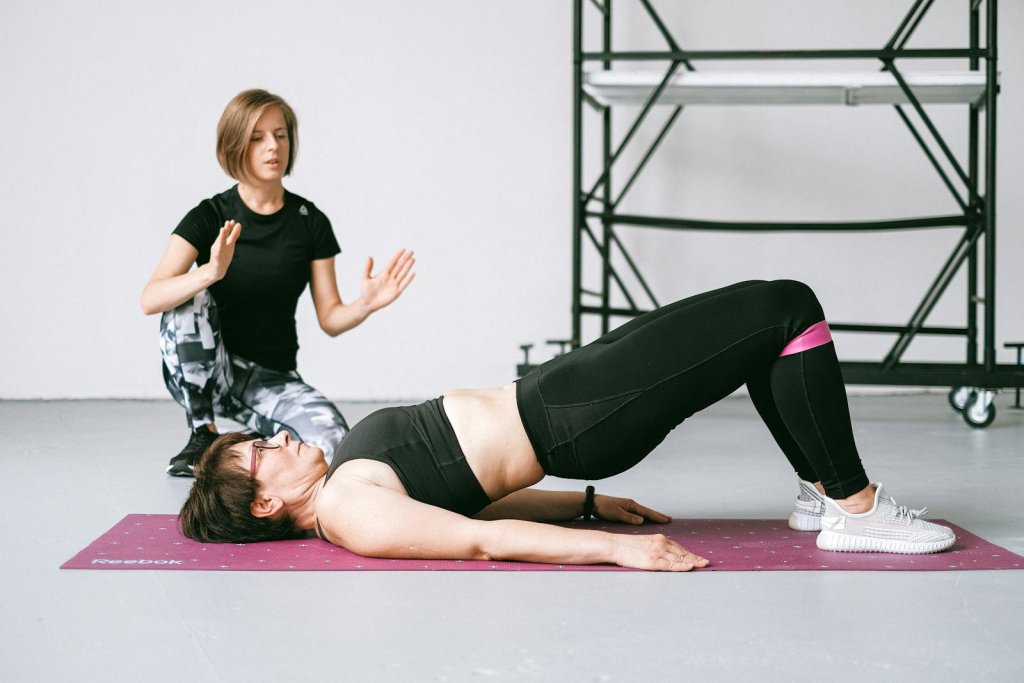
Understanding how to exercise the psoas safely is important because overly aggressive hip flexor work can strain the lower back. The exercises below focus on controlled motion, proper support, and senior-friendly ranges of movement, in line with guidance from trusted health organizations.
What Is the Psoas Muscle?
The psoas (pronounced so-az) is a deep muscle that runs from the lower spine to the upper thigh bone. It works with the iliacus muscle (together called the iliopsoas) to lift the leg and control hip movement during walking.
For seniors, a weak or tight psoas muscle may:
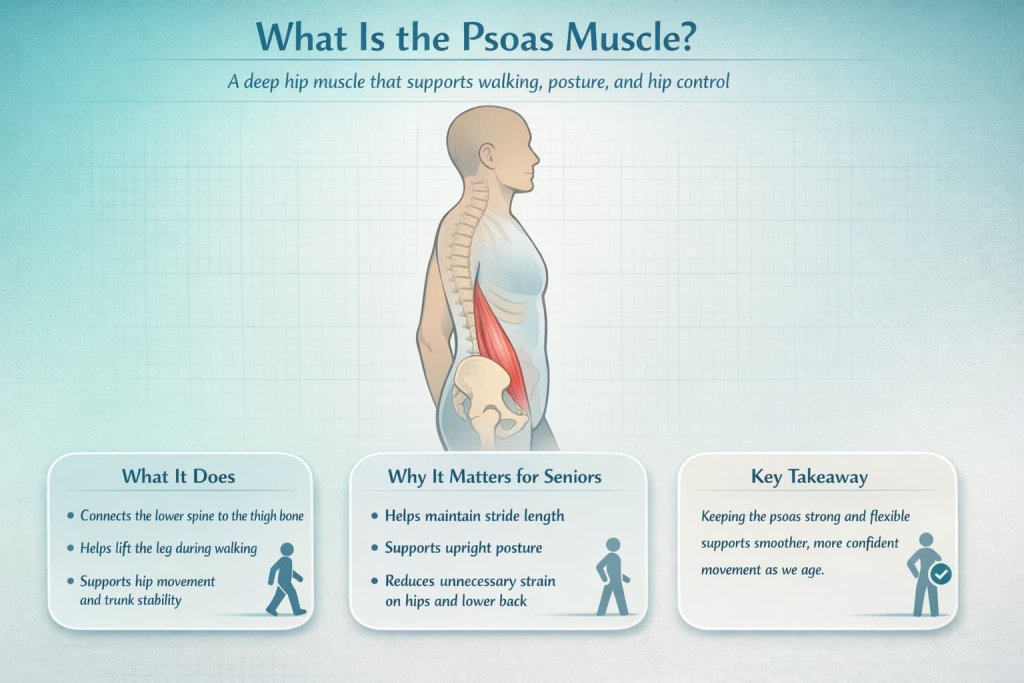
- Limit stride length while walking
- Contribute to a forward-leaning posture
- Increase strain on the lower back and hips
Maintaining psoas strength and flexibility supports smoother, more confident movement.
Why Psoas Muscle Exercises Matter for Seniors
As we age, prolonged sitting and reduced activity can affect hip flexor mobility. According to physical-activity guidance from the Centers for Disease Control and Prevention, older adults benefit from regular strength, mobility, and balance exercises to support independence and reduce fall risk.
Psoas-focused exercises may help seniors:
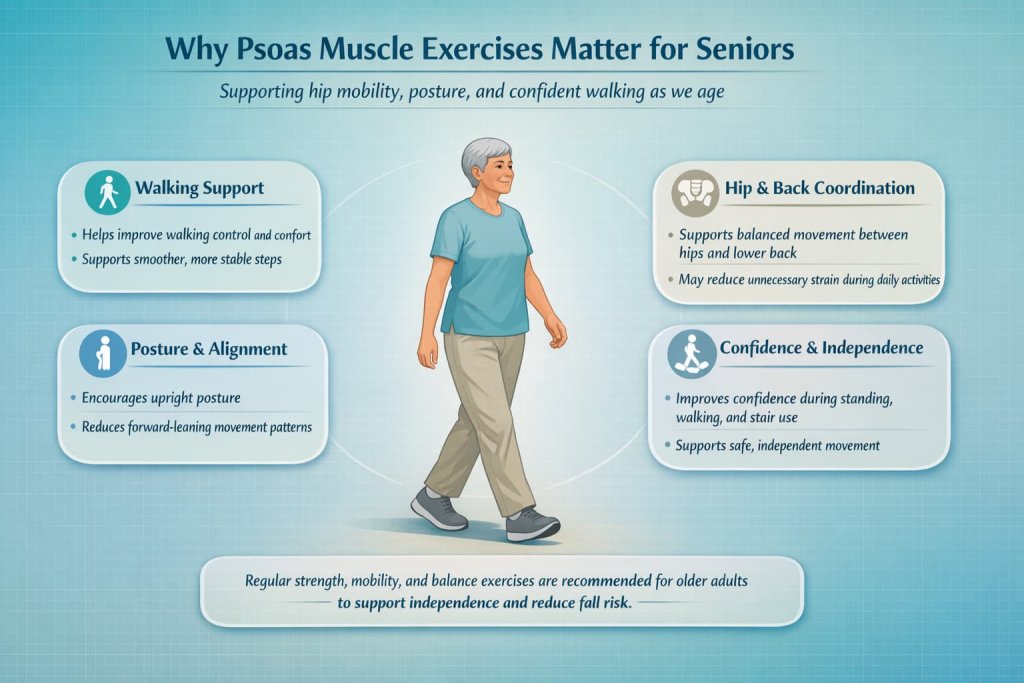
- Walk with better control and comfort
- Maintain upright posture
- Support hip and lower-back coordination
- Improve confidence during daily movement
7 Safe Psoas Muscle Exercises for Seniors
These gentle, senior-friendly exercises are designed to safely activate and stretch the psoas muscle to support hip mobility, posture, and walking confidence. Each movement uses controlled ranges and added support to prioritize comfort, balance, and joint safety.
1. Seated March
How to do it:
- Sit tall in a sturdy chair with your back supported and feet flat on the floor
- Engage your core gently by sitting upright, not leaning back
- Slowly lift one knee a few inches off the floor
- Pause briefly, then lower with control
- Alternate sides in a slow, steady rhythm
Why it works:
This movement gently activates the psoas without placing stress on the lower back. The seated position provides stability, making it ideal for seniors who are building hip control and coordination for walking.
Muscles worked:
Psoas, hip flexors, deep core stabilizers
Trainer Tip:
Focus on smooth, controlled lifts rather than height—control matters more than range.
2. Standing Hip Flexor Stretch (Chair Support)
How to do it:
- Stand behind a sturdy chair and lightly hold the backrest
- Step one foot back while keeping both feet pointing forward
- Gently shift your weight forward until you feel a stretch in the front of the back hip
- Keep your chest tall and ribs stacked over your hips
- Hold briefly, then switch sides
Why it works:
This stretch helps lengthen the psoas and iliacus muscles, which often tighten with prolonged sitting. Improved hip flexibility may support smoother walking and upright posture.
Muscles worked:
Psoas, iliacus, quadriceps
Trainer Tip:
Avoid arching your lower back—think of a gentle forward shift, not a deep lunge.
3. Supine Bent-Knee March
How to do it:
- Lie on your back with knees bent and feet flat on the floor
- Keep your arms relaxed by your sides
- Slowly lift one knee toward your chest without rocking your pelvis
- Lower the foot back to the floor with control
- Alternate sides
Why it works:
This exercise activates the psoas while the floor supports the spine, reducing unnecessary strain. It reinforces controlled hip flexion essential for walking and stair use.
Muscles worked:
Psoas, deep core muscles
Trainer Tip:
Gently press your lower back into the floor to keep your pelvis stable.
4. Heel Slides
How to do it:
- Lie on your back with legs extended and relaxed
- Slowly slide one heel toward your hips, bending the knee
- Keep your hips level and movement smooth
- Slide the heel back to the starting position
- Repeat on the other side
Why it works:
Heel slides train the psoas through a controlled range without lifting the leg, making them especially joint-friendly for seniors with limited strength or mobility.
Muscles worked:
Psoas, hip flexors, hamstrings
Trainer Tip:
Wear socks or perform on a smooth surface to reduce friction and strain.
5. Low Step-Ups
How to do it:
- Stand facing a low step or bottom stair
- Step up with one foot, pressing through the heel
- Bring the opposite foot up to stand tall
- Step back down slowly
- Switch leading legs
Why it works:
Step-ups closely mimic real-life movements like stair climbing and walking, helping train the psoas in a functional, weight-bearing way.
Muscles worked:
Psoas, glutes, quadriceps
Trainer Tip:
Use a railing or wall for balance and keep the step height low.
6. Glute Bridge
How to do it:
- Lie on your back with knees bent and feet hip-width apart
- Press your heels into the floor
- Lift your hips until your body forms a straight line from shoulders to knees
- Pause briefly, then lower slowly
Why it works:
Strong glutes support hip stability and help prevent the psoas from becoming overworked, which may reduce stress on the lower back.
Muscles worked:
Glutes, core stabilizers, hip muscles
Trainer Tip:
Stop lifting once your hips are level—avoid pushing into your lower back.
7. Standing Knee Lift
How to do it:
- Stand next to a wall or counter for support
- Shift your weight onto one leg
- Slowly lift the opposite knee to a comfortable height
- Lower with control and switch sides
Why it works:
This exercise strengthens the psoas in a standing position, reinforcing balance and coordination needed for daily walking and movement.
Muscles worked:
Psoas, hip flexors, balance muscles
Trainer Tip:
Imagine a string lifting you tall through the head to maintain posture.
How Often Should Seniors Do Psoas Exercises?
Most seniors can perform psoas muscle exercises 2–3 times per week, with rest days in between. Light stretching can be done more frequently if it feels comfortable and controlled.
According to activity recommendations from the National Institute on Aging, consistency matters more than intensity for long-term mobility benefits.
Safety Guidelines for Seniors Before Doing Psoas Exercises
Before starting psoas muscle exercises, seniors should prioritize safety and proper body awareness. These exercises are meant to be gentle and controlled—not aggressive or forceful.
Key safety guidelines include:
- Move slowly and stay within a comfortable, pain-free range of motion
- Use support (chair, wall, railing, or bed) for balance and stability
- Maintain upright posture and avoid excessive arching of the lower back
- Breathe normally—do not hold your breath during movements
- Stop immediately if you feel sharp pain, dizziness, numbness, or tingling
Seniors with chronic conditions or limited mobility should consider consulting a qualified healthcare professional before beginning a new exercise routine.
Common Mistakes Seniors Should Avoid During Psoas Exercises
Even gentle psoas exercises can become uncomfortable if performed incorrectly. Avoiding common mistakes helps reduce strain on the hips and lower back.
Common mistakes include:
- Lifting the knee too high and leaning backward
- Arching or compressing the lower back during hip movements
- Moving too quickly instead of using slow, controlled motion
- Skipping balance support during standing exercises
- Pushing into discomfort instead of stopping at mild effort
Focusing on control, posture, and breathing is more important than increasing range or repetitions.
Who Should Avoid or Modify Psoas Muscle Exercises?
While psoas muscle exercises for seniors are generally low impact, some individuals should avoid or modify them unless cleared by a healthcare professional.
Extra caution or professional guidance is recommended for seniors with:
- Recent hip, spinal, or abdominal surgery
- Severe osteoporosis or high fracture risk
- Ongoing hip, groin, or lower back pain
- Nerve-related symptoms such as sciatica or numbness
- Recent falls or significant balance issues
In these cases, a physical therapist can help tailor exercises to individual needs and ensure safe progression.
When to Seek Professional Guidance
Consider speaking with a physical therapist or healthcare provider if you experience:
- Persistent hip or groin pain
- Pain that radiates down the leg
- Difficulty walking despite regular exercise
- Recent falls or balance issues
Frequently Asked Questions
Are psoas muscle exercises safe for seniors?
Yes, when performed gently with proper support and within a comfortable range of motion.
Can psoas exercises help improve walking?
They may help support hip control and stride mechanics, which are important for walking.
Should seniors stretch or strengthen the psoas?
A combination of gentle stretching and low-load strengthening is generally recommended.
How long does it take to notice improvements?
Some seniors notice better comfort and mobility within a few weeks of consistent practice.
Can psoas exercises help lower back comfort?
They may help support balanced hip movement, which can reduce unnecessary lower-back strain.
Can these exercises be done at home?
Yes. All exercises listed are designed to be done safely at home with minimal equipment.
Conclusion
Psoas muscle exercises for seniors can play a valuable role in supporting hip mobility, posture, and confident walking. By choosing safe, controlled movements and staying consistent, older adults may improve everyday comfort and independence.
If you’re ready to continue, consider pairing these exercises with regular walking, balance training, and guidance from a qualified professional to support healthy aging.
This content is for informational purposes only and not medical advice.