
Carpal tunnel exercises may help reduce wrist and hand symptoms by improving how the median nerve and finger tendons move, especially when paired with smart activity changes and (for many people) night splinting. Using the right drills matters because carpal tunnel symptoms can worsen when you repeatedly bend your wrist, grip hard, or sleep with your wrist flexed.
In this guide, you’ll learn five commonly recommended, gentle exercises (including nerve and tendon glides), how to do them safely, and when to stop and get checked. For a trusted starting point, the American Academy of Orthopaedic Surgeons notes that specific therapeutic exercises may be incorporated with splinting and activity changes.
What Is Carpal Tunnel Syndrome
Carpal tunnel syndrome happens when the median nerve is compressed as it passes through the carpal tunnel in your wrist. Common symptoms include tingling, numbness, or pain in the thumb side of the hand, and symptoms can be worse at night.
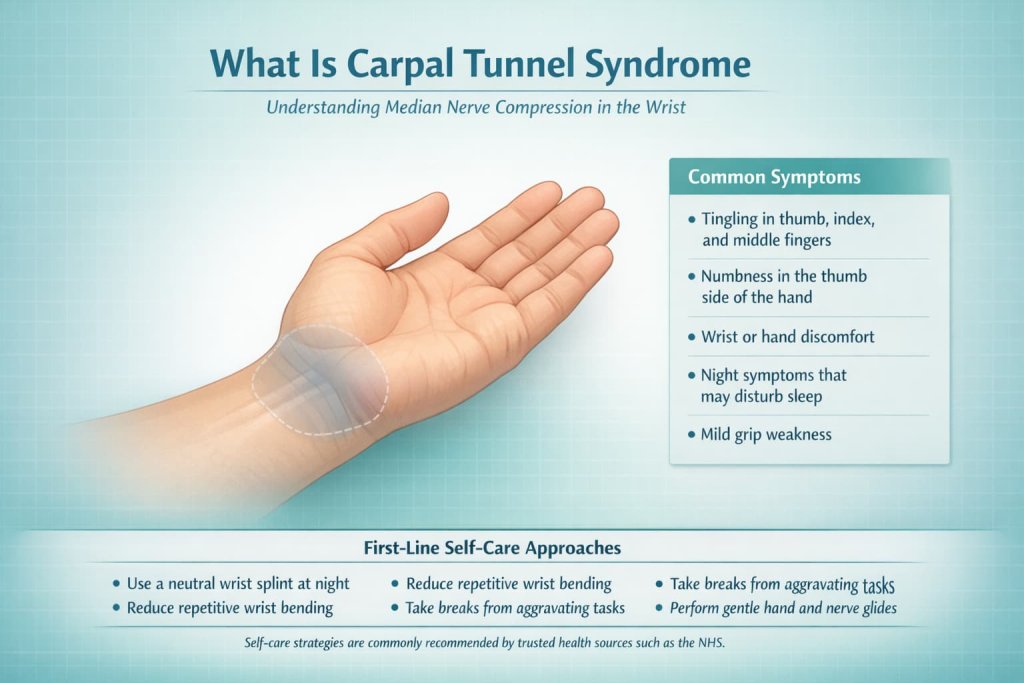
Self-care often focuses on reducing positions and tasks that increase pressure in the tunnel, and adding gentle movement to keep tissues sliding comfortably. The NHS lists wrist splinting, reducing aggravating activities, and hand exercises as common first-line self-help approaches.
When Carpal Tunnel Exercises Are Most Likely to Help
Carpal tunnel exercises are most useful when your symptoms are mild to moderate and you can do the movements without increasing tingling or numbness.
They tend to work best when you also:
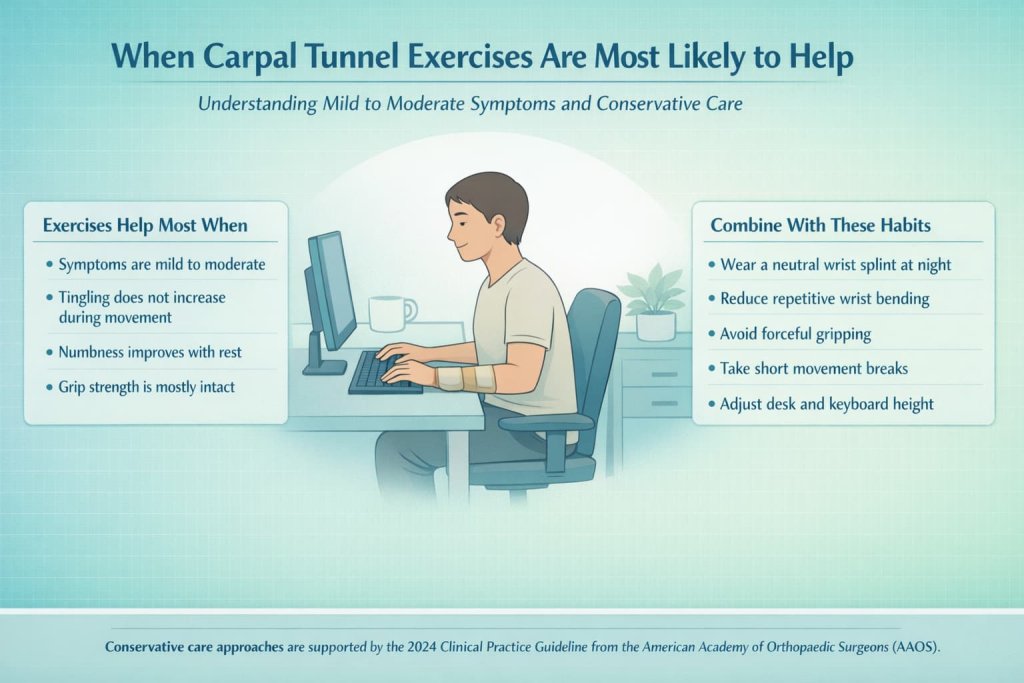
- Wear a neutral wrist splint at night (especially if symptoms wake you up)
- Reduce repeated wrist bending and forceful gripping
- Take short breaks from repetitive tasks and adjust your workstation setup
The American Academy of Orthopaedic Surgeons (AAOS) updated its Clinical Practice Guideline on carpal tunnel syndrome in May 2024, supporting evidence-based conservative care options before considering surgical pathways.
5 Best Carpal Tunnel Exercises
Gentle nerve glides, tendon glides, stretches, and light grip work may help reduce wrist pain and numbness. These five carpal tunnel exercises focus on safe movement, symptom control, and better hand function.
1) Median Nerve Glide (Nerve Slider)
How to do it:
- Sit or stand tall with shoulders relaxed
- Start with elbow bent at your side and wrist neutral
- Slowly straighten the elbow while gently extending the wrist and fingers
- Add a small head movement only if it remains comfortable
- Return smoothly to the starting position
Why it works: Median nerve glides are designed to encourage smoother nerve movement through the carpal tunnel without forcing a strong stretch. The American Academy of Orthopaedic Surgeons includes median nerve gliding in its therapeutic exercise program for carpal tunnel syndrome.
Muscles worked: This is primarily a nerve-mobility drill, with light coordination from the forearm flexors, extensors, and small hand muscles to control the movement.
Trainer Tip: Think “slide, not stretch.” If tingling increases during the motion or lingers afterward, reduce the range and keep the movement smaller and slower.
2) Tendon Glides (Five-Position Sequence)
How to do it:
- Hold your hand up with the wrist in a neutral position
- Move through positions: straight hand → hook fist → full fist → tabletop → straight hand
- Pause briefly in each position
- Keep the wrist steady throughout
Why it works: Tendon glides move the finger flexor tendons through controlled positions, which may support smoother motion and reduce stiffness. The sequence is outlined in carpal tunnel exercise guidance from the American Academy of Orthopaedic Surgeons.
Muscles worked: Finger flexors and extensors, along with intrinsic hand muscles that help coordinate finger positioning.
Trainer Tip: Slow, smooth transitions matter more than forceful squeezing. Avoid clenching the fist tightly.
3) Wrist Flexor Stretch (Palm-Up)
How to do it:
- Extend one arm forward
- Turn the palm up
- Use the opposite hand to gently pull the fingers back
- Hold briefly, then release
- Repeat on the other side
Why it works: Gentle forearm stretching may improve comfort for people who perform repetitive gripping or typing tasks.
Muscles worked: Wrist and finger flexors located along the front of the forearm.
Trainer Tip: Aim for mild tension only — not pain or tingling. If symptoms increase, reduce the stretch angle.
4) Wrist Extensor Stretch (Palm-Down)
How to do it:
- Extend one arm forward
- Turn the palm down
- Gently guide the hand downward using the opposite hand
- Hold briefly
- Switch sides
Why it works: Wrist extensor muscles can become tight with prolonged keyboard or mouse use. Gentle stretching supports forearm mobility and may help you maintain a more neutral wrist position during daily tasks.
Muscles worked: Wrist extensors along the back of the forearm.
Trainer Tip: Keep the stretch controlled and avoid forcing end range. The goal is comfortable mobility, not intensity.
5) Wrist-Neutral Isometric Grip
How to do it:
- Hold a soft ball or rolled towel
- Keep the wrist straight and neutral
- Gently squeeze at low effort (about 20–40% effort)
- Relax and repeat
- Avoid holding your breath
Why it works: Once symptoms are calm, light strengthening can support hand function without repeated wrist bending. Building low-level grip endurance may help daily activities feel easier while keeping the wrist in a safer neutral position.
Muscles worked: Forearm flexors, extensors (for stabilization), and grip muscles of the hand.
Trainer Tip: Skip strengthening if gripping increases symptoms. Focus on nerve and tendon glides first if tingling or numbness is still active.
How Often Should You Do Carpal Tunnel Exercises?
For mild symptoms, gentle nerve and tendon glides are commonly performed once or twice daily, as long as they do not trigger flare-ups.
Keep in mind:
- Move slowly and stay below symptom irritation
- Start with 1–2 sets
- Reduce frequency if symptoms worsen
Consistency and comfort matter more than intensity.
Quick Safety Checklist Before You Start
Use these rules to keep this routine symptom-calming rather than symptom-provoking:
- Keep the wrist mostly neutral (avoid deep flexion or extension)
- Move slowly and gently — no aggressive stretching
- Stop if you feel sharp pain, worsening numbness, or lingering symptoms afterward
- Focus on smooth, controlled movement rather than intensity
If you’re unsure about technique, the Cleveland Clinic explains that hand therapy guidance can help ensure exercises are performed correctly and safely.
When to Avoid or Stop Carpal Tunnel Exercises
Carpal tunnel exercises should feel gentle and controlled. Stop if symptoms increase instead of improve.
Avoid or pause exercises if you notice:
- Constant or worsening numbness
- Increasing weakness or dropping objects
- Sharp pain during movement
- Symptoms that linger after finishing
If exercises consistently aggravate symptoms, reduce the range or stop and seek professional guidance.
Simple Daily Routine Example
A balanced starting plan:
- Median nerve glides: 1–2 gentle sets
- Tendon glides: 1–2 slow rounds
- Wrist flexor stretch: brief holds each side
- Wrist extensor stretch: brief holds each side
- Optional light grip work if symptom-free
If symptoms worsen at night, the NHS Inform explains that night splints help keep the wrist in a neutral position during sleep.
Common Mistakes to Avoid
- Forcing deep wrist stretches
- Performing nerve glides aggressively
- Exercising with a bent wrist
- Ignoring workstation ergonomics
- Continuing despite worsening numbness or weakness
When to See a Doctor for Carpal Tunnel Symptoms
Consider medical evaluation if you have:
- Symptoms lasting several weeks without improvement
- Frequent night numbness or pain
- Weak grip or increasing hand weakness
- Persistent or spreading numbness
The NHS advises seeking care if symptoms worsen or do not improve with self-help measures.
Frequently Asked Questions
Do carpal tunnel exercises really work?
They may help reduce symptoms in mild to moderate cases, especially when combined with habit changes and splinting.
How often should I do these exercises?
Most people perform gentle movements daily, adjusting based on comfort.
Are nerve glides safe?
When done gently, they are commonly used in hand therapy settings.
What exercises should I avoid?
Avoid loaded wrist flexion or extension and heavy gripping if symptoms increase.
Why are symptoms worse at night?
Sleeping with bent wrists can increase pressure inside the carpal tunnel.
How long until I notice improvement?
Some people notice changes within a few weeks, but timelines vary.
Can typing cause carpal tunnel?
Repetitive hand use and sustained wrist bending may contribute in some individuals.
Conclusion
Carpal tunnel exercises can be a practical, low-risk starting point when done gently and combined with smart ergonomic adjustments. Begin with nerve and tendon glides, add light stretching, and only progress to strengthening if symptoms remain calm.
If numbness, weakness, or pain continues to worsen, seek professional evaluation to protect long-term hand function.
This content is for informational purposes only and not medical advice.