
Barbell exercises for arms are some of the most effective ways to build bigger, stronger biceps, triceps, and forearms because they let you train heavy, track progress easily, and repeat clean reps week after week. If you want arms that look and perform better, you need the right mix of barbell curls (biceps), barbell extensions/pressing (triceps), and forearm-focused variations—plus smart progression and safe form.
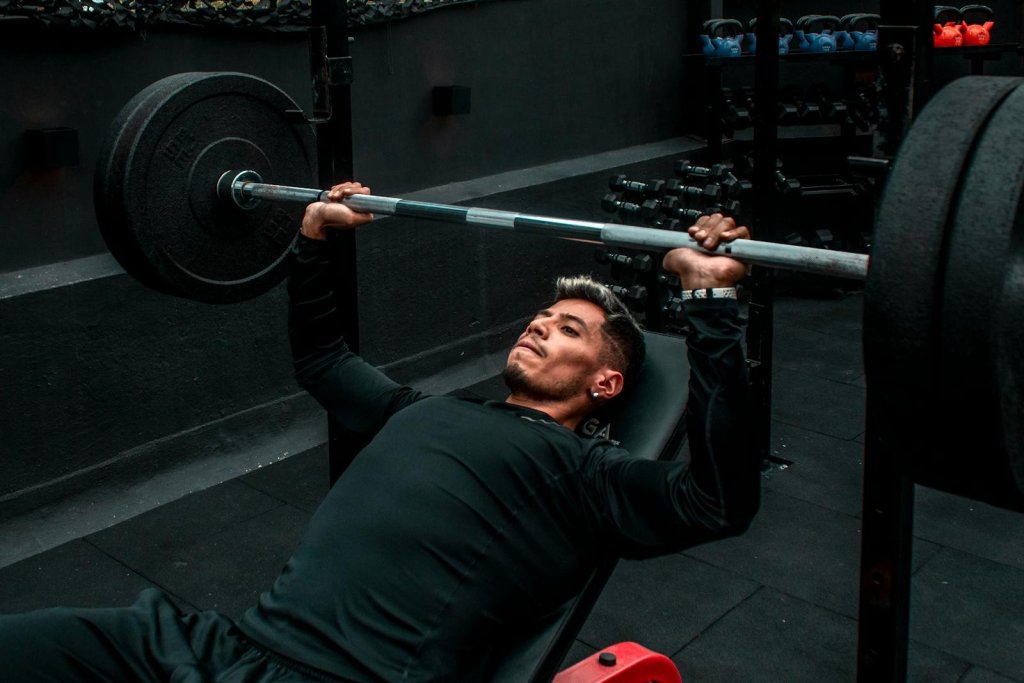
To stay consistent and joint-friendly, follow evidence-based training basics like doing muscle-strengthening work at least 2 days per week, building up gradually, and keeping reps controlled, as outlined in the CDC.
What Are Barbell Exercises for Arms?
Barbell exercises for arms are strength moves using a straight barbell or EZ-bar to train biceps (curling), triceps (pressing/extending), and forearms (grip and wrist work). The big advantage is consistency—you can repeat the same setup and track progress easily over time, which fits the muscle-strengthening approach recommended by the CDC.
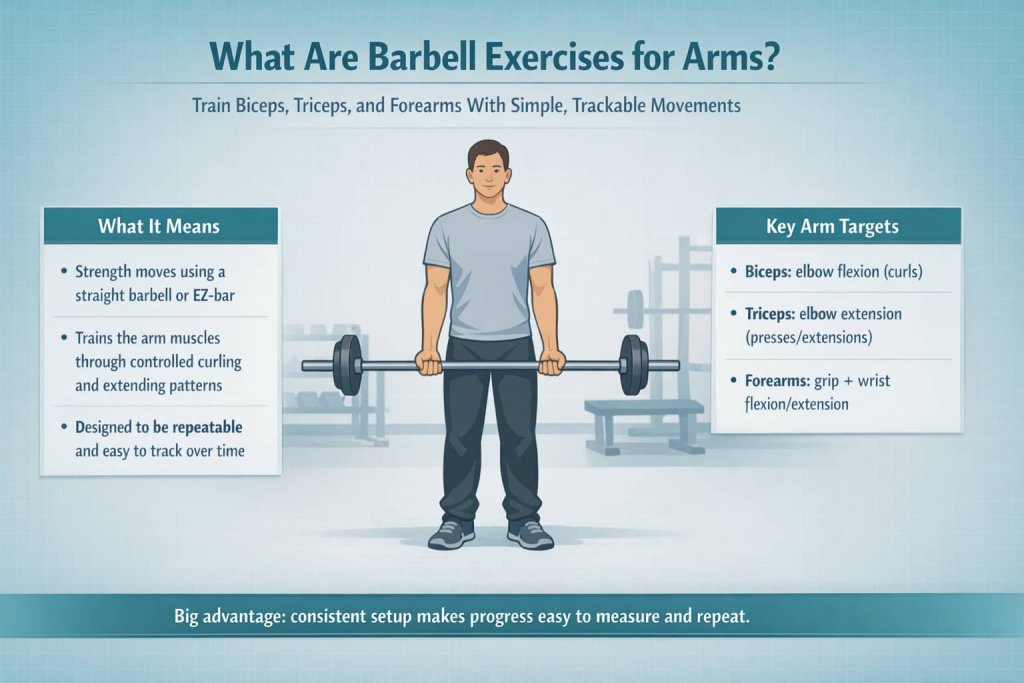
Key arm targets:
- Biceps: elbow flexion (curls)
- Triceps: elbow extension (presses/extensions)
- Forearms: grip + wrist flexion/extension
11 best barbell exercises for arms
Build bigger biceps, triceps, and forearms with these 11 best barbell exercises for arms. Use clean form and steady progression to add size and strength safely.
1) Barbell biceps curl
How to do it:
- Stand tall, feet hip-width, grip the bar underhand about shoulder-width
- Keep elbows close to your sides and chest still
- Curl up under control, then lower slowly
Why it works: A classic elbow-flexion pattern you can load and progress easily, making it ideal for measurable biceps growth.
Muscles worked: Biceps brachii, brachialis, brachioradialis.
Trainer Tip: If you start swinging, the weight is too heavy—reduce load and slow the lowering phase.
2) Close-grip bench press
How to do it:
- Lie on a bench and grip the bar in line with your shoulders
- Lower with elbows tucked closer to your ribs
- Press up while keeping your shoulders stable
Why it works: A heavy barbell press that biases triceps while still letting you use serious load.
Muscles worked: Triceps (all heads), chest, front delts.
Trainer Tip: Don’t go “too narrow.” Stay around shoulder-width so wrists and elbows feel stacked and strong.
3) Lying barbell triceps extensions (skull crushers)
How to do it:
- Lie on a bench, bar above your face/upper chest
- Keep elbows pointed up (don’t flare)
- Lower toward your forehead/top of head, then extend back up
Why it works: One of the most direct barbell options for triceps size, especially when controlled and done through a comfortable range.
Muscles worked: Triceps brachii (often strong long-head involvement).
Trainer Tip: Use an EZ-bar if straight-bar wrists or elbows feel cranky, and keep reps smooth.
4) Barbell reverse curl
How to do it:
- Grip the bar overhand about shoulder-width
- Curl up without letting elbows drift forward
- Lower slowly and keep wrists straight
Why it works: Shifts emphasis toward the brachioradialis and forearm muscles while still training elbow flexion.
Muscles worked: Brachioradialis, brachialis, forearm extensors, biceps (secondary).
Trainer Tip: Think “lift with the forearms,” not with the shoulders—keep upper arms pinned.
5) Barbell drag curl
How to do it:
- Stand tall with an underhand grip
- “Drag” the bar up your torso as elbows move slightly back
- Keep the bar close and lower slowly
Why it works: Reduces shoulder swing and helps you keep tension on the biceps with stricter form.
Muscles worked: Biceps brachii, brachialis.
Trainer Tip: Keep the bar brushing your shirt—if it drifts forward, you’ll lose the point of the lift.
6) Barbell preacher curl (if you have a preacher bench)
How to do it:
- Set upper arms on the pad, underhand grip
- Curl up without lifting elbows off the pad
- Lower under control and stop before the elbow fully “slams” straight
Why it works: Removes most body English, making it easier to isolate the biceps.
Muscles worked: Biceps brachii, brachialis.
Trainer Tip: Keep reps slow and clean—this is not a max-effort ego lift.
7) Barbell cheat curl (advanced, controlled)
How to do it:
- Use a slightly heavier load than strict curls
- Use a small, controlled hip pop to start the rep
- Lower very slowly and keep shoulders down
Why it works: Lets you overload the biceps, then emphasize the eccentric (lowering) phase.
Muscles worked: Biceps brachii, brachialis, forearms.
Trainer Tip: “Cheat up, strict down.” If you’re heaving every rep, it’s too heavy.
8) Standing barbell overhead triceps extension
How to do it:
- Hold bar overhead (often easier with an EZ-bar)
- Keep ribs down and elbows pointed forward/up
- Lower behind the head, then extend to lockout
Why it works: A strong option for training triceps through a long range—great for arm shape when done pain-free.
Muscles worked: Triceps brachii (often long head), core stabilizers.
Trainer Tip: If low back arches, reduce load and tighten your brace.
9) Close-grip floor press
How to do it:
- Lie on the floor, close-ish grip, wrists stacked
- Lower until upper arms lightly touch the floor
- Press up hard while keeping elbows closer to the body
Why it works: Limits shoulder depth while still letting you load triceps-heavy pressing.
Muscles worked: Triceps, chest, front delts.
Trainer Tip: Pause softly on the floor—no bouncing.
10) Barbell wrist curl
How to do it:
- Sit and rest forearms on thighs or a bench
- Let wrists extend slightly, then curl the bar up
- Keep movement small and controlled
Why it works: Direct forearm flexor work that supports grip endurance and arm fullness.
Muscles worked: Forearm flexors.
Trainer Tip: Use lighter weight than you think—forearms respond best to strict control.
11) Reverse barbell wrist curl
How to do it:
- Forearms supported, overhand grip
- Lift knuckles up (wrist extension), then lower slowly
- Keep elbows still
Why it works: Balances the forearm by training extensors, which can support elbow comfort for frequent curl work.
Muscles worked: Forearm extensors.
Trainer Tip: Small range + slow reps = better stimulus and less joint irritation.
How to use these barbell exercises for arms
Use this simple structure for results without overcomplicating it:
- Pick 2 biceps moves, 2 triceps moves, and 1 forearm move per session
- Do 2–4 sets per exercise
- Work mostly in the 6–12 rep range, and occasionally 12–20 for lighter, controlled sets
- Stop each set with 0–3 reps left in the tank (good form first)
Research reviews also show hypertrophy can happen across a wide range of loads when sets are challenging and performed with solid technique, as summarized in a research review available through the National Library of Medicine (PMC).
Quick safety checklist before you start
- Warm up elbows and shoulders with light sets first
- Use a full grip (thumb wrapped) and keep wrists neutral
- Move smoothly (no bouncing, no swinging)
- Stop if you feel sharp pain, numbness/tingling, or joint pain that worsens
If you have an existing injury or a medical condition, get clearance from a qualified professional before heavy lifting.
How to Progress Safely Without Irritating Elbows
Elbow irritation usually comes from rushing load increases, using sloppy reps, or piling on too much extension work too often. Progress slowly, keep reps clean, and adjust early if joints feel “beat up.”
Safer progression rules:
- Add reps first, then add small weight increases
- Keep most sets with 0–3 reps in reserve (don’t grind ugly reps)
- Control the lowering phase (especially on curls and extensions)
- Limit painful ranges—work only in a comfortable range of motion
- If elbows flare up: cut volume for 1 week, use an EZ-bar, and rebuild gradually
Sets, reps, and a simple weekly plan
Here’s an easy approach that fits most lifters:
- 2 days/week (recommended minimum): Train arms at the end of upper body days or in a short arms session, consistent with the CDC recommendation for muscle-strengthening activity at least two days per week
- Per exercise: 2–4 sets
- Reps:
- Heavy compounds (close-grip bench/floor press): 5–8 reps
- Curls/extensions: 8–12 reps
- Forearms: 12–20 reps
- Effort: End most sets with 0–3 reps in reserve (stop before form breaks)
- Rest: 90–150 seconds for presses; 60–90 seconds for curls/forearms
Common mistakes that stall arm growth
- Using momentum instead of controlling the bar
- Letting elbows drift forward on curls (turns it into a shoulder move)
- Going too heavy on skull crushers and irritating elbows
- Skipping forearms (then grip becomes the limiter on pulling days)
FAQs
Are barbell exercises enough to build arms?
Yes—if you include both biceps and triceps patterns, train consistently, and progress load/reps over time.
How often should I train arms each week?
Most people do well with 2–3 days per week total arm exposure (direct arms or indirect through pressing/pulling), and the CDC also recommends muscle-strengthening activity at least two days per week.
What’s the best barbell exercise for triceps size?
A combo works best: close-grip bench press for heavy loading plus lying triceps extensions for direct elbow-extension volume.
Should I use a straight bar or EZ-bar for curls and extensions?
Use what feels best on your wrists and elbows. Many lifters tolerate an EZ-bar better for skull crushers and curls.
What rep range builds the most muscle?
There isn’t one magic number. Reviews suggest hypertrophy can occur across a wide rep range when sets are challenging and controlled, as summarized by the National Library of Medicine (PMC).
Why do my elbows hurt during skull crushers?
Common causes are too much load, flared elbows, or a painful range. Reduce weight, slow reps, and adjust range or tool (EZ-bar) if needed.
Can beginners do these barbell arm exercises?
Yes—start with strict curls, close-grip bench (light), and easy triceps extensions, focusing on control before adding load.
Conclusion
If you want bigger, stronger arms, build your plan around barbell exercises for arms that you can progress reliably: strict curls, triceps-focused pressing, controlled extensions, and a little forearm work each week. Pick 5–7 moves from this list, track your reps, and add small improvements over time.
References
- American Council on Exercise (ACE). (n.d.). Close-Grip Bench Press. ACE Fitness Exercise Library.
- American Council on Exercise (ACE). (n.d.). Lying Barbell Triceps Extensions. ACE Fitness Exercise Library.
- American College of Sports Medicine (ACSM). (2009). Progression Models in Resistance Training for Healthy Adults. Medicine & Science in Sports & Exercise (PubMed).
- National Strength and Conditioning Association (NSCA). (2025). Using Intensity Based on Sets and Repetitions. NSCA Coach (PDF).
- National Library of Medicine (PMC). (2022). Baz-Valle, E., et al. Effects of Different Resistance Training Volumes on Muscle Hypertrophy: A Systematic Review.