
Foods don’t “switch off” cortisol on demand—but the right eating pattern can support a healthier stress response and may help reduce stress-related cortisol spikes over time. If you’re looking for “foods that lower cortisol,” the most evidence-based approach is to prioritize nutrient-dense meals (especially omega-3s, magnesium-rich foods, vitamin C-rich produce, and fiber) while limiting common cortisol-boosters like excess caffeine and added sugar.
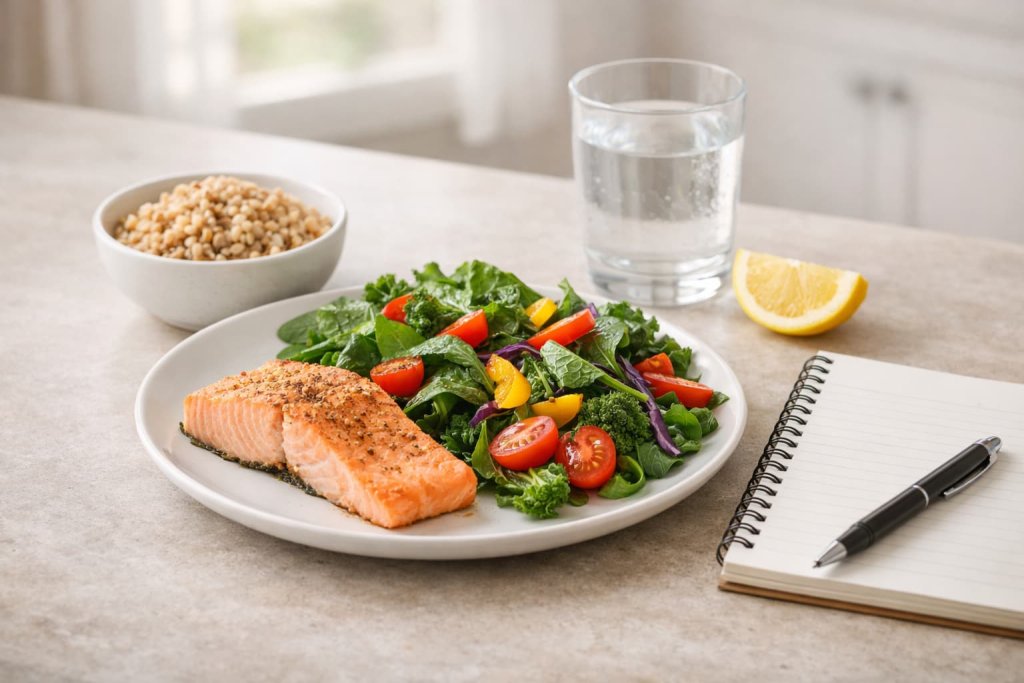
Cortisol also follows a normal daily rhythm, with a strong rise around waking. That’s why changes often look like “better regulation,” not a constant low number. The Endocrine Society explains this cortisol awakening response and why timing matters.
What cortisol is and what “lowering cortisol” really means
Cortisol is a hormone your body uses to help manage energy, inflammation, and the stress response. In healthy people, it naturally rises in the morning and declines later in the day. Aiming for “zero cortisol” isn’t the goal—healthy regulation is.
What food can realistically do:
- Support steadier blood sugar and energy (which can reduce stress signals)
- Provide nutrients involved in stress physiology (like magnesium and vitamin C)
- Support heart and brain health during stressful periods (like omega-3 fats)
- Support overall diet quality, which is closely linked with better stress coping
Stress also changes how people eat. The American Psychological Association notes that stress commonly influences eating habits, often pushing people toward less nutritious choices—so having a simple, realistic plan matters.
When to talk to a clinician about cortisol

Food and lifestyle can support healthier cortisol regulation, but persistently abnormal cortisol can sometimes be tied to medical conditions or medications. Consider talking to a clinician if you have symptoms such as:
- Unexplained weight gain (especially around the midsection) plus new muscle weakness
- Easy bruising, new purple stretch marks, or slow wound healing
- High blood pressure or high blood sugar that’s new or hard to control
- Ongoing insomnia, severe fatigue, or mood changes that don’t improve
- Menstrual changes or reduced libido, especially alongside other symptoms
Also ask if any medicines you take could affect cortisol or stress hormones (for example, steroid medications). If you suspect a cortisol problem, don’t self-diagnose with supplements—testing and interpretation should be guided by a healthcare professional.
12 foods that may help support healthier cortisol regulation
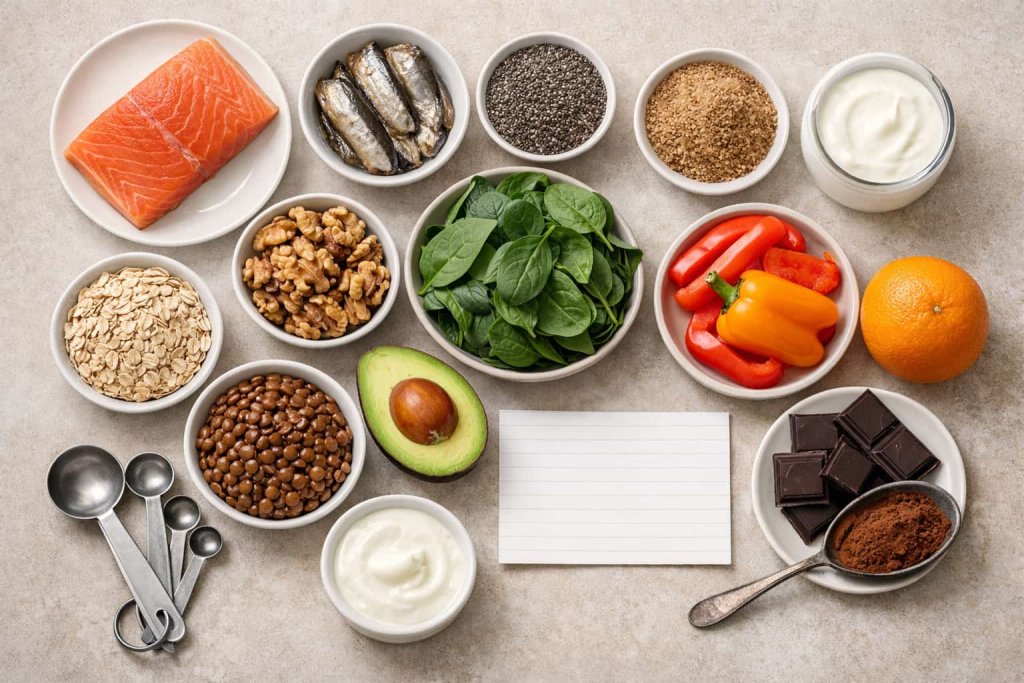
Quick portion guide for these foods
Use these serving ideas to make the list practical:
- Fatty fish (salmon/sardines): 3–4 ounces cooked per serving
- Chia or ground flax: 1–2 tablespoons per day
- Walnuts: a small handful (about 1 ounce)
- Leafy greens: 1–2 cups raw (or 1/2–1 cup cooked)
- Avocado: 1/4 to 1/2 avocado
- Lentils/beans: 1/2–1 cup cooked
- Oats: 1/2 cup dry (makes about 1 cup cooked)
- Bell peppers/citrus: 1 pepper or 1 citrus fruit (or 1–2 cups vitamin C-rich produce total)
- Yogurt/kefir: 3/4–1 cup
- Dark chocolate/cocoa: 1–2 small squares or 1 tablespoon unsweetened cocoa
If you’re new to these foods, start at the lower end for a week, then increase based on appetite and digestion.
These foods are chosen because they’re strong sources of nutrients repeatedly linked with stress physiology (omega-3s, magnesium, vitamin C, fiber) or have emerging evidence through the gut-brain axis.
1. Salmon
Why it helps: Salmon is rich in EPA and DHA omega-3 fats, which support cardiovascular and brain health and are commonly studied in stress-related research.
How to use it:
- Aim for salmon in a meal 1–2 times per week if you like fish.
- Pair with fiber (brown rice, beans, vegetables) for a steadier energy curve.
Omega-3 background and safety notes are summarized by the NIH Office of Dietary Supplements.
2. Sardines
Why it helps: Sardines are another EPA/DHA source, often budget-friendly, and easy to add to salads or grain bowls.
Tip:
- Try sardines on whole-grain toast with lemon and a side of fruit.
3. Chia seeds
Why it helps: Chia provides ALA (a plant omega-3) plus fiber, which can help smooth post-meal blood sugar swings.
Tip:
- Add 1–2 tablespoons to oatmeal, yogurt, or a simple chia pudding.
4. Ground flaxseed
Why it helps: Like chia, flax provides ALA and fiber.
Tip:
- Choose ground flax (or grind it yourself) for better absorption.
- Stir into oats, smoothies, or yogurt.
5. Walnuts
Why it helps: Walnuts offer ALA and also pair well with fruit—an easy “stress-smart snack” that adds fiber and micronutrients.
Tip:
- Keep portions reasonable (a small handful) to avoid turning a snack into a calorie overload.
6. Spinach (and other leafy greens)
Why it helps: Leafy greens are a magnesium contributor and support overall nutrient density. Magnesium is frequently discussed in stress biology, and magnesium adequacy is a smart diet target. The NIH Office of Dietary Supplements details magnesium’s roles, food sources, and medication interactions.
Tip:
- Add spinach to eggs, soups, lentils, or pasta dishes.
- Don’t rely only on supplements unless your clinician recommends them—food-first is safest for most people.
7. Avocado
Why it helps: Avocado provides fiber and potassium and can help meals feel more satisfying—useful when stress affects appetite and cravings.
Tip:
- Add avocado to grain bowls, salads, or whole-grain toast with an egg.
8. Lentils (and other beans)
Why it helps: Beans provide fiber, magnesium, and steady-digesting carbs that support more stable energy.
Tip:
- Build a simple “stress-resilient lunch”: lentils + vegetables + olive oil + a protein (fish, eggs, tofu).
9. Oats
Why it helps: Oats offer fiber and a slow-digesting carb profile that can support steadier mornings—especially if you’re prone to “coffee + no breakfast” stress spikes.
Tip:
- Add berries and walnuts for a fiber + vitamin C + omega-3 combo.
10. Bell peppers (or citrus)
Why it helps: Bell peppers and citrus are vitamin C-rich. Vitamin C is involved in many body processes, and high-dose vitamin C has been studied in stress contexts. The NIH Office of Dietary Supplements summarizes vitamin C food sources and safe upper limits.
Tip:
- Add sliced peppers to meals or snack plates.
- Include an orange or kiwi with breakfast or lunch.
11. Plain yogurt or kefir
Why it helps: Fermented dairy can support the gut microbiome and is a practical protein + probiotic food. Evidence on probiotics and cortisol is still developing; a 2024 review in PubMed Central found low-certainty evidence that probiotics might reduce cortisol in some contexts, but results vary by strain, dose, and population.
Tip:
- Choose plain yogurt and add fruit, cinnamon, and nuts.
- If you’re sensitive to lactose, try lactose-free yogurt or smaller portions.
12. Unsweetened cocoa or dark chocolate (70%+), small portions
Why it helps: Cocoa contains polyphenols and can be a “better treat” option when stress cravings hit—especially if it replaces ultra-sugary desserts.
Tip:
- Keep it modest: a small square or two, ideally with a meal or balanced snack.
What matters most: a cortisol-friendly eating pattern
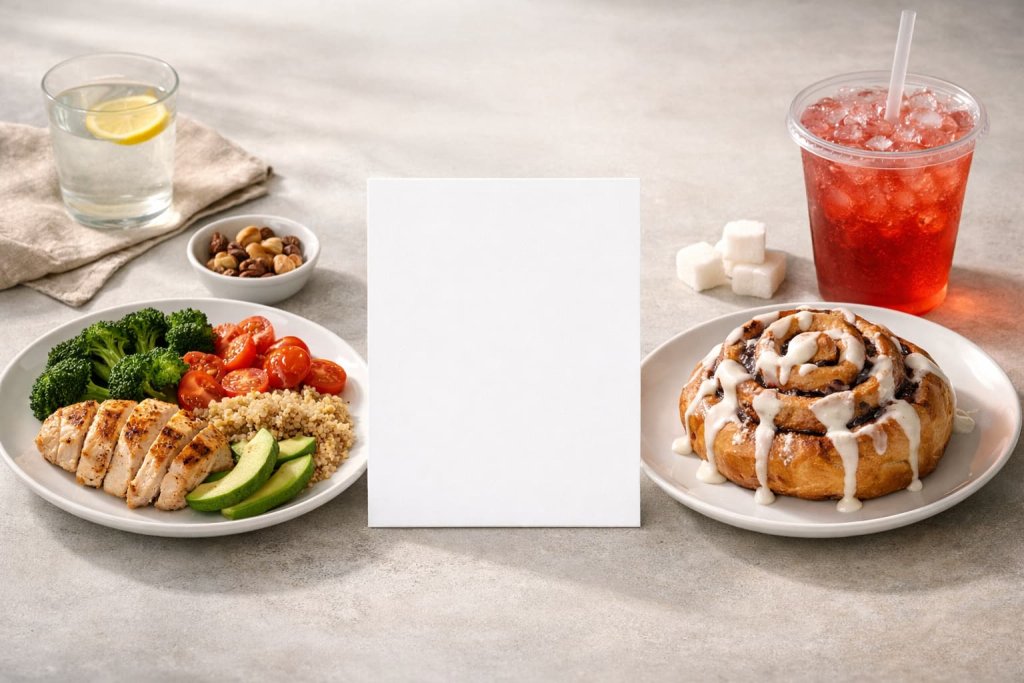
Single foods help most when they fit into a consistent structure. Use this simple template most days:
- Protein at meals (eggs, fish, yogurt, beans, tofu, poultry)
- Fiber-rich carbs (oats, beans, fruit, vegetables, whole grains)
- Healthy fats (olive oil, nuts, seeds, fatty fish)
- A vitamin C produce choice daily (citrus, peppers, berries)
Cortisol is closely tied to sleep and your daily rhythm. If your schedule is irregular, focus on two anchors:
- Eat a balanced first meal within a consistent window each morning
- Keep caffeine earlier in the day and protect a regular bedtime routine
These timing anchors often make food strategies feel noticeably more effective.
For a straightforward plate model and food-group balance, the U.S. Department of Agriculture is a reliable reference point.
Tips that make these foods work better
Build a “stress-smart” breakfast
A common cortisol-friendly move is eating something balanced before (or with) caffeine:
- Oats + yogurt + berries + walnuts
- Eggs + spinach + whole-grain toast + fruit
- Chia pudding + fruit + nuts
Pair caffeine with food and watch timing
Caffeine can raise cortisol. A controlled trial in PubMed Central found caffeine increased cortisol secretion across waking hours, with responses reduced but not eliminated in daily users.
Practical move:
- Avoid “coffee only” mornings.
- Keep caffeine earlier in the day if it affects your sleep.
Choose lower-sugar defaults
High added sugar intake can worsen energy crashes and cravings, which can feel like “more stress.” The American Heart Association recommends limiting added sugars to no more than 25 grams/day for women and 36 grams/day for men.
Easy swaps:
- Plain yogurt + fruit instead of sweetened yogurt
- Dark chocolate instead of candy
- Sparkling water instead of soda
Common mistakes that can work against healthy cortisol regulation
Even “healthy foods” won’t help much if these habits are driving stress signals:
- Skipping meals, then overeating at night (big swings in hunger and energy)
- “Coffee first, food later” mornings
- Using energy drinks or pre-workouts for a daily boost
- Drinking alcohol to unwind (it can disrupt sleep quality and next-day energy)
- Replacing meals with supplements instead of building balanced plates
A practical goal is consistency: regular meals, earlier caffeine, fewer liquid calories, and a steady sleep-friendly routine.
Don’t use extreme restriction as a “stress fix”
Over-restriction can backfire by increasing hunger, cravings, and stress. A sustainable pattern beats a perfect one—especially during high-stress weeks.
One-day example using these foods
Use this as a flexible template (swap based on preference and budget):
Breakfast
- Oats cooked with milk or soy milk
- Top with berries or an orange, plus walnuts and 1 tablespoon ground flax
Lunch
- Lentil bowl: lentils + spinach + chopped bell pepper + olive oil
- Optional add-on: plain yogurt on the side
Snack
- Plain yogurt or kefir with fruit
- If you want something sweet: a small piece of 70%+ dark chocolate
Dinner
- Salmon (or sardines) with a big vegetable side
- Add a fiber-rich carb if you want (beans, brown rice, or a whole grain)
Evening
- If caffeine affects your sleep, switch to water or non-caffeinated tea later in the day
Benefits you can reasonably expect
When these foods replace lower-quality choices and you eat consistently, common “wins” include:
- More stable energy and fewer crash-driven cravings
- Better meal satisfaction (which helps reduce stress-snacking)
- Better nutrition coverage (magnesium, vitamin C, omega-3s, fiber)
- A routine that supports healthier stress regulation over time
If you’re under heavy stress, the goal is progress—not perfection. You may notice steadier energy and fewer cravings first, while deeper stress resilience usually improves when nutrition is paired with better sleep, movement, and a manageable routine.
Risks and who should be careful
If you take blood thinners or have bleeding risk
Food sources of omega-3s are generally fine, but high-dose omega-3 supplements can be a concern for some people. Review supplement safety details in the NIH ODS omega-3 fact sheet (linked above) and ask your clinician if you’re unsure.
If you have kidney disease or a history of kidney stones
Very high vitamin C intake (especially from supplements) can raise kidney stone concerns in some people. The NIH ODS vitamin C fact sheet (linked above) includes upper-limit guidance.
If you take certain medications
Magnesium supplements (not magnesium-rich foods) can interact with some medications. The NIH ODS magnesium fact sheet (linked above) outlines common interaction categories. When in doubt, ask your pharmacist or clinician before adding a supplement.
If you have IBS, reflux, or histamine sensitivity
Fermented foods can bother some people. Start with small portions and choose lower-sodium fermented options when possible.
If you’re watching sodium or blood pressure
Some fermented foods (especially sauerkraut, kimchi, and certain pickled vegetables) can be high in sodium. If you have high blood pressure or are limiting sodium:
- Keep portions small (a few forkfuls can be enough)
- Rinse fermented vegetables briefly to reduce surface salt
- Choose lower-sodium versions when possible
- Consider yogurt or kefir as a lower-sodium fermented option
People also ask about foods that lower cortisol
What is the fastest way to lower cortisol naturally?
The fastest changes are usually behavioral: sleep, calming breathing, and reducing triggers. Food helps more through consistency—balanced meals, adequate calories, fewer sugar crashes, and smarter caffeine timing—rather than instant effects.
Can magnesium-rich foods lower cortisol?
Magnesium adequacy is linked to stress biology, and magnesium has been studied in stress contexts. Food sources are a safe first step; supplements should be individualized.
Do probiotics lower cortisol?
Evidence is mixed and strain-specific. Some studies suggest possible benefit in certain groups, but it’s not a guaranteed outcome for everyone.
Does coffee raise cortisol?
It can, especially if you drink it on an empty stomach or in large amounts. Pairing caffeine with food and moderating intake can help.
FAQ
Which foods are best to eat during high-stress weeks?
Start with easy staples: oats, beans/lentils, spinach, yogurt, fruit (especially citrus/berries), walnuts, and a fatty fish option.
How much salmon should I eat for omega-3 benefits?
Many guidelines encourage regular fish intake; a practical target is 1–2 servings weekly if you enjoy fish. If you’re considering supplements, discuss dosing with a clinician.
Is dark chocolate actually good for stress?
Small portions of higher-cocoa chocolate can be a smarter treat than high-sugar desserts, but it’s still calorie-dense. Keep it modest.
Can I lower cortisol by avoiding carbs?
Usually no. Many people do better with fiber-rich carbs (oats, beans, fruit) that provide steady energy. Extreme carb restriction can increase cravings and stress for some people.
What should I avoid if I’m trying to support healthy cortisol levels?
Common culprits include too much caffeine (especially on an empty stomach), high added sugar intake, skipping meals, and very restrictive dieting.
Do I need supplements to lower cortisol?
Not usually. Food-first is a safer approach for most people. Supplements can be helpful in specific cases but should be personalized, especially if you take medications or have health conditions.
Should I get my cortisol tested?
Testing can be useful when symptoms suggest a hormonal problem or when a clinician suspects a medication or medical condition is affecting cortisol. Because cortisol changes by time of day and test type, it’s best done with professional guidance rather than DIY interpretation.
How long does it take for diet changes to affect stress?
Some people notice steadier energy within days, but meaningful changes in stress resilience usually come from weeks of consistent habits—especially when paired with sleep and routine improvements.
Conclusion
If you want “foods that lower cortisol,” focus on a repeatable pattern: omega-3 sources (salmon, sardines, chia, flax, walnuts), magnesium-rich plants (spinach, beans), vitamin C produce (peppers, citrus), and fiber-rich carbs (oats, lentils). Pair that with smarter caffeine timing and lower added sugar, and you’re building the most evidence-based foundation for healthier stress regulation.
This content is for informational purposes only and not medical advice.