
You can lower cortisol levels safely by improving sleep consistency, using a simple daily stress-reset routine, and building movement and caffeine habits that protect your natural day-night cortisol rhythm. Cortisol is essential for life, so the goal is a steadier, healthier pattern—not “zero cortisol” or extreme hacks.
Cortisol is a steroid hormone made by the adrenal glands. It supports many normal functions and is part of your body’s stress-response system. (Endocrine Society; NCBI Bookshelf)
Quick clarity: what “lower cortisol levels” should mean
Most people searching “lower cortisol levels” really need one of these outcomes:
- Less daily stress reactivity (fewer “spikes” from small stressors)
- Better sleep and easier wind-down at night
- More stable energy and focus during the day
- Fewer stress habits (late caffeine, scrolling, skipping meals)
Cortisol naturally rises and falls across the day. It’s typically higher around waking, increases shortly after waking (the cortisol awakening response), and then trends down toward bedtime. Supporting that rhythm is a safe, realistic goal for most readers. (PubMed Central)
Important: “High cortisol” symptoms can overlap with many common issues like poor sleep, burnout, anxiety, irregular eating, certain medications, or demanding schedules. This plan is designed to support a healthier stress response and daily rhythm. If symptoms are severe, sudden, or persistent, it’s safer to use this guide as a foundation and also discuss your situation with a clinician.
Lower cortisol levels daily plan at a glance
Use this as your “template day.” Then customize it to your schedule.
| Time of day | Goal | What to do (simple defaults) |
|---|---|---|
| Morning (0–60 min after waking) | Anchor your rhythm | Light, water, 2–5 min calm practice, plan 1–3 priorities |
| Late morning to midday | Prevent stress buildup | Short movement break + protein/fiber-forward meal |
| Afternoon | Protect sleep later | Caffeine cutoff, 10–20 min walk, reduce screen stress |
| Evening (last 60–90 min) | Downshift | Dim lights, screens down, wind-down routine, consistent bedtime |
Step 1: Build the foundation with sleep (this matters most)
If you only change one thing, start with sleep consistency. It affects how your stress system behaves and how resilient you feel day to day.
The American Academy of Sleep Medicine and Sleep Research Society recommend that most adults get 7 or more hours of sleep per night regularly to support health. (American Academy of Sleep Medicine)
If you’re a teen: Many teens need more sleep than adults, and early school schedules can make that hard. Focus on a consistent wake time, a wind-down routine, and getting as close to a full night of sleep as your schedule allows.
Your sleep “minimum viable plan”
Pick the easiest version you can maintain.
- Set a consistent wake time (within a 60-minute window most days)
- Choose a bedtime range (not a single perfect bedtime)
- Create a 45–90 minute wind-down buffer
- Keep the bedroom cool, dark, and quiet if possible
A realistic wind-down routine (copy/paste)
- 10 minutes: tidy your space (low effort, high calm)
- 5 minutes: write tomorrow’s top 3 tasks
- 5 minutes: slow breathing or body scan
- Screens down or dimmed; avoid stressful content
If you wake up at night, keep the response boring: low light, minimal clock-checking, and a calm return to bed when you’re sleepy again.
Who should be cautious: If you take steroid medicines (like prednisone), use steroid inhalers frequently, have a known thyroid/adrenal condition, are pregnant, or have symptoms like unexplained weakness, fainting, or rapid unintended weight change, avoid “self-diagnosing cortisol issues.” Use the routine steps in this article, but get personalized guidance from a clinician before pursuing testing or supplements.
Step 2: Start mornings in a way that supports your natural cortisol rhythm

You don’t need a long “wellness routine.” You need a predictable one.
The first 10 minutes after waking
- Light exposure (outdoor daylight if possible; otherwise bright indoor light)
- Hydrate
- 2–5 minutes of a calming practice (you’ll choose one below)
Why this helps: cortisol rhythm is tied to circadian biology, and consistent morning cues can support a steadier pattern across the day.
Avoid the common cortisol-triggering morning pattern
- Waking late + rushing + skipping breakfast + immediate stressful scrolling
Instead, aim for: wake → light/water → calm → simple food → start tasks.
Step 3: Add one daily relaxation skill (2–10 minutes is enough)

The most effective stress tools are the ones you actually repeat.
A study comparing relaxation techniques found that progressive muscle relaxation, deep breathing, and guided imagery increased relaxation compared with a control condition. (PubMed Central)
Choose one skill and stick to it for 14 days
Pick the easiest option:
Option A: Slow breathing (beginner-friendly)
- Inhale gently through the nose
- Exhale slowly (make the exhale longer than the inhale)
- Repeat for 2–5 minutes
If you want a simple, clinician-reviewed breathing guide, use MedlinePlus. (MedlinePlus)
Option B: Progressive muscle relaxation
- Tense and release muscle groups from feet to face
- Total time: 5–10 minutes
Best for: “wired but tired” evenings.
Option C: Guided imagery
- Picture a calm scene with details (sound, light, temperature)
- Total time: 3–10 minutes
Where to place the relaxation skill in your day
- Morning: prevents “rush stress”
- Midday: breaks stress buildup
- Evening: improves wind-down and sleep readiness
Step 4: Move your body daily (without turning it into another stressor)
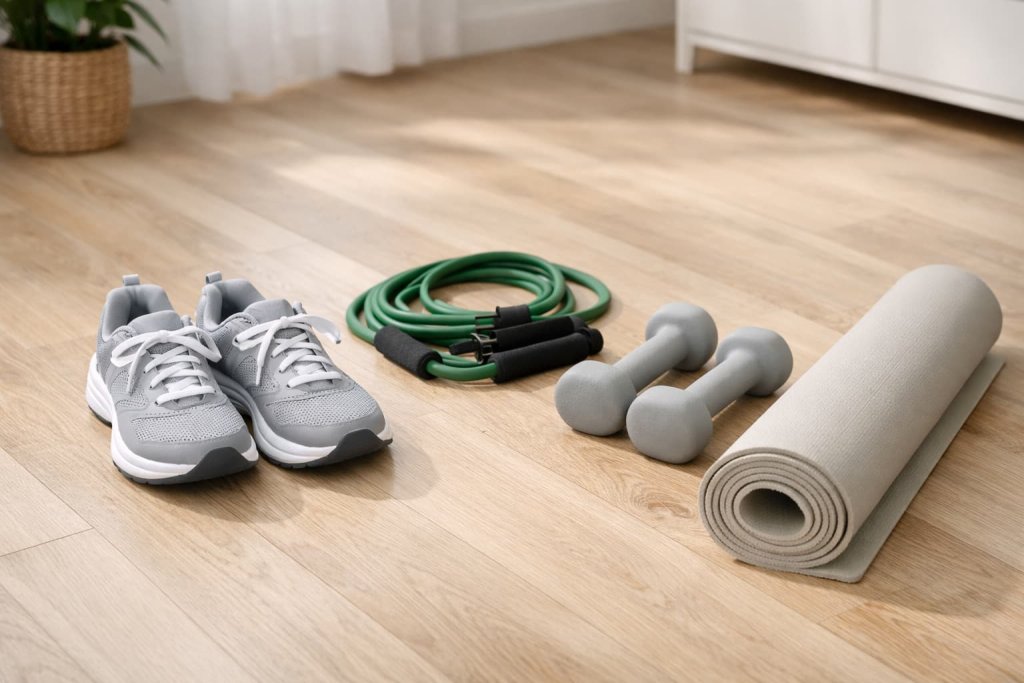
Exercise doesn’t need to be intense to support stress regulation. Consistent movement can improve sleep and resilience.
U.S. guidelines recommend 150–300 minutes per week of moderate-intensity activity (or 75–150 minutes vigorous) and muscle-strengthening activities on 2 or more days per week. (health.gov)
The “stress-friendly” movement menu
Choose what fits your reality:
- 10–20 minute walk most days
- 5-minute mobility break every 2–3 hours
- 2 short strength sessions weekly (20–30 minutes)
If workouts sometimes make you feel more stressed
That can happen when intensity is too high, sleep is too low, or recovery is too little. Try:
- Lower intensity for 2 weeks
- Add more walking
- Move hard workouts earlier in the day
- Prioritize bedtime consistency
Also consider under-fueling and recovery: If you’re training hard while eating too little, skipping meals, or sleeping poorly, your body may feel chronically “on.” A safer approach is to increase recovery (walks, lighter sessions), stabilize meals (especially protein + fiber), and protect sleep for 2 weeks before pushing intensity again.
Step 5: Set caffeine boundaries that protect sleep

Caffeine can be helpful, but timing and dose matter. Poor sleep can increase stress sensitivity the next day—so caffeine habits should support, not sabotage, sleep.
The FDA cites 400 mg of caffeine per day as an amount not generally associated with negative effects for most adults, while noting people vary widely in sensitivity. (U.S. Food and Drug Administration)
Caffeine rules that work for many people
- Keep caffeine earlier in the day
- Avoid “stacking” coffee + energy drinks + pre-workout
- If anxiety or sleep is getting worse, reduce dose first, not just willpower
Tip: if you want to keep a coffee ritual, switch the second drink to decaf or tea earlier in the afternoon.
Step 6: Eat in a way that reduces stress triggers (steady, simple, repeatable)

Food doesn’t “fix cortisol” directly, but inconsistent eating can add stress signals (energy crashes, irritability, poor sleep).
A cortisol-supportive meal pattern
- Eat meals at roughly consistent times
- Include protein + fiber at meals (helps steadier energy)
- Use planned snacks when days are long (avoid emergency sugar hits)
- Hydrate regularly
Easy meal structure (no tracking required)
- Plate idea: protein + high-fiber carbs + color (vegetables/fruit) + healthy fat
Make it boring and repeatable for weekdays.
Step 7: Reduce stress inputs you can control (high impact)

This is where many people feel the quickest relief.
The daily “stress input” checklist
- Turn off non-essential notifications
- Put social media in one planned window (not all day)
- Take one 10-minute “reset break” (walk, stretch, breathe)
- Use a simple boundary: “No work/school email after X time” when possible
The APA emphasizes practical coping strategies and building healthier responses to stressors. (American Psychological Association)
Step 8: Evening routine for lower cortisol levels at night

Nighttime is where your habits show up. If you’re stuck in “tired but wired,” treat evenings like a ramp, not a cliff.
The last 60–90 minutes (simple version)
- Dim lights
- Lower-stimulation activities (shower, stretch, light reading)
- Screens down or filtered
- 5–10 minutes relaxation practice
- Consistent bedtime window
If you keep scrolling at night
Try a “phone parking spot”:
- Charge your phone outside the bedroom (or across the room)
- Use an alarm clock or a simple alarm on a device you can’t scroll on
A note on evening alcohol and nicotine: Alcohol can feel relaxing at first but may disrupt sleep quality and increase night awakenings for many people. Nicotine can also interfere with sleep and keep the body more stimulated. If you’re working on calmer nights, start by reducing late-evening use and prioritize a consistent wind-down routine.
Step 9: A 7-day starter plan (easy version)
You don’t need to change everything at once. Stack small wins.
| Day | Focus | Your one goal |
|---|---|---|
| 1 | Sleep anchor | Set wake time window and bedtime range |
| 2 | Morning routine | Light + water + 2 minutes breathing |
| 3 | Midday reset | 10-minute walk after lunch |
| 4 | Caffeine boundary | Set a daily caffeine cutoff time |
| 5 | Evening ramp | 60 minutes wind-down buffer |
| 6 | Strength or mobility | 20 minutes simple strength or mobility |
| 7 | Review | Keep what worked; simplify what didn’t |
Repeat the week. Consistency is the multiplier.
How to know the plan is working (simple tracking): Pick 2–3 signals and track them for 14 days. Look for trends, not perfection.
- Time to fall asleep (rough estimate)
- Night awakenings (number of times)
- Afternoon energy dip (0–10)
- Irritability/stress reactivity (0–10)
- Caffeine timing and total drinks
If your sleep or mood gets worse after adding changes, simplify the plan and prioritize sleep timing and lower-stimulation evenings first.
What to avoid (safety checklist):
- “Cortisol detox” plans, extreme fasting, or crash dieting to force quick changes
- Stacking multiple stress/sleep supplements at once
- Using alcohol as your primary wind-down tool
- Very intense training every day without recovery
- Chasing perfect routines that increase stress
The safest approach is steady sleep timing, daily stress skills, and sustainable movement.
Step 10: Supplements marketed to “lower cortisol” (safety-first)
Many supplements are marketed for cortisol and stress. If you include supplements, do it conservatively:
- Lifestyle steps first (sleep, routine, movement, relaxation)
- Evidence varies by product, dose, and quality
- Supplements can cause side effects or interact with medications
For example, ashwagandha is widely promoted for stress; the NIH fact sheet summarizes evidence and safety considerations. (NIH Office of Dietary Supplements)
For additional safety context and cautions, review NCCIH’s overview. (NCCIH)
Shift work and irregular schedules (how to adapt the plan)
If you work nights or rotating shifts, your cortisol rhythm can be disrupted. A review of shift work notes that night work can disturb cortisol rhythmicity. (MDPI)
Practical adaptations
- Protect a consistent sleep window as much as possible
- Keep your “morning routine” tied to your wake time (even if it’s 3 pm)
- Use light strategically: brighter when you need alertness; lower light before sleep
- Keep caffeine earlier in your “workday,” not near your sleep time
If you work long or irregular hours, the CDC’s fatigue and sleep guidance includes practical tips for reducing sleep disruption. (CDC)
When to talk to a clinician instead of self-optimizing

Cortisol can be too high or too low for medical reasons. Consider professional guidance if you have:
- Persistent symptoms that disrupt life (severe fatigue, weakness, worsening sleep, unexplained weight change)
- Concerns about endocrine or adrenal conditions
- Use of steroid medications (never stop suddenly without medical guidance)
Cortisol testing basics (why timing matters): Cortisol changes across the day, so clinicians choose tests and timing carefully. Depending on your symptoms, they may use morning blood tests, saliva tests, or other measures and interpret results in context. If you’re worried about cortisol, the most helpful first step is describing your sleep schedule, stress pattern, medications, and symptoms clearly—then letting a clinician decide whether testing is appropriate and when it should be done.
The Endocrine Society explains adrenal hormones and related conditions, including adrenal insufficiency. (Endocrine Society; NCBI Bookshelf)
Common myths about lower cortisol levels
Myth 1: “Cortisol is bad and should be as low as possible”
Reality: cortisol is essential for normal function. The target is a healthier rhythm and response, not “as low as possible.”
Myth 2: “One hack will fix cortisol”
Reality: the biggest wins come from sleep consistency, daily stress skills, and movement routines you can repeat.
Myth 3: “Supplements are safer than habits”
Reality: supplements can have side effects and interactions. Use authoritative sources and clinician input when needed.
FAQ: Lower cortisol levels
1) How fast can I lower cortisol levels?
A breathing session or walk may help you feel calmer the same day, but steadier results usually come from repeating the daily plan consistently for weeks.
2) What is the best morning routine to lower cortisol levels?
A consistent wake time, early light exposure, hydration, and 2–5 minutes of a calming practice is a simple, effective start.
3) Does exercise lower cortisol levels or raise them?
Exercise can temporarily raise cortisol during the activity, but consistent physical activity supports sleep and stress resilience over time.
4) Can caffeine raise cortisol levels?
Caffeine affects alertness and can worsen anxiety or sleep for some people, especially with higher doses or late timing. The safest approach is earlier timing and moderate intake.
5) What foods lower cortisol levels?
No single food reliably “lowers cortisol.” A steady meal pattern with protein, fiber, and hydration can reduce stress triggers like energy crashes.
6) What is the safest supplement for lowering cortisol levels?
There isn’t one best option for everyone. Review evidence and safety information and consider clinician guidance, especially if you take medications.
7) When should I consider cortisol testing?
If symptoms are persistent, severe, or suggest an endocrine issue, ask a clinician whether testing is appropriate.
Conclusion
Lower cortisol levels safely is mostly about building a day that supports your natural rhythm: consistent sleep, a repeatable relaxation skill, regular movement, and caffeine boundaries that protect your nights. Start small, make it repeatable, and stack changes week by week.
This content is for informational purposes only and not medical advice.