
The wall squat exercise is a beginner-friendly, equipment-free movement that strengthens the legs by holding or sliding into a supported squat position against a wall. It is widely used in fitness, rehabilitation, and athletic training because it allows controlled lower-body loading with minimal balance demands.
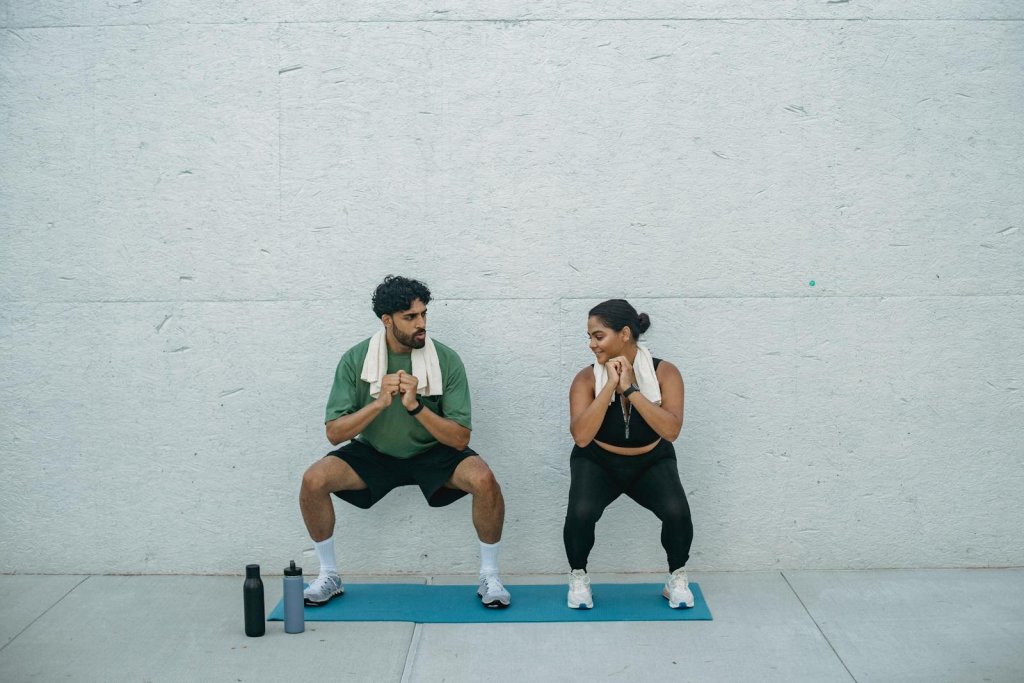
Understanding how to perform wall squats correctly matters because proper form helps you build leg strength safely, manage joint stress, and progress at your own pace.
Below is a clear, evidence-based guide covering how wall squats work, their benefits, correct technique, variations, safety tips, and common questions—so you can use them confidently in your routine.
What Is the Wall Squat Exercise?
A wall squat is a lower-body exercise performed with your back supported by a wall while your hips and knees bend into a squat position. Depending on how it’s performed, it can be:
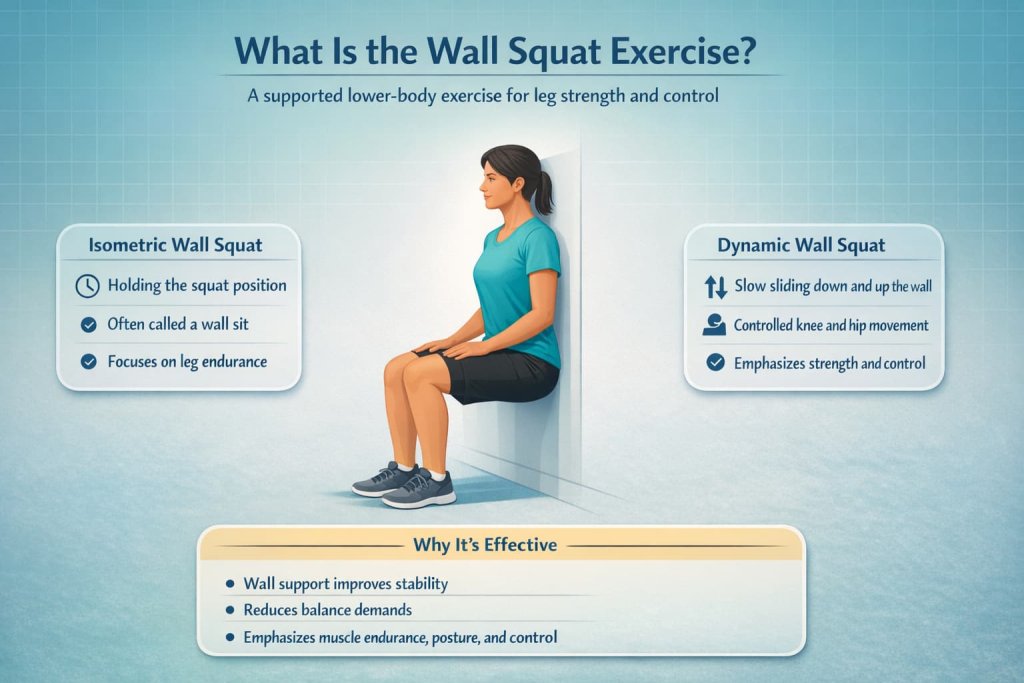
- Isometric (holding the squat position, often called a wall sit)
- Dynamic (slowly sliding down and up the wall)
Because the wall provides stability, the exercise emphasizes muscle endurance, control, and posture rather than balance.
How to Do the Wall Squat Exercise Correctly
How to do it:
- Stand with your back flat against a wall and feet about shoulder-width apart
- Walk your feet slightly forward so your knees can bend comfortably
- Lower your body by bending hips and knees until thighs are near parallel (or as tolerated)
- Keep your chest upright and core gently braced
- Hold the position or slowly slide back up with control
Most fitness organizations emphasize smooth movement, upright posture, and pain-free range of motion when teaching wall squats.
Muscles Worked During Wall Squats
The wall squat primarily targets the quadriceps, which work isometrically to maintain knee position. Secondary involvement includes:
- Gluteal muscles – help stabilize the hips
- Hamstrings – assist with knee and hip control
- Core muscles – support upright posture against the wall
Electromyography (EMG) research shows wall squats produce meaningful activation in the quadriceps and supporting hip muscles, making them useful for both strength and rehabilitation contexts.
Benefits of the Wall Squat Exercise
Wall squats are popular because they offer multiple practical benefits:
- Builds leg strength and endurance without weights
- Joint-friendly option for people easing into lower-body training
- Improves squat positioning awareness by reinforcing upright posture
- Minimal equipment and space required, suitable for home workouts
Isometric lower-body exercises like wall squats are also discussed in cardiovascular research contexts, as isometric training has been studied for its potential role in supporting healthy blood pressure when done appropriately.
Why the Wall Squat Exercise Is Effective for Stronger Legs
The wall squat exercise builds stronger legs by keeping the quadriceps under continuous tension while the wall provides support and stability. This setup allows focused lower-body effort with reduced balance demands, making it effective for building leg endurance and control.
Key reasons it works:
- Sustained isometric loading of the quadriceps
- Reduced balance requirements for better form
- Consistent knee and hip alignment
- Easy to scale by changing depth or hold time
How Long Should You Hold a Wall Squat?
Hold duration should match your strength level and remain pain-free.
- Beginners: 20–30 seconds
- Intermediate: 40–60 seconds
- Advanced: 60–90 seconds
- Perform 2–3 controlled sets with rest between holds
Tips for Safe Wall Squat Practice
Following simple safety principles helps protect joints and improve results.
- Warm up before starting
- Keep knees aligned with toes
- Maintain steady breathing
- Choose a comfortable squat depth
- Stop if sharp pain occurs
Guidance from organizations such as the American College of Sports Medicine and the Mayo Clinic emphasizes controlled movement and gradual progression.
Wall Squat vs Wall Sit: Is There a Difference?
Although the terms are often used interchangeably, there is a subtle distinction:
- Wall sit: Static hold at a fixed depth (purely isometric)
- Wall squat: May include controlled movement up and down the wall
Both variations strengthen the legs; your choice depends on whether you want endurance holds or controlled movement practice.
Common Wall Squat Mistakes to Avoid
To get the most benefit, avoid these frequent errors:
- Letting knees collapse inward
- Placing feet too close to the wall, increasing knee stress
- Holding your breath instead of breathing steadily
- Sliding too low without control or beyond comfort
Maintaining proper alignment helps reduce unnecessary joint strain.
Who Should Be Cautious With Wall Squats?
Wall squats are generally safe for many people, but extra care is advised if you:
- Have knee, hip, or lower-back pain
- Are recovering from lower-limb surgery or injury
- Experience sharp pain during knee bending
In such cases, reducing depth, shortening hold times, or consulting a qualified professional is recommended.
How to Progress the Wall Squat Exercise
Once the basic version feels manageable, you can progress by:
- Increasing hold time gradually
- Performing slow wall-slide repetitions
- Adding a stability ball between your back and the wall
- Holding light dumbbells at your sides
These progressions increase muscular demand while maintaining controlled support.
How Often Should You Do Wall Squats?
General physical-activity guidelines from the World Health Organization and the American Heart Association recommend including muscle-strengthening activities at least two days per week. Wall squats can fit easily into these sessions, especially for beginners or active-recovery days.
Frequently Asked Questions (FAQs)
Are wall squats good for beginners?
Yes. The wall provides support, making wall squats accessible for beginners learning proper squat mechanics.
How long should I hold a wall squat?
Many beginners start with 20–30 seconds and gradually increase as strength and comfort improve.
Do wall squats build muscle?
They primarily improve muscular endurance and strength, especially in the quadriceps, when performed consistently.
Are wall squats bad for knees?
When done with correct form and within a pain-free range, wall squats are generally considered knee-friendly.
Can wall squats replace regular squats?
They can complement traditional squats but do not fully replace free-standing squat variations for overall strength development.
Can seniors do wall squats?
Yes, with adjusted depth and shorter holds, wall squats are often used in senior fitness programs.
Conclusion
The wall squat exercise is a simple yet effective way to strengthen your legs, improve posture, and build endurance without equipment. Its supportive setup makes it ideal for beginners, home workouts, and structured progressions. By focusing on proper form and gradual progression, wall squats can become a reliable part of a balanced fitness routine.
If you are new to exercise or managing joint concerns, start conservatively and build confidence over time.
References
- Stability Ball Wall Squats (ACE Fitness Exercise Library)
- 9 Benefits of Wall Sits and How To Do Them (Cleveland Clinic)
- Gluteus Medius Activation During Weight-Bearing Exercises (BMC, 2010)
- Exercise Training and Resting Blood Pressure: Network Meta-analysis (BJSM, 2023)
- Isometric Wall Squat in Knee Osteoarthritis: Randomized Controlled Trial (BMJ Open, 2025)
- WHO Physical Activity Fact Sheet (World Health Organization)
- AHA Recommendations for Physical Activity in Adults (American Heart Association)