
Foam roller exercises for hip pain relief can help by easing muscle tightness and improving short-term hip mobility, which may reduce “stiff and sore” sensations for many people. Foam rolling is a form of self-massage that may increase range of motion and help with muscle soreness when done gently and consistently.
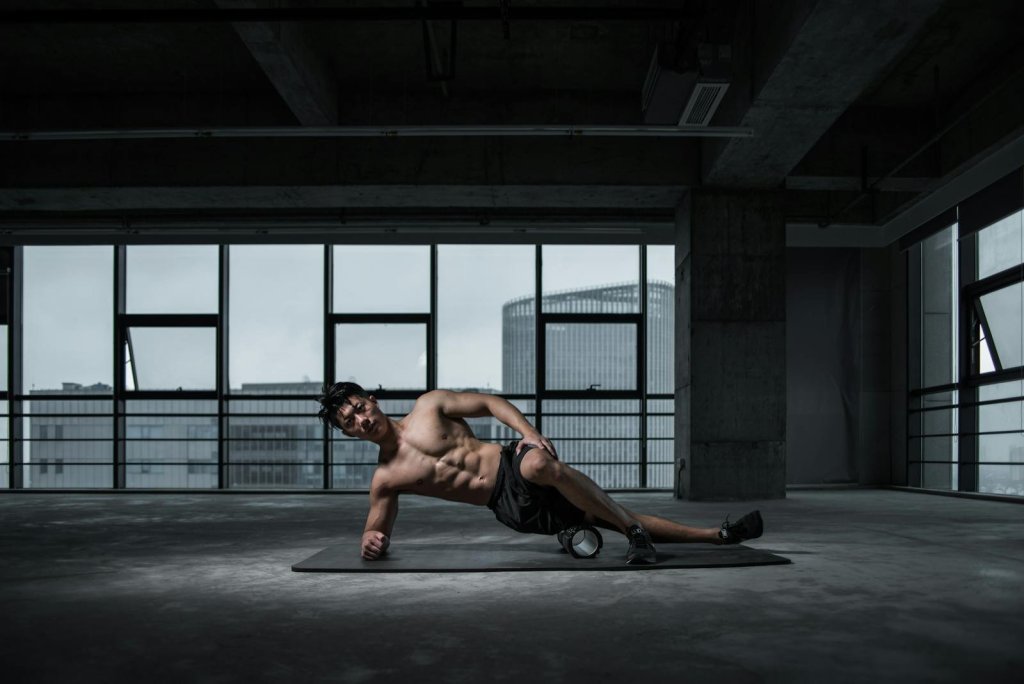
Hip pain has multiple causes (muscles, tendons, joints, nerves), so the goal here is safe, practical self-care that targets common “tight-feeling” areas around the hip. If your pain is sharp, worsening, or doesn’t improve, it’s smart to check in with a qualified clinician.
Before you start: quick safety rules for foam rolling hip pain
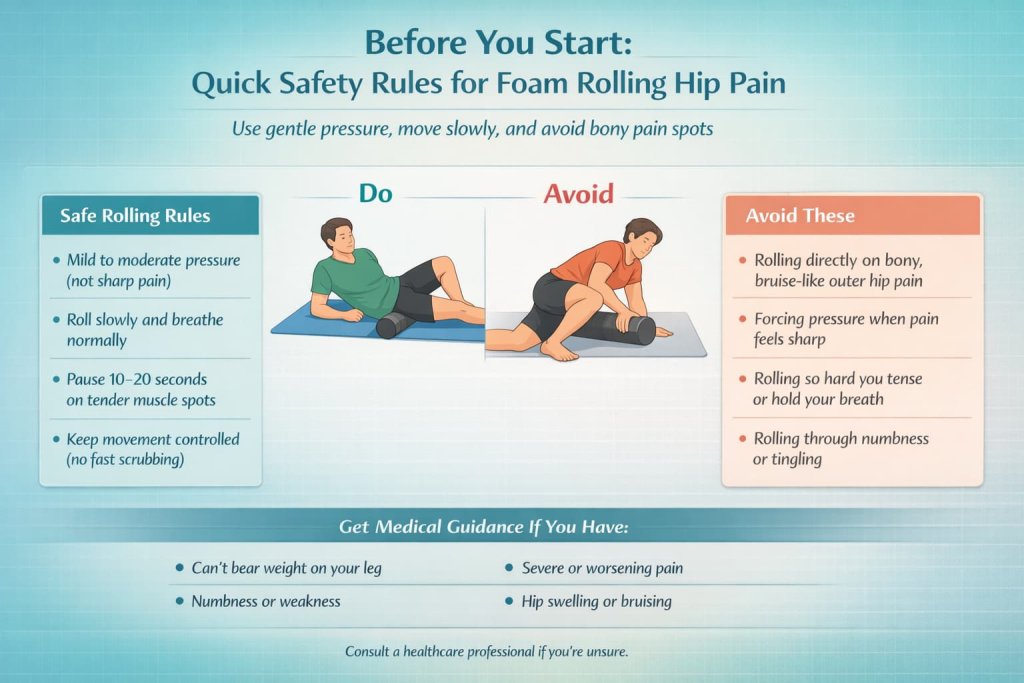
- Aim for mild to moderate discomfort, not sharp pain.
- Roll slowly, breathe normally, and avoid “scrubbing” fast over painful spots.
- Avoid rolling directly on bony, bruise-like pain on the outside of the hip. If you have lateral hip pain (sometimes related to GTPS-type patterns), direct pressure over the bony area can flare symptoms—this caution is also highlighted by the American Council on Exercise (ACE).
- Seek medical guidance sooner if you have red flags like inability to bear weight, fever, major swelling, numbness/tingling that spreads, or severe night pain.
Why foam rolling may help hip pain
Foam rolling is commonly used to:
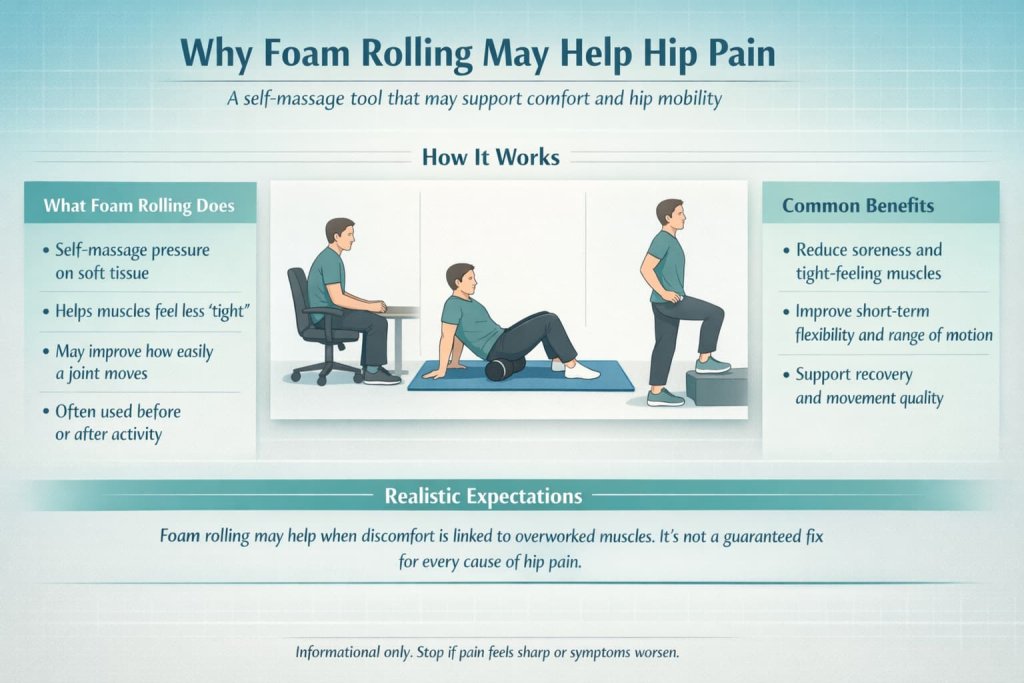
- Reduce muscle soreness and tightness feelings
- Improve short-term flexibility/range of motion
- Support recovery and movement quality
It’s not a guaranteed fix for every kind of hip pain, but it can be a helpful tool when your symptoms are driven by overworked tissues around the hip.
Common causes of outer-hip pain you should know about
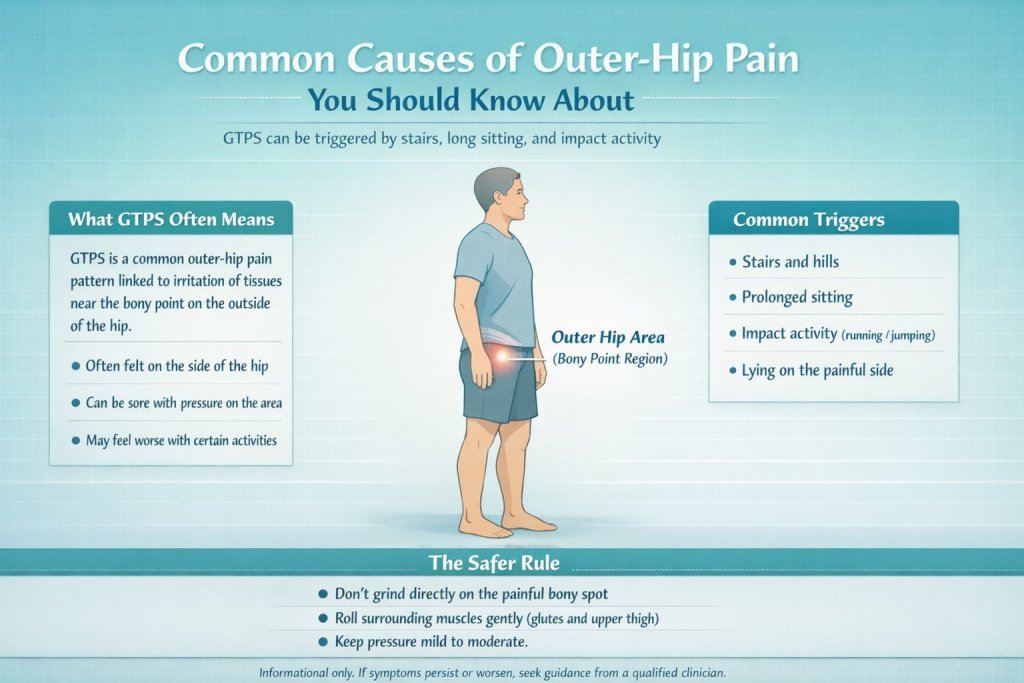
A very common source of outer-hip pain is greater trochanteric pain syndrome (GTPS), which often involves irritation of tissues near the greater trochanter (the bony point on the outside of your hip). It’s frequently aggravated by stairs, prolonged sitting, and impact activity, as described in the NCBI Bookshelf.
If this sounds like you, the “rule” is simple: don’t grind directly on the painful bone—work the surrounding muscles gently instead.
5 Best foam roller exercises for hip pain relief
Target your glutes, piriformis area, TFL/upper outer thigh, adductors, and quads to reduce tightness and improve hip mobility safely. Roll slowly with light-to-moderate pressure, avoid the bony outside hip, and stop if pain feels sharp or radiates.
1) Glute foam roll (glute max and glute med area)
Why it works: Tight or overworked glutes can make the hips feel stiff, especially after long sitting or lots of walking/running. Rolling the glute region often improves comfort and hip motion without pressing directly on the hip bone.
Muscles worked: Gluteus maximus, gluteus medius/minimus region, deep hip rotators (lightly).
How to do it:
- Sit on the foam roller with both hands behind you for support.
- Cross one ankle over the opposite knee (figure-4) to expose the glute.
- Lean slightly toward the crossed-leg side (stay on the muscle, not the bony hip).
- Roll slowly from the top of the glute to the mid-glute for 30–60 seconds.
- Pause on tender spots for 10–20 seconds while breathing normally.
Trainer Tip: If the outer hip feels “bony and bruise-like,” shift a few inches back onto the glute muscle. If you suspect a GTPS-type pattern, avoid direct pressure over the greater trochanter area.
2) Piriformis and deep rotator release (gentle glute pocket roll)
Why it works: The deep rotators (often called the “piriformis area”) can feel tight in people who sit a lot or do lots of hinging/squats. Gentle pressure can help reduce that tight sensation.
Muscles worked: Piriformis region and other deep external rotators (lightly), glute med.
How to do it:
- Sit on the roller and place it slightly toward the back pocket area (not on the spine).
- Keep the same figure-4 position as above, or keep both feet down for less pressure.
- Roll in a small range (a few inches) to explore tender spots.
- Hold mild tender points for 10–20 seconds while breathing slowly.
- Switch sides.
Trainer Tip: If you feel tingling, numbness, or pain that shoots down the leg, stop and get guidance—don’t roll through nerve-like symptoms.
3) TFL/upper outer thigh roll (instead of “rolling the IT band”)
Why it works: Many people blame the IT band, but direct aggressive rolling along the IT band can be uncomfortable and isn’t always the best target. A smarter approach is working the upper outer thigh/TFL area and glute muscles, while avoiding the painful bony hip point—especially if you have lateral hip pain.
Muscles worked: Tensor fasciae latae (TFL), upper lateral quad fibers, nearby hip stabilizers.
How to do it:
- Lie on your side with the roller under the upper outer thigh (just below the front pocket area).
- Use your top leg and arms to control how much bodyweight is on the roller.
- Roll slowly 2–6 inches up and down, staying on muscle tissue.
- Keep clear of the bony point of the hip (greater trochanter).
- Spend 30–60 seconds per side.
Trainer Tip: If the outside of your hip is the painful spot, keep your pressure slightly forward (TFL/upper outer thigh) or slightly back (glute), instead of pinning the bony point.
4) Adductor foam roll (inner thigh)
Why it works: Tight inner-thigh muscles can contribute to hip stiffness and altered movement patterns. This is often a helpful “hidden” area for people who feel hip tightness with squats, lunges, or side-to-side movement.
Muscles worked: Adductors (adductor longus/brevis/magnus region), gracilis.
How to do it:
- Lie face down and place the roller parallel to your body.
- Bend one knee and open the leg out to the side (like a frog position).
- Place the inner thigh on the roller near the knee.
- Roll slowly toward the upper inner thigh (stay comfortable; avoid the groin crease if sharp).
- Spend 30–60 seconds per side.
Trainer Tip: Use your arms and opposite leg to reduce pressure. The inner thigh can be sensitive—gentle is better than intense.
5) Quadriceps roll (front thigh to support hip flexor comfort)
Why it works: The quads connect into the front of the hip area and can feel tight after sitting, running, cycling, or lots of leg training. Rolling the front thigh often helps the hips move more freely without jamming pressure into the front groin.
Muscles worked: Quadriceps group (rectus femoris, vastus muscles).
How to do it:
- Lie face down with the roller under the front of one thigh.
- Support yourself on forearms like a relaxed plank.
- Roll from just above the knee toward mid-thigh (or higher if comfortable).
- Keep your core gently engaged and breathe.
- Spend 30–60 seconds per side.
Trainer Tip: If the very front of the hip/groin is the painful spot, don’t force the roller into it. Stay on the thigh muscle and pair this with gentle hip mobility afterward.
How long should you foam roll for hip pain?
A simple starting dose:
- 30–60 seconds per area, 1–2 rounds
- 3–5 days per week (or after long sitting/workouts)
- Keep pressure comfortable and gradually build tolerance
A simple 5-minute routine for foam rolling hip pain
Use this as a starter plan (adjust pressure as needed):
- Glutes: 45 seconds/side
- Piriformis area: 30 seconds/side
- TFL/upper outer thigh: 45 seconds/side
- Adductors: 30 seconds/side
- Quads: 45 seconds/side
What to do after foam rolling
Use the next few minutes to reinforce comfortable movement (not intense stretching).
- Walk or do very light cycling for 2–5 minutes
- Add 1–2 gentle mobility drills (pain-free range): hip switches (90/90), easy hip flexor opener, or slow chair squats
- Do 1 simple activation move: glute bridge holds (5–10 seconds) or clamshells (slow reps)
- Drink water and keep the rest of your workout light if the hip feels sensitive
- Recheck later: if pain increases within 2–24 hours, use less pressure/time next session and focus on easy movement
When foam rolling is a good idea (and when it’s not)
Foam rolling may be a good idea if:
- Your hips feel tight from sitting, training, or general stiffness
- Discomfort is muscular and improves with gentle movement
- You want a quick mobility boost before activity
Skip it (or get guidance first) if:
- Pain is sharp, hot/swollen, or worsening
- You have nerve-like symptoms (numbness/tingling, pain shooting down the leg)
- You have strong lateral hip pain and rolling the bony outside hip makes it worse (possible GTPS-type pattern)
Does foam rolling help hip osteoarthritis pain?
In a PubMed-indexed study involving people with hip osteoarthritis, foam rolling was associated with improved hip pain, according to PubMed. That said, osteoarthritis is a medical condition with multiple factors, so consider foam rolling a supportive tool, not a standalone solution.
FAQs
Can foam roller exercises really relieve hip pain?
They can help some types of hip discomfort—especially tightness and soreness—by improving short-term mobility and comfort. They’re less reliable for pain driven by joint injury, nerve irritation, or significant tendon problems.
How often should I do foam roller exercises for hip pain relief?
A practical starting point is 3–5 days per week, 30–60 seconds per area, adjusting based on how you feel the next day.
Should I foam roll the outside of my hip?
If the outside of your hip is the painful spot (especially the bony point), don’t roll directly on it. Focus on glutes and nearby upper-thigh muscles instead.
Is it okay to foam roll the IT band for hip pain?
Many people do better targeting nearby muscles (glutes/TFL/upper thigh) rather than aggressively grinding along the IT band, especially if the lateral hip feels sensitive.
What should foam rolling feel like?
Mild to moderate discomfort is normal; sharp pain is not. If rolling causes worsening pain, bruised-bone sensations, or radiating symptoms, stop.
Should I stretch or foam roll first?
Either can work, but many people prefer foam rolling first to reduce tightness feelings, followed by gentle mobility or stretching.
How long does it take to notice results?
Some people feel a short-term change in comfort or mobility right away. If you don’t notice any improvement after 2–3 weeks of gentle, consistent work, it’s worth reassessing the cause of pain and getting professional input.
Conclusion
Foam roller exercises for hip pain relief work best when you keep pressure gentle, avoid bony hot-spots, and target the muscles that influence hip motion—especially the glutes, upper outer thigh/TFL, adductors, and quads. If your symptoms match an outer-hip GTPS-type pattern, be extra cautious with direct lateral-hip pressure and prioritize surrounding tissues instead.
If you want, tell me where your hip pain is located (front, side, groin, butt), and I’ll suggest the safest order and which of these 5 moves to prioritize.
References
- PubMed Central (PMC) — GTPS diagnosis/management review (helps explain outer-hip pain patterns)
- PubMed Central (PMC) — Systematic review/meta-analysis on foam rolling and range of motion
- PubMed — Systematic review/meta-analysis on foam rolling, ROM, recovery, and performance markers
- ScienceDirect — Meta-analysis on foam rolling and delayed-onset muscle soreness (DOMS)