
The chin tuck exercise is a simple, evidence-based movement that helps retrain neck posture by activating the deep neck flexor muscles and reducing forward head posture.
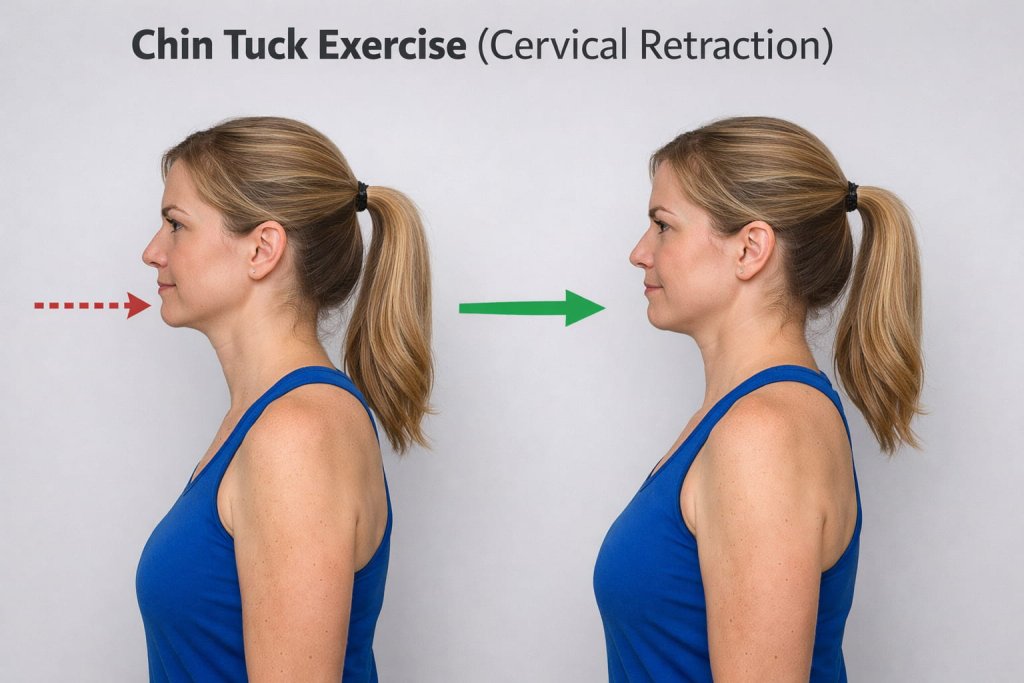
It’s widely used in physical therapy and posture programs because it requires no equipment, takes only minutes per day, and supports healthier neck alignment during sitting, standing, and daily movement.
Forward head posture is increasingly common due to prolonged screen time and sedentary habits. Learning how to perform the chin tuck exercise correctly may help support neck comfort, posture awareness, and long-term spinal health.
What Is the Chin Tuck Exercise?
The chin tuck exercise—also known as cervical retraction—is a controlled movement where the head glides straight backward while staying level. Unlike looking down, this motion trains the deep stabilizing muscles of the neck that help hold the head in a neutral position.
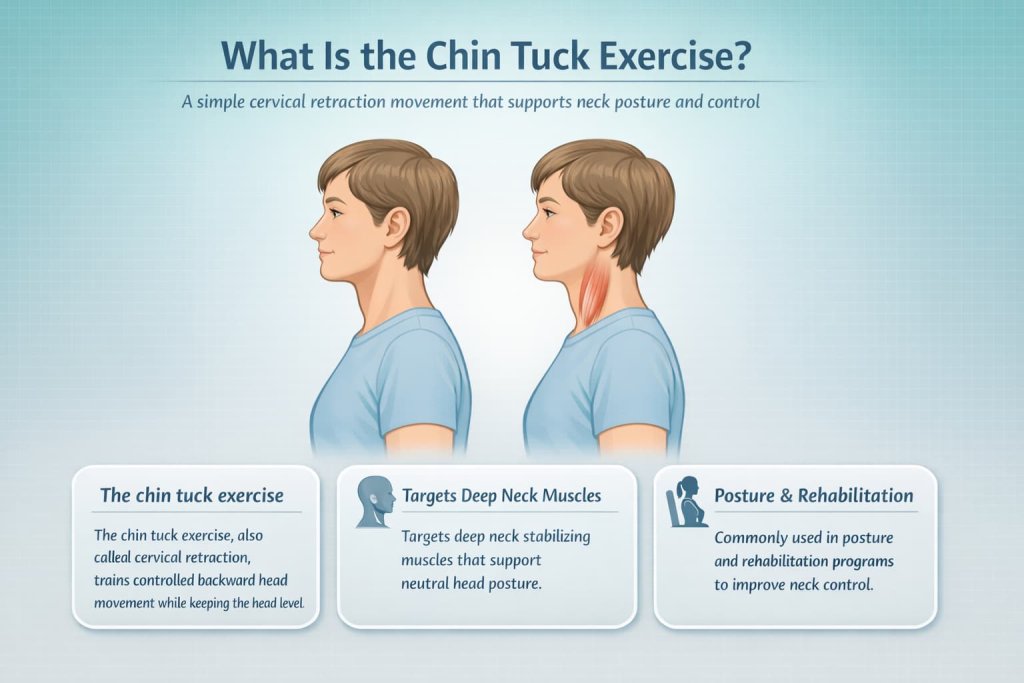
Clinical and rehabilitation resources commonly include chin tucks in programs designed to improve posture awareness and neck control.
How to Do the Chin Tuck Exercise Correctly
How to do it
- Sit or stand upright with your chest lifted and shoulders relaxed
- Keep your eyes level, looking straight ahead
- Gently glide your head straight backward as if making a “double chin”
- Avoid tilting your head up or down
- Hold the position for 5–10 seconds
- Relax and return to the starting position
Repeat for 5–10 controlled repetitions.
How the Chin Tuck Exercise Works
The chin tuck focuses on activating the deep neck flexors, muscles that sit close to the cervical spine and play a key role in posture and segmental neck stability.
When these muscles are underactive, the head often drifts forward, increasing strain on:
- The upper cervical joints
- Neck extensor muscles
- Supporting soft tissues of the spine
By practicing controlled retraction, the chin tuck encourages better head-over-shoulders alignment.
Benefits of the Chin Tuck Exercise
When performed consistently and with proper technique, the chin tuck exercise may help:
- Support better neck and head posture
- Improve awareness of forward head positioning
- Encourage balanced neck muscle activation
- Reduce compensatory tension in the upper neck and shoulders
- Complement broader posture and mobility programs
Public-health and rehabilitation guidance from organizations such as the Mayo Clinic and the National Health Service commonly includes postural exercises as part of conservative neck-care strategies.
Why the Chin Tuck Exercise Helps Forward Head Posture
Forward head posture increases the load placed on the cervical spine. Research consistently shows that as the head moves forward, muscular demand on the neck increases significantly.
Chin tucks help counter this by:
- Re-educating neutral head positioning
- Supporting endurance of postural neck muscles
- Reducing reliance on overworked neck extensors
Exercise-based posture strategies are commonly recommended by rehabilitation professionals and supported by guidance from the American Physical Therapy Association.
Common Chin Tuck Exercise Mistakes
Many people perform chin tucks incorrectly. Avoid these common errors:
- Tilting the head downward instead of gliding backward
- Over-tightening the jaw or clenching teeth
- Forcing the movement aggressively
- Holding the breath
- Rushing through repetitions
The movement should feel controlled and gentle, not strained.
Why Forward Head Posture Happens
Forward head posture develops when the head consistently sits in front of the shoulders rather than stacked over them. This position increases the mechanical load on the cervical spine and surrounding muscles over time.
Common contributing factors include:
- Prolonged sitting, especially during computer or phone use
- Habitual slouched or rounded-shoulder posture
- Reduced endurance of the deep neck flexor muscles
- Limited upper-back (thoracic) mobility
- Age-related postural changes and decreased activity levels
Rather than being caused by a single issue, forward head posture usually reflects a combination of daily habits, muscle imbalances, and movement patterns that develop gradually.
Who Should Be Cautious or Avoid Chin Tuck Exercises
While the chin tuck exercise is generally considered low risk, it may not be appropriate for everyone without modification or professional guidance.
Extra caution is recommended for individuals who:
- Experience sharp or worsening neck pain during movement
- Have a recent neck injury, surgery, or trauma
- Notice dizziness, numbness, tingling, or radiating arm symptoms
- Have diagnosed cervical spine instability or neurological conditions
If the exercise causes discomfort beyond mild muscle effort, it should be stopped. A qualified healthcare or rehabilitation professional can help determine whether chin tucks are appropriate and how they should be adjusted.
Can Chin Tucks Alone Fix Forward Head Posture?
Chin tucks are a helpful component of posture training, but they are not a standalone solution for forward head posture.
Forward head posture typically involves multiple regions of the body, including:
- The cervical spine
- The upper back and shoulders
- The rib cage and overall sitting or standing habits
For lasting improvement, chin tucks are most effective when combined with:
- Upper-back mobility exercises
- Postural awareness during daily activities
- Strengthening of supporting muscles in the shoulders and trunk
- Reduced prolonged screen time or improved workstation setup
Think of chin tucks as a foundational exercise that supports better alignment, not a quick fix on its own.
Safety Guidelines and When to Avoid Chin Tucks
The chin tuck exercise is generally considered low risk when performed gently. However:
- Stop if you feel dizziness, sharp pain, or numbness
- Avoid forcing the range of motion
- Consult a qualified professional if you have a recent neck injury, neurological symptoms, or worsening pain
If symptoms persist, evaluation by a licensed healthcare or rehabilitation professional is recommended.
How Often Should You Do the Chin Tuck Exercise?
Most posture programs recommend:
- 1–2 sessions per day
- 5–10 repetitions per session
- Slow, controlled holds rather than fast movements
Consistency matters more than intensity.
Frequently Asked Questions
Does the chin tuck exercise fix forward head posture?
The chin tuck exercise may help improve posture awareness and neck muscle control, but best results usually come when combined with overall posture, mobility, and strength work.
Can I do chin tucks every day?
Yes, chin tucks are commonly prescribed for daily practice when done gently and without pain.
Are chin tucks safe for seniors?
They are often included in senior-friendly posture programs, provided the movement stays pain-free and controlled.
How long does it take to see posture improvements?
Postural awareness can improve within weeks, but visible changes depend on consistency and daily habits.
Should chin tucks cause pain?
No. Mild muscle effort is normal, but pain is a sign to stop and reassess technique.
Conclusion
The chin tuck exercise is a simple, accessible movement that supports better neck posture and alignment when performed correctly. While it isn’t a standalone solution, it plays an important role in posture-focused exercise routines recommended by rehabilitation professionals.
If you spend long hours sitting or using screens, adding chin tucks to your daily routine may help reinforce healthier neck positioning and long-term movement habits.
References
- Oxford Health NHS Foundation Trust – Neck Exercises (PDF)
- University Hospitals Dorset NHS Foundation Trust – Neck Range of Motion Exercises (PDF)
- Cleveland Clinic Abu Dhabi – Neck Pain Exercise Book
- PLOS One (2025) – Exercise Therapy and Cervical Proprioception in Forward Head Posture
- PubMed Central (2025) – Forward Head Posture and Neck Muscle Endurance in Chronic Neck Pain
- PubMed Central (2019) – Forward Head Posture and Neck Pain: Systematic Review and Meta-Analysis
- Korean Journal of Pain (2023) – Comparing Exercise Training Approaches in Chronic Neck Pain