
Tech neck exercises are targeted movements that strengthen deep neck muscles, improve posture, and reduce strain caused by prolonged screen use. Understanding how to perform the right exercises matters because forward head posture can overload the neck, shoulders, and upper back over time, especially with daily phone and computer use.
Research-backed exercise routines, combined with posture awareness and screen-time breaks, may help support neck comfort, mobility, and postural alignment.
Below are the most effective, evidence-informed tech neck exercises you can safely do at home or at work.
What Are Tech Neck Exercises?
Tech neck exercises are posture-focused movements designed to counteract forward head posture caused by looking down at screens. They typically target:
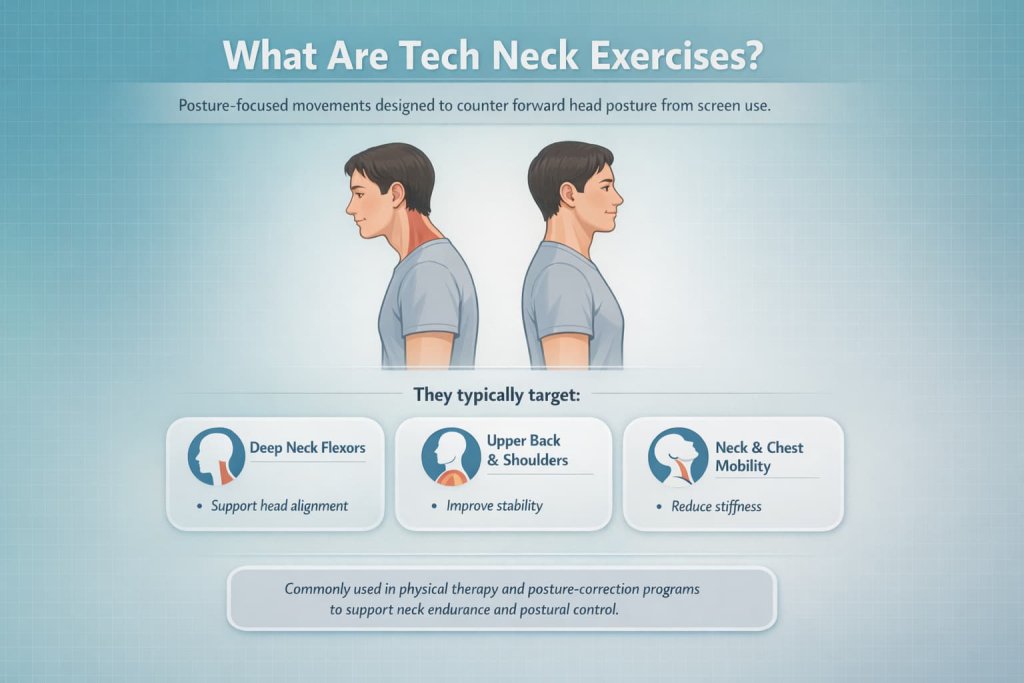
- Deep neck flexor muscles that support head alignment
- Upper-back and shoulder stabilizers
- Neck and chest mobility to reduce stiffness
These exercises are commonly used in physical therapy and posture-correction programs to support neck endurance and postural control.
8 Best Tech Neck Exercises
These 8 tech neck exercises are designed to support better head and neck alignment by addressing muscle weakness, stiffness, and postural fatigue caused by prolonged screen use. Practiced consistently, they may help improve posture awareness and reduce daily neck strain.
1. Chin Tuck
Why it works:
The chin tuck directly activates the deep neck flexor muscles, which play a key role in supporting neutral head alignment. These muscles often become weak with prolonged phone and laptop use, allowing the head to drift forward. Strengthening them helps counter forward head posture and reduces strain on the neck and upper back.
How to do it:
- Sit or stand upright with your shoulders relaxed and chest tall
- Gently draw your chin straight backward, as if creating a small double chin
- Keep your eyes level and your head aligned over your shoulders
- Hold briefly with controlled breathing, then relax and repeat
Muscles worked:
Deep neck flexors, cervical stabilizers
Trainer Tip:
Imagine sliding your head straight back along a wall—avoid tilting your head up or down.
2. Seated Neck Retraction Hold
Why it works:
This exercise builds endurance in the postural muscles of the neck, helping you maintain better head position during prolonged sitting and screen use. Improved endurance allows you to hold proper posture longer without fatigue.
How to do it:
- Sit tall with feet flat on the floor and spine upright
- Gently retract your head into a chin tuck position
- Maintain the position while breathing slowly and evenly
Muscles worked:
Deep neck flexors, upper cervical stabilizers
Trainer Tip:
Quality matters more than duration—start with short holds and increase time gradually as control improves.
3. Upper Trapezius Stretch
Why it works:
The upper trapezius often becomes tight and overactive with forward head posture and stress. Stretching this muscle may help reduce neck stiffness and improve comfort during daily activities.
How to do it:
- Sit upright with shoulders relaxed
- Gently tilt your head toward one shoulder
- If comfortable, place your hand lightly on your head to guide the stretch
Muscles worked:
Upper trapezius, neck extensors
Trainer Tip:
Keep the opposite shoulder relaxed and down—avoid shrugging as you stretch.
4. Levator Scapulae Stretch
Why it works:
The levator scapulae assists in neck rotation and elevation of the shoulder blade. Prolonged screen use can overload this muscle, contributing to stiffness and discomfort along the side and back of the neck.
How to do it:
- Sit tall with a neutral spine
- Turn your head slightly and angle your gaze downward
- Gently guide the stretch with your hand if needed
Muscles worked:
Levator scapulae, upper cervical muscles
Trainer Tip:
Move into the stretch slowly and keep your breathing steady to avoid unnecessary tension.
5. Shoulder Blade Squeeze
Why it works:
Strengthening the muscles between the shoulder blades helps counter rounded shoulders, which often accompany forward head posture. Improved scapular control reduces the workload placed on the neck.
How to do it:
- Sit or stand tall with arms relaxed at your sides
- Gently pull your shoulder blades together and slightly downward
- Hold briefly, then slowly release
Muscles worked:
Rhomboids, middle trapezius
Trainer Tip:
Avoid arching your lower back—keep the movement controlled and subtle.
6. Wall Posture Hold
Why it works:
This exercise reinforces full-body postural awareness by aligning the head, shoulders, and upper back. It helps retrain your sense of what neutral posture feels like.
How to do it:
- Stand with your back against a wall
- Lightly touch the wall with your head, upper back, and hips
- Maintain the position while breathing normally
Muscles worked:
Postural stabilizers, deep neck flexors
Trainer Tip:
Use this as a quick posture check during work breaks or between screen sessions.
7. Thoracic Extension Stretch
Why it works:
Forward head posture is often paired with upper-back rounding. Thoracic extension stretches help restore mobility in the upper spine, making it easier to maintain upright posture.
How to do it:
- Sit upright on a chair or bench
- Place your hands behind your head with elbows relaxed
- Gently extend your upper back without forcing the movement
Muscles worked:
Thoracic spine extensors, spinal stabilizers
Trainer Tip:
Focus the movement in your upper back—not your lower back or neck.
8. Chest (Pectoral) Stretch
Why it works:
Tight chest muscles pull the shoulders forward, encouraging forward head posture. Stretching the chest supports better shoulder alignment and reduces strain on the neck.
How to do it:
- Stand near a doorway or wall
- Place one arm behind you at shoulder height
- Slowly rotate your body away until you feel a gentle stretch
Muscles worked:
Pectoralis major, pectoralis minor
Trainer Tip:
Keep your ribs down and spine tall to ensure the stretch targets the chest—not the lower back.
How Often Should You Do Tech Neck Exercises?
Most posture experts recommend:
- Daily light exercises for mobility and activation
- 1–2 posture breaks every hour of screen use
- Short routines (5–10 minutes) performed consistently
The World Health Organization advises breaking up sedentary time regularly to support musculoskeletal health.
How Tech Neck Exercises Help Improve Posture
Tech neck exercises are designed to support posture by improving muscle balance, control, and awareness rather than forcing the neck into a specific position. When performed consistently, they may help the body better tolerate screen-related postures.
These exercises can support posture by:
- Activating deep neck stabilizers that help hold the head closer to neutral alignment
- Improving muscular endurance, allowing better posture to be maintained for longer periods
- Reducing stiffness through gentle mobility and stretching
- Strengthening upper-back and shoulder muscles that counter rounded shoulders
- Increasing postural awareness, making it easier to recognize and correct slouching
While exercises alone cannot offset prolonged poor posture, they work best when combined with regular movement breaks and ergonomic adjustments.
Common Mistakes to Avoid
- Overstretching the neck aggressively
- Ignoring upper-back and shoulder strength
- Holding static postures for too long without breaks
- Expecting instant results without consistency
When to Seek Professional Guidance
Consider consulting a physical therapist or healthcare professional if you experience:
- Persistent or worsening neck pain
- Numbness or tingling in arms or hands
- Headaches linked to neck movement
- Pain after injury or accident
What Causes Forward Head Posture From Screen Use
Forward head posture commonly develops when screen-based activities place the head in a prolonged, forward-tilted position. Over time, this posture shifts the head away from its neutral alignment over the shoulders, increasing strain on the neck and upper back.
Common contributing factors include:
- Prolonged downward gaze at phones, tablets, or laptops positioned below eye level
- Extended static sitting, especially without posture changes or breaks
- Weak deep neck flexor muscles, which are responsible for supporting head alignment
- Tight chest and neck muscles, often paired with rounded shoulders
- Reduced upper-back mobility, making upright posture harder to maintain
As screen time increases, these factors may combine, leading to muscle imbalance and postural fatigue rather than a single structural problem.
Who Should Be Cautious or Avoid These Exercises
Although tech neck exercises are generally low-impact and accessible, some individuals should proceed with caution or seek professional guidance before starting.
You should be cautious or avoid these exercises if you have:
- Recent neck injury, trauma, or surgery
- Persistent or worsening neck pain that does not improve with rest
- Numbness, tingling, or weakness in the arms or hands
- Dizziness, headaches, or visual changes triggered by neck movement
- A diagnosed spinal condition requiring individualized care
In these situations, exercises should be tailored by a qualified healthcare or rehabilitation professional to ensure safety and appropriateness.
Frequently Asked Questions
Can tech neck exercises fix forward head posture?
They may help improve muscle strength, awareness, and alignment when practiced consistently and combined with posture habits.
How long does it take to see results?
Many people notice improvements in comfort and posture awareness within a few weeks of regular practice.
Are tech neck exercises safe for seniors?
Yes, when performed gently and within a comfortable range.
Should I stop using my phone?
No—but reducing prolonged screen time and taking breaks is strongly recommended.
Do I need equipment?
Most tech neck exercises require no equipment.
Can exercises replace ergonomic changes?
No. Exercises and ergonomics work best together.
Conclusion
Tech neck is a modern posture challenge—but it’s also highly manageable. With consistent tech neck exercises, better screen habits, and simple ergonomic adjustments, you can support healthier neck posture and reduce daily strain. Start small, stay consistent, and make posture-friendly movement part of your routine.
This content is for informational purposes only and not medical advice.
References
- Mayo Clinic News Network: Tech neck is a pain in more than just the neck
- Mayo Clinic Health System: Tech neck—effect of technology on your neck
- OSHA: Computer Workstations—Monitors (neck/head positioning guidance)
- WHO: Guidelines on Physical Activity and Sedentary Behaviour (2020)
- PubMed: Sedentary behavior and neck pain (systematic review/meta-analysis, 2025)
- PubMed Central: Deep cervical flexor training and forward head posture
- PubMed Central: Scapular treatment for chronic neck pain (systematic review/meta-analysis, 2024)
- JOSPT: Neck Pain Clinical Practice Guidelines (Revision 2017)