
The healthiest foods to eat every day are simple, nutrient-dense basics like vegetables, fruit, beans, whole grains, nuts and seeds, yogurt, fish, eggs, and healthy fats. These foods make it easier to get fiber, protein, vitamins, minerals, and healthy fats without relying on highly processed meals.
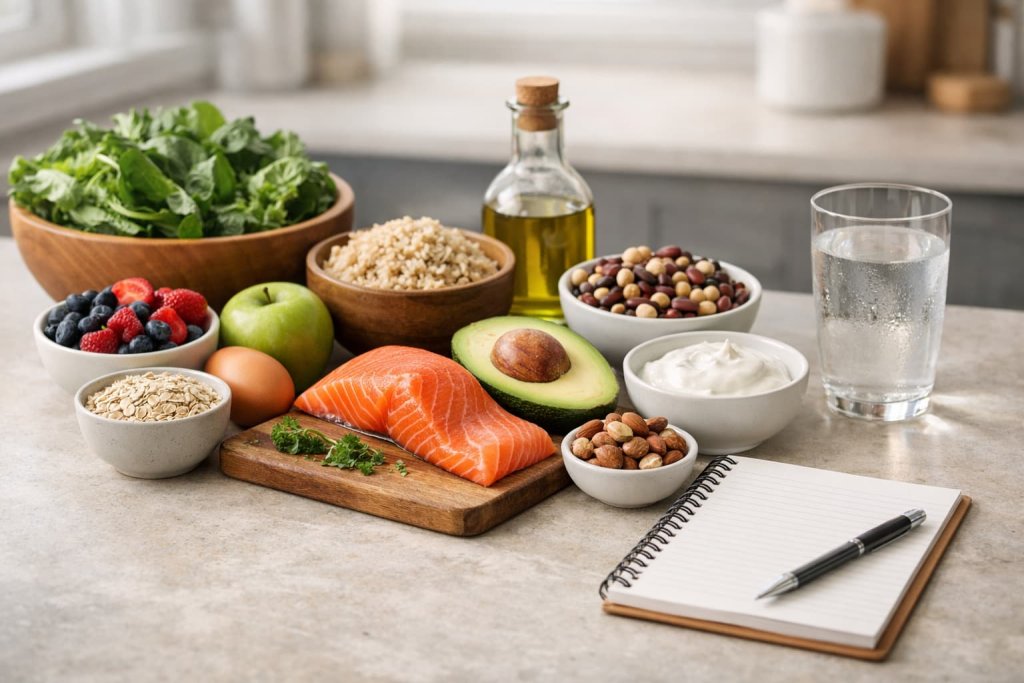
Understanding which healthy foods to eat every day matters because daily patterns matter more than one “perfect” food. Current guidance from MyPlate and the Dietary Guidelines for Americans consistently emphasizes fruits, vegetables, whole grains, protein-rich foods, and lower-sugar dairy or fortified alternatives as the foundation of a healthy routine.
What makes a food worth eating every day?
A food does not have to be trendy to be healthy. The best everyday foods are the ones that help you build balanced meals again and again.
In general, healthy foods to eat every day should do at least one of these things:
- Add fiber
- Provide protein
- Supply vitamins or minerals
- Offer healthy fats
- Help you stay full and satisfied
- Replace foods high in added sugar, sodium, or refined carbs
According to the CDC, healthy eating emphasizes vegetables, fruits, whole grains, protein foods, dairy without added sugars, and healthy fats. That gives this list a strong practical foundation.
That said, “every day” does not mean every single food on this list must appear daily. A better goal is to eat from these groups regularly across the week and make them the foundation of most meals. Variety usually works better than trying to follow a perfect menu.
9 Healthy Foods to Eat Every Day
These 9 healthy foods to eat every day can help you build balanced meals with more fiber, protein, vitamins, and healthy fats. The goal is not perfection, but choosing simple, nutrient-dense foods regularly.
1. Vegetables
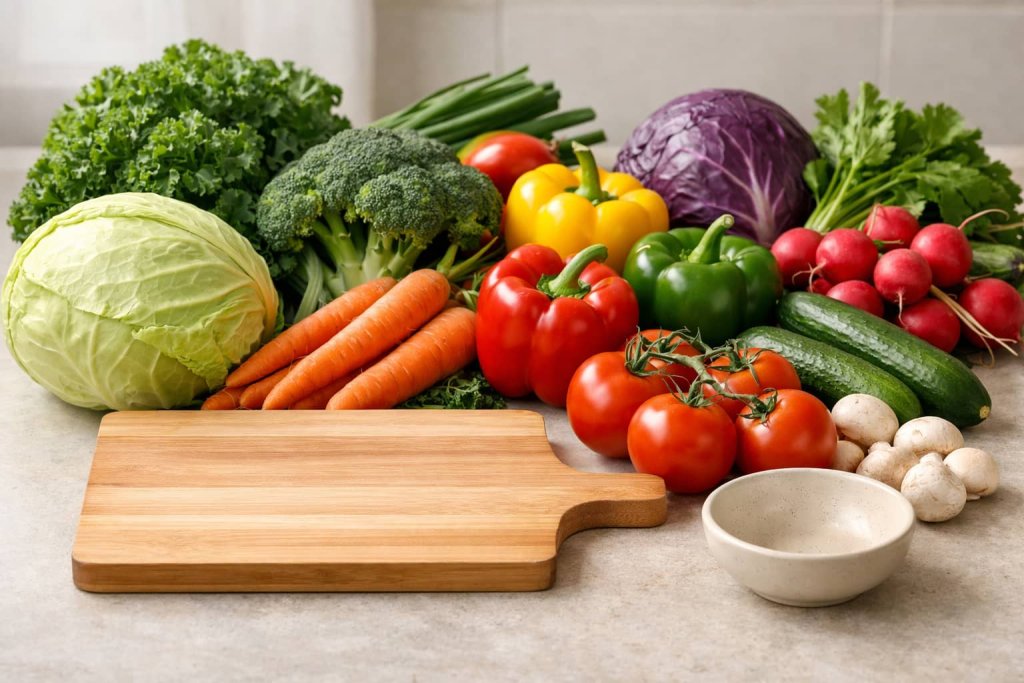
Vegetables deserve a place in daily meals because they deliver nutrients with relatively few calories. They can also add fiber, volume, and variety to lunch and dinner.
Dark leafy greens, broccoli, carrots, peppers, tomatoes, cabbage, and cooked mixed vegetables are all good options. Fresh, frozen, canned, and dried vegetables can all fit a healthy diet.
The American Heart Association notes that healthy eating can include fresh, frozen, canned, and dried produce, and it recommends choosing versions without added salt or sugar when possible.
Simple ways to eat more vegetables every day:
- Add cooked vegetables to eggs
- Keep a side salad with lunch
- Stir beans and vegetables into soups
- Use frozen vegetables for fast dinners
2. Whole fruit
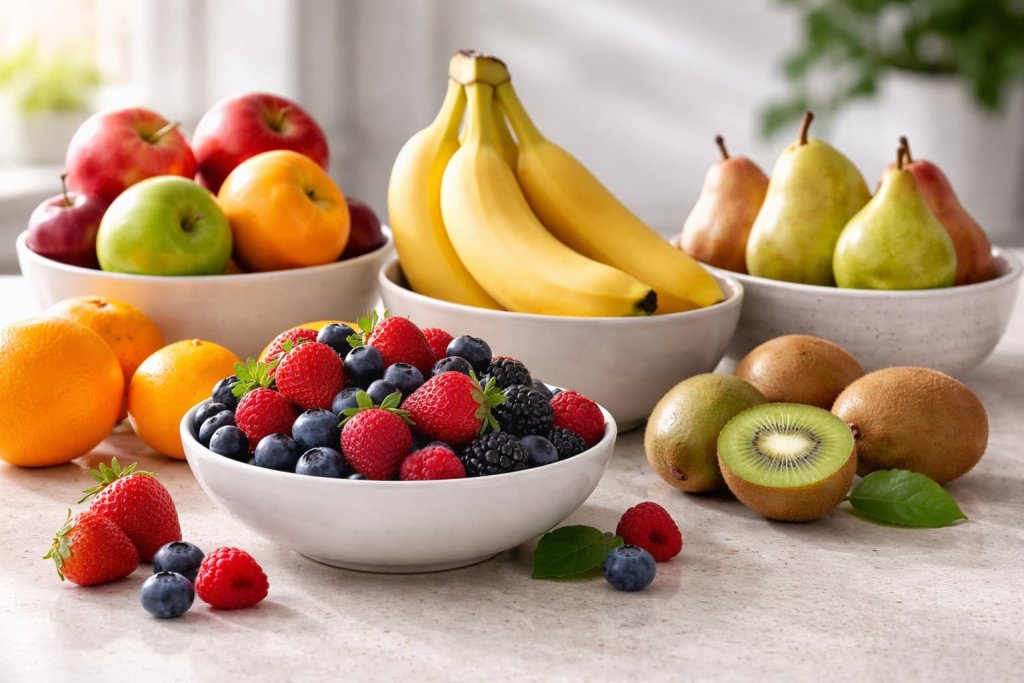
Whole fruit is one of the easiest healthy foods to eat every day. It adds natural sweetness, water, fiber, and useful nutrients in one simple package.
Berries, apples, oranges, bananas, pears, kiwi, and grapes are all practical choices. Whole fruit is usually a better everyday option than fruit juice because it is more filling and less easy to overconsume.
Fruit works well:
- At breakfast with yogurt or oats
- As a snack instead of sweets
- In salads
- As dessert after meals
Try rotating fruits through the week instead of eating the same one every day. That helps with variety and makes the routine easier to stick with.
3. Beans, peas, and lentils
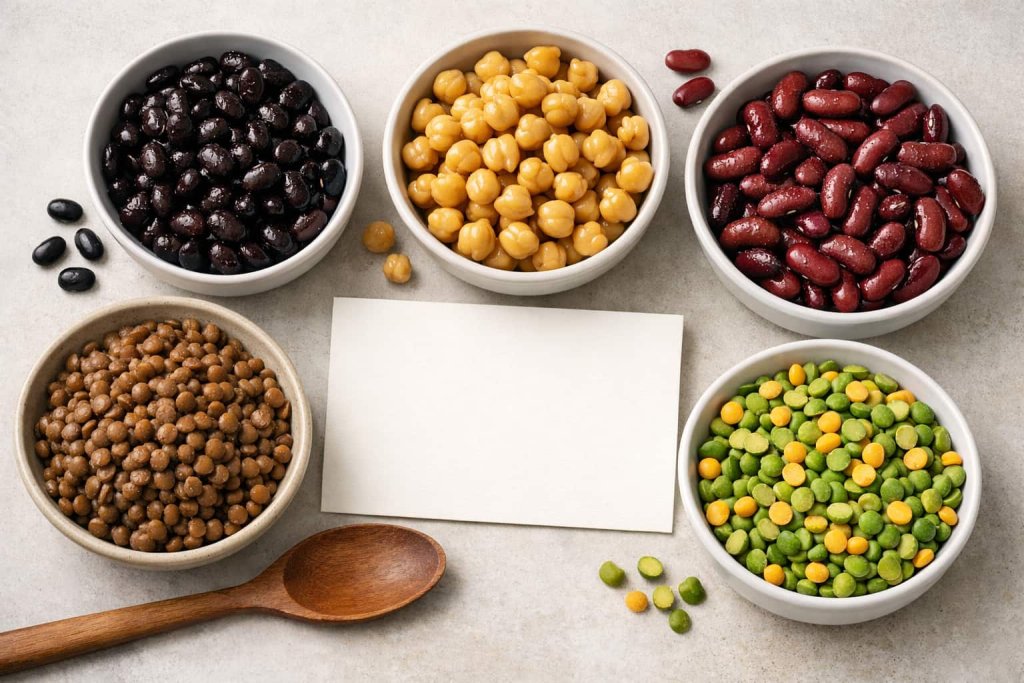
Beans, peas, and lentils are among the most useful healthy foods to eat every day because they provide both plant protein and fiber. They are also budget-friendly and work in many meals.
Black beans, chickpeas, lentils, kidney beans, split peas, and edamame can all support a balanced diet. They work especially well for people trying to eat more filling meals without relying on processed foods.
Easy uses include:
- Add chickpeas to salads
- Stir lentils into soup
- Use black beans in rice bowls
- Mash beans into wraps
- Blend white beans into dips
Canned beans can save time. Choose low-sodium options when possible, and rinsing canned beans can help lower some of the sodium.
4. Whole grains
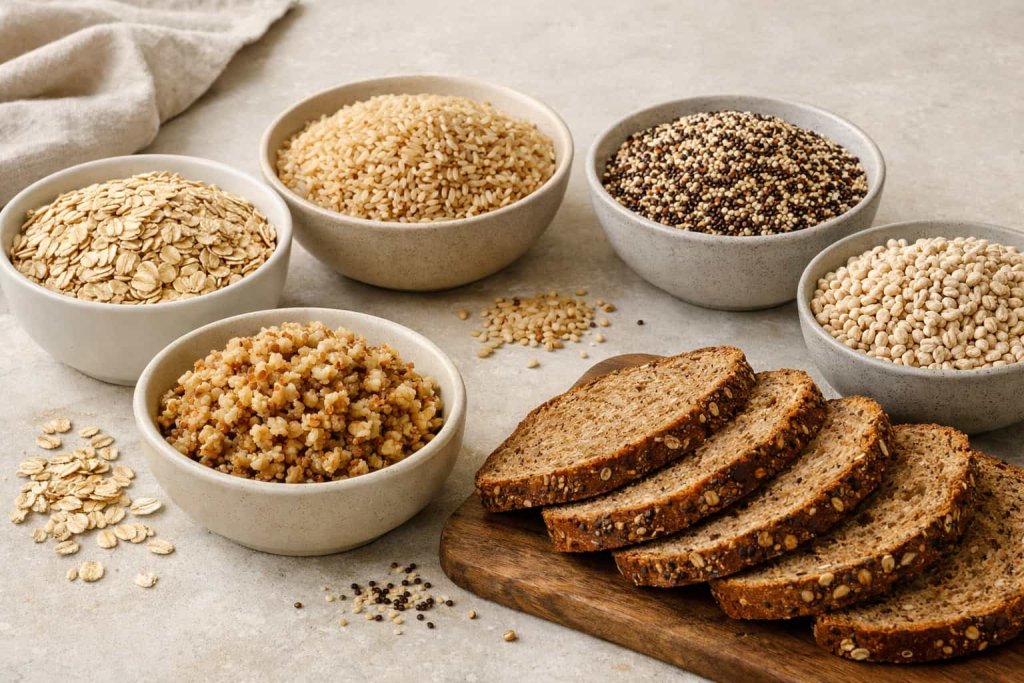
Whole grains are another smart daily staple because they provide carbohydrates for energy along with more fiber and nutrients than refined grains.
Good options include oats, brown rice, quinoa, barley, bulgur, popcorn, and whole-grain bread. A balanced diet does not need to avoid carbs. It usually works better to choose better-quality carbs.
The Dietary Guidelines for Americans recommend making at least half of grains whole grains. That is a practical rule for buying bread, cereal, crackers, rice, and pasta.
Good everyday ideas:
- Oatmeal with fruit at breakfast
- Brown rice with beans and vegetables
- Whole-grain toast with eggs
- Quinoa added to grain bowls
5. Nuts and seeds
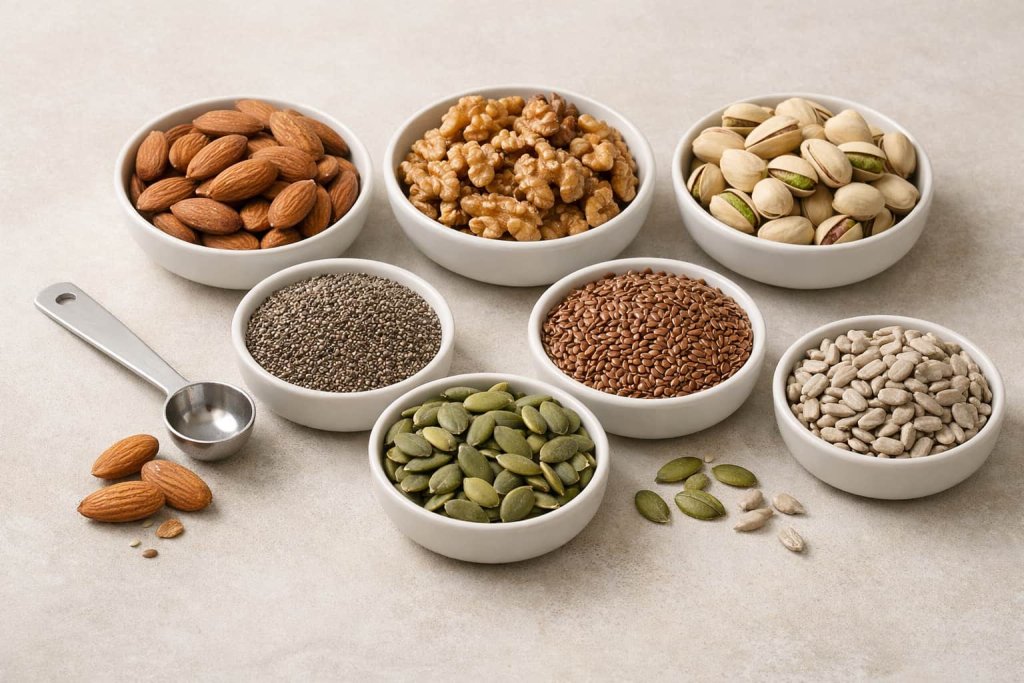
Nuts and seeds are small but powerful. They provide healthy fats, some protein, and minerals, and they can make meals more satisfying.
Almonds, walnuts, pistachios, peanuts, chia seeds, flaxseed, pumpkin seeds, and sunflower seeds are all useful options. They work best as part of a meal or snack, not as a mindless extra.
Good ways to use them:
- Add chia or flax to oatmeal
- Sprinkle pumpkin seeds on salad
- Pair a small handful of nuts with fruit
- Add nut butter to whole-grain toast
Because nuts and seeds are calorie-dense, portion size still matters. A small handful is often enough.
6. Yogurt or kefir
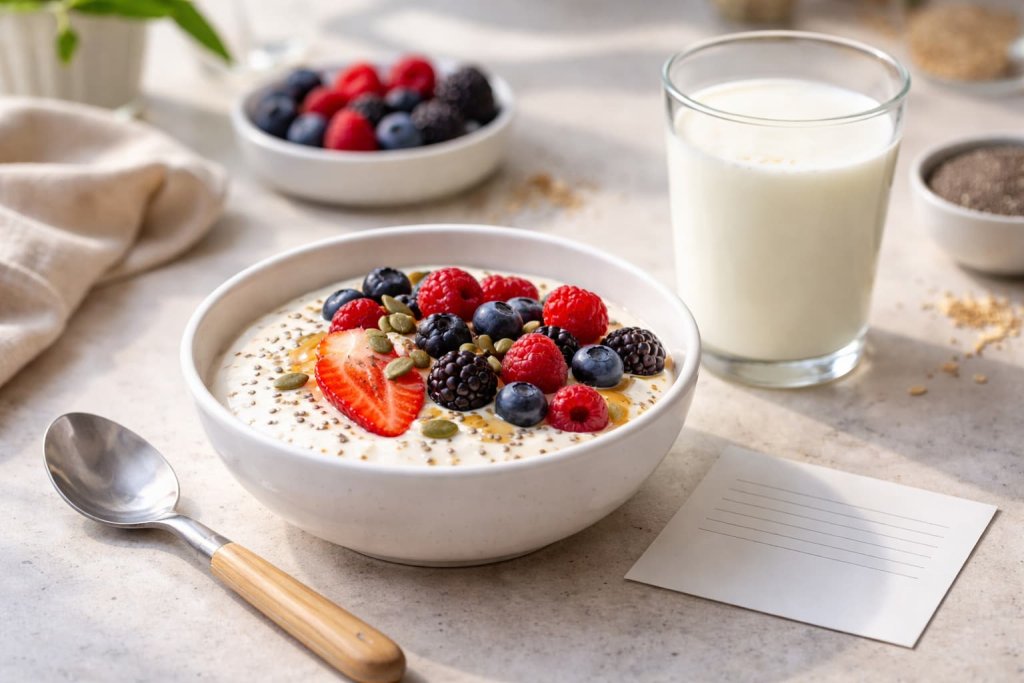
Plain yogurt and kefir can be practical everyday foods because they provide protein and important nutrients such as calcium. They can also be an easy breakfast or snack option.
The CDC includes fat-free or low-fat milk and milk products in healthy eating patterns, while also emphasizing lower added sugar choices.
The main thing to watch is sugar. Many flavored yogurts can contain a lot of added sugar. The FDA says the Daily Value for added sugars is 50 grams per day on a 2,000-calorie diet, and the Dietary Guidelines recommend keeping added sugars to less than 10% of daily calories.
Smarter choices:
- Plain yogurt with berries
- Kefir with fruit
- Greek yogurt with nuts or seeds
- Yogurt used as a base for dips or sauces
7. Fish and seafood
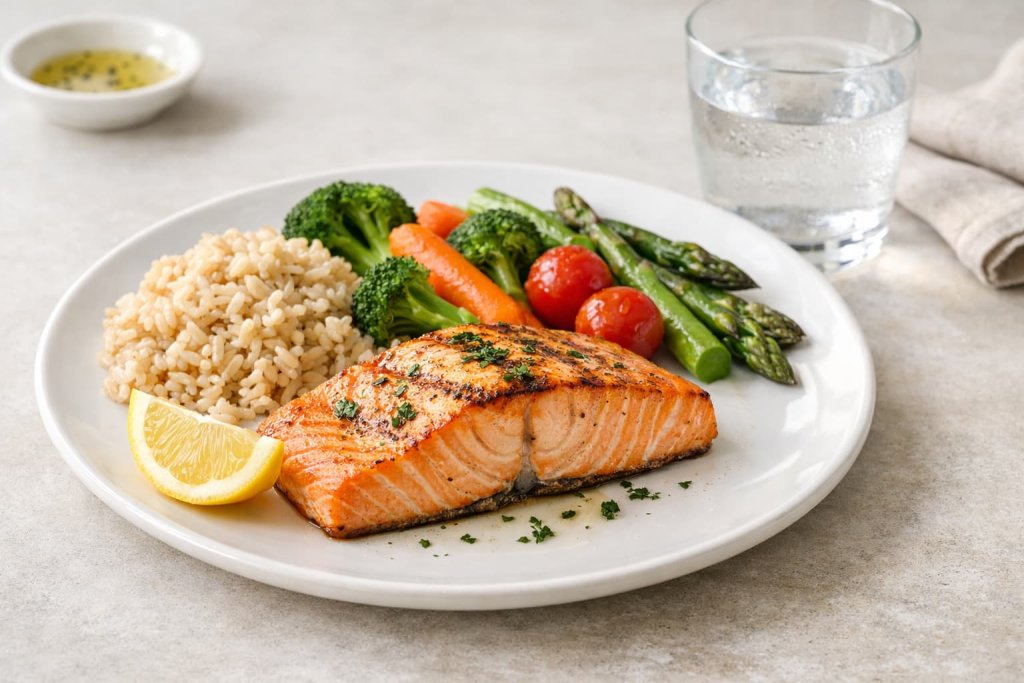
Fish and seafood are useful healthy foods to eat every day or several times a week because they offer high-quality protein and, in many cases, omega-3 fats.
According to the NIH Office of Dietary Supplements, EPA and DHA are found in fish and other seafood, while ALA is found mainly in plant foods such as flaxseed and certain oils.
Salmon, sardines, trout, tuna, and other seafood can help add variety to your protein choices. You do not need fish every day to benefit from it, but it belongs on an everyday healthy-food list because it is one of the best foods to rotate in regularly.
Easy options:
- Salmon with vegetables and rice
- Tuna on whole-grain toast
- Sardines with crackers and salad
- Fish tacos with cabbage slaw
8. Eggs
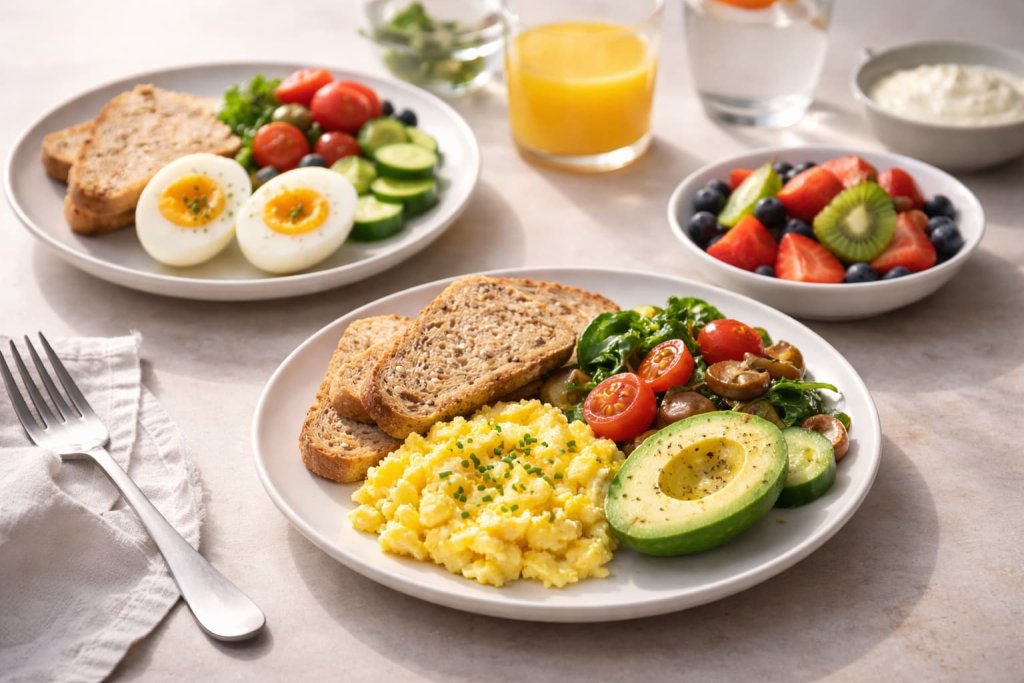
Eggs are simple, affordable, and versatile. They provide protein and can make fast meals more filling.
They work well for breakfast, lunch, or dinner:
- Boiled eggs with fruit
- Scrambled eggs with vegetables
- Omelets with beans
- Eggs on whole-grain toast
Eggs can be part of a healthy routine when they fit into an overall balanced eating pattern. The bigger picture still matters most: what you eat with them, how they are cooked, and what the rest of your day looks like.
9. Healthy fats like olive oil or avocado
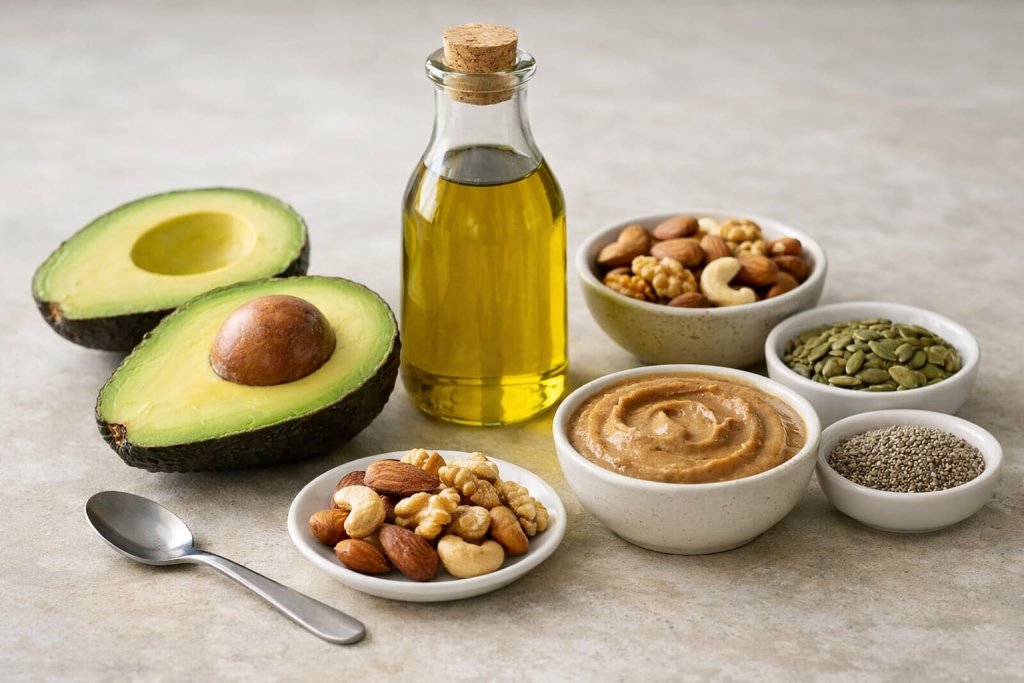
Healthy fats help meals feel satisfying and can support a balanced eating pattern. Olive oil, avocado, nuts, seeds, and nut butters are all examples.
Use them to improve meal quality, not to pour on calories without noticing. A little can go a long way.
Practical uses:
- Olive oil on vegetables or salad
- Avocado on toast or grain bowls
- Nut butter with apple slices
- Seeds added to yogurt or oats
These foods are nutritious, but they are still rich foods. Sensible portions help keep meals balanced.
Simple portion ideas for healthy foods to eat every day
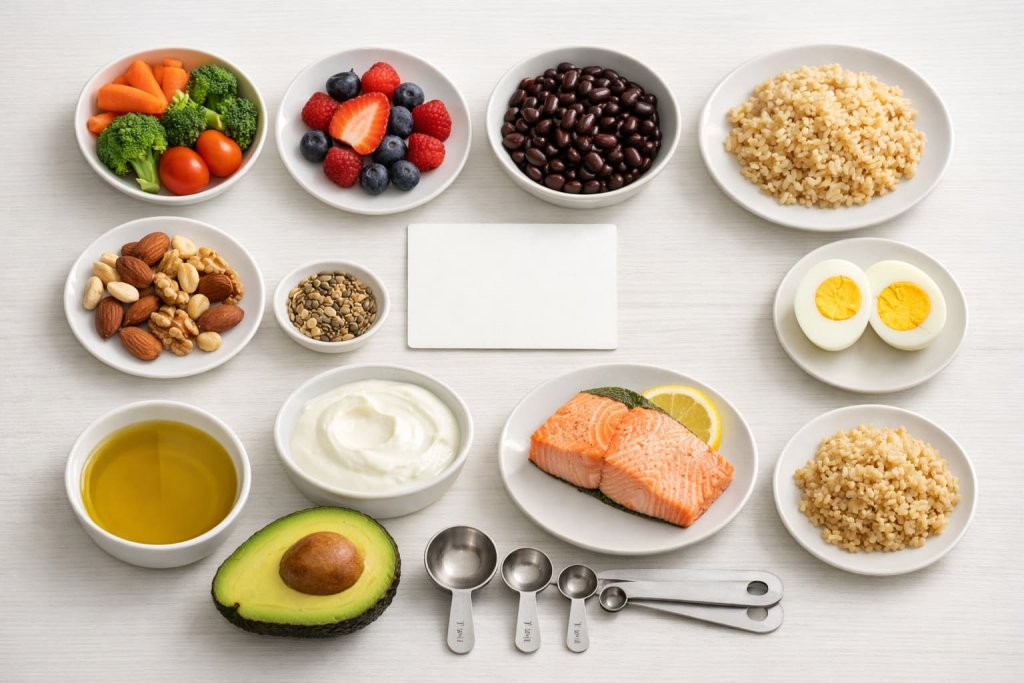
You do not need to measure every bite, but having a rough idea of portion size can make healthy eating feel easier and more realistic.
Here are simple examples:
- Vegetables: aim for a generous serving at meals, such as about 1 to 2 cups raw or 1 cup cooked
- Whole fruit: 1 medium piece of fruit or about 1 cup cut fruit
- Beans, peas, and lentils: about 1/2 to 1 cup cooked
- Whole grains: about 1/2 to 1 cup cooked grains, or 1 slice of whole-grain bread
- Nuts and seeds: a small handful of nuts or 1 to 2 tablespoons of seeds
- Yogurt or kefir: about 3/4 to 1 cup
- Fish or seafood: about a palm-sized portion
- Eggs: 1 to 2 eggs as part of a balanced meal
- Healthy fats like olive oil or avocado: about 1 tablespoon oil or a few avocado slices to 1/2 avocado depending on the meal
These are not strict rules. They are simple starting points that can help you build balanced meals without overthinking it.
How to build meals with healthy foods to eat every day
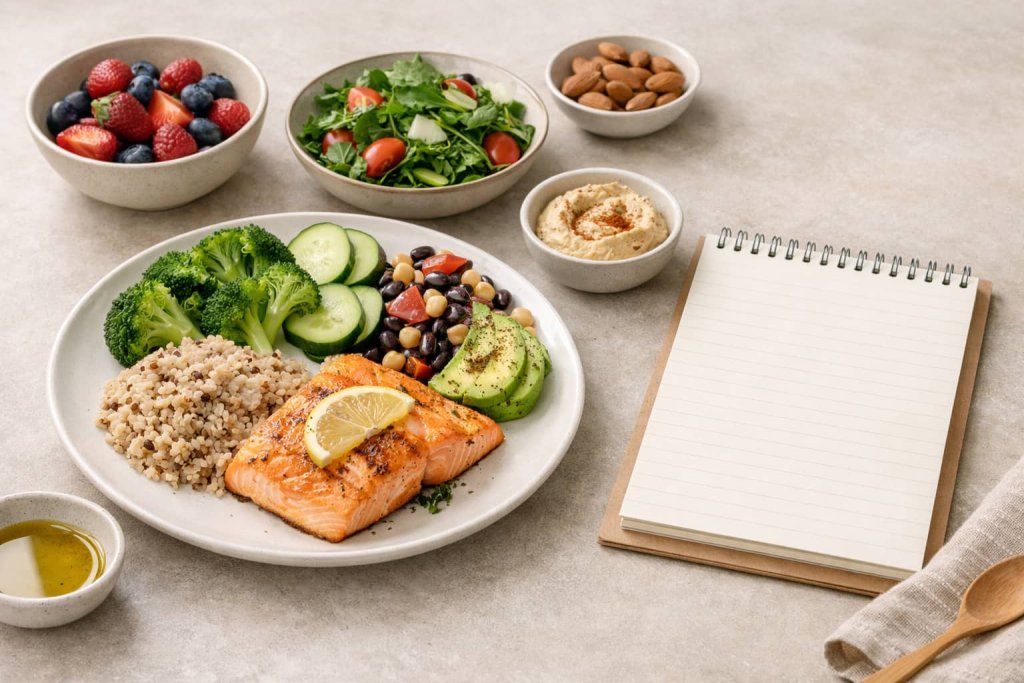
You do not need all nine foods in every meal. A better goal is to combine a few of them across the day.
A simple formula:
- 1 fruit or vegetable
- 1 protein-rich food
- 1 higher-fiber carb
- 1 healthy fat
Examples:
- Oatmeal with berries and chia seeds
- Greek yogurt with fruit and walnuts
- Rice bowl with lentils, vegetables, and avocado
- Salmon with potatoes and broccoli
- Eggs with whole-grain toast and fruit
Healthy foods to eat every day on a budget
Healthy eating does not have to be expensive. Some of the most practical everyday foods are also some of the most affordable.
Budget-friendly options include:
- Oats
- Bananas
- Beans and lentils
- Eggs
- Plain yogurt
- Brown rice
- Frozen vegetables
- Canned fish
- Peanut butter
- In-season fruit
A few simple ways to save money:
- Buy frozen produce when fresh items are expensive
- Use canned beans and canned fish for convenience and value
- Choose store brands when nutrition is similar
- Build meals around lower-cost basics like oats, eggs, beans, and rice
- Use nuts, seeds, avocado, and olive oil in sensible portions rather than large amounts
Healthy eating becomes much easier when you focus on simple staples instead of specialty products.
Common mistakes to avoid
Thinking one healthy food cancels out everything else
No single food fixes an unbalanced diet. Healthy eating works best as a pattern.
Choosing foods that sound healthy but are high in sugar or sodium
Granola bars, sweetened yogurt, flavored oatmeal, and packaged snacks can look healthy but still be heavily processed.
Ignoring the label
The FDA explains that the Nutrition Facts label lists nutrients such as fiber, sodium, added sugars, and protein. Checking those details can help you compare similar foods more clearly.
Forgetting that frozen and canned foods can help
Healthy eating does not require expensive fresh food every day. The American Heart Association says fresh, frozen, canned, and dried produce can all be healthy choices, especially when you choose options without extra sugar, salty sauces, or heavy syrups.
How to choose healthier versions at the store
Some healthy foods are easy to buy in less helpful forms. A few quick label checks can help you make better choices without spending a long time comparing products.
When buying packaged foods, look for:
- Less added sugar: especially in yogurt, cereal, granola, and flavored oatmeal
- Less sodium: especially in canned beans, soups, sauces, and packaged meals
- More fiber: especially in bread, cereal, crackers, and grains
- Shorter ingredient lists: when possible, choose simpler versions with fewer extras
- Whole-grain wording: look for whole grain as a main ingredient when buying bread, pasta, or crackers
Good examples include plain yogurt instead of heavily sweetened yogurt, plain oats instead of sugary instant packets, and low-sodium beans instead of regular canned beans.
You do not need a perfect product. You just want the version that helps you build a better everyday eating pattern.
Who should be a little more careful?
Most people can benefit from these foods, but some need extra attention to food choices:
- People with nut, fish, egg, soy, or dairy allergies
- People who need to monitor sodium, especially with canned foods or packaged yogurt
- People who need to watch potassium or protein intake based on medical guidance
- People who do better with lower-fiber meals during certain digestive flare-ups
For those cases, the right version and portion of a healthy food may matter more than the food category itself.
A simple one-day example
Here is one easy example of how healthy foods to eat every day can fit into a normal day of meals.
Breakfast: plain oatmeal topped with berries and chia seeds, plus yogurt on the side
Lunch: brown rice bowl with black beans, mixed vegetables, and avocado
Snack: apple with a small handful of nuts
Dinner: salmon, roasted vegetables, and a baked potato or quinoa
Optional simple swap: if you do not eat fish, use eggs, lentils, tofu, or beans instead
This kind of meal pattern is simple, flexible, and based on familiar foods rather than strict rules.
FAQs
Is it really necessary to eat the same healthy foods every day?
No. Variety is better. The goal is to regularly include foods from these categories, not to eat the exact same menu daily.
What is the single healthiest food to eat every day?
There is no single best food. Vegetables are probably the strongest everyday choice, but the healthiest pattern includes multiple food groups.
Are frozen fruits and vegetables still healthy?
Yes. They can be very healthy choices. Just check for added sugar, sauces, or extra salt.
Are eggs healthy to eat every day?
Eggs can fit into a healthy diet for many people. Overall eating pattern, cooking method, and portion balance matter more than calling one food good or bad.
What should I eat every day for gut and heart health?
A practical starting point is vegetables, fruit, beans, whole grains, nuts or seeds, and fish or yogurt depending on your preferences. These foods support a more balanced eating pattern.
Are healthy foods always expensive?
No. Beans, oats, eggs, frozen vegetables, bananas, plain yogurt, canned fish, and brown rice are often some of the most budget-friendly healthy foods.
How can I start eating healthier without overcomplicating it?
Start with one change per meal. Add fruit to breakfast, vegetables to lunch, and a better protein or whole grain at dinner. Small upgrades are easier to maintain.
Conclusion
The best healthy foods to eat every day are not exotic or complicated. They are familiar, practical foods that make balanced meals easier: vegetables, fruit, beans, whole grains, nuts and seeds, yogurt, fish, eggs, and healthy fats. Focus on building most meals around these basics, keep portions realistic, and choose less processed versions most often.
A simple next step is to pick three of these foods you can add to your routine this week and build one meal around each.