
Plain popcorn can be a relatively low-calorie snack, with about 100 calories in 3 cups of air-popped popcorn before toppings. That makes it one of the lighter crunchy snack options when you keep the preparation simple.
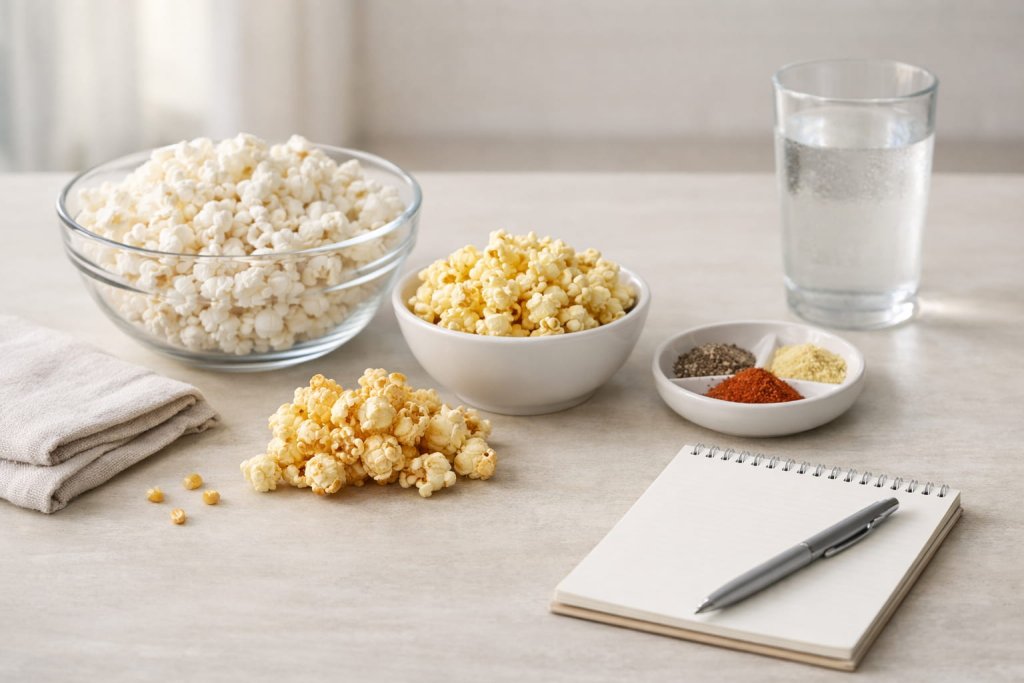
Understanding how many calories are in popcorn matters because the number can change a lot depending on whether it is air-popped, cooked in oil, covered in butter, or served in a very large portion. According to the USDA Agricultural Research Service, popcorn is also a whole grain, which gives it some nutritional value beyond just calories.
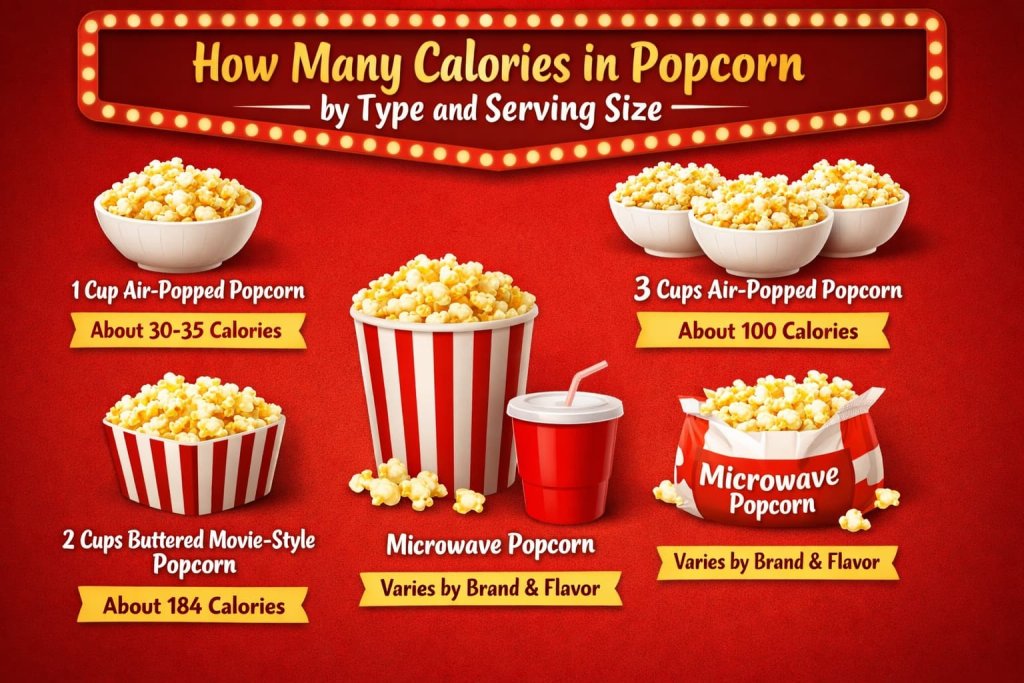
How Many Calories in Popcorn by Type and Serving Size
Here is the most practical way to think about popcorn calories.
- 1 cup air-popped popcorn: about 30 to 35 calories
- 3 cups air-popped popcorn: about 100 calories
- 2 cups buttered movie-style popcorn: about 184 calories in a Dietary Guidelines comparison example
- Microwave popcorn: varies by brand, oil, flavoring, and serving size
- Movie theater popcorn: often much higher because of oil, butter topping, and very large portions
The most important point is that plain popcorn itself is usually not very high in calories. The big increase usually comes from butter, oil, cheese flavoring, caramel, kettle-style sugar coatings, and oversized bags or tubs. The Dietary Guidelines for Americans shows how quickly added butter can raise the calorie total.
Quick calorie comparison for common popcorn types
Here is a more practical way to compare common popcorn types:
- Air-popped popcorn: about 30 to 35 calories per cup
- Oil-popped popcorn: usually higher than air-popped because the oil adds calories
- Light butter microwave popcorn: varies by brand, but is usually higher than plain air-popped popcorn
- Movie theater popcorn with butter: can be much higher because both the portion size and toppings increase the total
- Kettle corn or caramel popcorn: usually higher in calories because of added sugar, oil, or both
The most accurate way to judge packaged popcorn is to read the Nutrition Facts label and check both calories per serving and servings per container. That matters because a bag that looks like one snack may actually contain more than one serving.
Why Popcorn Calories Vary So Much
Popcorn starts as a whole grain corn kernel. Once it pops, it is light and airy, which is why plain popcorn can give you a fairly large volume for a modest calorie amount. What changes the calorie total most is:
Added fat
Oil and butter add calories quickly. Even a simple butter topping can make a big difference.
Added sugar
Caramel corn, kettle corn, and dessert-style popcorn can be much higher in calories than plain popcorn.
Portion size
A nutrition label may look reasonable at first, but the package may contain more than one serving. The FDA explains that if you eat multiple servings, you also eat multiple times the listed calories, sodium, and fat.
Preparation method
Air-popped popcorn is usually the lightest option. Oil-popped, buttered, and theater-style popcorn are usually much heavier.
Nutrition Profile of Plain Popcorn
Plain popcorn has more going for it than many people realize. It is a whole grain snack and can provide fiber while staying naturally low in sugar.
Here is a simple nutrition snapshot for plain air-popped popcorn:
| Nutrient | What to know |
|---|---|
| Calories | About 30 to 35 per cup, or about 100 for 3 cups |
| Carbohydrates | Main macronutrient |
| Fiber | A useful source for a snack food |
| Protein | Small amount |
| Total fat | Very low when air-popped |
| Sugar | Naturally low |
| Whole grain | Yes |
The USDA Agricultural Research Service notes that popcorn is a whole grain and contains dietary fiber. USDA nutrient tables also show that air-popped popcorn provides some B vitamins, including niacin.
Key Nutrients in Popcorn
When popcorn is prepared simply, these are the main nutritional positives:
Whole grains
Popcorn counts as a whole grain, which is one reason it can be a better snack choice than many refined snack foods.
Fiber
Fiber can help make snacks feel more satisfying and may support overall diet quality.
Some B vitamins
Popcorn can contribute modest amounts of nutrients such as niacin.
Naturally low sugar
Plain popcorn does not come with the high sugar load found in many sweet snack foods.
Is Popcorn Good for Weight Management?
Yes, popcorn can be good for weight management when it is plain or lightly seasoned. Its biggest advantage is that it gives you a lot of volume for relatively few calories compared with many chips, crackers, and sweet snacks.
The American Heart Association describes air-popped and lightly seasoned popcorn as a healthy snack option. Research indexed by the National Library of Medicine also found that popcorn was more filling than potato chips in a short-term comparison, which helps explain why it may work well for some people trying to control snack calories.
Why popcorn may help with weight management
- It is bulky and airy, so a serving can look generous
- It can provide fiber
- Plain versions are relatively low in calories
- It may feel more satisfying than more calorie-dense snack foods
When popcorn becomes less weight-friendly
Popcorn can stop being a lighter snack when it is:
- drenched in butter
- cooked with a lot of oil
- covered in caramel or sugar
- eaten in very large portions
- heavily flavored with cheese powders or rich coatings
Air-Popped vs Microwave vs Movie Theater Popcorn
Air-popped popcorn
This is usually the best choice if you want the lowest calorie option. It is simple, whole grain, and easy to portion.
Microwave popcorn
Microwave popcorn can range from fairly reasonable to surprisingly heavy. Some versions contain added oil, butter flavoring, and more sodium. Always check the label for:
- serving size
- servings per bag
- calories per serving
- sodium
- saturated fat
Also pay attention to whether the label refers to the popcorn as popped or unpopped, since that can affect how people interpret the calorie total. Some bags also list nutrition for only part of the package, so it is important to check whether you are eating one serving or the whole bag.
Movie theater popcorn
Movie popcorn is where calories can climb fast. Large portions and butter topping can turn popcorn from a light snack into something much more calorie-dense. Even when the base popcorn starts out reasonably, the extras can push the total much higher.
Who Should Be a Little More Careful With Popcorn
Popcorn can fit many eating patterns, but a few groups should pay closer attention.
People watching sodium intake
Packaged and flavored popcorn can be high in sodium. The FDA continues to encourage sodium reduction in processed foods, which highlights why label-checking matters for snacks like microwave popcorn.
People limiting saturated fat or overall calories
Butter-heavy popcorn and large theater servings can add a lot of extra calories and saturated fat.
Young children
Popcorn is a known choking hazard for small children. The American Academy of Pediatrics includes popcorn among foods that can cause choking, especially in younger children.
Older adults or anyone with swallowing problems
The MedlinePlus guidance on choking risk also lists popcorn among foods that may cause problems for some people.
People with braces, dental issues, or digestive sensitivity
Hard kernels and tough hull pieces may be uncomfortable for some people, especially those with braces, dental work, or sensitive digestion. In those cases, eating popcorn slowly and avoiding partially popped kernels may help reduce problems.
How to Make Popcorn Lower in Calories
If you want popcorn to stay a lighter snack, these simple choices matter most:
Choose air-popped when possible
Air-popped popcorn is usually the lowest-calorie base.
Add flavor without heavy toppings
Try lighter options such as:
- a small pinch of salt
- black pepper
- cinnamon
- smoked paprika
- garlic powder
- nutritional yeast
Watch the extras
Butter, oil, sugary coatings, and cheese toppings are what usually make popcorn much more calorie-dense.
Portion it before eating
Instead of eating from a large bag or bowl, portion out what you plan to eat first.
Easy Ways to Keep Popcorn a Smarter Snack
A simple portion of popcorn can fit well into a balanced eating plan when you keep the extras modest. Practical ideas include:
- 3 cups of air-popped popcorn as a light snack
- 3 cups of popcorn plus a protein food, such as plain Greek yogurt or a boiled egg, if you want something more filling
- A lightly seasoned homemade bowl instead of eating from a large movie-style tub or oversized microwave bag
- Using spices instead of heavy toppings when you want flavor without a major calorie jump
This kind of approach helps popcorn stay what it can be at its best: a whole-grain snack with good volume for relatively modest calories.
Does Popcorn Have Empty Calories?
Not exactly. Plain popcorn is more nutritious than many people assume because it is a whole grain and provides fiber. That does not make every popcorn product automatically healthy, but it does mean plain popcorn is more than just empty calories. The nutritional quality depends heavily on the ingredients added after popping.
Common Questions About How Many Calories in Popcorn
Is popcorn lower in calories than chips?
Usually, yes, if you compare plain or lightly prepared popcorn with a typical serving of chips. Popcorn often gives you more volume for fewer calories.
Is microwave popcorn healthy?
It can be, but it depends on the product. Some are fairly moderate in calories, while others are high in sodium, saturated fat, or added flavorings. Reading the label is important.
Is popcorn okay to eat every day?
For many people, plain or lightly seasoned popcorn can fit into a balanced diet. The bigger concern is not the popcorn itself, but the butter, oil, salt, sugar, and portion size.
How much popcorn is a reasonable snack portion?
A common practical portion is around 3 cups of air-popped popcorn, which is about 100 calories before toppings.
Conclusion
Popcorn can be a smart snack when you keep it simple. Air-popped popcorn is relatively low in calories, provides whole-grain benefits, and can work well for weight management because it offers a satisfying portion for about 100 calories per 3 cups. The main thing to watch is how it is prepared. Butter, oil, sugar coatings, and oversized portions are what turn popcorn into a much higher-calorie snack. If your goal is a lighter option, plain or lightly seasoned popcorn is usually the best place to start.
The simplest rule is this: plain popcorn can be a light, satisfying whole-grain snack, while heavily buttered, oily, or sugary popcorn is a very different food from a calorie standpoint. If you check the portion, keep toppings reasonable, and read the label on packaged products, popcorn can be much easier to fit into your routine.
Sources/References
- USDA Agricultural Research Service — Popcorn: A Healthy Whole Grain Snack
- USDA Agricultural Research Service — Popcorn: A Healthy Whole Grain Snack
- Dietary Guidelines for Americans — Nutrient Density Calorie Comparisons
- FDA — Serving Size on the Nutrition Facts Label
- American Heart Association — Air-Popped Popcorn
- National Library of Medicine — Satiety of Popcorn Compared to Potato Chips
- FDA — Voluntary Sodium Reduction Goals
- American Academy of Pediatrics — Prevention of Choking Among Children
- MedlinePlus — Choking in Adults