
Chest stretching exercises may help improve flexibility, reduce upper-body tightness, and support better posture when done gently and consistently. They matter because tight chest muscles can make it harder to keep the shoulders comfortably back and the upper body moving well, especially if you sit a lot or do frequent pressing workouts.
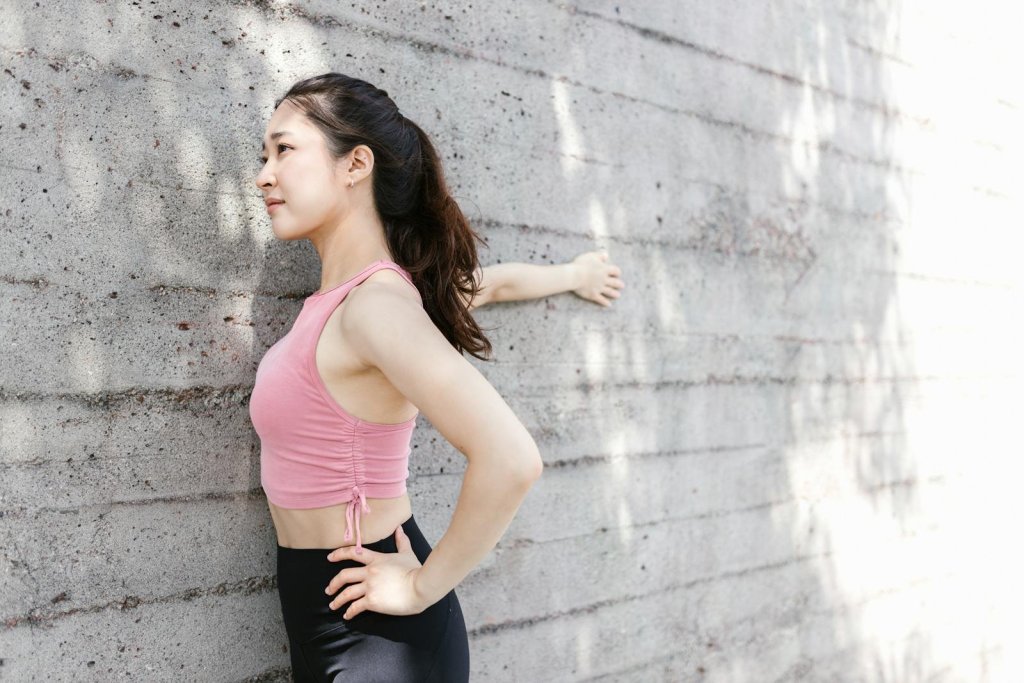
A good plan is simple: warm up first, stretch to mild tension instead of pain, hold each stretch for about 10 to 30 seconds, and repeat a few times per side. Guidance from AAOS, Mayo Clinic, and Harvard Health supports that basic approach.
What Are Chest Stretching Exercises?
Chest stretching exercises are movements that lengthen the muscles at the front of the upper body, mainly the pectoralis major and pectoralis minor. These muscles help move the arms and support the shoulder area, but they can also feel tight after long hours at a desk, lots of pushing exercises, or repetitive forward-shoulder posture.
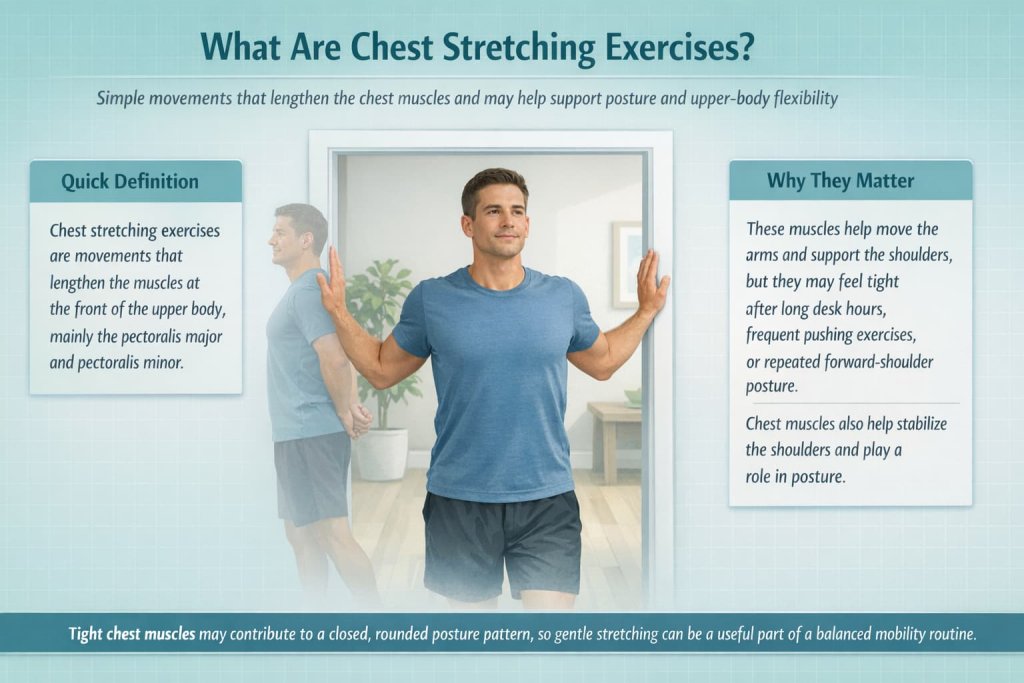
Hospital for Special Surgery notes that the chest muscles also help stabilize the shoulders and play a role in posture.
Why Chest Stretching Exercises Matter for Posture and Flexibility
When the front of the chest feels stiff, the shoulders often drift forward more easily. That does not mean chest tightness is the only cause of poor posture, but it can be part of the pattern. Posture usually improves best when chest stretching is paired with better daily movement habits and enough upper-back and core strength.
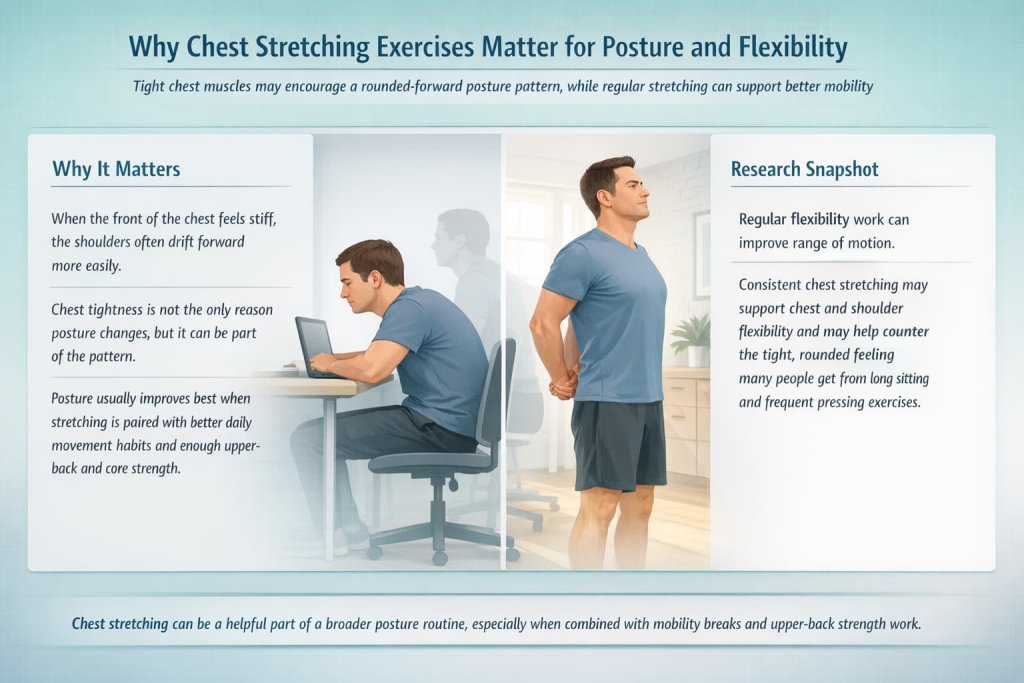
Regular flexibility work can also improve range of motion. ACE Fitness says consistent chest stretching can improve chest and shoulder flexibility and range of motion, while chest-opening movements may help counter the tight, rounded feeling many people get from sitting and pressing.
Before You Start Chest Stretching Exercises
Warm up first. A short walk, arm circles, or a few minutes of easy movement is better than stretching cold muscles.
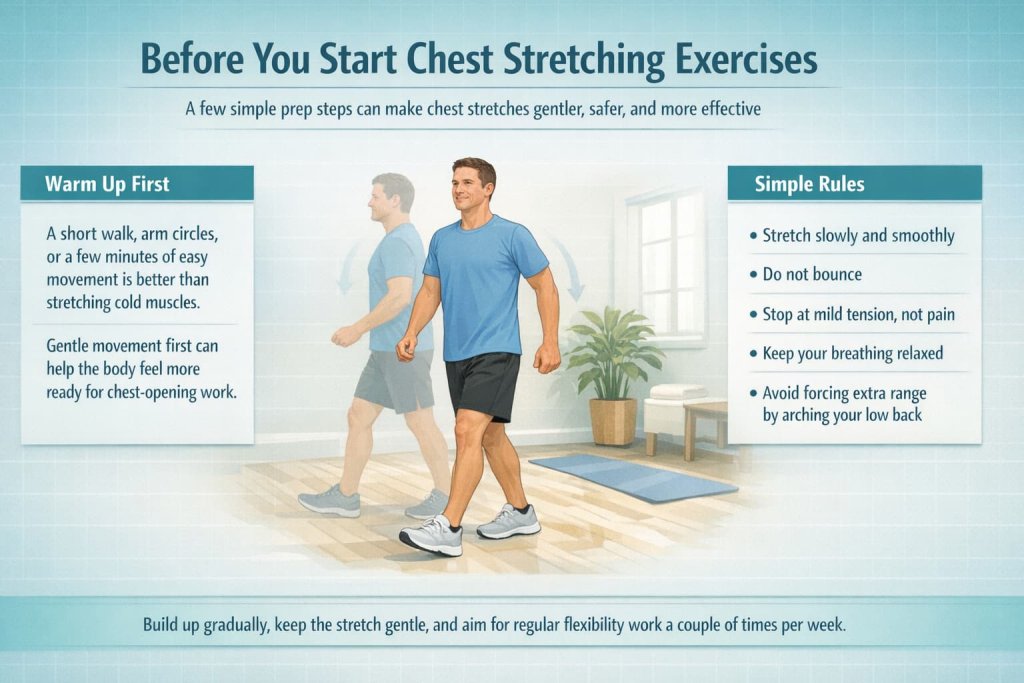
Keep these simple rules in mind:
- Stretch slowly and smoothly
- Do not bounce
- Stop at mild tension, not pain
- Keep your breathing relaxed
- Avoid forcing extra range by arching your low back
General stretching guidance from the NHS also supports building up gradually and doing flexibility work at least a couple of times per week.
12 Best Chest Stretching Exercises
Loosen tight chest muscles and improve upper-body mobility with these simple, beginner-friendly stretches. These 12 chest stretching exercises may help support better posture, reduce stiffness, and make everyday movement feel easier.
1. Doorway Chest Stretch
How to do it:
- Stand in a doorway with one foot slightly in front of the other.
- Place your forearms on the doorframe with elbows bent around 90 degrees.
- Keep your chest lifted and gently lean your body forward.
- Stop when you feel a light stretch across the chest and front shoulders.
- Hold, then step back and relax.
Why it works:
This is one of the easiest and most practical chest stretches because the doorframe helps you control the position and intensity.
Muscles worked:
Pectoralis major, pectoralis minor, front deltoids.
Trainer Tip:
Do not let your ribs flare or low back overarch just to get “more” stretch. A smaller, cleaner position usually works better.
2. Single-Arm Doorway Chest Stretch
How to do it:
- Stand beside a doorway or wall.
- Place one forearm or palm on the frame at shoulder height.
- Gently turn your chest away from that arm.
- Hold the stretch with relaxed breathing.
- Repeat on the other side.
Why it works:
This version lets you target one side at a time, which is useful if one shoulder or chest side feels tighter than the other.
Muscles worked:
Pectoralis major, pectoralis minor, anterior shoulder.
Trainer Tip:
Try slightly different arm heights on different rounds to see where the stretch feels best.
3. Corner Chest Stretch
How to do it:
- Stand facing a corner with one forearm on each wall.
- Bend your elbows comfortably and keep your feet staggered.
- Lean your body slightly into the corner until you feel a chest stretch.
- Hold the position steadily.
- Step back out with control.
Why it works:
The corner setup can feel stable and supportive, especially for people who want a broad chest-opening stretch without lying on the floor.
Muscles worked:
Chest muscles, front shoulders, supporting upper-arm tissues.
Trainer Tip:
Keep your neck relaxed. Do not shrug your shoulders upward as you lean in.
4. Standing Chest Opener With Hands Clasped Behind Back
How to do it:
- Stand tall with feet about hip-width apart.
- Clasp your hands behind your back, or hold a towel if your hands do not reach.
- Gently straighten your arms as comfortable.
- Lift the chest slightly while drawing the shoulders back and down.
- Hold without forcing the arms upward.
Why it works:
This stretch opens the front of the chest while also encouraging a more upright shoulder position.
Muscles worked:
Pectorals, front shoulders, biceps area, upper chest.
Trainer Tip:
Think “shoulders down” rather than “arms high.” Chasing height often turns the stretch into a back arch.
5. Wall Chest Stretch
How to do it:
- Stand beside a wall.
- Place one palm or forearm on the wall with the arm slightly behind your body.
- Slowly rotate your chest away from the wall.
- Keep the shoulder relaxed and hold the stretch.
- Switch sides.
Why it works:
This is a simple stretch for small spaces and works well at home, at the gym, or at the office.
Muscles worked:
Pectoralis major, pectoralis minor, front deltoid.
Trainer Tip:
If the shoulder feels pinchy, lower the arm slightly and reduce the turning range.
6. Supine Chest Stretch on the Floor
How to do it:
- Lie on your back with knees bent and feet flat.
- Let your arms rest out to the sides in a comfortable open position.
- Relax the front of the shoulders and chest.
- Breathe slowly and let the chest gently open.
- Hold the position without pressing through pain.
Why it works:
The floor supports your spine, which can make it easier to relax and feel a mild chest-opening stretch.
Muscles worked:
Chest muscles, front shoulders, upper-arm tissues.
Trainer Tip:
Use a small folded towel under each arm if your shoulders feel strained on the floor.
7. Foam Roller Chest Stretch
How to do it:
- Lie lengthwise on a foam roller so your head and spine are supported.
- Bend your knees and place feet flat for balance.
- Open your arms out to the sides in a comfortable position.
- Let the chest gently stretch as you breathe slowly.
- Stay relaxed and return carefully when finished.
Why it works:
This stretch combines chest opening with gentle thoracic extension support, which many desk workers find helpful.
Muscles worked:
Pectorals, front shoulders, upper chest, supporting postural tissues.
Trainer Tip:
Start with short holds if balance feels tricky. You can also do this on a firm pillow setup if needed.
8. Towel Chest Stretch
How to do it:
- Hold a towel behind your back with both hands.
- Keep one hand higher and one hand lower, depending on comfort.
- Gently draw the shoulders back while lifting the chest slightly.
- Hold the stretch without yanking the towel.
- Repeat and change hand positions if helpful.
Why it works:
The towel makes the stretch more accessible if you cannot comfortably clasp your hands behind your back.
Muscles worked:
Chest, front shoulders, biceps area.
Trainer Tip:
A longer towel gives you more control and usually feels better than forcing a close grip.
9. Seated Chest Stretch
How to do it:
- Sit tall near the front of a sturdy chair.
- Interlace your fingers behind your head or lightly behind your back.
- Gently draw the elbows back and open the chest.
- Keep your chin neutral and your low back relaxed.
- Hold, then return to neutral.
Why it works:
This is a convenient option for people who spend long hours sitting and need a quick posture break.
Muscles worked:
Chest muscles, front shoulders, upper chest.
Trainer Tip:
Sit tall through the breastbone, but do not crank the head forward or upward.
10. Lying Open-Arm Chest Stretch
How to do it:
- Lie on your side with knees bent.
- Reach both arms straight in front of you.
- Slowly open the top arm across your body toward the other side.
- Let your chest rotate gently as far as comfortable.
- Return with control and repeat before switching sides.
Why it works:
This stretch adds gentle upper-body rotation along with chest opening, which can feel good if your upper back also feels stiff.
Muscles worked:
Chest, front shoulders, thoracic rotation muscles.
Trainer Tip:
Keep the movement smooth. Do not force the arm to the floor if your shoulder or back feels restricted.
11. Stability Ball Chest Stretch
How to do it:
- Sit in front of a stability ball and carefully lean back onto it.
- Support your head and upper back on the ball.
- Open your arms out wide in a comfortable position.
- Let the chest expand while keeping your feet planted.
- Hold the stretch, then come up slowly.
Why it works:
The curve of the ball can create a broad, comfortable chest-opening position for some people.
Muscles worked:
Chest muscles, front shoulders, upper chest, trunk stabilizers.
Trainer Tip:
Only use this option if you feel steady on the ball. Skip it if balance is a concern.
12. Bench or Chair Chest Stretch
How to do it:
- Kneel in front of a bench or sturdy chair.
- Place your elbows or hands on the surface.
- Sit your hips back slightly while letting your chest drop between your arms.
- Keep the ribs controlled and the neck relaxed.
- Hold, then come out slowly.
Why it works:
This variation can stretch the chest while also opening the shoulders, especially after upper-body workouts.
Muscles worked:
Chest, shoulders, lats, upper-arm tissues.
Trainer Tip:
You should feel a broad front-of-body stretch, not a pinch in the shoulders or pressure in the low back.
How Long Should You Hold Chest Stretching Exercises?
A practical range for most people is about 10 to 30 seconds per stretch, repeated 2 to 4 times. Another evidence-based way to think about it is to build toward roughly 60 seconds total per stretch. Healthy adults are generally advised to train flexibility for major muscle groups, including the chest, at least 2 to 3 times per week, based on general stretching guidance from Harvard Health and ACE Fitness.
Common Mistakes to Avoid
Stretching cold muscles
A brief warm-up usually makes stretching feel better and reduces the chance of overdoing it.
Pushing into pain
A chest stretch should feel like mild to moderate tension, not sharp pain, numbness, or joint pinching.
Arching the low back
Many people fake extra chest mobility by flaring the ribs and overextending the lower back.
Shrugging the shoulders
Shoulders creeping upward can reduce the quality of the stretch and irritate the neck.
Going too aggressive too soon
Consistency matters more than intensity. Gentle stretching done regularly usually works better than rare, forceful sessions.
Do Chest Stretching Exercises Really Help Posture?
They can help, especially when tight chest muscles are part of the problem. But they usually work best as one piece of a bigger plan that also includes movement breaks, upper-back strength, shoulder control, and better desk or phone habits. Stretching alone is not a universal fix for posture, but it can support a more comfortable starting position for better movement, which is also consistent with guidance from Hospital for Special Surgery.
Who Should Be Careful Before Starting?
Get medical or physical therapy guidance first if you have:
- Recent shoulder, chest, or upper-back injury
- A history of shoulder instability or dislocation
- Numbness, tingling, or pain radiating down the arm
- Sharp chest pain or unexplained symptoms
- Recent surgery
- Severe pain with overhead or reaching movements
If a stretch causes joint pain, dizziness, or worsening symptoms, stop and get appropriate medical advice.
Simple Weekly Plan for Chest Stretching Exercises
Here is a basic beginner-friendly plan:
Option 1: Posture support routine
- 3 days per week
- Choose 3 to 4 chest stretches
- Hold each for 20 to 30 seconds
- Repeat 2 rounds
Option 2: Desk-break routine
- 5 short sessions per week
- Choose 2 stretches
- Hold each for 15 to 20 seconds
- Repeat 2 to 3 times
Option 3: After-workout flexibility routine
- After upper-body training
- Choose 2 to 3 chest stretches
- Hold each for 20 to 30 seconds
- Keep the effort gentle
FAQs About Chest Stretching Exercises
Are chest stretching exercises good for rounded shoulders?
They may help if chest tightness is contributing to a rounded-forward posture. They usually work best when paired with upper-back and shoulder-blade strengthening.
How often should I do chest stretching exercises?
Most people can do them at least 2 to 3 times per week. Gentle mobility breaks can also be useful on more days.
Should chest stretches hurt?
No. You should feel tension or a gentle pull, not sharp pain or pinching.
What is the best chest stretch for beginners?
The doorway chest stretch is often the easiest place to start because it is simple and easy to control.
Can chest stretching exercises help after desk work?
Yes, they may help relieve the tight, closed-in feeling that can build up after long periods of sitting.
Is it better to stretch before or after a workout?
A light warm-up comes first either way. Many people prefer longer static stretches after workouts, when the muscles are already warm.
How long does it take to notice improvement?
Some people feel short-term relief right away, but meaningful flexibility changes usually take steady practice over time.
Conclusion
Chest stretching exercises can be a practical way to improve flexibility, ease tightness, and support better posture habits. Start with simple, controlled stretches like doorway, wall, or seated options, keep the effort gentle, and stay consistent from week to week. The best results usually come when chest stretching is combined with better movement habits and enough strength work for the upper back and shoulders.