
Trap bar exercises are some of the best full-body strength movements because they can train your legs, glutes, back, traps, grip, and core with one piece of equipment. For most people, the trap bar deadlift is the main lift to build around, then you can add carries, shrugs, lunges, jumps, and hinge variations to make your training more complete. Understanding which trap bar exercises to use matters because the right mix can improve strength, power, posture, and training variety without making your program overly complicated. Research comparing hex-bar and straight-bar deadlifts has found meaningful differences in force, velocity, and joint demands, which is why trap bar training remains popular in both general fitness and performance settings.
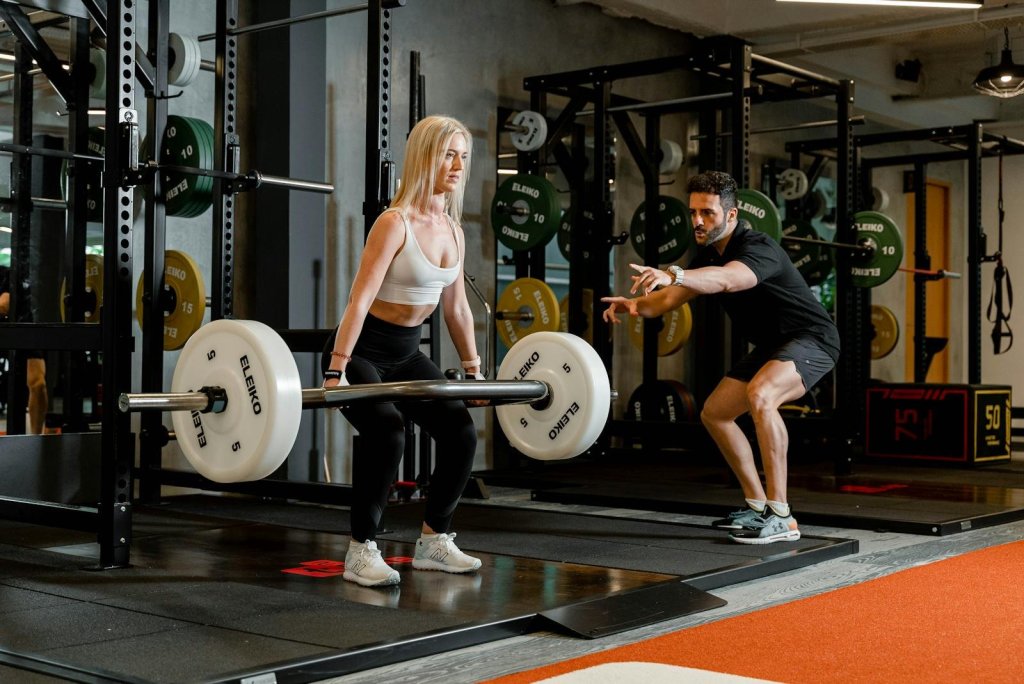
A practical way to use the trap bar is simple: start with deadlift patterns, add one or two accessory moves, and progress load only when your form stays controlled. The American Council on Exercise offers a helpful general technique reference, while research on hex-bar deadlifts supports their value for strength and power work. Background evidence from PubMed and newer comparisons indexed by PubMed are especially useful for understanding why trap bar work is so often recommended. Another useful evidence source is a PubMed Central study reporting improvements in muscle strength, power, and lean mass in recreationally active women.
Why trap bar exercises are so effective
The trap bar changes how the load sits around your body. Instead of the bar being in front of your shins, you stand inside the frame, which can make the lift feel more centered and manageable for many lifters. In the 2011 Swinton study, the hex bar was associated with higher peak force, velocity, and power than the straight bar under the tested conditions. A later study available through PubMed Central also reported that heavy hex-bar deadlifts could be performed faster, with more work done at greater power outputs.
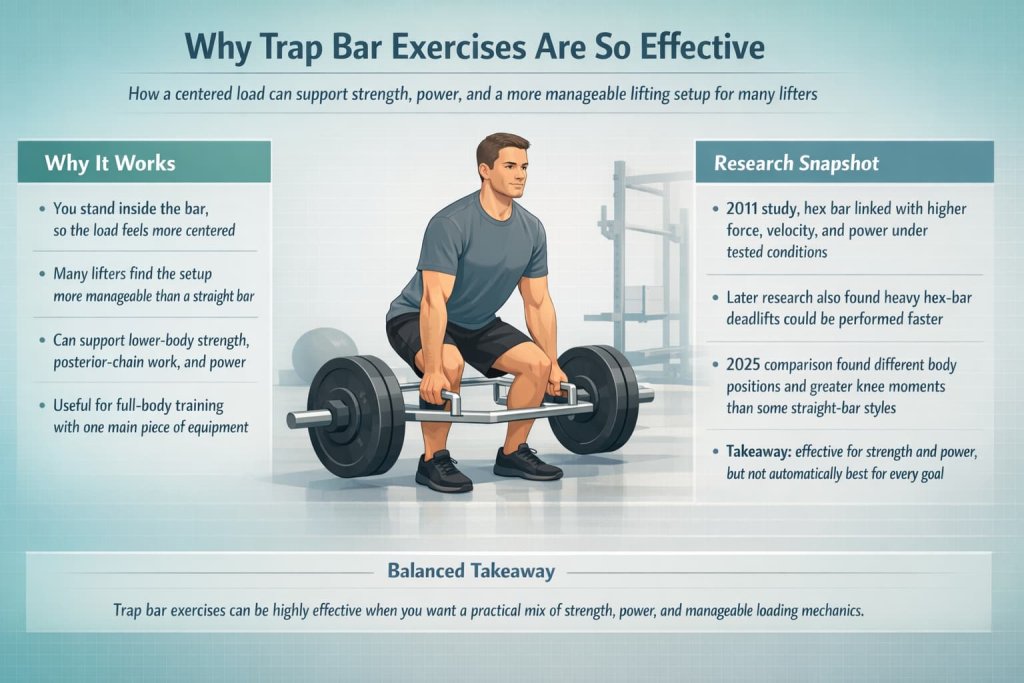
That does not mean trap bar training is automatically better for every goal. It means the trap bar is a very strong option when you want a blend of lower-body strength, posterior-chain work, and athletic power. A 2025 biomechanics comparison indexed by PubMed also found the hex-bar style involved greater knee moments and different body positions than conventional and sumo deadlifts, which helps explain why it often feels different in the quads and hips.
Before you start trap bar exercises
Warm up for 5 to 10 minutes and do a few lighter sets before your work sets. Keep your spine neutral, brace your trunk, and move under control. The trap bar can feel more user-friendly than some straight-bar lifts, but it still rewards good setup and careful loading. The American Council on Exercise notes that deadlift form should include a flat back, strong grip, and force through the floor rather than yanking the weight upward.
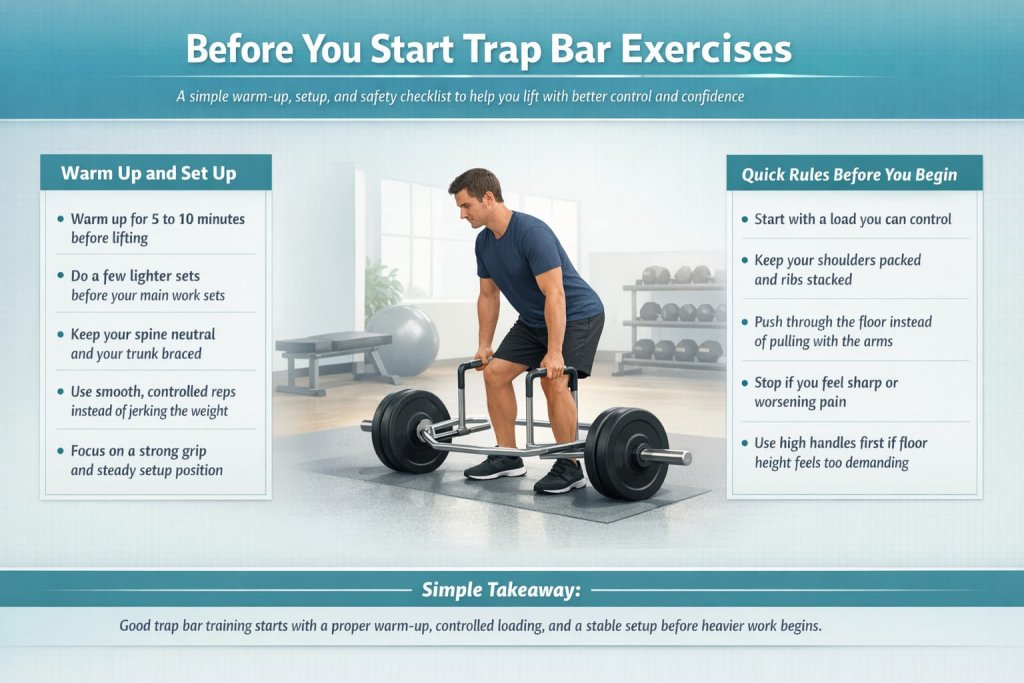
Use these quick rules before you begin:
- Start with a load you can control without jerking
- Keep your shoulders packed and your ribs stacked
- Push through the floor instead of pulling with your arms
- Stop if you feel sharp or worsening pain
- Choose high handles first if standard floor height feels too demanding
15 best trap bar exercises
Build full-body strength, power, grip, and muscle with these versatile trap bar exercises. From deadlift variations to carries, shrugs, and lunges, these moves help make your training more effective and efficient.
1. Trap Bar Deadlift
How to do it:
- Stand inside the trap bar with feet about hip-width apart.
- Hinge at the hips and bend the knees to grab the handles.
- Brace your core and keep your chest proud.
- Push the floor away to stand up with the bar.
- Lower it back under control.
Why it works: This is the foundation trap bar exercise. It trains the glutes, quads, hamstrings, back, grip, and trunk in one movement. Research indexed by PubMed has repeatedly shown the hex-bar deadlift can produce high force and power outputs, making it a strong primary lift for full-body strength.
Muscles worked: Glutes, quads, hamstrings, erector spinae, traps, forearms, core.
Trainer Tip: Think “push the floor away” instead of “yank the bar up.”
2. High-Handle Trap Bar Deadlift
How to do it:
- Flip the trap bar to use the higher handles.
- Set up the same way as a normal trap bar deadlift.
- Brace and stand up smoothly.
- Lower with control.
Why it works: The higher handles shorten the range of motion, which can make the lift more accessible for beginners, taller lifters, or people still building confidence with hinging from the floor.
Muscles worked: Glutes, quads, hamstrings, upper back, grip, core.
Trainer Tip: Use this as your entry point before progressing to lower handles.
3. Low-Handle Trap Bar Deadlift
How to do it:
- Use the lower handles if your bar has them.
- Sit into the setup with a strong brace.
- Drive through the floor to stand up.
- Return the bar slowly.
Why it works: This increases the range of motion and usually demands more mobility and strength off the floor than high-handle work.
Muscles worked: Glutes, hamstrings, quads, back, traps, grip, core.
Trainer Tip: Only use low handles when you can keep your setup solid from the start.
4. Trap Bar Romanian Deadlift
How to do it:
- Stand tall inside the bar with the weight already lifted.
- Soften your knees slightly.
- Push your hips back while keeping the bar close to your body line.
- Lower until you feel a hamstring stretch without losing position.
- Drive the hips forward to stand tall again.
Why it works: This variation shifts more of the challenge to the hip hinge and posterior chain. It is one of the best trap bar exercises for glutes and hamstrings.
Muscles worked: Hamstrings, glutes, erector spinae, upper back, core.
Trainer Tip: Stop the descent when your spine or pelvic position starts to change.
5. Trap Bar Squat
How to do it:
- Stand inside the trap bar and hold the handles.
- Sit down between your hips and knees as if doing a squat.
- Keep your chest tall and feet planted.
- Stand back up under control.
Why it works: Depending on your build and the bar design, the trap bar can be used for a squat-style pattern that feels balanced and stable.
Muscles worked: Quads, glutes, adductors, core, upper back.
Trainer Tip: Keep the movement “down and up,” not forward onto the toes.
6. Trap Bar Jump
How to do it:
- Use a light load only.
- Set up in a trap bar deadlift position.
- Drive forcefully through the floor and jump explosively.
- Land softly and reset between reps.
Why it works: Trap bar jumps are used to train lower-body power. The trap bar’s centered load can make loaded jumps more manageable than some other barbell options. Research and applied coaching literature available through PubMed Central often use the hex bar in power-focused programming because it allows fast movement with meaningful load.
Muscles worked: Glutes, quads, hamstrings, calves, core.
Trainer Tip: Keep reps low and crisp. This is not a grind exercise.
7. Trap Bar Shrug
How to do it:
- Stand tall holding the trap bar at your sides.
- Keep your arms straight.
- Lift your shoulders straight up toward your ears.
- Pause briefly, then lower slowly.
Why it works: The trap bar puts the load at your sides, which many people find comfortable for shrugging without the bar scraping the thighs.
Muscles worked: Upper trapezius, forearms, grip.
Trainer Tip: Move straight up and down, not in circles.
8. Trap Bar Farmer Carry
How to do it:
- Lift the bar to a stable standing position.
- Walk forward with short, controlled steps.
- Keep your ribs down and shoulders level.
- Set the bar down carefully when done.
Why it works: Carries build grip, posture, trunk stiffness, and work capacity. They also teach you to stay organized under load while moving.
Muscles worked: Grip, traps, shoulders, core, glutes, legs.
Trainer Tip: Walk tall. Do not let the load pull you into a shrug or lean.
9. Trap Bar March
How to do it:
- Lift the trap bar and hold it in place.
- March slowly by lifting one knee at a time.
- Stay tall and resist side-to-side sway.
- Continue for controlled reps or time.
Why it works: Marching adds an anti-rotation and balance element without needing a lot of space.
Muscles worked: Core stabilizers, hip flexors, glutes, grip, traps.
Trainer Tip: Move slowly enough that the trunk does not wobble.
10. Trap Bar Static Hold
How to do it:
- Lift the trap bar to standing.
- Hold the top position without walking.
- Keep your posture stacked and your grip tight.
- Set the bar down with control.
Why it works: Static holds are simple but effective for grip, posture, and confidence with heavier loads.
Muscles worked: Forearms, traps, core, glutes, legs.
Trainer Tip: This is a great accessory if your grip fails before your legs do.
11. Trap Bar Reverse Lunge
How to do it:
- Stand inside the bar holding the handles.
- Step one foot back into a reverse lunge.
- Lower under control until both knees bend comfortably.
- Push through the front foot to return to standing.
- Repeat on the other side.
Why it works: Reverse lunges train single-leg strength and balance while the trap bar keeps the load more evenly distributed.
Muscles worked: Glutes, quads, hamstrings, calves, core.
Trainer Tip: Start light. Unilateral trap bar work gets challenging quickly.
12. Trap Bar Split Squat
How to do it:
- Set your feet in a split stance inside the bar.
- Hold the handles and lower straight down.
- Push through the front foot to rise.
- Complete all reps, then switch sides.
Why it works: This is a stable way to build unilateral leg strength without needing the coordination of stepping in and out of each rep.
Muscles worked: Quads, glutes, hamstrings, adductors, core.
Trainer Tip: Keep your torso tall and your stance long enough to stay balanced.
13. Trap Bar Calf Raise
How to do it:
- Stand tall holding the trap bar.
- Rise onto the balls of your feet.
- Pause briefly at the top.
- Lower with control.
Why it works: The trap bar allows heavy calf loading with the weight centered at your sides.
Muscles worked: Gastrocnemius, soleus, foot stabilizers.
Trainer Tip: Use a slow tempo instead of bouncing.
14. Trap Bar Deadlift to Carry
How to do it:
- Perform one clean trap bar deadlift.
- Once standing, begin walking forward.
- Hold your posture steady.
- Stop, reset, and lower the bar carefully.
Why it works: This combines strength and loaded locomotion in one sequence, making it useful for conditioning and full-body bracing.
Muscles worked: Glutes, quads, hamstrings, traps, grip, core.
Trainer Tip: Treat the deadlift and carry as one smooth, controlled effort.
15. Trap Bar Suitcase Offset Hold or Carry
How to do it:
- Load one side slightly heavier than the other.
- Lift the trap bar carefully.
- Hold or walk while resisting the urge to lean.
- Set it down under control.
Why it works: The offset load increases anti-lateral-flexion demand, so your core and posture muscles have to work harder to keep you level.
Muscles worked: Obliques, quadratus lumborum, grip, traps, glutes, legs.
Trainer Tip: Keep the weight difference modest. This is an advanced progression.
Best trap bar exercises by goal
For full-body strength
Your best choices are the trap bar deadlift, low-handle deadlift, trap bar squat, and deadlift to carry.
For glutes and hamstrings
Use the trap bar deadlift, trap bar Romanian deadlift, and reverse lunge.
For power
Trap bar jumps are the standout option. They fit well after a warm-up and before heavy strength work.
For grip and traps
Use farmer carries, static holds, shrugs, and offset carries.
For beginners
Start with high-handle trap bar deadlifts, static holds, and farmer carries before trying more technical variations.
Common trap bar exercise mistakes
Loading too much too soon
The trap bar often feels easier to learn than other deadlift styles, but that can tempt people to jump ahead too fast.
Letting the spine round under fatigue
Some form breakdown usually happens when sets go too long or the load is too heavy.
Turning power work into grinding reps
Trap bar jumps should stay explosive. Once jump speed drops, the set is done.
Walking carries with sloppy posture
Carries only work as intended when you stay tall and controlled.
How to program trap bar exercises
A practical beginner-friendly setup is:
- One main lift: trap bar deadlift or high-handle deadlift
- One accessory: trap bar Romanian deadlift, split squat, or shrug
- One carry: farmer carry, march, or static hold
A simple starting range is 2 to 4 sets per exercise. For strength, many people use 3 to 6 reps on deadlifts and 6 to 10 reps on accessory lifts. Carries and holds can be done for distance or time, such as 20 to 40 meters or 20 to 45 seconds. Research available through PubMed Central suggests heavy loading can improve strength and power, but the exact sets and reps should match your training level and recovery.
Are trap bar exercises good for beginners?
Yes, in many cases they are. The trap bar is often easier to learn than a straight-bar deadlift because the load is centered around the body, and the handles can reduce some setup difficulty. That does not remove the need for coaching, patience, or smart loading, but it can make the learning curve smoother, as discussed in research indexed by PubMed.
Are trap bar exercises enough for a full program?
They can cover a lot, but usually not everything. Trap bar work is excellent for strength, carries, and some power training. You may still want upper-body pushing, rowing, core work, and mobility work elsewhere in your routine.
Frequently asked questions about trap bar exercises
What is the best trap bar exercise?
For most people, the trap bar deadlift is the best overall trap bar exercise because it gives you the most full-body strength return for the time you put into it.
Are trap bar exercises better than barbell exercises?
Not across the board. Trap bar exercises are often more approachable and can be excellent for force and power output, but straight-bar lifts still have their own advantages depending on your sport, goals, and technique, as shown in research indexed by PubMed.
Can trap bar exercises build muscle?
Yes. Trap bar exercises can support muscle gain when you train with enough effort, volume, and progression. A study available through PubMed Central reported improvements in lean mass along with strength and power.
Are trap bar deadlifts safer for the back?
They may feel more comfortable for some people, but “safer” depends on your form, mobility, injury history, and load management. Good setup and sensible progression still matter.
How often should I do trap bar exercises?
Most people do well with 1 to 3 trap bar sessions per week depending on the total program, exercise selection, and recovery.
Can I use trap bar exercises at home?
Yes, if you have the equipment and enough space. Carries need the most room, while deadlifts, RDLs, shrugs, and static holds work in smaller spaces.
What trap bar exercise is best for athletic power?
Trap bar jumps are one of the strongest choices because they let you move explosively with load.
Conclusion
Trap bar exercises deserve a place in many strength programs because they are versatile, scalable, and efficient. The trap bar deadlift should usually be your anchor movement, then you can build around it with Romanian deadlifts, carries, shrugs, lunges, marches, and jumps depending on your goal. Start with the variation you can control best, progress slowly, and focus on clean reps before heavier loading.