
Cable back exercises are some of the best options for building a stronger, more muscular back because they keep tension on the target muscles through the full range of motion and make it easy to train rows, pulldowns, and isolation work in one setup. They also work well for many lifters who want more control and smoother resistance than free weights alone. Understanding which cable back exercises to use matters because different angles emphasize different parts of the back, from lat width to mid-back thickness to upper-back muscles that support better posture.
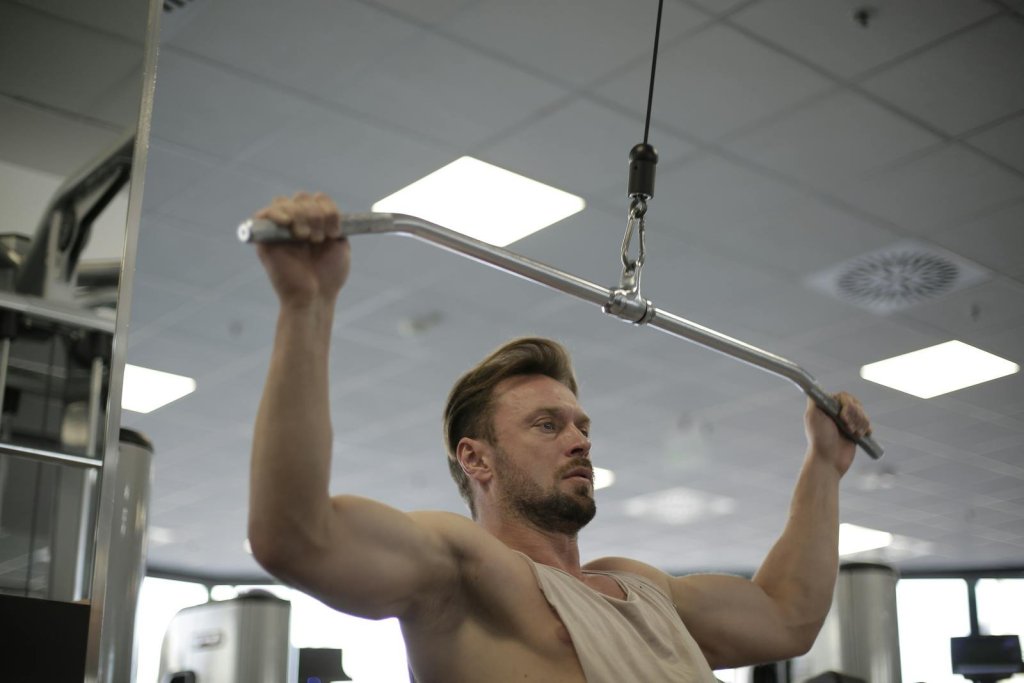
Guidance from ACE Fitness, NASM, Mayo Clinic, and ACSM supports a simple approach: pick a few effective patterns, use controlled form, and stay consistent.
Why cable back exercises work so well
Cable machines are useful for back training because they let you adjust the line of pull, use different attachments, and keep muscular tension more constant than many free-weight variations. That makes them especially helpful for combining width-focused pulldowns, thickness-focused rows, and upper-back work in the same session. ACE Fitness includes cable-based movements such as the seated row, standing row, high row, straight-arm pressdown, and kneeling lat pulldown, while NASM notes that lat pulldown variations can effectively train the lats and upper back with different grip options.
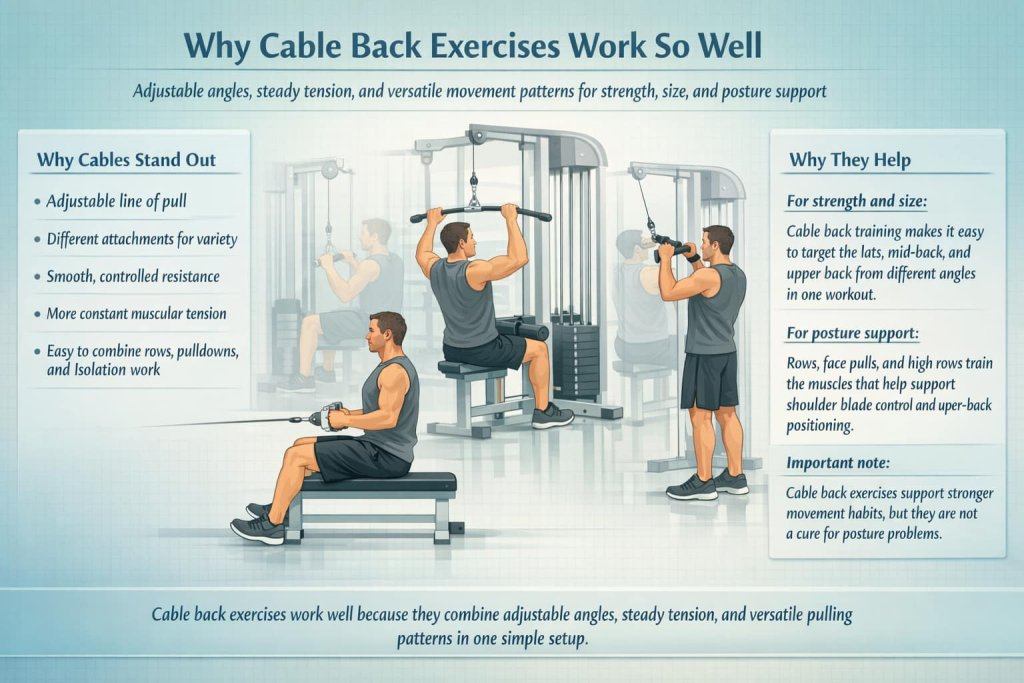
For posture, cable work can be a smart choice because many back exercises train the muscles that help control the shoulder blades and support the upper spine. Mayo Clinic notes that strength training supports better movement and body control, and ACE Fitness highlights upper- and mid-back exercises such as rows and face pulls as useful tools in balanced training. Cable exercises are not a cure for posture problems, but they can support stronger positioning habits when paired with good technique and regular training.
12 Best Cable Back Exercises
Build a stronger, more balanced back with these cable exercises that target the lats, rhomboids, traps, and rear delts from multiple angles. This list includes the best cable back exercises for strength, muscle size, and better posture, with options for both beginners and experienced lifters.
1. Seated Cable Row
Why it works:
The seated cable row is one of the most practical cable back exercises for overall back development. It trains the mid-back well and also gives useful work to the lats, rear shoulders, and arm flexors. Research discussed by ACE Fitness found the seated row performed well for middle trapezius activation, which is one reason it fits so well in a strength, size, and posture-focused program.
Muscles worked:
This move mainly targets the mid-back, including the rhomboids and middle trapezius, while also training the lats and biceps. It is one of the best cable choices for building back thickness.
How to do it:
- Sit tall with your feet braced and your chest lifted.
- Grab the handle and start with your arms extended without rounding forward.
- Pull your elbows back toward your sides.
- Bring the handle toward the lower ribs or upper waist.
- Pause briefly, then return under control.
Trainer Tip:
Do not turn this into a low-back swing. Keep your torso mostly steady and think about moving through the shoulder blades and elbows instead of throwing the weight backward.
2. Wide-Grip Lat Pulldown
Why it works:
The wide-grip lat pulldown is a classic vertical pull for people who want more lat emphasis and an upper-back training effect without doing pull-ups. NASM describes the lat pulldown as one of the most popular back-strengthening exercises, and ACE Fitness lists the seated lat pulldown as a standard back movement.
Muscles worked:
This variation mainly targets the latissimus dorsi, with help from the upper back, rear shoulders, and biceps. A wider overhand grip often shifts the feel more toward the upper outer back and lats.
How to do it:
- Sit down and secure your thighs under the pad.
- Take a wide overhand grip on the bar.
- Brace your trunk and keep your chest up.
- Pull the bar down toward the upper chest.
- Control the bar back up without shrugging.
Trainer Tip:
Do not yank the bar behind your neck. A front pulldown to the upper chest is the more common and safer choice for most people.
3. Close-Grip Lat Pulldown
Why it works:
The close-grip lat pulldown gives you another vertical pull pattern with a slightly different arm path. It often feels smoother for lifters who prefer keeping the elbows closer to the torso. NASM notes that grip changes can alter the way the pulldown feels and which muscles contribute more.
Muscles worked:
This version still trains the lats heavily, but many people also notice a bit more biceps and lower-lat feel compared with a very wide grip. It is a strong option when you want variety without changing the core movement pattern too much.
How to do it:
- Attach a close-grip or neutral-grip handle.
- Sit tall and lock your legs under the pad.
- Pull your elbows down and in toward your sides.
- Bring the handle toward the upper chest.
- Return slowly to a full stretch.
Trainer Tip:
Think “elbows to hips” instead of “hands to chest.” That cue often helps lifters feel the lats more clearly.
4. Single-Arm Cable Row
Why it works:
Single-arm work can help clean up side-to-side differences and lets you focus on a longer reach and stronger contraction on each rep. It is also easier for many people to learn scapular control one side at a time than with both arms together. ACE Fitness specifically reminds users to avoid trunk rotation, which is a useful cue here too.
Muscles worked:
This exercise trains the lats, rhomboids, middle trapezius, rear deltoids, and biceps. Because it is unilateral, your trunk and hips also have to help you stay stable.
How to do it:
- Set a single handle at about torso height.
- Stand or sit in a stable split stance or bench-supported position.
- Reach forward with control at the start.
- Row the elbow back without twisting your torso.
- Pause, then return slowly.
Trainer Tip:
Let the shoulder blade move naturally, but do not let the whole body spin with the weight. Keep your rib cage quiet and your pull smooth.
5. Standing Cable Row
Why it works:
The standing cable row adds a little more full-body demand than a seated row because you have to brace and stay balanced while pulling. ACE Fitness emphasizes a chest-high pulley, tall posture, and elbows kept close to the sides.
Muscles worked:
It targets the lats, rhomboids, middle traps, rear delts, and arm flexors while also asking the trunk to stay stable. This makes it useful for general strength and posture-oriented training.
How to do it:
- Set the pulley around chest height with two handles.
- Stand tall with a slight knee bend.
- Pull both handles back while keeping your arms roughly parallel to the floor.
- Squeeze your shoulder blades together briefly.
- Return with control.
Trainer Tip:
Avoid leaning way back to finish the rep. Stay tall and make the back muscles do the work.
6. High Cable Row
Why it works:
The high cable row shifts more attention to the upper back by using a higher pulling path and wider elbow position. ACE Fitness uses a shoulder-height pulley and a brief pause at the contracted position, which can help lifters feel the upper back better.
Muscles worked:
This exercise mainly targets the upper back, especially the rear delts, rhomboids, and middle traps, while still involving the lats. It is a very good choice when your goal includes posture support and shoulder-blade control.
How to do it:
- Set the pulley around shoulder height with a rope attachment.
- Stand tall facing the machine.
- Pull your elbows back and slightly out.
- Bring your hands toward the front of your shoulders.
- Pause, then return slowly.
Trainer Tip:
Do not shrug up toward your ears. Keep the neck relaxed and think about the upper back doing the pull.
7. Straight-Arm Cable Pulldown
Why it works:
The straight-arm cable pulldown is one of the best cable isolation moves for the lats because it reduces elbow flexion and makes it easier to focus on shoulder extension. ACE Fitness lists the straight-arm pressdown as a back exercise performed with the pulley set high and the arms kept straight.
Muscles worked:
This variation mainly trains the lats and teres major, with the trunk helping stabilize the movement. It is especially useful after rows and pulldowns when you want more direct lat work without much biceps fatigue.
How to do it:
- Set the cable high with a straight bar or rope.
- Stand tall with a slight hip hinge and soft knees.
- Keep your arms mostly straight.
- Pull the handle down toward the front of your hips.
- Return slowly until you feel a lat stretch.
Trainer Tip:
Keep the movement controlled and avoid turning it into a triceps pressdown. The elbows should not keep bending and straightening through the rep.
8. Kneeling Cable Lat Pulldown
Why it works:
The kneeling cable lat pulldown is a useful alternative when you want a pulldown pattern without using the standard lat pulldown station. ACE Fitness includes it in its back exercise library and identifies the back muscles involved, including the lats, traps, rhomboids, and erector spinae.
Muscles worked:
This move mainly trains the lats, but it also challenges the trunk because the kneeling setup reduces lower-body assistance. It can be a good fit for home gyms or cable stations with adjustable pulleys.
How to do it:
- Set the pulley high and kneel facing the machine.
- Grab the bar or handles with your arms overhead.
- Brace your core and keep your ribs down.
- Pull your elbows down toward your sides.
- Return slowly to the start.
Trainer Tip:
Do not let the lower back overarch as the weight rises. Stay tall through the trunk and keep the movement smooth.
9. Cable Face Pull
Why it works:
The cable face pull is one of the best upper-back cable exercises for balanced training because it targets muscles many people neglect during pressing-heavy programs. ACE Fitness includes the cable face pull among useful mid-back exercises, which is one reason it is often recommended in posture-supportive programs.
Muscles worked:
This exercise mainly trains the rear deltoids, rhomboids, and middle traps, with help from the rotator cuff and upper back. It is less about heavy loading and more about clean shoulder-blade movement and upper-back control.
How to do it:
- Set a rope attachment around upper-chest to face height.
- Grab the rope with thumbs pointing backward or neutral.
- Pull the rope toward your face.
- Let your elbows travel out as the rope separates.
- Pause briefly, then return under control.
Trainer Tip:
Keep the ribs stacked and the chin neutral. This should feel like an upper-back exercise, not a lower-back lean.
10. Single-Arm High-to-Low Cable Row
Why it works:
This row variation lets you pull from a slightly higher angle down toward the hip, which many lifters find helpful for feeling the lats. It combines the unilateral focus of a one-arm row with an elbow path that often matches the lats well. This is a practical variation built from the same pulling principles described by ACE Fitness and NASM.
Muscles worked:
The lats do most of the work here, while the rhomboids, rear delts, and biceps assist. The trunk also works to resist unwanted rotation.
How to do it:
- Set one pulley slightly above shoulder level.
- Grab a single handle and step back into a stable stance.
- Start with a full reach.
- Pull the elbow down and back toward your hip.
- Return slowly without twisting.
Trainer Tip:
Keep the shoulder down as you pull. If the shoulder hikes up toward your ear, the rep is getting sloppy.
11. Cable Rear Delt Row
Why it works:
A cable rear delt row is a smart way to train the back of the shoulders and upper back together. It uses a row pattern, but the wider elbow path shifts more of the work toward the rear delts and upper-mid back instead of pure lat focus. This fits well with ACE Fitness guidance on upper-back-focused pulling patterns.
Muscles worked:
The main targets are the rear deltoids, rhomboids, and middle traps. This is a great accessory exercise when your upper back needs more attention than your lats.
How to do it:
- Set the pulley around chest height with two handles.
- Take a staggered stance and hold one handle in each hand.
- Pull with elbows flared out more than a standard row.
- Bring the handles toward the upper chest.
- Return slowly and stay in control.
Trainer Tip:
Use less weight than you think. This exercise usually works better with strict reps and a good squeeze than with heavy cheating.
12. Cable Pullover
Why it works:
The cable pullover gives you another lat-focused isolation option, especially if you want to train shoulder extension in a different way from a straight-arm pulldown. ACE Fitness includes pull-over patterns among back-building options, which supports using this as an accessory lift rather than a main heavy movement.
Muscles worked:
This move mainly targets the lats and teres major, while the long head of the triceps and core assist depending on setup. It can be useful at the end of a session when rows and pulldowns have already taken a lot out of your grip and biceps.
How to do it:
- Set the pulley high with a straight bar or rope.
- Step back and hinge slightly at the hips.
- Start with your arms overhead or angled upward.
- Pull the handle down in an arc toward your thighs.
- Return slowly and feel the stretch through the lats.
Trainer Tip:
Keep the rib cage controlled. Do not turn the movement into a big torso swing just to move more weight.
Best Cable Back Exercises by Goal
If your goal is back width, start with wide-grip lat pulldowns, close-grip pulldowns, kneeling lat pulldowns, and straight-arm cable pulldowns. These emphasize vertical pulling and shoulder extension, which match lat-focused training well according to NASM.
If your goal is back thickness, prioritize seated cable rows, standing rows, single-arm rows, and high-to-low rows. These are strong choices for the mid-back and for building more dense-looking upper-body musculature. Research highlighted by ACE Fitness especially supports the seated row as a solid mid-back option.
If your goal is better posture support, high rows, rear delt rows, and face pulls deserve extra space in your program because they help train the upper back and shoulder-blade muscles that many desk-bound lifters undertrain.
How to Build a Cable Back Workout
A simple cable back workout does not need to be complicated. ACSM emphasizes that consistency matters more than overly complex programming, and Mayo Clinic notes that for many people, even a single set of 12 to 15 repetitions with an appropriate load can build strength effectively.
A practical beginner-to-intermediate workout could look like this:
- 1 vertical pull: lat pulldown or kneeling cable lat pulldown
- 1 main row: seated cable row or standing cable row
- 1 upper-back movement: high row or face pull
- 1 lat isolation movement: straight-arm cable pulldown or cable pullover
Do 2 to 4 sets per exercise and keep most sets in a controlled moderate rep range, such as 8 to 15 reps. Focus on clean motion, stable posture, and gradual progression before chasing heavier loads.
Common Mistakes to Avoid With Cable Back Exercises
The biggest mistakes are usually technical, not exercise selection. Common problems include using momentum, shrugging through every rep, pulling with the arms only, leaning too far back on pulldowns, and cutting the range of motion short. ACE Fitness repeatedly emphasizes bracing, lifting the chest, and returning the weight under control, while Mayo Clinic stresses proper technique and manageable loading.
A simple fix is to reduce the load slightly and slow the rep down. In most cases, better form will make cable back exercises feel harder in the right places almost immediately.
Who Should Be Careful With Cable Back Exercises
Most healthy adults can use cable back exercises safely when the load and setup match their current ability. But if you have shoulder pain, a recent upper-body injury, neck issues, or back problems, it is wise to get medical or physical therapy guidance before pushing hard. Mayo Clinic advises people with back problems, osteoporosis, or other health concerns to talk to a health professional before starting certain strength exercises.
FAQs About Cable Back Exercises
Are cable back exercises enough to build muscle?
Yes, they can be. Cable machines allow effective rows, pulldowns, and isolation work, and ACSM emphasizes that consistent resistance training matters more than fancy programming. You do not need barbells and dumbbells to build a stronger back, though many lifters like combining them.
What are the best cable back exercises for beginners?
Good beginner options include the seated cable row, close-grip lat pulldown, standing cable row, and cable face pull. They are relatively easy to set up, simple to control, and useful for learning better shoulder-blade mechanics, as shown in the ACE Fitness exercise library.
Which cable back exercises are best for lats?
Wide-grip pulldowns, close-grip pulldowns, kneeling lat pulldowns, straight-arm cable pulldowns, and cable pullovers are among the best choices when your goal is more lat emphasis. NASM and ACE Fitness both support these patterns well.
Which cable back exercises help with posture?
High rows, face pulls, rear delt rows, and seated rows are especially helpful for training the upper- and mid-back muscles that support better shoulder-blade control. They are not a standalone fix for every posture issue, but they can support better positioning and stronger upper-back function.
How often should I train back with cables?
For many people, 1 to 3 back-focused sessions per week can work, depending on the rest of the program, recovery, and total training volume. ACSM emphasizes consistency and progressive overload rather than unnecessary complexity.
Are cables better than dumbbells for back training?
Not always better, but often easier to control and very effective for keeping tension on the back muscles. Dumbbells and barbells can still be excellent. The best option is usually the one that lets you train hard with safe, repeatable technique, which aligns with general guidance from Mayo Clinic.
Conclusion
Cable back exercises are one of the easiest ways to build a stronger, thicker, and more balanced back without making your training overly complicated. Start with a row, a pulldown, an upper-back exercise, and one lat isolation move, then get stronger over time with clean reps and steady progression. If you are building your next back workout, use the 12 cable back exercises above as your starting list and choose the few that best match your goal.